
News
Jha highlights growing Indian power, reiterates commitment to strengthening ties with SL

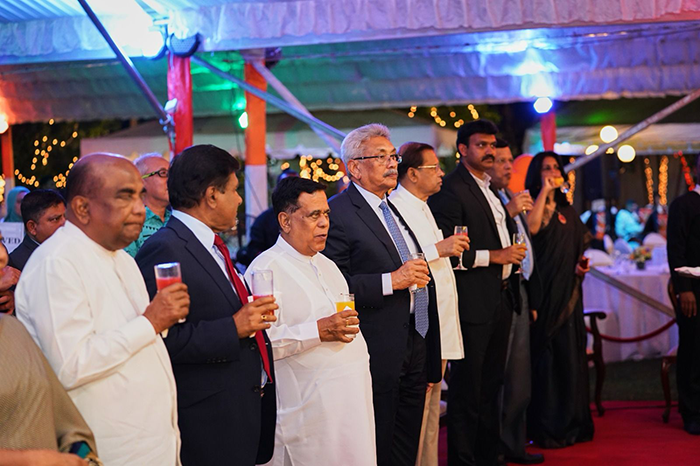
Indian High Commissioner Santosh Jha has said India and Sri Lanka are natural partners and their interests in matters of security or development are intertwined and interlinked. “The huge potential our partnership holds and the tangible impact it can have on the lives of the common people drives me to work harder to further deepen and strengthen it. I look forward to your support and cooperation in this regard.”
HC Jha said so on Friday (26) at the evening reception hosted by him at India House on the occasion of the 75th Republic Day of India.Among those present were former Presidents Mahinda Rajapaksa, Maithripala Sirisena and Gotabaya Rajapaksa.
Commenting on the growing Indian economy, Jha said: Our economic journey, in particular in the last decade, has also been remarkable. India is now the fastest growing major economy in the world. We are now the fifth largest economy and poised to become the third largest by 2027-2028. That we were 10th largest 10 years ago shows the speed of this journey!
India truly stands today at an inflection point. The vision of our Prime Minister is to make India a developed country – a ‘Viksit Bharat’ or a developed India – by 2047. We believe that it is through ‘Sabka Prayas’ or through efforts of all that a ‘Viksit Bharat’ will materialize. There is realization that development, just as democracy, is of the people, for the people and by the people.
One of the many major transformations underway in India is built on the implementation of the Unique Digital Identity Number or Aadhar. This has delivered good governance and empowered the poor and the underprivileged in a way not seen before. To give you an example, the Aadhar has enabled the government to deliver food rations to 850 million, provide free medical insurance cover to 500 million and effect cash transfers to 450 million Indians. There are multiple examples of such welfare schemes reaching the poor and the most underprivileged without leakages and in full transparency. Today, India is perhaps the only low-middle income country in the world to deliver societal benefits on such scale and with such impact.
Beyond this, the Unique Digital Identity Number, along with the UPI, has also ushered a boom in digital financial transactions in India. Today, 46 of every 100 such transactions in the world are taking place in India. The digital public infrastructure has also led to spectacular growth of start-ups in India, with over 100,000 registered start-ups in just the last decade. And among them are over 100 Unicorns or startups with more than a billion dollar valuation.
The speed and scale of change is also noteworthy. In the last 18 months, we have installed 400,000 5G sites. Every day, in the last five years, we have opened two new colleges in India. Our physical infrastructure is acquiring world class standards. Our technological capabilities were best demonstrated when we landed the Chandrayaan-3 on the South Pole of the moon – the first by any country. Our journey on renewable energy has also been remarkable. We are on target to achieve 68.4% of our energy or 650 GW from non-fossil sources by 2032. We are also building a formidable green hydrogen capacity. Not surprisingly, we are the only G20 country that is on track to implement and even exceed its Paris Climate commitments.
Our growing national capabilities are also reflecting in our foreign policy. Our G20 presidency saw consensus on a common outcome, secured the membership for the African Union and championed the cause of the Global South.
Our domestic vision is also driving our Neighbourhood First policy. Our SAGAR policy which seeks security and growth for all in the Indian Ocean region is at the heart of our approach towards Sri Lanka.
The India-Sri Lanka partnership has been built on civilizational ties, geographical proximity, cultural connect, strong sense of solidarity and age-old goodwill. In recent years, be it during the COVID-19 pandemic or the economic crisis, India has reaffirmed itself as a trusted and reliable partner of Sri Lanka.
The Vision document adopted by our leaders in July 2023 seeks to build a stronger economic partnership with connectivity as its central theme.
Since July 2023, we have started daily flights between Jaffna and Chennai, and launched ferry services between India and Sri Lanka. We are working on building mechanisms to establish the India-Sri Lanka Connectivity Corridor.
We are also advancing multiple energy initiatives. These include the power grid connectivity eventually to enable Sri Lanka to export power to India; the multi-product pipeline, which will boost our shared interest in developing Trincomalee as an economic hub; and we are also working to set up a virtual LNG pipeline from Kochi to Colombo to bring down electricity costs in Sri Lanka. There are other clean energy projects in the private sector as well as the one by the NTPC in Sampur.
India is also Sri Lanka’s largest trading partner. In 2022, bilateral trade stood at USD 6 billion. In recent years, we have also been the largest foreign investor in Sri Lanka. India continues to be the largest source of foreign tourists in Sri Lanka. We hope to enhance our economic partnership and enhance Sri Lanka’s export potential through early conclusion of the Economic and Technology Cooperation Agreement, just as the FTA opened new export opportunities for Sri Lanka to India, which now stands at more than on4 billion dollars.
Till date, we have contributed over five billion US dollars towards our development partnership, which has touched every single district of Sri Lanka. We are working on projects for solar electrification of religious places across Sri Lanka, assisting in modernization of Sri Lanka railways, constructing houses for the poor, enhancing Sri Lanka’s health and education infrastructure, and engaging in ports and airports development. We are working on the Sri Lanka-Unique Digital Identity project and seeking to soon roll out UPI in Sri Lanka. In all of this, India’s priorities are determined by Sri Lanka’s needs and aspirations and that too principally of its citizens.”







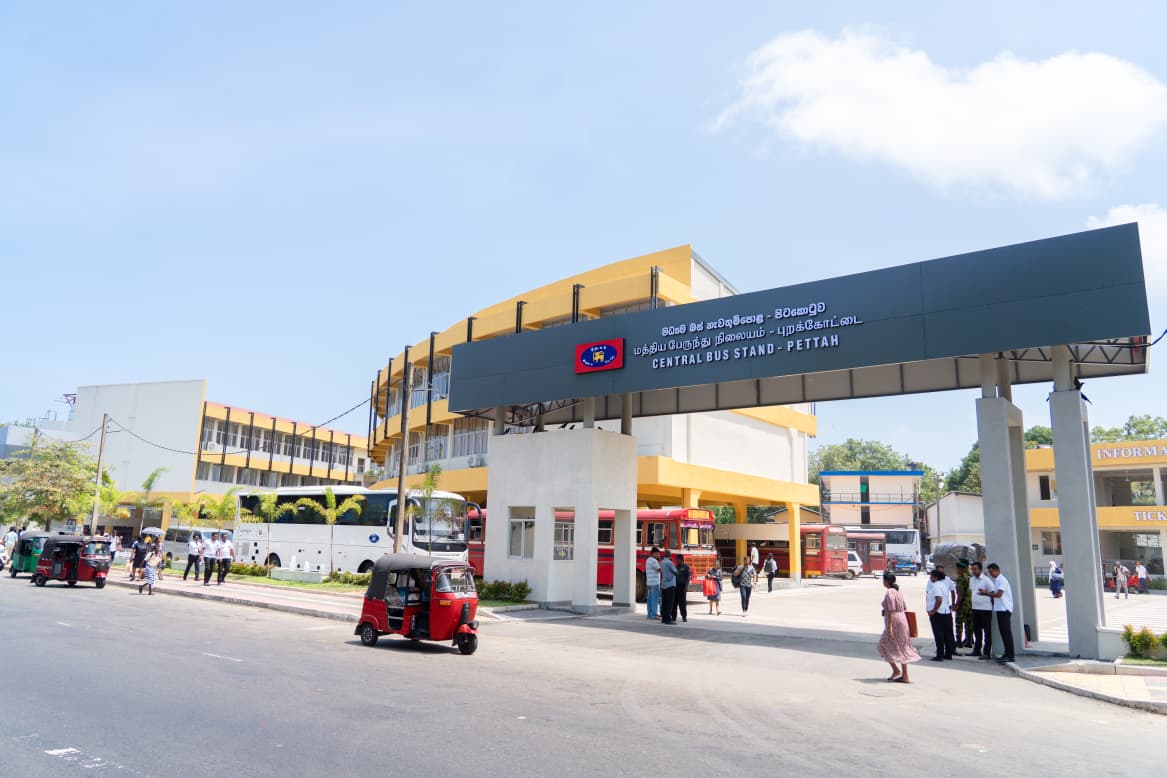
The Colombo Central Bus Stand, which has a history of over six decades and had remained without a proper maintenance for many years, has now been renovated under the current government’s development programme and vested to the public. Following that, the Prime Minister undertook an inspection tour of the newly renovated Colombo Central Bus Stand.
Originally constructed in 1964, the bus stand was refurbished with modern facilities to meet current needs and was officially reopened to the public on April 8. The primary objective of this initiative is to provide passengers with a higher-quality and more comfortable transportation service.
During the renovation process, special attention has been given to the comfort and safety of women, which was commended by the Prime Minister. In particular, a modern rest area designed to ensure privacy for nursing mothers travelling from distant areas received special praise.
The Prime Minister also reviewed the newly introduced passenger seat reservation system and information services established to assist commuters. In addition, the modern surveillance unit and other security measures installed within the premises to ensure passenger safety were also inspected.
During the visit, the Prime Minister engaged in conversations with passengers at the bus stand and inquired about their views on the newly renovated facilities and the quality of transport services.
It was emphasized that the government’s objective is to transform public transportation into a safe, technologically advanced service that can be used with convenience by all citizens.

(Prime Minister’s Media Division)
Latest News
Sun directly overhead Nagawilluwa, Galgamuwa, Sigiriya, Palugasdamana and Mankerni about 12:11 noon today (10)


On the apparent northward relative motion of the sun, it is going to be directly over the latitudes of Sri Lanka from the 05th to 15th of April in this year.
The nearest areas of Sri Lanka over which the sun is overhead today (10th) are Nagawilluwa, Galgamuwa, Sigiriya, Palugasdamana and Mankerni about 12:11 noon.
No-faith motion to be taken up today
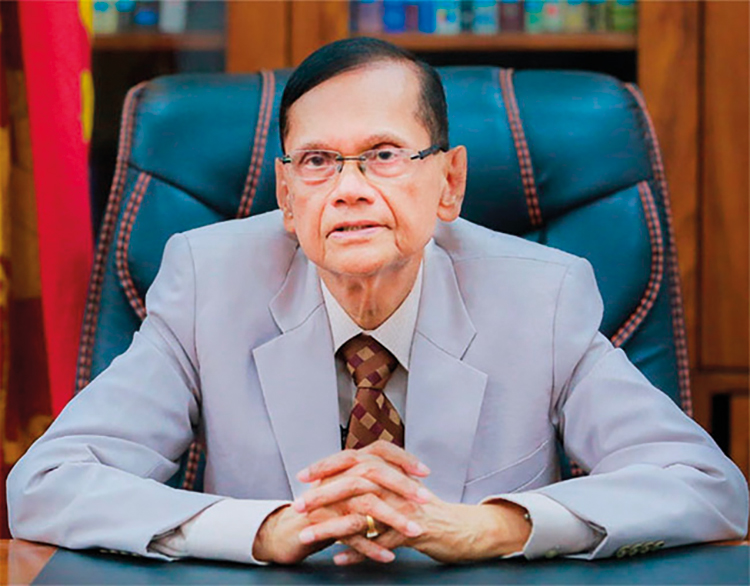
Former Foreign Minister Prof. G. L. Peiris yesterday (9) said that President Anura Kumara Dissanayake should remove Energy Minister Kumara Jayakody unless the minister stepped down on his own.Prof. Peiris, addressing a press conference called by the Opposition, said that Jayakody couldn’t under any circumstance continue to serve as a minister after the Commission to Investigate Allegations of Bribery or Corruption (CIABOC) moved the Colombo High Court against the government member over a previous financial scandal.
Pointing out that Minister Jayakody had been indicted of a corrupt deal struck during the yahapalana regime, Prof. Peiris said it was wrong for the NPP to retain him as a minister, claiming that the offence was not committed during his tenure as a Cabinet minister in the current government.
Prof. Peiris and several other Opposition members dealt with the No-Confidence Motion (NCM) against Jayakody that would be taken up today (10) with the academic calling the vote an acid test for the NPP. Having campaigned on an anti-corruption platform at presidential and parliamentary polls, the NPP couldn’t protect Jayakody though he was widely believed to be close to President Dissanayake.
As the Manager of the Procurement and Import Division of the Ceylon Fertilizer Company, Jayakody is alleged to have committed the offence of corruption, according to CIABOC.
Jayakody has been accused of causing a loss of Rs. 8,859,708 to the State by influencing and exploiting the procurement process.
Following the serving of indictments on 27 March, the judge ordered Jayakody’s release on two personal bail bonds of Rs. 1 million each. The court directed that the defendant’s fingerprints be obtained and a formal report be submitted. The case has been scheduled for a pre-trial conference on 6 May.
Prof. Peiris stressed that the CIABOC action against Jayakody is central to the NCM primarily moved over the irregularities ridden coal procurement process launched in 2025 that caused severe disruption to the power generation. Responding to The Island query after the media briefing, Prof Peiris expressed surprise that the JVP/NPP accommodated a person under investigation by the CIABOC. Having taken an utterly irresponsible decision, the JVP/NPP were now playing down the developing issue, prof. Peiris said.
The entire government parliamentary group faced the prospect of having its image tarnished by defending Jayakody, the former lawmaker said.
Prof. Peiris said that they intended to build a campaign around the issues involving the energy minister to expose the government. With yet another electricity tariff hike in the offing due to the growing demand for thermal generation as a result of coal-fired Lakvijaya power plant’s failure to meet the requirement[RA1] , the energy minister and ministry’s performances have to be examined, Prof. Peiris said.The timely release of the Auditor General’s report on controversial coal procurement should compel the government to decide on the energy minister’s fate or be prepared to face the fallout.
By Shamindra Ferdinando

PM on inspection tour of newly renovated Colombo Central Bus Stand

Israel to hold direct talks with Lebanon but no ceasefire, Netanyahu says

Sun directly overhead Nagawilluwa, Galgamuwa, Sigiriya, Palugasdamana and Mankerni about 12:11 noon today (10)

Showers expected in the Western, Sabaragamuwa, Southern and Uva provinces and in Kandy and Nuwara-Eliya districts after 2.00 p.m

Opposition tells Minister Kumara Jayakody to resign

Coal tender scandal: FSP to move court against illegal deals

‘Dates have the highest sugar content to fight Coronavirus’

Sunday Island 27 December – Headlines

#SundayIsland 17th December – Headlines

Sunday Island – 28th March

Sunday Island Headlines – 21 March

Sunday Island – 21st February – Headlines
-

 Features5 days ago
Ranjith Siyambalapitiya turns custodian of a rare living collection
-

 News5 days ago
Global ‘Walk for Peace’ to be held in Lanka
-

 News3 days ago
Lankan-origin actress Subashini found dead in India
-

 Features5 days ago
Beyond the Blue Skies: A Tribute to Captain Elmo Jayawardena
-

 Features5 days ago
Aspects of Ceylon/Sri Lanka Foreign Relations – 1948 to 1976
-

 Business1 day ago
Hayleys Mobility introduces Premium OMODA C9 PHEV
-

 News1 day ago
AG: Coal procurement full of irregularities
-

 Sports1 day ago
DS to face St. Anthony’s in ‘Bridges of Brotherhood’ cricket encounter