
Foreign News
Japan earthquake: Fires hit quake zone as rescuers race to reach survivors

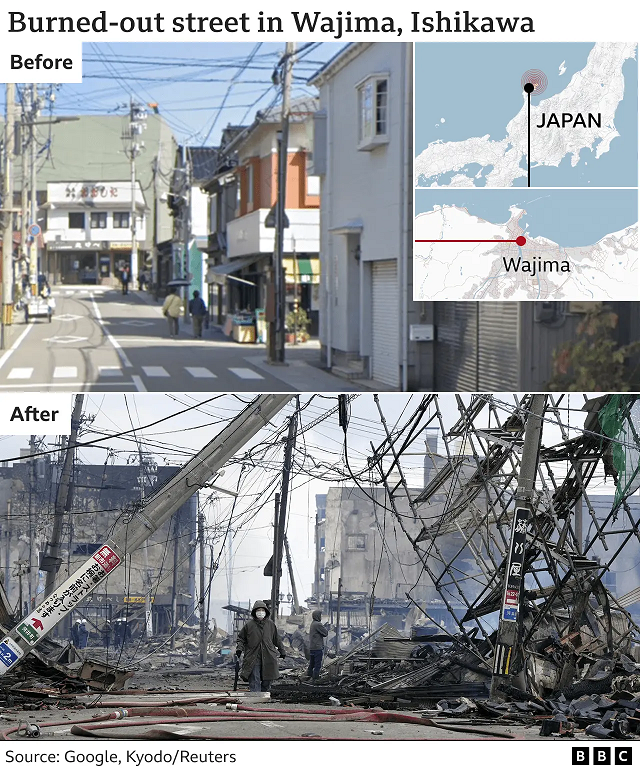
Rescue efforts continue in Japan after at least 62 people were killed in a powerful earthquake that hit the country on New Year’s Day.
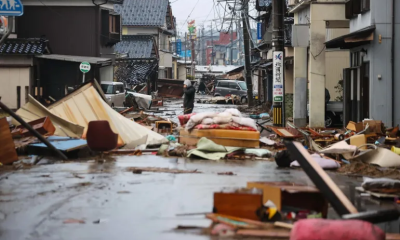
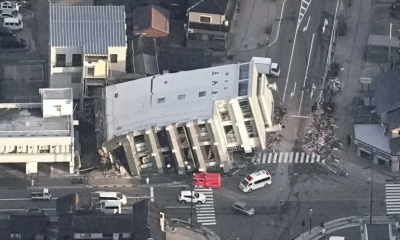
Homes collapsed, buildings caught fire and roads were extensively damaged, hindering the work of rescue services.
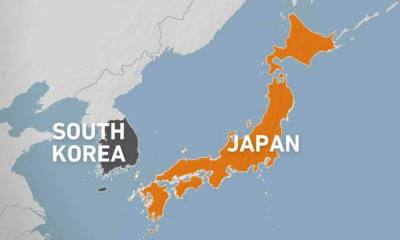
The epicentre of the 7.6 quake was the Noto peninsula, in central Japan.
The Prime Minister, Fumio Kishida, said that emergency services were locked in a “race against time” to rescue survivors. He also said some 3,000 rescuers were trying to reach parts of the Noto peninsula. Helicopter surveys showed many fires and widespread damage to buildings and infrastructure. The city of Wajima, on the northern tip of Noto, has been cut off from land routes.
In the coastal city of Suzu in Ishikawa prefecture, some 90% of homes in the city had been “completely or nearly completely destroyed”, mayor Masushiro Izumiya told news outlet Kyodo.
The Japanese military has been handing out supplies including food, water and blankets for those who have had to vacate their homes. The country’s government has said that 57,360 people had to be evacuated. Tens of thousands of meals are being delivered across the affected region.
Aftershocks continued into Tuesday. The chief cabinet secretary, Yoshimasa Hayashi, warned people to “be alert” for more earthquakes “of an intensity of up to 7” in the coming week. Ishikawa, 155km (96.3 miles) south of the Noto peninsula, experienced a 4.9 quake on Tuesday afternoon.
The major tsunami warnings put out by the Japanese government on Monday were later downgraded. By Tuesday, all tsunami advisories were lifted along the Sea of Japan, meaning there was no longer a risk of such an event. Residents of the affected area of Japan have been sharing their experiences of the quake, which lasted several minutes.
An 82-year-old resident of Nanao, Toshio Iwahama, told the BBC that his wooden home had partially collapsed. He said that despite living through multiple earthquakes, he had never experienced tremors of this magnitude.
Briton Emma Ward, 41, who was on a skiing holiday in the resort village of Hakuba, said the quake had hit “without warning”, prompting her group to take shelter under a table in a cafe. She told the BBC that the intensity of the tremors had caused people to flee the building entirely. “The worst part during the earthquake was not knowing how intense it was going to become. It’s a very frightening experience,” Ms Ward said.
Many also said the quake had reminded them of the devastating 2011 earthquake and tsunami that killed 18,000 people and triggered an accident at a nuclear plant in Fukushima.
In an incident unrelated to the earthquake, a Japan Airlines plane caught fireon Tuesday as it collided with a coastguard aircraft on its way to provide earthquake relief at Tokyo’s Haneda airport. Five people on board the coastguard plane are known to have died, but the Japan Airlines plane’s 379 passengers and crew managed to escape.
Japan is one of the most seismically active nations on Earth, owing to its location on the so-called Pacific Ring of Fire, where many tectonic plates meet. The constant threat of earthquakes has led Japan to develop one of the world’s most sophisticated tsunami warning systems.
(BBC)








Stew, a 35-year-old from Montana, has enjoyed dabbling in sports bets since he downloaded the Kalshi app about 18 months ago.
But just a few weeks ago, after spotting reports of elevated pizza deliveries around the Pentagon during some late-night scrolling, he made a different kind of bet – wagering $10 (£7.50) on the odds that Iran’s Ayatollah Ali Khamenei would be “out” by 1 March.
It was a trade that tested the limits of the kinds of bets Americans are allowed to make.
So-called predictions markets – overseen by firms such as Kalshi – have exploded in popularity over the last year, hosting more than $44bn in trades.
They are rapidly transforming the betting landscape in the US, where sports betting was largely illegal until 2018 and gambling on elections had been off-limits for years until 2024.
While much of the activity on the platforms revolves around sporting matches, users can speculate on any number of questions, including local elections, whether the US central bank will cut interest rates and the year of Jesus Christ’s return.
The apps caught fire during America’s 2024 presidential campaign, after a legal victory cleared the way for them to accept election bets and they showed the odds tilting toward Donald Trump.
But it is more grisly wagers tied to military action involving Iran, Venezuela and Israel that have drawn attention lately.
In theory, such bets run afoul of US financial rules, which bar trading on contracts involving war, terrorism, assassination, gaming or other illegal activities.
But that hasn’t stopped firms from taking in millions of trades.
Critics have seized on the activity, calling for a crackdown on the apps, which they say are facilitating unseemly, and potentially illegal, war profiteering, generating national security risks and enabling opportunities for insider trading and corruption.
“You have now opened up gambling basically on almost anything and it has turned into this very, very gruesome type of thing on the death of a head of state,” said Craig Holman, government affairs lobbyist at the Public Citizen advocacy group, which recently filed a complaint this week over the bets.
Polymarket alone has hosted what Bloomberg estimated as more than $500m in bets related to the Iran war, at one point offering an opportunity to play the odds on the chance of nuclear detonation.
The company, which is headquartered in New York but operates on a limited basis in the US, eventually removed that market after it drew scrutiny on social media but users can still submit bets on questions like when US forces will enter Iran. It did not respond to the BBC’s request for comment.
Kalshi also ended up cancelling the Khamenei market, which had drawn $54m in trades, noting that US-regulated entities are barred from “having a market directly settling on someone’s death”.
The company, which did not respond to a request for comment for this article, has said the war bets are happening on unregulated exchanges outside the US.
Concerns about the war bets have collided with a bigger battle over how prediction market firms should be regulated.
Unlike traditional gaming firms, in which the odds are set by the company, prediction market companies function more like a stock exchange, allowing users to bet against each other on the outcome of future events using “event contracts”.
That design has allowed national financial regulators at the Commodities Futures Trading Commission (CFTC) to claim oversight.
But critics say they are sports betting and gambling operations trying to dress up as financial exchanges in a bid to avoid stricter rules and taxes faced by traditional gaming firms, which are regulated by the states.
Disagreement over who should be policing the apps has sparked dozens of legal battles across the US, as states start to assert their right to regulate the companies like other gaming firms, rather than leave oversight up to the CFTC.
Even some Republicans have voiced concerns, as traditional gaming firms have also stepped up their lobbying, enlisting a savvy former Trump official, Mick Mulvaney, to plead their case in Washington.
“Nobody is saying that gambling shouldn’t be allowed,” says Ben Schiffrin, director of securities policy at Better Markets, which advocates for financial reforms. “What the states are saying and other advocates are saying is things that are gambling should be regulated as gambling.”
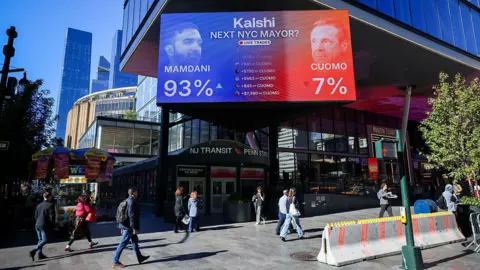
Suspiciously timed bets related to military operations involving Israel, Venezuela and Iran have added fodder to those calls.
In recent weeks, Democrats have introduced legislation to bar federal officials from trading event contracts, pointing to incidents such as when a gambler new to Polymarket made nearly half a million dollars on the capture of Venezuela’s president just before it was officially announced.
They have also issued alerts to consumers about the risks of insider trading and written to the administration urging it to more clearly enforce the rules against wagering on war.
But the odds of a crackdown remain long.
Though the Biden administration had taken a hard line on the sector, proposing to ban sports and politics-related event contracts, that regulatory drive stalled after a court defeat and the 2024 election of Donald Trump, who came to power promising a lighter hand.
Last month, the CFTC said it would withdraw the proposed ban on sports and election related contracts.
It has also taken the side of prediction market firms in the legal fights they are facing in the states, which Michael Selig, Trump’s chairman of the Commodity Futures Trading Commission, condemned in a recent opinion piece as “overzealous”.
He argued that event contracts served “legitimate economic functions”, allowing businesses to hedge against risks triggered by events.
“It’s clear that Americans like the product and want to participate,” he said, while also emphasising that platforms must still follow rules.
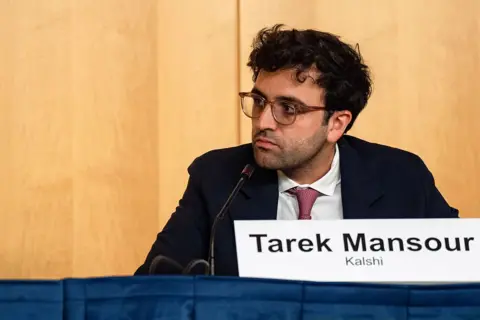
As the pressure mounts, Polymarket has announced steps to more formally police suspicious activity, while Kalshi, which advertises its status as a “regulated exchange”, has become more vocal about what it is doing to combat insider trading.
It recently announced punishments in two cases of insider trading and disclosed that it had opened up 200 investigations over the last year.
The company also ultimately cancelled the $54m market around Khamenei’s ouster.
In series of statements explaining the decision, the firm said it did not “list markets directly tied to death”, noting that its terms had included that carve-out.
It promised to make the terms more clear from the get-go, saying it had “learned a lot” from the incident.
But in an indication of growing pains, the decision still sparked outrage among users, including Stew, who said the firm had initially “buried” those rules and its explanation seemed disingenuous, given that there were “only a handful of realistic methods” for Khamenei to go.
Stew, who received a refund, said he wasn’t sure regulation was the answer, but he was sympathetic to the idea that the debate seemed to be stumbling around semantics.
“They call it contract trading, which I guess technically speaking, that’s what it is. But if we’re all being honest here, it’s still betting,” he said.
[BBC]
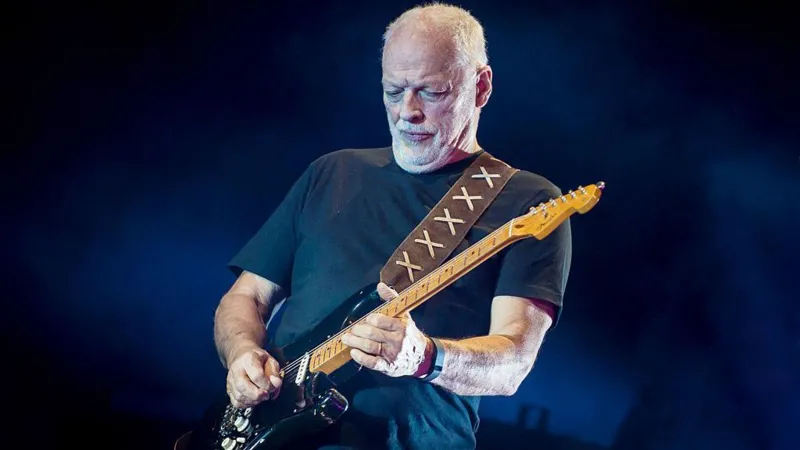
A guitar used by David Gilmour on six of Pink Floyd’s albums has sold for a record $14.6m (£10.9m), making it the most expensive guitar ever sold, auction house Christie’s has said.
Gilmour played the 1969 Fender Stratocaster, nicknamed the ‘Black Strat’, on all of the British rock band’s albums between 1970 and 1983, including The Dark Side of the Moon, Wish You Were Here, and The Wall.
The guitar sold to an unnamed buyer after 21 minutes of bidding, as part of a rock memorabilia auction in New York on Thursday.
A piano owned by the Beatles’ John Lennon also sold at the auction for $3.2 (£2.5m), believed to be the highest fee ever paid for a piece of Beatles memorabilia.
(BBC)

China has approved a sweeping new law which claims to help promote “ethnic unity” – but critics say it will further erode the rights of minority groups.
On paper, it aims to promote integration among the 56 officially recognised ethnic groups, dominated by the Han Chinese, through education and housing. But critics say it cuts people off from their language and culture.
It mandates that all children should be taught Mandarin before kindergarten and up until the end of high school. Previously students could study most of the curriculum in their native language such as Tibetan, Uyghur or Mongolian.
The law was approved on Thursday as the annual rubber-stamp parliamentary session drew to an end.
“The law is consistent with a dramatic recent policy shift, to suppress the ethnic diversity formally recognised since 1949,” Magnus Fiskesjö, an associate professor of anthropology at Cornell University said in a university report.
“The children of the next generation are now isolated and brutally forced to forget their own language and culture.”
However, Beijing argues that teaching the next generation Mandarin will help their job prospects.
It also says the law for “Promoting Ethnic Unity and Progress” is crucial for promoting “modernisation through greater unity”.
The law was voted and passed on Thursday at the National People’s Congress in Beijing, which has never rejected an item on its agenda.
The law also provides a legal basis to prosecute parents or guardians who may instil what it described as “detrimental” views in children which would affect ethnic harmony and it calls for “mutually embedded community environments” which some analysts believe could result in the break up of minority-heavy neighbourhoods.
The Chinese government started to push for what it describes as the “sinicisation” of minority groups in the late 2000s and create a more unified national identity by assimilating ethnic groups into the dominant Han culture.
Han Chinese make up more than 90% of the country’s 1.4 billion people.
Beijing has long been accused of restricting the rights of minority ethnic groups in regions like Tibet, Xinjiang and Inner Mongolia.
Critics say assimilation has often been forced on people in these places – a state-led policy that has accelerated under Chinese leader Xi Jinping who has taken a harder line on dissent and protests, especially in areas home to minority ethnic groups,
In Tibet, the authorities have arrested monks, and taken control of monasteries to ensure they do not worship the Dalai Lama.
When the BBC visited a monastery that had been at heart of Tibetan resistance in July last year, monks spoke of living under fear and intimidation.
“We Tibetans are denied basic human rights. The Chinese government continues to oppress and persecute us. It is not a government that serves the people,” one of them told us.

In Xinjiang, human rights groups have documented the detention of a million Uyghur Muslims in what the Chinese government calls camps for “re-education”, while the UN has accused Beijing of grave human rights violations.
The BBC’s reporting from 2021 and 2022 found evidence supporting the existence of detention camps, and allegations of sexual abuse and forced sterilisation, which Beijing denies.
In 2020, ethnic Mongolians in northern China staged rare rallies against measures to reduce teaching in the Mongolian language in favour of Mandarin.
Parents even held children back in protest at the policy as some ethnic Mongolians viewed the move as a threat to their cultural identity. Authorities moved quickly to crackdown on what it saw as dissent.
The Communist Party says it embraces different ethnicities. The country’s constitution states that “each ethnicity has the right to use and develop their own language” and “have the right to self-rule”.
But critics believe this new law will cement Xi’s push toward assimilation.
“The law makes it clearer than ever that in Xi Jinping’s PRC non-Han peoples must do more to integrate themselves with the Han majority, and above all else be loyal to Beijing,” Allen Carlson, an associate professor of government at Cornell University said, referencing China by the initials of its official name.
This focus on development and prosperity is “telling”, Professor Ian Chong of the National University of Singapore told the BBC.
“It is easy to read this language as meaning that minority languages and cultures are backward and impediments to advancement.”
Xi’s approach towards minorities is “consistent with his idea of creating a great and strong Chinese nation with a northern Han core… minorities are seen as branching off from that core, and hence in some ways derivative,” he adds.
“In practice, this has prompted concerns about further rounds of increasing control, diminution, and even crackdowns on minority cultures and languages.”
[BBC]

A new curriculum will be introduced for preschools in 2027, while steps will also be taken to train teachers accordingly – PM

Be mindful of the accuracy of information before sharing it on social media – PM

Heat Index at ‘Caution level’ at some places in the Western, Sabaragamuwa, Southern and North-western provinces and in Monaragala, Mannar, Anuradhapura and Vavuniya districts

Showers expected at several places in the Central, Sabaragamuwa, Southern, North-western, Eastern and Uva provinces after 2.00 pm.

Fuel rationing begins: Police deployed as queues return

GMOA warns fuel quota could disrupt health services

‘Dates have the highest sugar content to fight Coronavirus’

Sunday Island 27 December – Headlines

#SundayIsland 17th December – Headlines

Sunday Island – 28th March

Sunday Island Headlines – 21 March

Sunday Island – 21st February – Headlines
-

 News6 days ago
Prof. Dunusinghe warns Lanka at serious risk due to ME war
-

 News4 days ago
Historic address by BASL President at the Supreme Court of India
-

 Sports5 days ago
Royal start favourites in historic Battle of the Blues
-

 Sports4 days ago
The 147th Royal–Thomian and 175 Years of the School by the Sea
-

 Business5 days ago
BOI launches ‘Invest in Sri Lanka’ forum
-

 News5 days ago
CEBEU warns of operational disruptions amid uncertainty over CEB restructuring
-
 News4 days ago
Power sector reforms jolted by 40% pay hike demand
-

 Features5 days ago
Indian Ocean zone of peace torpedoed!