
News
Japan donates large shipment of canned fish to Lanka

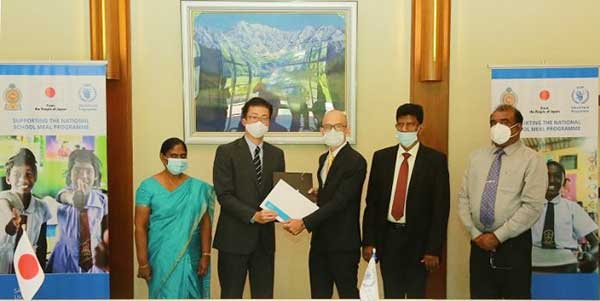
Kitamura Toshihiro, Charge d’Affaires ad interim of Japan to Sri Lanka and Andrea Berardo, WFP Deputy Country Director of Sri Lanka, sign the Exchange of Notes for the donation of canned fish, in the presence of N.H.M. Chitrananda, Secretary of the Ministry of Education, L.M.W. Darmasena, Additional Secretary, School Activities of the Ministry of Education and Renuka Peiris, Director, Health and Nutrition of the Ministry of Education.
The Government of Japan has donated a large shipment of canned fish, weighing 388 MT and worth JPY 300 million (LKR 519 million), to the United Nations World Food Programme (WFP) and the Government of Sri Lanka, to meet the protein needs of school children covered by the national school meal programme.
The donation was formalised at a ceremony held at the Japanese Ambassador’s residence in Colombo, at which the Exchange of Notes were signed by Kitamura Toshihiro, Charge d’Affaires ad interim of Japan to Sri Lanka and Andrea Berardo, WFP Deputy Country Director of Sri Lanka. The event was presided over by N.H.M. Chitrananda, Secretary of the Ministry of Education, L.M.W. Darmasena, Additional Secretary, School Activities of the Ministry of Education and Renuka Peiris, Director, Health and Nutrition of the Ministry of Education.
“The Governments of Sri Lanka and Japan have had a strong bond with a mutually supportive relationship between the people of our countries for many years,” says Kitamura Toshihiro, Charge d’Affaires ad interim of Japan to Sri Lanka.
“The Government of Sri Lanka and its people demonstrated their solidarity to Japan in the immediate aftermath of the Great East Japan Earthquake and Tsunami in March 2011, through a cash donation of US$ 1 million and 3 million tea bags. The canned fish provided by Japan is sourced from the areas supported by Sri Lanka, as an extension of the continuous supply provided by Japan, reflecting our appreciation of our Sri Lankan friends for lending a hand to Japan in times of need. We will continue to support Sri Lanka, in the spirit of unity and solidarity in our joint battle against the effects of Covid-19”.
Through this agreement, the Government of Japan commits to making available to the Government of Sri Lanka – through WFP – 388 MT of canned fish, enough for the preparation of 19 million nutritious meals, rich in protein, for 270,000 school children. This latest contribution ensures that canned fish will continue to be offered to school children, for the period 2021 – 2022, in addition to the previous consignment of canned fish supplied by the Government of Japan which will last up to mid next year.
“Nutritious meals are the foundation to good health, especially for children,” says Andrea Berardo, WFP Deputy Country Director in Sri Lanka. “This generous contribution from Japan comes at a crucial time when so many Sri Lankan families are hard hit by COVID-19 with reduced incomes and job loss. Fish is a great source of protein and by including it in school meals, we can be certain that children are getting the right nutrients they need to grow and develop.”
Lack of adequate protein intake could result in several health issues amongst children, including slow growth, poor concentration and decreased immunity. In Sri Lanka, nutrition surveys have indicated that 40% of primary-level school children were too thin before Covid-19. Consumption of protein-rich foods such as fish is vital to help children meet their dietary requirements.
“The Government of Sri Lanka has been conducting the National School Meal Programme for several decades,” said the Secretary of the Ministry of Education, N.H.M. Chitrananda. “The programme was developed with the objective of ensuring that children are healthy and can optimally benefit from educational opportunities provided to them. We are thankful to the Government of Japan and WFP for providing canned fish to supplement the school meal programme and for supporting us in enhancing the nutritional status of school children.”
The National School Meal Programme which WFP has supported since 2003 was disrupted by Covid-19-induced school closures in March 2020. The Government of Japan, through WFP, has been supporting the programme since 2011, with approximately 1,500 MT of canned fish worth more than JPY 1 billion, to supplement school meals twice a week, adding diversity, nutrition and taste. WFP, together with the Government of Japan, will continue to support the Government of Sri Lanka in its efforts to scale up and enhance the National School Meal Programme.


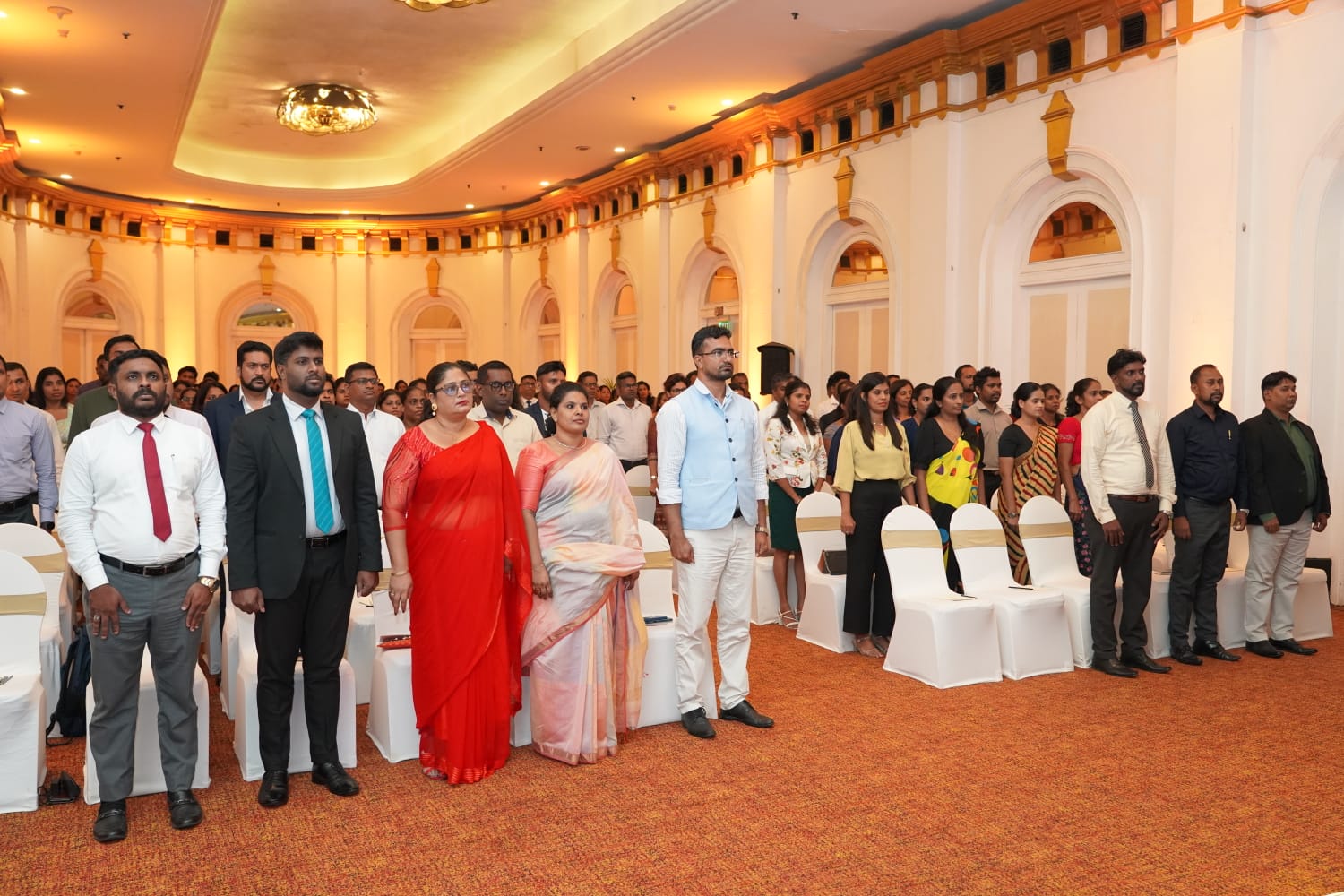
Sri Lankan professionals trained in India under the Indian Technical and Economic Cooperation (ITEC) programme have formed a national alumni association. The Sri Lanka ITEC Alumni Association was formally launched at its inaugural meeting on Thursday, 8 October 2026, at the Grand Crystal Ballroom of Hotel Taj Samudra, Colombo.
The Association is a unique initiative of the Education Wing of the High Commission of India in Sri Lanka. The Wing oversees India’s education and scholarship programmes for Sri Lanka, including the ITEC programme. The initiative was led by Sandeep Chaudhary, First Secretary (Education), High Commission of India. His vision and support were key to bringing Sri Lanka’s ITEC alumni together under one platform for the first time.
The Government of India launched ITEC in 1964, and it has since become one of the cornerstones of India’s development partnership with countries of the Global South. The programme is fully funded by the Government of India and offers civilian training in a wide range of fields, including public administration, finance, information technology, engineering, management, agriculture, health and the environment. Courses are delivered at leading Indian institutions. Over six decades, ITEC has trained officials and professionals from more than 160 partner countries. Sri Lanka has been one of its most active participants, and thousands of Sri Lankan public servants and professionals have benefited from the programme.
The new Association brings these alumni together from government, semi-government and private sector institutions. Its aims are to foster professional networking, knowledge sharing, capacity development and community service. It will also encourage collaboration among alumni and guide and support future Sri Lankan participants in ITEC programmes. In doing so, the Association seeks to deepen the long-standing friendship and people-to-people ties between Sri Lanka and India.
At the meeting, members elected an Executive Committee to lead the Association. Ms. Gayathri Suveendran was elected President. The other office-bearers are:
Vice Presidents: P.B. Hasith Sandaruwan and Leo Darshan
General Secretary: Anupa Weerarathne
Assistant Secretary: Vimukthi Dushantha
Treasurer: S. Rubadharshan
Assistant Treasurer: I. Ravikumar
Four sectoral committees will carry the Association’s work forward:
Establishment, Administration and Finance: Prof. M.I.M. Mujahid Hilal, M. Farwis, Milroy Aluthwatta, W.P. Suraweera, M.S. Thayaraj and Asinsala Senevirathne.
ICT, Digital Transformation and Innovation: Sujah Ameer, Danushka Diunugala, T.M.M. Perera, Tharanga, M.K.H.P. De Silva, Pubuditha Madushan and Arulkumaran Mahalingam.
Coordination, Organising and Legal Affairs: T. Srirajeevan, Theja Jayathilaka, Eng. A. Lingeswaran, Chaminda K. Uda, Kumuduni, S. Sinthujan and Ananda Arasu.
Media, Public Relations and Publications: Rahul Samantha Hettiarachchi, Dr. Gayani Kaushalya, Anandi Premarathne, Vimukthi Dushantha, R. Suhanthan and Shyam Nuwan Ganewatta.
The founding of the Association marks a significant milestone for the ITEC community in Sri Lanka. It turns individual training experiences in India into a shared national resource, and it adds a new professional dimension to the enduring partnership between the two neighbours.
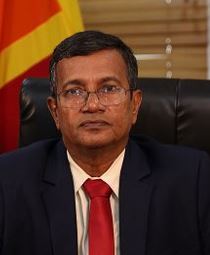
The government is taking all necessary measures to protect the Diyagama forest area located in Homagama within the Colombo District, Deputy Minister of Environment, Anton Jayakody,
stated on Friday (9) while delivering a special address in Parliament.
Originally an abandoned plot of land, it has regenerated naturally over the past two decades into a sensitive ecosystem bearing the characteristics of a rainforest. With rapid urbanization, numerous wildlife species displaced across
the Colombo District have now migrated to and found sanctuary in this ecological haven.
Citing field research conducted by a team of scholars from the University of Colombo—including Prof. S.W. Ranwala, Prof. Ileperuma, and Prof. Abeykoon—the Deputy Minister pointed out that nearly 120 species of flora and fauna have been identified in the area. Among them are species endemic to Sri Lanka, as well as rare wildlife such as the red slender loris and pregnant animals close to giving birth, clearly testifying to the rich biodiversity thriving within this habitat.
Located adjacent to the Mahinda Rajapaksa International Stadium and the Japan–Sri Lanka Friendship Baseball Ground, this green zone serves as a vital ecosystem for absorbing carbon
dioxide emitted by athletes and residents in the vicinity.
In addition to directly contributing toward Sri Lanka’s commitments under the Paris Agreement to achieve net-zero emissions by 2050, the forest also functions as a vital catchment area feeding into the Bolgoda water basin.
Accordingly, following the approval of the Colombo District Coordinating Committee (DCC) with the participation of the Divisional Secretary, government officials, and environmentalists, steps will be taken to submit a Cabinet paper to formally declare this valuable woodland a forest reserve, the Deputy Minister emphasized.

Stranded Iranian ships off SL:
Iran has reminded Sri Lanka that as a member of the UN the government is obligated to fulfil its responsibilities.
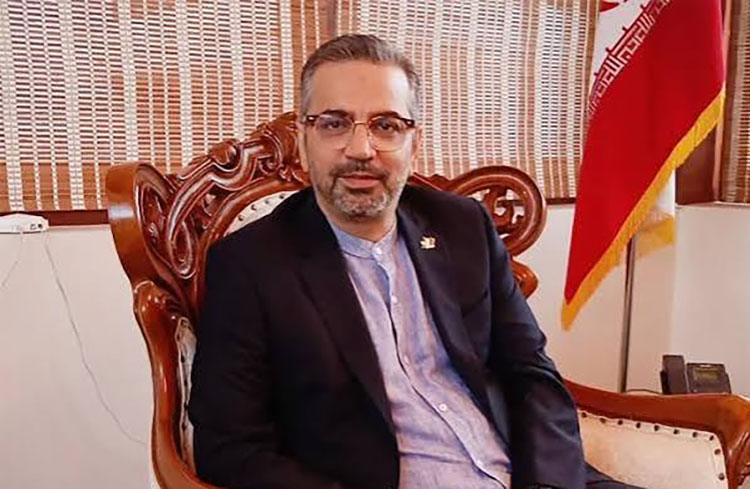
Iranian Ambassador Alireza Delkhosh in Colombo said that in terms of the Convention on the Law of the Sea (Article 98) as well as SOLAS and SAR Conventions, Sri Lanka couldn’t refrain from providing the needs of the Iranian vessels stranded in its Exclusive Economic Zone (EEZ).
Ambassador Delkhosh was responding to a recent Foreign Minister Vijitha Herath’s declaration that neither the government nor private companies would provide food, water and medicine to these ships.
The Ambassador questioned how Sri Lanka accepted illegal and unilateral US sanctions against Iran, contrary to the JVP’s much touted historic anti-imperialistic manifesto.
The Iranian vessels are believed to be under constant US surveillance to prevent any supplies from getting through.
The Iranian Embassy made these comments as USS Tulsa (LCS 16), an Independence-variant littoral combat ship arrived in Colombo where it received supplies. The US Embassy declared that; ” this goodwill visit provides an opportunity to strengthen ties between US and Sri Lankan sailors while the ship refuels and resupplies before continuing its mission in the Indo-Pacific.”
Ambassador Delkhosh said that even if the above-mentioned Conventions weren’t adhered to, there existed, what he called, unwritten yet binding conventions that compelled Sri Lanka to assist. “It is the Convention of not forgetting past friendship and Convention of Humanitarian Actions.”
The Iranian envoy emphasised that these conventions that exempt no country from extending humanitarian aid, especially Sri Lanka, which, throughout its recent history, has been a recipient of Iranian assistance.
A section of the international media reported that Sri Lanka faced the risk of secondary sanctions from the United States if Sri Lanka allowed supplies to reach the stranded Iranian vessels. Twenty vessels are believed to be stranded in EEZ.
Former Sri Lankan Ambassador in Tehran, M.M. Zuhair, recalled how the Iranian government swiftly and decisively provided assistance, amidst western efforts to jeopardise the military campaign, by undermining the national economy.
As the war entered a crucial stage, the government found itself in an extremely difficult situation. Following talks at the highest level, Iran provided Sri Lanka with an interest-free and concessionary oil credit facility worth $1.05 billion to help obtain crude oil requirements, President’s Counsel Zuhair said.
If not for the rolling credit line, easing severe foreign exchange pressures, the Rajapakasa government could have faced an insurmountable challenge, the former diplomat said, adding that, unfortunately, those in decision-making positions now have forgotten the past. (SF)

Sri Lanka ITEC Alumni Association formally launched

Measures underway to protect Diyagama Forest as a Reserve — Deputy Minister of Environment

Showers or thundershowers will occur in most parts of the island after 1.00 p.m.

NPP govt. reminded of its responsibilities as US warship leaves Colombo

CERT: Beware of foreign Uni. scams on social media

Shiranthi receives treatment at National Eye Hospital

‘Dates have the highest sugar content to fight Coronavirus’

Sunday Island 27 December – Headlines

#SundayIsland 17th December – Headlines

Sunday Island – 28th March

Sunday Island Headlines – 21 March

Sunday Island – 21st February – Headlines
-

 News5 days ago
Geneva takes up Sallay’s case and govt. ignores opportunity to answer accusations
-

 Features6 days ago
The first woman in the foreign service or Ceylon Overseas Service it was then called
-

 News6 days ago
Nearly 20 Iranian tankers stranded off Lanka amid US sanctions
-

 Features4 days ago
Preventing grievances from becoming communal
-

 Sports2 days ago
Nissanka absence opens door for Sri Lanka’s young guns
-

 Features5 days ago
Sri Lanka Cricket Bill: Governance reform is not yet a cricket strategy
-

 News3 days ago
Gnansara Thera to be assigned to prison printing section: Officials
-

 News6 days ago
Lanka enters new phase of prosecutions as hurdles clear