
Latest News
Jamie Smith digs deep in the gloom as Asitha Fernando keeps Sri Lanka in the contest

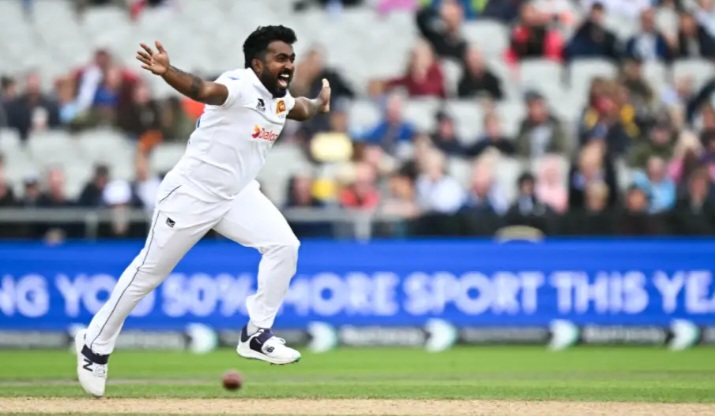
Asitha Fernando produced a compelling display of all-purpose seam and swing bowling, while Prabath Jayasuriya chipped in with two bewilderingly brilliant deliveries in an otherwise steady display of left-arm spin, as Sri Lanka fought gamely to stay in touch on a gloomy second day of the first Test at Emirates Old Trafford.
By the close, England were indebted to their rookie keeper, Jamie Smith who justified his promotion to No. 6 with a hard-earned 72 not out, his third half-century in five innings since taking over from his Surrey team-mate Ben Foakes at the start of the summer. Harry Brook added another fifty of his own as England recovered from a dicey 125 for 4 to close on 259 for 6, with a slender lead of 23 in the bank.
As had been the case throughout the West Indies series earlier in the summer, the impression after two days of action is that England should yet close out this contest with some ease, but the quality and spirit of the visitors’ bowling has forced them to graft with rather more diligence than might have been the case in previous incarnations of the Bazball era. Asitha in particular was superb throughout his 14 overs, spread across three key spells, including an incisive mid-innings bout of reverse-swing that belied the dank conditions.
After sweating under the covers for several hour during a rainy morning in Manchester, the Old Trafford pitch was ripe for seam bowling when play finally got underway at 1.15pm, and Asitha was primed to cash in. With his bustling approach and a commitment to a full length, he posed problems from the outset, under still-dense cloud cover and with the floodlights in full beam.
His performance went into overdrive from the first ball of his second over, when Dan Lawrence was pinned on the pad and given out lbw by umpire Paul Reiffel. Although that decision was successfully overturned, with the ball shown to be skimming over the bails, the information was stored away and perfectly processed by the bowler.
Two balls later, and now with Ben Duckett on strike, Asitha fired the ball in a good two feet fuller, and was this time the successful reviewee, with the ball shown to be both pitching on and hitting leg stump as Duckett was turned inside-out on his attempted flick across the line.
And in his very next over, Asitha served up the piece de resistance of his new-ball spell, an exceptional wobble-seam delivery, pitching half a foot fuller than the Lawrence ball, and straightening off the pitch to smash into the top of Ollie Pope’s off stump. England’s captain was gone for 6, and at 40 for 2 in the ninth over, England had a bit of a rebuild to undertake.
Root is no stranger to skinny top-order scorelines, of course, and as he bedded in for the long haul, it was Lawrence who initiated England’s counterattack, with a brace of forceful whips through the leg side as Asitha strayed in length. But, having scored just four of his 30 runs through the off side, his vulnerability in the channel was superbly exploited by Vishwa Fernando, who nicked him off after a change of ends, using the breeze from the James Anderson End to push a lifter across his bows from his left-arm angle.
Despite the conditions, Sri Lanka were able to find some appreciable reverse-swing off a typically abrasive Old Trafford pitch, meaning that Root and Brook had to be on their mettle even as their 58-run stand clipped along at more than five an over. Milan Rathnayake, Sri Lanka’s first-day hero, was picked off for three fours in an over as he strained for that swinging full length, but it was Asitha’s return to the attack that would prise the most vital wicket of the day.
Root had reached 42 from 56 balls in another understated display of touch and timing when he was undone in expert fashion, climbing into a wider line from Asitha while still playing for the inswing that had been the feature of his over to that point. This ball, however, held its line and skidded straight on, and Dinesh Chandimal scooped up the low edge to leave England wobbling at 125 for 4.
Brook, however, kept the foot down in his familiarly forceful manner, driving with heavy timing whenever the ball was over-pitched, and working the gaps well, with Sri Lanka’s field still veering towards the defensive given England’s reputation for boundary-hunting. He duly rattled along to a 59-ball half-century, his 14th in just 25 Test innings, and if it was beginning to feel as though something special would be needed to dislodge him, then Jayasuriya obliged shortly after tea.
Sri Lanka’s left-arm spinner had been diligent without being threatening for much of his day’s work, when out of the blue, he served up something unplayable: a perfectly pitched ripper that gripped and bounced on middle and leg to clip the top of off. Brook could only blink in astonishment – as, indeed, would Chris Woakes, some 18 overs later, when he fell in near-identical fashion, to almost the only other spinning delivery to deviate from the straight all day.
Between those two moments, however, there was Smith, with the third fifty of his fledgling career, and unquestionably the hardest-earned yet. He was forced to graft against the swinging ball early in his innings, although one massive straight six off Jayasuriya signalled his refusal to be cowed, but it was the mid-point of his innings that displayed his savvy – in particular a relative grind through the 40s, after Rathnayake had induced two inside-edges in the space of three deliveries with his probing fourth-stump line outside the rookie’s eyeline.
Woakes was the ideal ally for a defensively minded rebuild, as England – a batter light in Ben Stokes’ absence – focused on batting long, rather than rushing into a lead. Sri Lanka’s tactics arguably failed to adapt to the dominance that their bowlers were exerting in this period, although in reducing the pair to a run-rate of less than three an over in their 52-run stand, they succeeded in keeping themselves in the game.
And when the light began to fail, only minutes after Woakes’ extraction, there was never any thought of Sri Lanka bowling spin in the gloom for the sake of filling out the overs, as had been England’s approach at the same stage on day one. Dhananjaya de Silva marched his players straight off for the pavilion, with six wickets in the bank, and the prospect of a night’s rest for his quicks before they continue their quest to stay in touch with a quietly engrossing contest.
Brief scores: (stumps day 2)
England 259 for 6 in 61 overs (Dan Lawrence 30, Joe Root 42, Harry Brook 56, Jammie Smith 72*, Chris Woakes 25; Prabath Jayasuriya 2-58, AsithaFernando3-68, VishwaFernando 1-51) lead Sri Lanka 236 in 74 overs (Kusal Mendis 24, Dhananjaya de Silva 74, Milan Rathnayake 72; Chris Woakes 3-32, Gus Atkinson 2-48, Shoaib Bashir 3-55) by 23 runs
(Cricinfo)

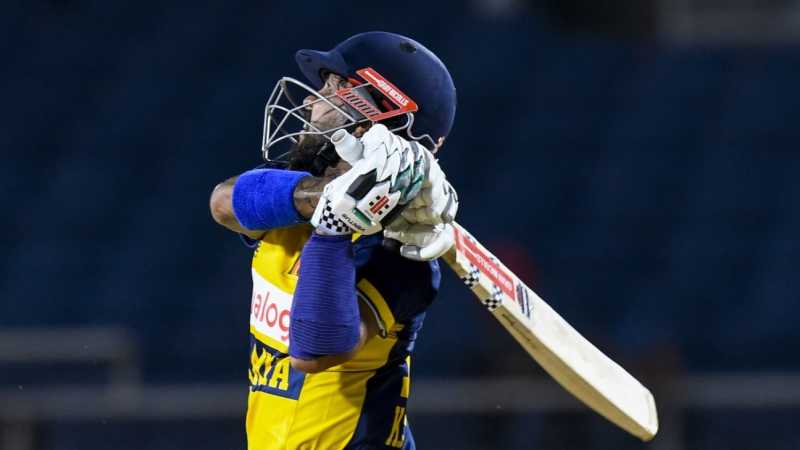
Kusal Mendis and Binura Fernando have been ruled out of Sri Lanka’s upcoming T20I series against England, with the SLC saying that the two were “still undergoing rehabilitation” after injuries picked up at the 2026 Lanka Premier League.
The update came just over a day after the two were named in the 16-member squad, with Kusal retained as captain of both the T20I and the ODI sides.Charith Asalanka, who had returned to the vice-captain’s position for the series, will now lead the side in the T20Is. Though Kusal hasn’t been ruled out of the ODIs just yet, were he to miss out, Asalanka, as the designated vice-captain, might step in there too.
Kusal has been out of action since July 19 with a right hamstring injury, while Binura hasn’t played since August 5, SLC putting his absence down to a back injury.
Pavan Rathnayake, the 24-year-old top-order batter, has replaced Kusal in the T20I touring party, while Dilshan Madushanka, the fast bowler who was in the squad for the Tests against India recently but didn’t get to play, has come in for Binura.
(Cricinfo)
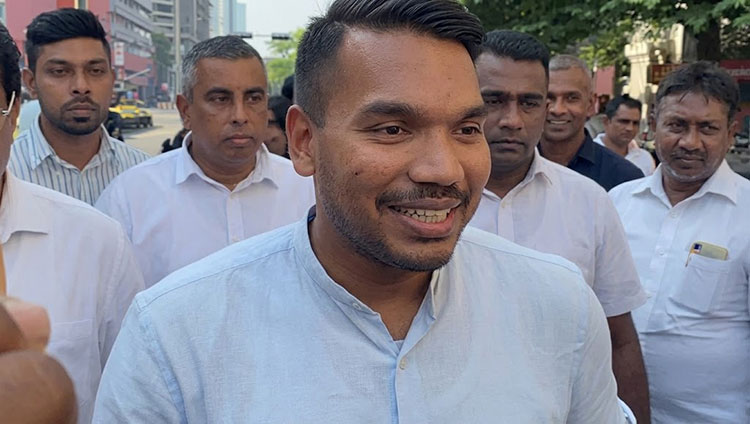
Sri Lanka Podujana Peramuna (SLPP) Member of Parliament Namal Rajapaksa has been arrested by the Commission to Investigate Allegations of Bribery or Corruption (CIABOC).
Namal Rajapaksa had been summoned by CIABOC to provide a statement in connection with investigations into the controversial Airbus deal. He was subsequently arrested by CIABOC after recording his statement for over 5 hours.
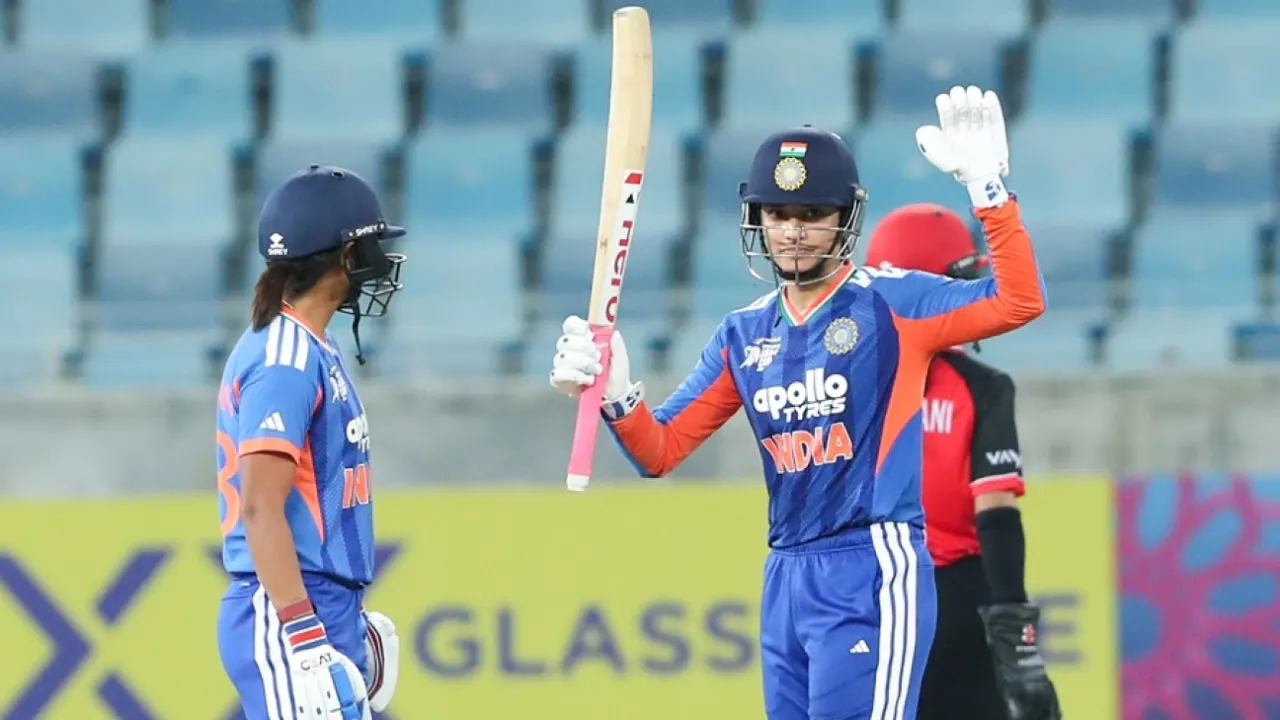
Smriti Mandhana filled her batting coffers with her second T20I century, along the way surpassing Mithali Raj for the record for most runs in women’s internationals, to help India secure a second straight win on Thursday night in Dubai.
Hong Kong’s nerves showed on the field when they fell flat at the first sign of attack from India’s batters, and their timid approach in the chase further exposed the gulf in quality and experience. In the end, they lost by 137 runs – 13 more than what Mandhana managed on her own.
A second straight loss meant Hong Kong will only have some pride to play for, as a berth in the next round is now out of the equation.
India’s cautious start
At the end of five overs, India were 38 without loss – not concerning, but not dominating enough either. They took a while to suss up the lack of pace from the bowlers. Mandhana hogged much of the strike; Shafali Verma faced just six balls in the first five overs. Hong Kong couldn’t have been happier at having kept a lid on the scoring.
Shafali steps up
After a tight first over that went for just seven, offspinner Maria Lamplough was clobbered by Shafali for two fours and two sixes in a 22-run over that helped India take off.
Lamplough struggled for consistency and kept looping the ball up, with Shafali needing no second invitation. The first of the two sixes was a shovel over deep midwicket; the next even better – lofted inside-out over deep extra cover.
Shafali’s brief surge ended on 28 in the eighth over, when Marina took an excellent catch running in and diving full stretch from long-on off Ruchita Venkatesh’s bowling. By then, the openers had put on 74.
Mandhana prances towards record century
As new No. 3 Pratika Rawal took a while to gauge the pace of the surface, Mandhana reached her half-century – her 36th in T20Is – off 40 deliveries with a flat six over deep square. Mandhana’s default setting for much of this period was moving over to the off-side to set herself up for several variations of the slog in the arc between wide long-on and deep square.
Her next fifty came off just 18 deliveries. The century could’ve been nipped in the bud had she been taken at deep square leg in the 16th over off Siu Wai, but she accelerated even more soon after bringing up her century that helped her climb atop the list for most international hundreds in women’s cricket.
In the 18th over, she clobbered Venkatesh for three consecutive sixes, and in the same over also went past Mithali’s record for most international runs. This helped India finish strongly, the second half of their innings brought them 107 despite losing a clutch of wickets.
Nandani’s dream run continues
Coming off a three-for against Thailand, Nandani Sharma’s seam presentation and control was immaculate with the new ball as Hong Kong crawled to 4 for 1 in four overs. The wicket, off Mariko Hill, one of their most experienced batters, came off a superb in-ducker on the back of three successive away-swingers. Nandani added one more wicket to her kitty to finish with 2 for 6 off her three overs.
The collapse
The highest partnership of the innings was the 27 between Yasmin Daswani and Natasha Miles for the second wicket; a period where they hardly threw any caution to the wind, choosing instead to bat overs and gain some match time against an opponent they were playing for the first time in 14 years.
The partnership ended when Daswani’s attempt to heave into the leg side was intercepted by a leaping Bharti Fulmali at midwicket to give Deepti Sharma a wicket. Six balls later, Miles was out attempting to cut Prema Rawat’s sharp leg break, nicking behind to Richa Ghosh.
That was the start of the collapse, as India’s spinners closed in, each one getting onto the scorecard with a bagful. There were eight single-digit scores, with 15 the highest. They lost their last five wickets in 11 deliveries, collapsing from 54 for 5 to 56 all out.
India couldn’t have asked for an easier route into the semi-finals.
Scores:
India Women 193 for 5 in 20 overs (Smriti Mandhana 124, Shafali Verma 28, Pratika Rawal 10, Richa Gosh 11, Harmanpreet Kaur 10; Marina Lamplough 2-46, Ruchitha Venkatesh 1-30, Joyleen Kaur 1-12) beat Hong Kong Women 56 in 16.2 overs (Natasha Miles 15, Yasmin Daswani 11, Marina Lamplough 14; Nandani Sharma 2-06, Shree Charani 2-16, Deepti Sharma 3-09, Prema Rawat 2-12) by 137 runs
[Cricinfo]

Prime Minister of Sri Lanka holds a bilateral meeting with Minister for Education and Skills Development of Bhutan

Prime Minister Meets His Majesty the King of Bhutan

Kusal Mendis, Binura Fernando ruled out of T20I series in England

SLPP MP Namal Rajapaksa arrested by CIABOC

Devapathiraja clinch U15 Division I title with 33-run win over Royal

Mandhana’s record ton powers India into semi-finals

‘Dates have the highest sugar content to fight Coronavirus’

Sunday Island 27 December – Headlines

#SundayIsland 17th December – Headlines

Sunday Island – 28th March

Sunday Island Headlines – 21 March

Sunday Island – 21st February – Headlines
-

 Features6 days ago
“Wrap Me Up in My Blazer”— A Gentlemanly Bradby Reminiscence
-

 Features5 days ago
When Sri Lankan stories find their own voice
-
 Features6 days ago
JVP/NPP government as seen from outside by Lionel Bopage now domiciled in Australia
-

 News5 days ago
BASL takes exception to Justice Ganepola being denied a place in SC
-

 Editorial7 days ago
Govt. trying to dupe UN Rapporteur?
-
 Features6 days ago
Prof. Savitri Goonesekere: What has she done?
-

 News2 days ago
Denied of promotion to SC despite vacancies, justice Gurusinghe retires
-

 Latest News2 days ago
Grade 5 scholarship exam results released