
Life style
‘Its not like chicken farming’: why manta rays are being chopped up in Sri Lanka


by Zinara Rathnayake
The gill plates of the extremely intelligent fish – many species of which are already categorized as endangered – are sold across east Asia as remedies said to have ‘no basis in medical science’
Every morning, starting at 3am, Lakshan hacks up manta rays. A wholesale buyer who plies his trade at Sri Lanka’s largest fish market, in the city of Negombo, just north of Colombo, he jostles with fishers offloading their catches. His business is primarily to find fresh tuna but he also buys 700kg (1,540lb) of manta and devil rays every day.
He doesn’t want the ray’s meat, which most Sri Lankans don’t eat. Instead, he’s after the gill plates: cartilage that helps manta and devil rays filter out microorganisms in ocean waters.
In a courtyard across from the market, Lakshan dries the gill plates on a corrugated iron board. Then he sells them to another trader for as much as $130 (#104) per kilo. It seems a high price, but Lakshan (who gave only his first name out of concern for his trade) needs 5kg of fresh gill plates for every kilo of dried ones. He has only a vague idea what happens to them afterwards. “We heard they sell it to the Chinese because they eat them,” he says.
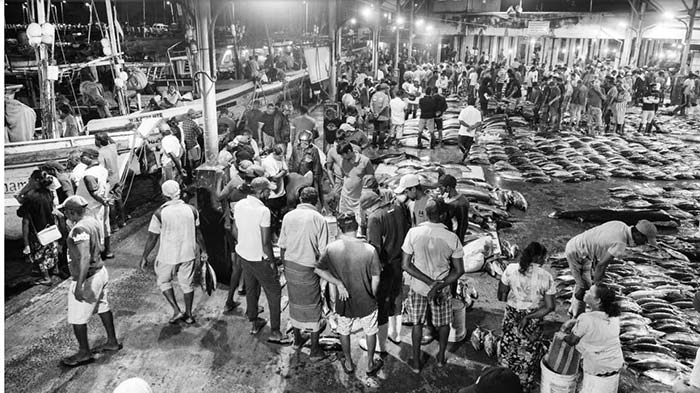
Buyers and sellers inspect the wares at the night market, where tuna and sailfish remain the most prized offerings
Dried gill plates are indeed often sold in medicine and dried seafood markets across east Asia, but are not used in traditional Chinese medicine. The growing demand for ray gill plates stems from market vendors using them to make soup that they tout a remedy for various health issues. The conservation charity Manta Trust calls these gill-plate concoctions “a pseudo-remedy” that has “no basis in medical science”.
The demand for gill plates has generated a sprawling cottage industry. Small-scale fisheries across Sri Lanka kill manta and devil rays (collectively known as mobulids), including endangered and vulnerable species, just to export their gill plates. A recent study showed that more mobulid rays are caught in Sri Lanka alone than the annual global catch across large industrial purse seine fisheries (huge operations that use curtain-like nets to scoop up marine life by the tonne). Their sizes are also declining, the study says.
Most mobulid species are classed as endangered, which means – according to the International Union for Conservation of Nature’s criteria – their populations has reduced by between 50% and 70% in the past decade. Meanwhile, the number of mobulids being caught continues to grow, with India, Indonesia and China the biggest culprits, feeding a thriving trade centred in Guangzhou, China, and Hong Kong.
Sri Lanka fishers don’t specifically target mobulids. Instead, the rays get entangled in gillnets used to catch yellowfin tuna, billfish and sailfish. Most Sri Lankans don’t eat them, though some add dried ray meat to curry; there’s little to no demand for the fresh meat.
This meant fishers used to release manta and devil rays back to the sea, but the lucrative gill plate trade has changed that. “Sometimes fishers used to cut off their heads and toss them out in the seas, because they thought that buyers wanted the meat,” says Daniel Fernando, the co-founder of the Blue Resources Trust, a non-profit marine research institution. “But traders didn’t want the meat. They wanted gill plates, which are in the head.”
The trade in plates provides much-needed additional income. Last year, Sri Lanka’s economy crashed, dragging many families into poverty. In its worst economic crisis since independence, the country ran out of basics such as food, cooking gas and fuel. Many people are still struggling to put meals on the table, and the World Food Program reported in February that 32% of households remained food-insecure. For fishery workers like Lakshan, gill plates bring much-needed income.
Manta rays are one of the most intelligent species of fish, with a brain up to 10 times larger than that of a whale shark and more highly developed areas for learning, problem solving and communicating. They are playful, curious and are thought to be able to recognize themselves in mirrors, a sign of self-awareness usually limited to the great apes, cetaceans and elephants.
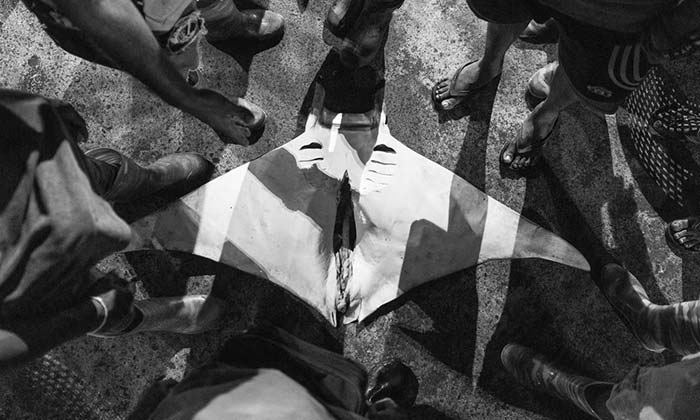
The tail of this species (madu-valgey) is used as a whip.
Trading rays is not illegal, although in 2014 the Convention on International Trade in Endangered Species of Wild Fauna and Flora (CITIES) brought in stronger protection for manta rays, and the international trade in their meat, gills and fins is supposed to be accompanied by permits and certificates confirming that they have been harvested sustainably and legally.
However, the UN’s Bonn Convention stipulates that the animals should not be captured for commercial purposes. Sri Lanka is also signed up to the Indian Ocean Tuna Commission, which requires that its members not retain any mobulid catch.
Sri Lanka itself has no legal framework to protect manta and devil rays. It has stopped issuing export permits but there are no national protections, Fernando said. Periodically, customs agents will stop shipments of gill plates being illegally exported, but the trade is persistent: in 2020, authorities at Hong Kong airport seized 300kg of manta ray gill plates worth $116,000, coming from Sri Lanka.
As fishing boats proliferate across the Indian Ocean, mobulids are under pressure. They’re particularly vulnerable biologically to overfishing: they have slow reproduction cycles, with young female mantas taking 10-15 years to mature sexually, and giving birth to just one pup every two or three years. “Their population can collapse in a very short time,” Fernando says. “Things will appear to be fine for a few years, and then, suddenly, they can pretty much get wiped out.”
He emphasizes that the problem is not limited to Sri Lanka. “These rays don’t respect political boundaries – they go in and out of Sri Lankan waters. It’s a regional issue, if not global. Action of one country is not sufficient.”
The organization is calling for governments to join in declaring protected areas for rays and their habitats to reduce by-catch, and to educate fishers about safely releasing juveniles back into the ocean to improve their chance of survival.
Replacing the use of gillnets – vertical walls of netting used to trap fish – with properly managed sustainable fishing methods such as longlines (miles-long lines with baited hooks) would also help, but the transition could take a long time as gillnets are the main method used by small fisheries.
Rays don’t have that time, Fernando says: their stocks are falling fast. He acknowledges that locals rely on them for income but points out: “We are not putting fish in the ocean and harvesting them. It’s not like chicken farming.
“Ideally, we should’ve looked into protecting them about four decades ago, to ensure they are caught sustainably, but we’ve waited so long that they now face imminent collapse,” he says. “We are going to have to make some very difficult decisions.” (Guardian)

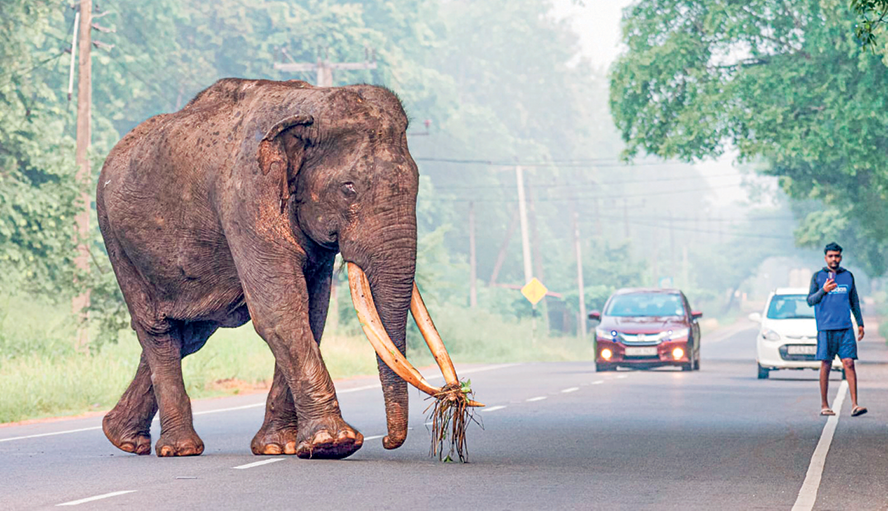
In the vast dry-zone wilderness of Sri Lanka, where ancient reservoirs mirror crimson sunsets and monsoon winds whisper through forests untouched for centuries, there still roams a giant who has become both legend and symbol.
His name is Mahasen — perhaps the most celebrated wild tusker Sri Lanka has ever known.
To wildlife enthusiasts, photographers, researchers, and villagers across the North Central Province, Mahasen is not merely an elephant. He is the living embodiment of Sri Lanka’s ancient wilderness, a reminder of a time when giant tuskers ruled the forests that surrounded the island’s great hydraulic civilisation.
Secretary and Chief Coordinator of Wild Tuskers of Sri Lanka, Chandika Lakmal, describes Mahasen as “one of the greatest living treasures of Sri Lanka’s natural heritage.”
“When people see Mahasen, they are not simply looking at a wild elephant,” he said.
“They are witnessing history, culture, ecology, and wilderness all combined into one magnificent animal. Tuskers like Mahasen are extremely rare, and losing such an elephant would mean losing a part of Sri Lanka’s identity itself.”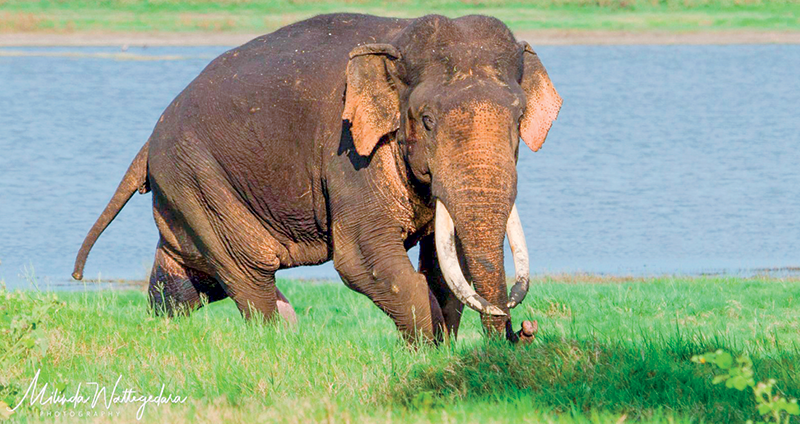
Sri Lanka has long shared a sacred bond with elephants. Ancient kings regarded tuskers as symbols of sovereignty and divine authority.
From the kingdoms of Anuradhapura and Polonnaruwa to the Kandyan era, elephants marched beside rulers during ceremonies and wars alike. Within Buddhist culture, elephants became revered symbols of strength, wisdom, and spiritual purity.
Yet among all elephants, the tusker has always occupied a special place.
Unlike African elephants, only a very small percentage of male Asian elephants develop tusks. This makes Sri Lankan tuskers exceptionally rare. Over centuries, they became deeply embedded in folklore, temple art, and village legends.
Mahasen stands today as perhaps the finest surviving example of that ancient legacy.
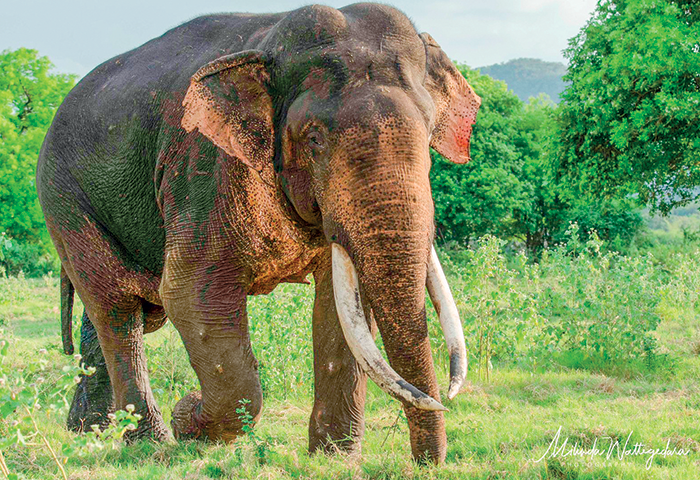
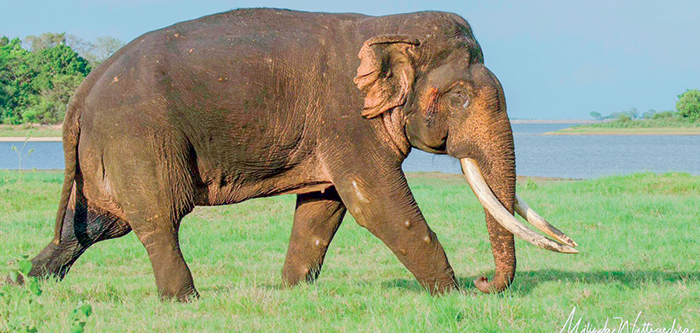
Mahasen, one of Sri Lanka’s most iconic wild tuskers, photographed during his majestic prime in 2014 and in 2025 as the ageing giant continues his struggle for survival in the island’s shrinking wilderness
 The legendary tusker was first photographed in 2002 by renowned wildlife photographer Vajira Wijegunawardena. During those early years, wildlife enthusiasts referred to him as the “Somawathiya Tusker” because he was frequently sighted around the floodplains near Somawathiya before travelling towards Minneriya and Kaudulla during the season of the great elephant gathering.
Later, the giant elephant was named Mahasen in honour of the ancient King Mahasen, the visionary ruler who built the magnificent Minneriya Tank. The name reflected not only strength and majesty, but also a deep connection to the same historic landscape shaped by kings, forests, and elephants thousands of years ago.
Today, Mahasen is believed to be around 60 years old, making him one of the oldest surviving wild tuskers in Sri Lanka. Towering above most elephants, he possesses perhaps the largest pair of tusks ever documented among Sri Lanka’s wild elephants, stretching beyond six feet in length.
For decades, Mahasen became one of the greatest attractions of the famous elephant gathering at Minneriya National Park and Kaudulla National Park — one of the largest congregations of Asian elephants anywhere in the world.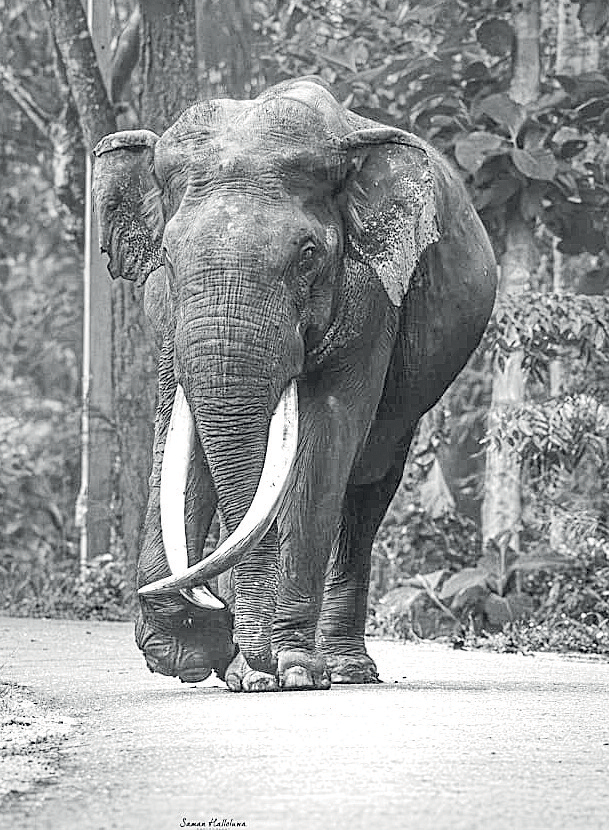
Photographers from across the globe waited patiently for hours hoping to capture the old king emerging from the dusty grasslands, at dusk, his enormous tusks glowing beneath the golden evening light. For many wildlife lovers, witnessing Mahasen in the wild became an unforgettable experience.
“Mahasen carries an extraordinary presence,” Chandika Lakmal explained. “Even among large elephants, he stands apart. There is a certain calmness, confidence, and dignity in the way he moves. You immediately understand why ancient people considered tuskers sacred.”
Yet beyond his beauty and fame, Mahasen also represents the fragile future of Sri Lanka’s elephants.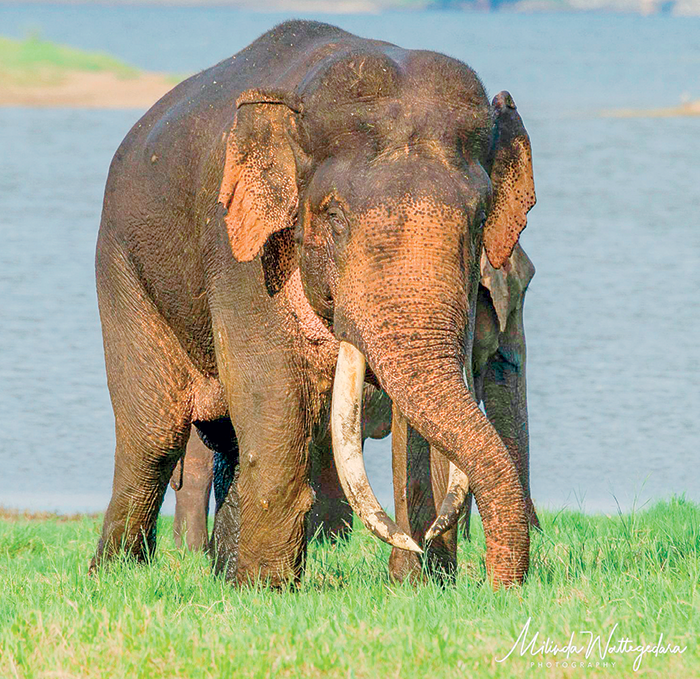
Modern conservation science identifies elephants as “keystone species” and “umbrella species,” meaning their survival protects entire ecosystems. Elephants create pathways through forests, disperse seeds, maintain grasslands, and help sustain biodiversity across vast landscapes.
“Elephants are ecosystem engineers,” Chandika Lakmal said. “The forest itself depends on them. Without elephants, the structure of these ecosystems begins to change. Protecting tuskers, like Mahasen, means protecting entire habitats and countless other species.”
Sadly, Sri Lanka’s wild elephants now face mounting threats.
Habitat fragmentation, shrinking forests, electric fences, roads, railway accidents, illegal shootings, and human-elephant conflict continue to endanger their survival.
Nearly 60 percent of Sri Lanka’s wild elephants live outside protected national parks, surviving within fragmented forests and ancient tank ecosystems increasingly surrounded by human settlements.
Traditional elephant migration corridors that existed for centuries have now been blocked by agriculture and development projects. As elephants lose access to food and water, they are increasingly forced into villages and farmlands, creating dangerous encounters between humans and wildlife.
Even Mahasen has not escaped these pressures.
In recent years, the ageing tusker’s movements have become increasingly restricted. Wildlife observers believe the enormous weight of his tusks, combined with old age, has forced him into smaller forest patches between Kakirawa and Maradankadawala where food and water are available within shorter distances.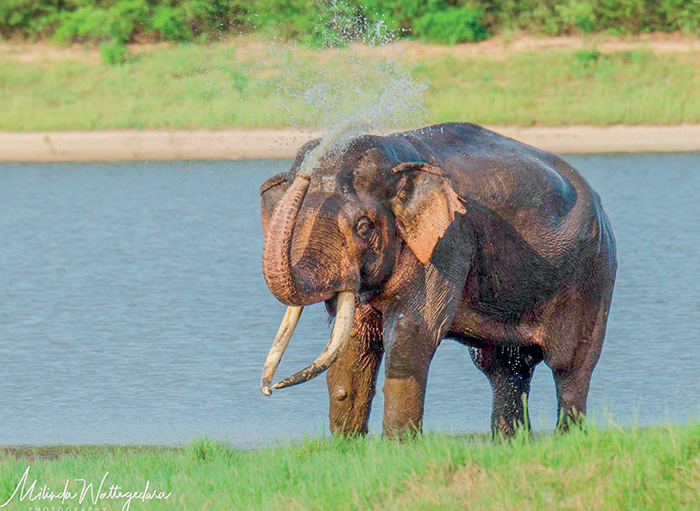
Several months ago, Mahasen was discovered with a serious wound on his back believed to have been caused either by a gunshot injury or a clash with another elephant. Wildlife officials intervened quickly and treated the giant tusker, offering hope that he would recover once again.
However, concern continues to grow among conservationists and wildlife enthusiasts as sightings of Mahasen have become increasingly rare in recent months.
For many Sri Lankans, the thought of losing Mahasen is deeply emotional.
“Mahasen is not just another elephant,” Chandika Lakmal said quietly. “He is one of the last living symbols of Sri Lanka’s ancient wilderness. Future generations deserve the chance to see such animals alive in our forests, not only in photographs or history books.”
Despite his immense ecological and cultural importance, many villagers living near elephant habitats still struggle with fear and economic hardship caused by crop raids and property damage.
Conservationists stress that long-term coexistence can only be achieved through proper land-use planning, protection of elephant corridors, community awareness, and sustainable conservation policies.
Across the forests of Yala National Park, Wilpattu National Park, Gal Oya National Park, and Wasgamuwa National Park, Sri Lanka’s remaining tuskers continue their silent struggle against an uncertain future.
But among them all, Mahasen remains special.
He is more than an old tusker wandering through fading forests.
He is the last king of a vanishing wilderness.
And as long as Mahasen still walks beneath the ancient trees of Sri Lanka’s dry zone, the spirit of the island’s wild heritage continues to survive majestic, untamed, and unforgettable.
By Ifham Nizam
An auspicious beginning for ‘Tharulya’
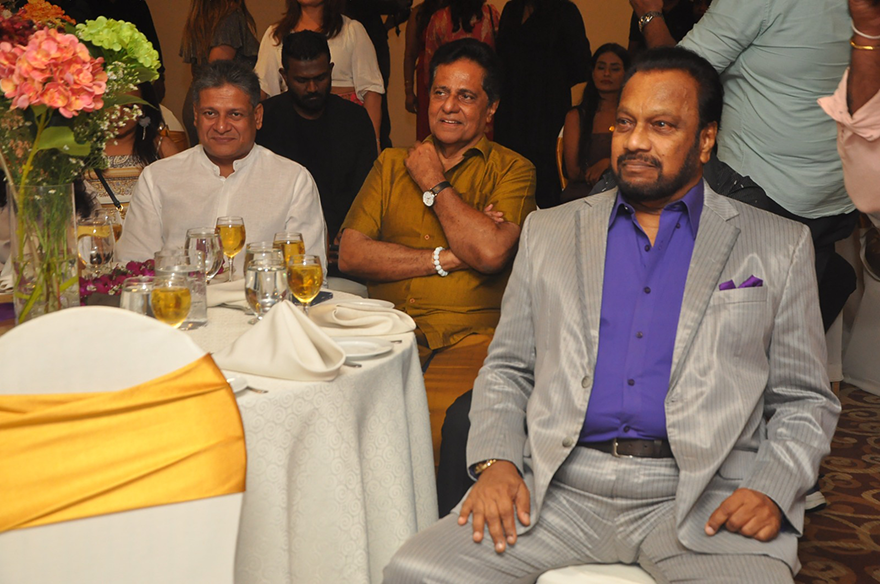
The Muhurath ceremony of ‘Tharulya’ the newest teledrama directed by Sudarma Jayewardena, was held in a graceful setting at Waters Edge recently, bringing together artistes, television personalities and invited guests from the entertainment industry.
The auspicious occasion marked the official beginning of the much-awarded teleseries, with the lighting of the traditional oil lamp adding colour and glamour to the evening.
Cast members and crew joined Sudarma in celebrating the launch while industry well-wishers extended their support for the production.
Sudarma is known for her emotionally rich story telling and distinctive creative touch. When asked about her new tele-serial, she expressed optimism ‘Tharulya’ is expected to bring a fresh narrative to the local television audiences. For her ‘Tharulya’ can be described as a reflection of dreams, emotions and human relationships, woven into meaningful teledrama narratives. The word ‘Tharulya’ evokes a poetic sense of stars, hope and destiny, symbolising the journeys and emotional bonds explored through the story.
Sudarma Jayewardena is known for her work as a actress, director, producer and creative visionary behind several acclaimed teledramas. Over the years she has build a reputation for presenting emotionally layered stories that explore family dynamics, social realities, women’s experiences and human relationships with sensitivity and depth .
Her teledramas are known for strong story telling, refined casting and cinematic production.
The teledrama, ‘Ganga Adare’, directed by Sudarma, is among the well known television production.
This tele-series became popular on the small screen for its emotional story telling, strong character development and family centred narrative style that resonated with Sinhala TV audiences.
Sudarma’s involvement in musical events, like ‘Sonu Nigam,’ highlighted her versatility beyond teledramas, showcasing her ability to create large scale entertainment events that combined glamour, culture and audience appeal.
Sudharma, who is no stranger in the entertainment industry, is the Managing Director of Star Events. ‘Tharulya’ was produced by Saranga Mendis. This much talked about teleserial is all set to unspool on Derena TV.
Beyond teledramas , Sudarma also contributed to musical and entertainment programmes, expanding her influence within Sri Lanka’s media industry. Her productions are often noted for their polished presentation and emotional story telling. (Zanita) Pix by Thushara Attapathu
-

- Smile,glamour and anticipation for the young star
-
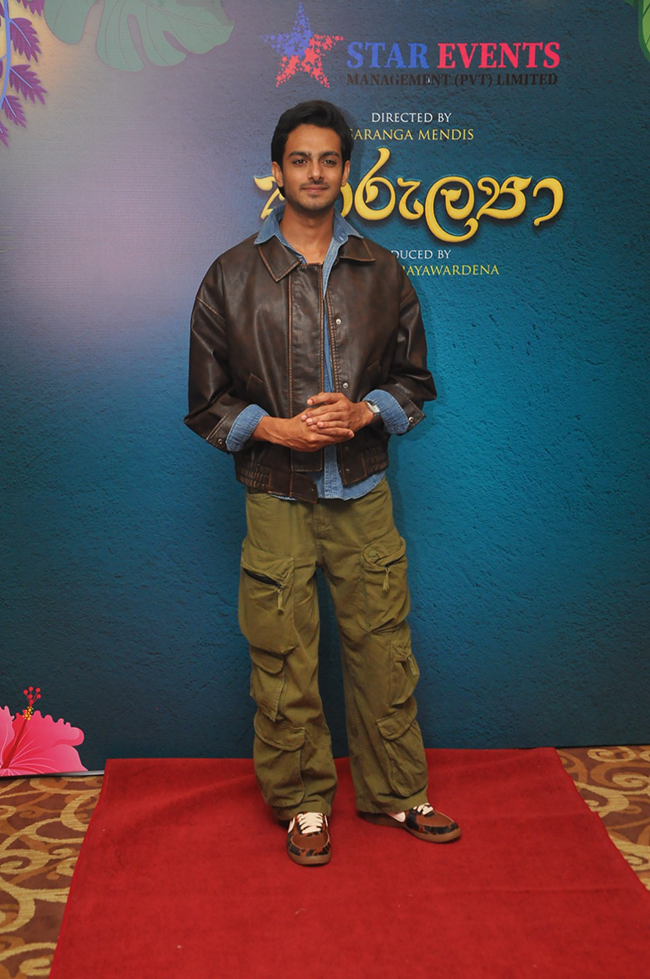
- Powerful performances expected as he steps into a key role
-

- Moments from the launch
-

- Soulful voice adds magic
-
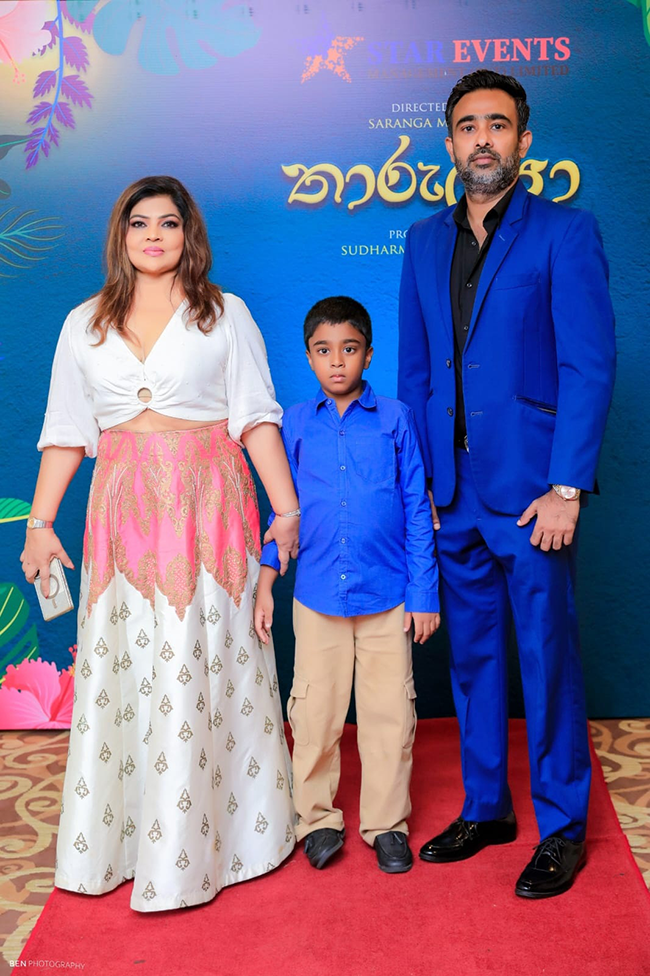
- Creativity in motion as Director Sudarma Jayewardena leads the cast with her spouse
-
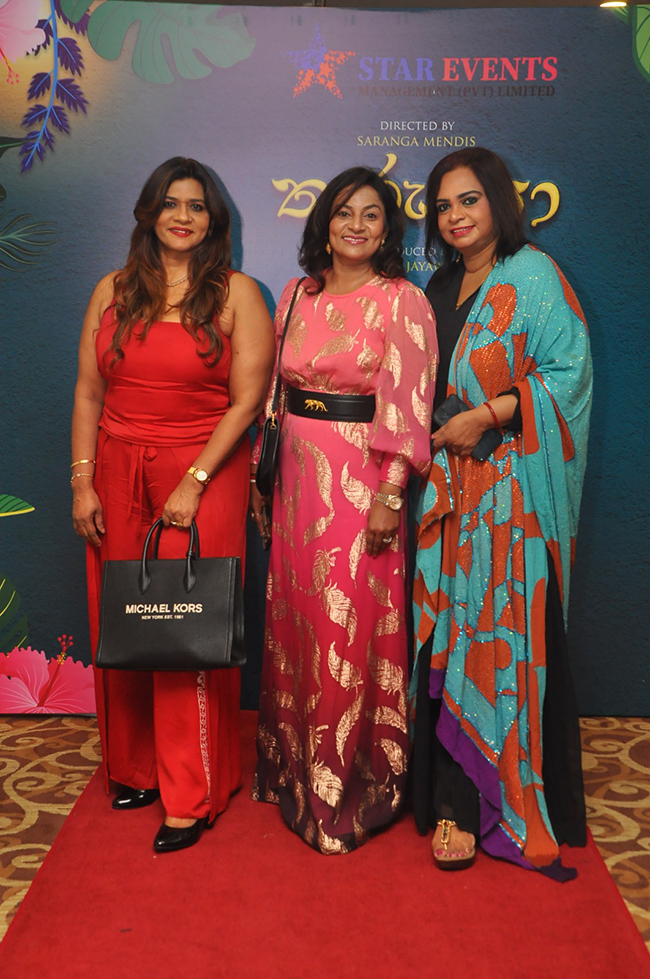
- Invited guests marked the launch
Air Bridge of Friendship
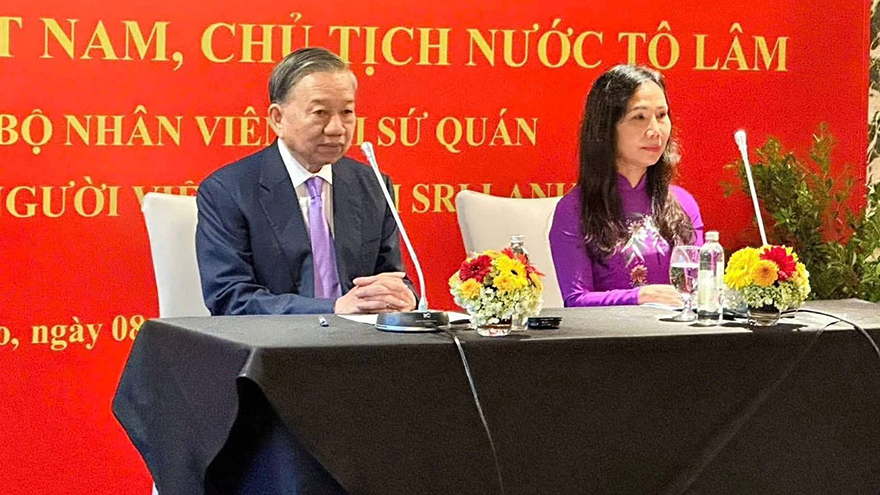
 The state visit of the Party Secretary and State President, To Lam of Viet Nam, to Sri Lanka, heralds a defining moment in bilateral relations, where diplomacy and aviation converge in a new era of connectivity. With the launch of Viet Nam air services, linking the two nations, the partnership soars behind traditional statecraft -opening a seamless corridors for tourism, trade and cultural exchange between South and South East Asia.
My interview with the Ambassador for Viet Nam in Sri Lanka, Trinh Thi Tam, went as follows:
(Q) How significant is the State visit to Sri Lanka by Party General Secretary and State President To Lam?
(A)Party General Secretary and State President To Lam’s visit to Sri Lanka is highly significant as it takes place when the two countries have just celebrated 55 years of diplomatic relations in 2025. Viet Nam is the first ASEAN members to visit Sri Lanka, and is also the first ASEAN country that President Anura Kumara Dissanayake visited after assuming office. More, importantly, both sides agreed to elevate bilateral ties to a Comprehensive Partnership on this occasion, opening a new chapter for cooperation in politics, trade, tourism, culture, education, and connectivity. The visit reflects the strong mutual trust and the shared determination to deepen cooperation in the years ahead.
(Q) Viet Nam and Sri Lanka share centuries old Buddhist links. How can these spiritual and cultural ties be transformed into stronger people-to-people tourism?
(A) Viet Nam and Sri Lanka share centuries-old Buddhist and cultural links, which create a very strong foundation for closer people-to-people relations. These spiritual ties can be transformed into stronger tourism cooperation through Buddhist pilgrimage tours, exchanges between temples and universities, cultural festivals, and tourism promotion programmes. Increased air connectivity and easier travel arrangements will also encourage more visitors to explore each other’s cultural heritage and strengthen mutual understanding between the two peoples.
(Q) Direct flights between Colombo and Ho Chi Minh City has generated great excitement in Sri Lanka. How important is this milestone for tourism and bilateral relations?
(A) The launch of direct flights between Colombo and Ho Chi Minh City by Viet Nam Airlines (national carrier) and Viet Jet (a private airline) is a historic milestone for bilateral relations. It not only shortens travel time but also creates new opportunities for tourism, trade, investment, business cooperation as well as people-to-people and cultural exchange. This achievement comes at a very meaningful moment, following the establishment of the Comprehensive Partnership, demonstrating the commitment of both countries to enhance practical cooperation and strengthen connectivity between Southeast Asia and South Asia.
(Q) Do you think this direct flight will significantly increase Vietnamese tourist arrivals to Sri Lanka within the next few years?
(A) Yes, we believe the direct flights will significantly increase Vietnamese tourist arrivals to Sri Lanka over the next few years. Sri Lanka is becoming increasingly attractive to Vietnamese travellers because of its beautiful beaches, Buddhist heritage, natural landscapes, and hospitality. Easier connectivity and tourism promotion activities will help more Vietnamese people discover Sri Lanka. We also expect stronger two-way tourism exchanges, contributing positively to economic cooperation and people-to-people relations between the two countries.
(Q) Do you see Colombo becoming a stronger regional hub connecting Viet Nam with the Indian Ocean region?
(A) Colombo has great potential to become a stronger regional hub connecting Viet Nam with South Asia and the Indian Ocean region. Sri Lanka’s strategic geographic location, combined with improving connectivity and growing economic cooperation, can help facilitate trade, tourism, logistics, and maritime cooperation. Following the establishment of the Comprehensive Partnership, Viet Nam sees many opportunities to work more closely with Sri Lanka in regional connectivity initiatives and strengthen economic links between Southeast Asia and the Indian Ocean region.
(Q) Viet Nam and Sri Lanka have enjoyed decades of friendly relations. What makes this partnership unique in Asia?
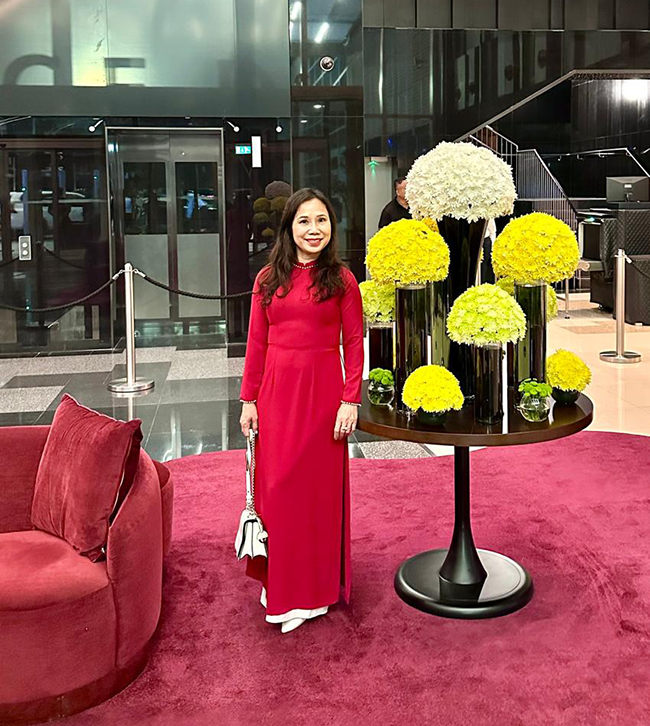
Proud moment for Ambassador Trinh Thi Tam
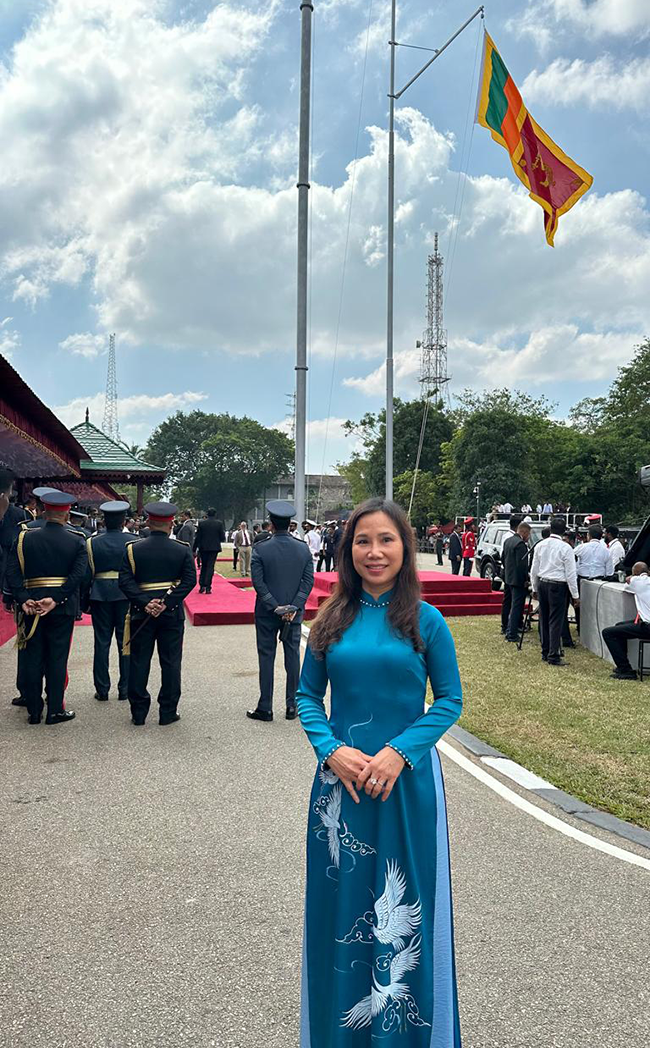
Trinh Thi Tam played a key role in celebrating the historic visit
(A) The Viet Nam–Sri Lanka partnership has been built on longstanding friendship, mutual trust, and deep cultural connections rather than only economic interests. The two countries have consistently supported each other over many decades and share common values regarding independence, peace, and international cooperation. President Ho Chi Minh, Viet Nam’s Nation Father, stopped over in Sri Lanka on three occasions. Vietnamese people has always treasured the strong, unconditional support offered by Sri Lankan people during our hard struggle against imperialism and colonialism. The recent elevation of bilateral ties reflects the maturity of this relationship and the shared vision to expand cooperation across many sectors in a sustainable and balanced manner.
(Q) How does Viet Nam view Sri Lanka’s role with South Asia and the Indian Ocean together?
(A) Viet Nam highly values Sri Lanka’s important role in South Asia and the Indian Ocean region. Sri Lanka’s strategic location and historical role as a maritime and commercial centre make it an important partner for regional connectivity and economic cooperation. With Sri Lanka’s keen interest in engaging more with ASEAN (Regional Comprehensive Economic Parnership ) Viet Nam believes Sri Lanka can play an even stronger role in connecting South Asia and Southeast Asia, especially in trade, tourism, logistics and maritime cooperation.
(Q) How would you describe the current diplomatic relationship between Viet Nam and Sri Lanka after the Party General Secretary and State President’s visit?
(A) Following the visit, the diplomatic relationship between Viet Nam and Sri Lanka can be described as stronger, more dynamic, and more future-oriented. The establishment of the Comprehensive Partnership demonstrates the high level of political trust and creates a solid framework for expanding cooperation in many important sectors, including trade, investment, tourism, education, digital transformation, agriculture, and cultural exchanges between the two countries.
(Q) After the Party General Secretary and State President, what is your vision for Viet Nam-Sri Lanka relations over the next decade?
(A) Over the next decade, we hope Viet Nam–Sri Lanka relations will develop into a stronger, broader, and more practical partnership under the framework of the Comprehensive Partnership. We expect deeper cooperation in trade, tourism, connectivity, digital economy, education, renewable energy, agriculture, and maritime cooperation. At the same time, people-to-people exchanges and cultural cooperation will continue to grow, creating a solid foundation for long-term friendship and mutual prosperity between the two countries.
(Q) What message does Viet Nam wish to send to Sri Lanka and South Asian Region through the visit?
(A) Through the Party General Secretary and State President’s visits to India and Sri Lanka, Viet Nam wishes to send a strong message of friendship, cooperation, and shared development to Sri Lanka and the wider South Asian region. The visits demonstrates Viet Nam’s commitment to strengthening partnerships in South Asia and promoting peace, stability, connectivity, and economic cooperation in the Indo-Pacific region.

US military launches strikes on southern Iran amid talks in Qatar

Pope says AI must be ‘disarmed’ to prevent domination, exclusion, and death

Showers will occur at times in the Western, Sabaragamuwa and North-western provinces and in Galle, Matara, Kandy and Nuwara-Eliya districts.

Election monitors flay JVP for postponing PC polls

SL exports exceed USD 5.7 bn in first four months of 2026

Easter Sunday carnage: Court told Maulana’s statement cannot be accepted without cross-examination

‘Dates have the highest sugar content to fight Coronavirus’

Sunday Island 27 December – Headlines

#SundayIsland 17th December – Headlines

Sunday Island – 28th March

Sunday Island Headlines – 21 March

Sunday Island – 21st February – Headlines
-
 Features6 days ago
Octopus, Leech, and Snake: How Sri Lanka’s banks feast while the nation starves
-
 Sports6 days ago
Sri Lanka women’s volleyball team ready for Central Asian challenge
-
 Opinion5 days ago
Murder of Ehelepola family, Bogambara Wewa and Sightings of Wangediya
-

 Business4 days ago
Historic launch of CCWE Fashion Week & International Summit 2026
-
 News5 days ago
Steps underway to safeguard Sri Lanka’s maritime heritage
-

 Features2 days ago
The NPP’s pivot to the past
-
 News1 day ago
Police probe underway to ascertain links between criminals deported from UAE and local politicians
-

 Editorial5 days ago
A play without its protagonist