
News
It’s China that happens to have the cash now, says Sri Lanka Minister


Each country works out its own financing arrangements, says Ajith Nivard Cabraal, referring to Sri Lanka’s borrowing from China
by Meera Srinivasan
While government critics and the Opposition in Sri Lanka raise concern over the Rajapaksa administration’s growing reliance on China, in the wake of Colombo seeking a new $700 million loan from Beijing, a State Minister has said it is China that has the “most amount of cash now”.
“In different times in world history, different countries have been the ones who have had the most amount of cash. And now it happens to be China, so China will naturally invest all over the world,” Ajith Nivard Cabraal, State Minister of Money and Capital Market and State Enterprise Reforms, told The Hindu in a recent interview, on Sri Lanka’s response to the economic impact of the global pandemic. “I think we should all respect that,” said the Minister, who was the Governor of the Central Bank of Sri Lanka during Mahinda Rajapaksa’s last term in office.
Amid the World Bank and International Monetary Fund’s (IMF) worrying forecast of a GDP contraction up to almost 7%, credit rating agency Moody’s downgrading of Sri Lanka by two notches to the “very high credit risk” category, the daunting $4.5 billion foreign debt due in the coming year, falling revenues and rising living costs, the Minister expressed optimism. Sri Lanka is exploring different options to repay its debt, including additional loans from China, currency swap facilities with India and China, and Samurai and Panda bonds, he said.
Mr. Cabraal’s remarks came a week after a high-powered delegation from Beijing flew into Colombo, and met President Gotabaya Rajapaksa and Prime Minister Mahinda Rajapaksa, who is also the Finance Minister. China, which sanctioned a $500 million loan in March to help Sri Lanka cope with the coronavirus’s blow, is likely to favourably consider the Rajapaksa government’s request for an additional $700 million now, having pledged support to the island nation’s pandemic recovery effort. Further, Sri Lanka is also negotiating a nearly $1.5-billion currency swap facility with the People’s Bank of China. Sri Lanka owes China over $5 billion so far.
Trade practices
“Nobody says China has given $1.5 trillion loans to the U.S.? We are talking about $700 million coming in… these are the trade practices, financing practices, prevalent in the world. Each country works out their own financing arrangements in line with what they feel is best for them,” Mr. Cabraal said, adding, other countries such as Japan, the U.S. and India have also been big investors in Sri Lanka. The U.S., for instance, “is a very strong investor in Sri Lanka’s sovereign bonds. I met the Indian CEO forum here, and I was quite surprised that there are more than 50 in Indian CEOs here.”
‘Different sources’
Government critics, including former Finance Minister Mangala Samaraweera, has urged the Rajapaksa administration to engage the IMF, rather than fall into a “Chinese debt trap”, but the government has ruled out an IMF bailout.
The rapid credit facility that the government had earlier sought from the multilateral lender is yet to come through. Expressing displeasure, Mr. Cabraal said: “Rapid means rapid, no. Where is rapid in October when the accident occurred in March,” adding the government would still talk to the IMF.
While President Rajapaksa has vowed to disprove the “Chinese debt trap analysis”, few other sources seem as willing to lend readily. As for India, the Reserve Bank of India signed a $400 million swap agreement with Sri Lanka in July, to help boost Sri Lanka’s foreign reserves, and is perusing a further $1 billion requested by Sri Lanka. New Delhi is also yet to respond to PM Rajapaksa’s request for a debt moratorium — Sri Lanka owes $ 960 million to India — but Mr. Cabraal observed bilateral moratoriums cannot help much. “Emerging nations have all faced external sector stresses, which is not peculiar to Sri Lanka. Recently, some of the international agencies had provided some support for around 70 odd countries, which have been ad-hoc arrangements. This is a global problem, which needs a global solution,” he said.
Despite the external sector weakening significantly, Sri Lanka is “fortunate”, in Mr. Cabraal’s view. The country’s foreign reserves have “not been affected too much”, exports have “held firm” and remittances have been “pretty strong”. In September, Sri Lanka recorded over $700 million from worker remittances. Exports in July crossed $1 billion and the government’s move to restrict imports “has paid off”, according to Mr. Cabraal. “Our foreign reserves will be around $5.8 billion. I would say that is not an uncomfortable level.” A clearer picture will emerge only by end of the year, as the Department of Census and Statistics postponed the release of the second quarter GDP figures until then.
However, Sri Lanka’s challenge is far from over. It remains to be seen if the remittances will continue flowing in. Some 50,000 Sri Lankan migrant workers, who were employed in West Asian countries, want to return, while thousands lost their jobs and at least 67 succumbed to Covid-19 in their host countries. Domestically too, a new wave of COVID-19 infections is rapidly spreading within the garment manufacturing sector that is crucial to exports.
Falling revenues
Meanwhile, Sri Lanka’s revenues have fallen drastically, by an estimated LKR 440 billion (about $2.3 billion), also in the wake of tax cuts on imported items, prompting economists to emphasise a sound fiscal policy in the coming budget. Asked if the government was taking a fresh look at its tax regime to boost revenues, including considering a wealth tax that the IMF has recommended in its recent World Economic Outlook, Mr. Cabraal said: “You cannot make poor people rich, by making the rich people poor…we don’t want to put mansion taxes and these silly taxes which have actually crippled the more affluent people and remove them from the equation of providing jobs and providing support,” adding that the upcoming Budget, to be tabled next month, would reflect a “a balanced partnership”, where small and medium scale businesses will be supported, so they can extend job opportunities to the poor.
(THE HINDU)

News
Sun directly overhead Galle, Angulugaha, Imaduwa, Telijjawila, Yatiyana and Tangalle about 12.08 noon today (07)


The sun is going to be directly over the latitudes of Sri Lanka from 28th of August to 07th of September due to its apparent southward relative motion.
The nearest places of Sri Lanka over which the sun is overhead today (07) are Galle, Angulugaha, Imaduwa, Telijjawila, Yatiyana and Tangalle about 12.08 noon.

By Norman Palihawadane
The CID recently found that former SLPP Deputy Minister Premalal Jayasekara, better known as ‘Choka Malli’, had left for Thailand when the Supreme Court imposed an overseas travel ban on him last Friday.
The CID discovered that Jayasekara had left Sri Lanka on August 31, while authorities were taking steps to enforce the travel restriction imposed by the Supreme Court. The Department has subsequently informed the Attorney General’s Department of the development.
The Supreme Court last Friday ordered Jayasekara, and two other men, to appear before court on October 21, and imposed a ban on their overseas travel.
The orders were made as the Supreme Court considered an appeal challenging the acquittal of the three men in connection with the 2015 murder of Shantha Dodangoda, also known as D.G. Sunil Perera.
The appeal was filed by Dodangoda’s wife against a decision of the Court of Appeal to acquit and release Jayasekara and the two other accused, who had previously been convicted and sentenced to death by the Ratnapura High Court.
Dodangoda was killed in a shooting in Kahawatta town, in the early hours of January 5, 2015, while a group of people were putting up decorations for an election rally in support of then common Opposition presidential candidate Maithripala Sirisena.
Two others, Karunadasa Weerasinghe and Mohamed Ilfan, were seriously injured in the shooting.
Following the incident, the Ratnapura High Court convicted Jayasekara, former Chairman of the Kahawatta Pradeshiya Sabha Wajira Darshana de Silva, and former Sabaragamuwa Provincial Council member Nilanta Jayakody, sentencing all three to death.
The Court of Appeal subsequently acquitted the three men and ordered their release.
The victim’s wife later challenged the acquittal before the Supreme Court.
The appeal was taken up before a Supreme Court bench, comprising Justice Preethi Padman Surasena and Justices Achala Wengappuli and Gihan Kulatunga.
During the proceedings, Deputy Solicitor General Janaka Bandara requested that the court impose overseas travel restrictions on Jayasekara and the other respondents.
The Supreme Court subsequently ordered all three to appear before the court on October 21 and imposed travel bans on them.
President’s Counsel Nalin Ladduwahetty, President’s Counsel U.R. de Silva and President’s Counsel Anuja Premaratne appeared for the respondents. President’s Counsel Saliya Peiris represented the aggrieved party.
Police sources said that the discovery that Jayasekara had already left for Thailand, on August 31, has raised concerns over the timing and enforcement of the travel ban.
Sources said that the CID had notified the Attorney General’s Department and was taking further action in relation to the development.
By Pradeep Prasanna Samarakoon
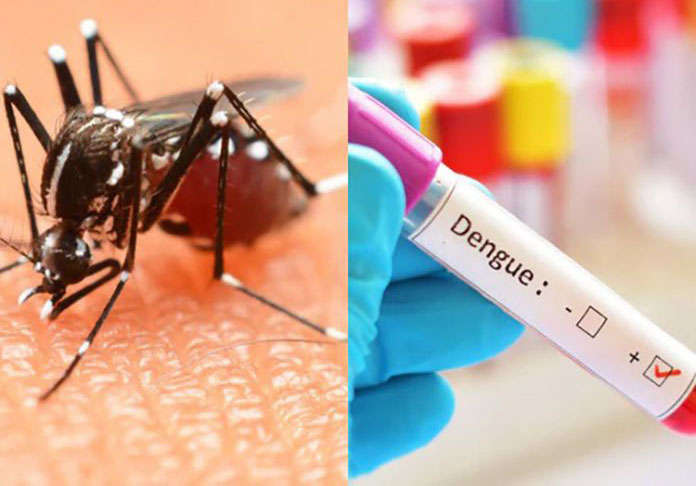
The number of deaths from dengue fever in Sri Lanka has risen to 73 this year, with 96,228 cases reported across the country so far, according to the Dengue Control Unit.
The latest figures indicate that dengue continues to pose a significant public health concern, with 737 new cases recorded during the first four days of September alone.
Dengue infections peaked in July, when 29,964 cases were reported, according to the latest data. June recorded the second-highest monthly total, with 21,533 cases, while 10,155 cases were reported in August.
Earlier in the year, 8,590 cases were recorded in May and 7,866 cases in January.The Western Province remains the worst-affected area, accounting for more than half of all dengue cases reported nationwide. A total of 50,851 cases have been recorded in the province, representing 52.84% of the country’s total.
The Southern Province has recorded 13,950 cases, followed by the Central Province with 8,818 cases and Sabaragamuwa Province with 7,925 cases.

Sun directly overhead Galle, Angulugaha, Imaduwa, Telijjawila, Yatiyana and Tangalle about 12.08 noon today (07)

Showers above 50 mm are likely at some places in the Uva and Eastern provinces.

Harshitha’s composed knock seals Sri Lanka’s semi-final berth

‘Choka Malli’ slips out of country before travel ban

Dengue death toll rises to 73

Ranil accuses govt. of undermining democracy

‘Dates have the highest sugar content to fight Coronavirus’

Sunday Island 27 December – Headlines

#SundayIsland 17th December – Headlines

Sunday Island – 28th March

Sunday Island Headlines – 21 March

Sunday Island – 21st February – Headlines
-

 News5 days ago
Denied of promotion to SC despite vacancies, justice Gurusinghe retires
-

 Latest News5 days ago
Grade 5 scholarship exam results released
-

 News5 days ago
22A: SC urged to suspend hearing, appoint full bench
-

 Midweek Review6 days ago
The local and global dynamics of Sri Lanka’s 22nd Amendment
-

 News3 days ago
Namal remanded until Sept. 18 over Airbus deal investigation
-

 News5 days ago
Govt. seeks NATO assistance
-

 Latest News2 days ago
Tharanga creates history with Diamond League crown in Brussels
-

 News6 days ago
40 professional organisations and TU oppose proposed 22A