
News
It’s a matter of urgency to include young people in climate change policy: British Council report


* 75 percent of young people around the world report having skills to deal with climate change in their communities – but 69 percent have never participated in climate action.
* Concern that voices of women and minority groups overlooked in current climate change policy.
* 67 percent of young people feel leaders cannot address climate change alone.
* Consistent call for young people to be included in policy decisions.
Young people around the world unanimously consider climate change to be the biggest threat facing the planet but many struggle to engage in meaningful action and have their voices heard, a British Council report published recently (on 9th September) has revealed.
The Global Youth Letter Report used a mixed methodology approach including crowdsourcing to garner the views, experiences and aspirations of 8,000 young people aged 18-35 across 23 countries – including Brazil, India, Kenya, Sri Lanka and the UK – about their perspectives on climate change. It found a strong, unanimous voice of young people on climate change across all 23 countries.
This research is part of the British Council’s Climate Connection programme, which aims to bring people around the world together to address the challenges of climate change. Research for the report was carried out between January and March 2021.
The findings from the report have been used to write a Global Youth Letter, a plan of action setting out young people’s aspirations and recommendations around climate change. The letter directly addresses the policymakers and world leaders who will attend the UN Climate Change Conference of the Parties (COP26) in November.
25 percent of the young people surveyed globally, came from rural areas, which can be harder to reach, and 75 percent from urban areas. 55 percent of respondents were female. The report also heard from traditionally overlooked groups such as young people with disabilities, and those belonging to minority groups and indigenous communities.
67 percent of young people felt that their country leaders could not address climate change on their own. They raised concerns that the voices of women and minority groups were not reflected in current climate change policy.
The report found a consistent call for young people to be included in policy decisions. Young people felt that their involvement would ensure more innovative ideas for tackling climate change and would have a wider, more effective reach. The findings emphasised a clear need for policymakers to channel the passion and enthusiasm of young people in more practical and structured ways.
The report found that whilst young people are willing and keen to make meaningful contributions, many lack the opportunities to do so. 75 percent of young people reported that they had the skills to deal with climate issues in their communities and 63 percent said that they knew about the UN Climate Change Conference of the Parties (COP26). However, 69 percent said they had never participated in climate change action.
Some of the barriers to youth participation in climate action include limited digital access, hierarchical social cultures that exclude young people, and a lack of access to training and skills development.
The report also highlighted the role and potential of digital channels as a tool for young people to tackle climate change, although acknowledged that the ‘digital divide’ that sees some people excluded from accessing the internet must be taken into consideration.
Young people unanimously viewed social media as an important platform to share messages about climate change with their peers, countering disinformation and influencing those around them. For young people in remote areas without internet access, television and radio can provide them with information about climate change instead.
Young people are encouraged to sign the letter and pledge to tackle climate change, adding their own recommendations to be considered. The letter can be signed here: www.britishcouncil.org/climate-connection/get-involved/global-youth-letter
The Global Youth Letter was launched at a virtual event recently (on 9th September). Insights from the Global Youth Letter will inform ongoing discussions with policymakers in the run up to and during COP26.
The Global Youth Letter includes youth voices from Sri Lanka extracted from the ‘Perceptions of Young People on Climate Change and Action’ research study that was conducted with over 1000 respondents. In relation to youth perceptions, youth in Sri Lanka are generally aware of climate change but the majority does not have a technical understanding and detailed knowledge of it.
There is a significant interest among youth to learn more about climate change, and the majority believes to some degree that their opinions and actions on climate change will matter in the future. When it comes to making this change and engaging in climate action, emphasis was placed on education and showcasing successful practices as a tangible way to inspire and facilitate action. Sri Lanka’s youth believe in collective action for climate change and see it as a public responsibility, not an individual issue, highlighting the need for systemic changes and large-scale actions.
In both urban and rural contexts lack of access to knowledge resources, lack of tutoring and low engagement with government action were highlighted as barriers for youth engagement.
The British Council Sri Lanka has a number of projects planned as part of the Climate Connection programme. Youth engagement and our youth leadership programme will continue to remain the main vehicle for addressing climate change issues at the community level, bringing positive change to society at large. Through our overall scope of work in Sri Lanka in the Arts and culture, English, and education strands we aim to actively contribute to the National Action Plan for climate action at a policy level.
British Council Sri Lanka Country Director, Maarya Rehman said: “The climate emergency is the biggest crisis facing our planet so it’s no surprise that British Council research has found it’s the number one priority for young people the world over. I’m proud of the Sri Lankan young people that have put their signatures to our Global Youth Letter so far, calling on world leaders for urgent action. I hope that this sends a strong message about the importance of including youth voices in the climate change conversation.”
Kate Ewart-Biggs, British Council Deputy Chief Executive, said: “Our report reveals the untapped potential of young people around the world to contribute towards action on climate change. Young people are the leaders and influencers of tomorrow and it’s essential that we provide opportunities for their voices to reach government leaders and involve them in the policy decisions that will impact their futures. Through the British Council’s Climate Connection campaign, we are drawing on our expertise in education, the arts, cultural exchange, and the English language to help young people find innovative solutions to the biggest global emergency we face.”
The UK will host COP26 in Glasgow, Scotland, from 1 to 12 November. The British Council is supporting the UK government’s ambition for COP26 to be the most inclusive ever by using its global networks to inspire millions of people around the world to take action against climate change.
The Global Youth Letter on Climate Action is a call for action from young people globally, directly addressing the leaders attending COP26 – the 26th UN Climate Change Conference, in Glasgow, November 2021.
It is the result of a large-scale research exercise between the British Council and not for profit social enterprise Catalyst in Communities, who used a mixed methodology approach including crowdsourcing to garner the views, experiences, and aspirations of 8,000 young people across 23 countries.
Aiming to be as representative as possible in terms of gender, background, location and socio-economic status, the research team worked through global COVID-19 restrictions to amplify the unheard voice of the climate debate: today’s young people. Research for the report was carried out between January and March 2021.
The Global Youth Letter on Climate Action, and accompanying 8,000 Rising campaign, is part of the British Council’s Climate Connection programme, a global platform for dialogue, cooperation, and action, connecting millions of people through shared solutions to the climate crisis.
Young people are at the centre of this collaborative approach, as we support them to raise their voices, and gain the skills and networks to participate in meaningful dialogue and bring about real change for our planet.


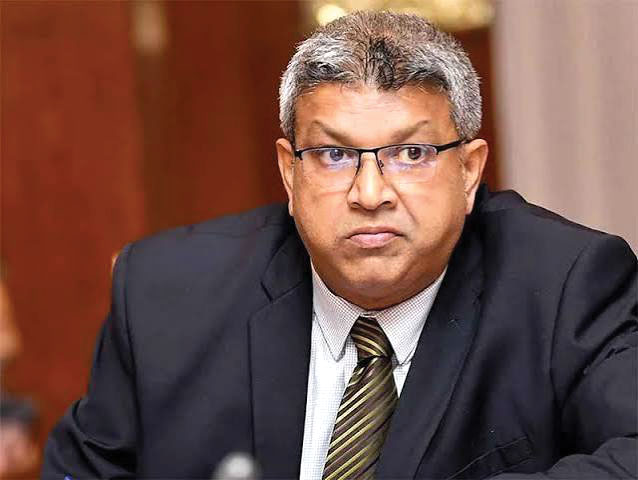
Appointment of committee eyewash, says UNP
The government is considering changes to prison regulations pertaining to the treatment of Buddhist monks serving jail terms, including their right to wear monastic robes when taken outside prison.
Justice and National Integration Minister Harshana Nanayakkara announced the proposed changes yesterday (14) following the submission of an interim report by a committee appointed to review the rules and procedures governing prisons.
The report was handed over to Secretary to the President Dr Nandika Sanath Kumanayake at the Presidential Secretariat.
One of the key recommendations is to amend Prison Standing Order 356 by introducing a new provision, 356(A). The proposed revision would require prison authorities to consult the Department of Buddhist Affairs on the removal of a monk’s robes upon admission to prison. The Commissioner of Prisons would be allowed 10 days to notify the department and take the necessary steps.
A separate amendment to Departmental Order 550 would allow Buddhist monks to wear their robes whenever they are taken outside prison, unless their respective Nikaya formally requests that the privilege be withdrawn.
The committee has also recommended extending similar arrangements, with suitable modifications, to members of other religious clergy who are imprisoned.
The proposals follow concerns raised over the treatment of Ven. Galagoda Aththe Gnanasara Thera after he was taken into custody. President Anura Kumara Dissanayake subsequently held discussions with representatives of the three main Buddhist Nikayas and appointed the committee to examine the existing legal framework.
Nanayakkara said the interim report had been forwarded to the Acting Commissioner General of Prisons, along with instructions to revise the relevant standing orders in accordance with its recommendations.
The proposed amendments have yet to be confirmed as formally implemented.
Meanwhile, the UNP yesterday criticised the government’s decision to appoint a committee to make recommendations on the attire to be worn by imprisoned Buddhist monks and other religious leaders when taken outside prison, describing the move as unnecessary.
In a statement issued yesterday (14), the UNP said the procedures governing the matter were already clearly set out in the Department of Prisons’ Standing Orders, making the appointment of a separate committee unwarranted.
The party cited remarks by Professor G.L. Peiris, Convenor of the Janathawadi Joint Opposition, who had described the committee’s appointment as a
“complete eyewash” and questioned the need for such a move.
Referring to Standing Order 550 of the Prisons Department, the UNP said convicted prisoners appearing before court for legal proceedings should not be required to wear prison uniforms.
It further stated that the regulations allowed prisoners to wear civilian clothing consistent with what they wore before imprisonment, including attire appropriate to their cultural and religious backgrounds.
The UNP accused the government of unnecessarily prolonging the issue by appointing a committee, despite the existence of regulations governing prisoners’ attire.
The party also called on the government to seek forgiveness from the Mahanayake Thera and the Sangha Council of the Kotte Sri Kalyani Samagri Dharma Maha Sangha Sabha of the Siyam Maha Nikaya over the decision concerning the religious attire of Ven. Galagoda Aththe Gnanasara Thera.
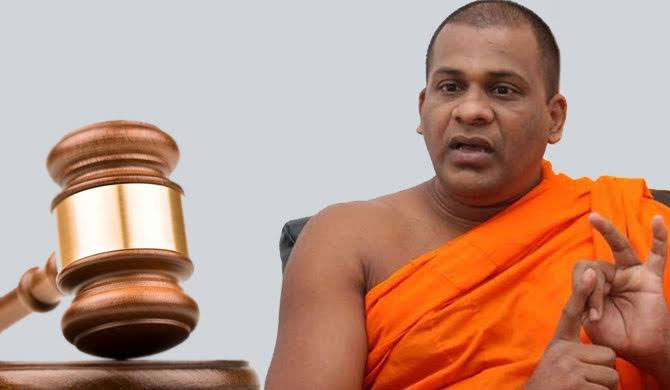
Court of Appeal President Justice Rohantha Abeysuriya yesterday withdrew from the bench hearing petitions challenging the decision by prison authorities to require Ven. Galagoda Aththe Gnanasara Thera to wear prison attire following his imprisonment.
The decision was announced when the petitions seeking to invalidate the prison authorities’ decision were taken up for consideration on October 14.
Following his withdrawal, a three-judge bench was appointed to hear the petitions.
The petitions relate to the prison authorities’ decision to require Gnanasara Thera to wear prison attire after he was taken into custody to serve the remainder of his sentence for contempt of court.
In September this year, the Supreme Court annulled the presidential pardon granted to Gnanasara Thera by former President Maithripala Sirisena in May 2019.
Following the ruling, the Court of Appeal directed the Commissioner General of Prisons to take the necessary steps to enforce the remainder of the monk’s prison sentence.
Gnanasara Thera had originally been sentenced to six years’ imprisonment for contempt of court but had served only around nine months before receiving the presidential pardon in 2019.
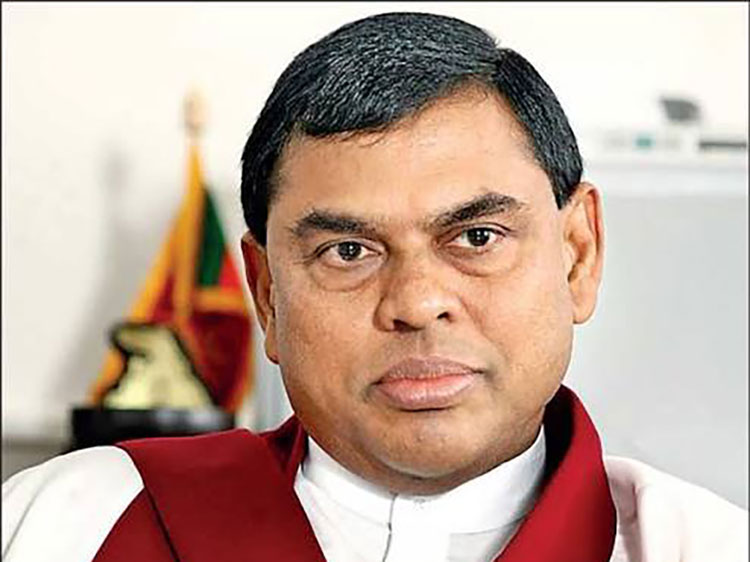
The Fort Magistrate’s Court yesterday issued an arrest warrant for former Minister Basil Rajapaksa over the alleged misuse of funds belonging to the Sri Lanka Tourism Promotion Bureau during the 2014 Uva Provincial Council election.
The Magistrate also directed the CID Illegal Assets Investigation Division to take necessary steps to obtain a Red Notice through Interpol.
The orders were issued following submissions made by the CID in connection with the alleged financial irregularities.
The CID’s Illegal Assets Investigation Unit informed the court that Rs. 7.8 million allocated to the Sri Lanka Tourism Promotion Bureau in 2014 had allegedly not been used for the Bureau’s promotional activities.
Instead, the funds had allegedly been used to provide 12,000 T-shirts during the Uva Provincial Council election, causing a financial loss to the government, the CID told court.

Showers or thundershowers will occur at most parts of the island

Prison rules to be revised over monks’ attire

AC President recuses himself from hearing prison attire case pertaining to Gnanasara Thera

Court orders steps to obtain INTERPOL Red Notice against Basil

CID informs Fort Magistrate’s Court investigation into money laundering case against Namal completed

No force used to make Gnanasara Thera wear prison garb – Prisons

‘Dates have the highest sugar content to fight Coronavirus’

Sunday Island 27 December – Headlines

#SundayIsland 17th December – Headlines

Sunday Island – 28th March

Sunday Island Headlines – 21 March

Sunday Island – 21st February – Headlines
-

 News6 days ago
NDB fraud Rs 60mn more than reported
-

 News6 days ago
Removing monk’s robes matter for Sangha to decide: Mahanayake Theras
-

 News5 days ago
NPP govt. reminded of its responsibilities as US warship leaves Colombo
-

 News4 days ago
Sri Lanka escalates anti-graft drive with Shiranthi’s jailing
-

 Latest News6 days ago
Farhan, Sadaqat help Pakistan ace 183 chase to go 1-0 up
-
 News6 days ago
BHC, Colombo: “LTTE remains a proscribed org. in the UK”
-

 Latest News3 days ago
Farhan and Sadaqat help Pakistan seal series in style
-

 News4 days ago
Iranian ships stranded, Lanka fears US sanctions