
Business
It has been proposed to increase the daily wage for plantation workers from Rs. 1,350 to a potential Rs. 1,750. – PM

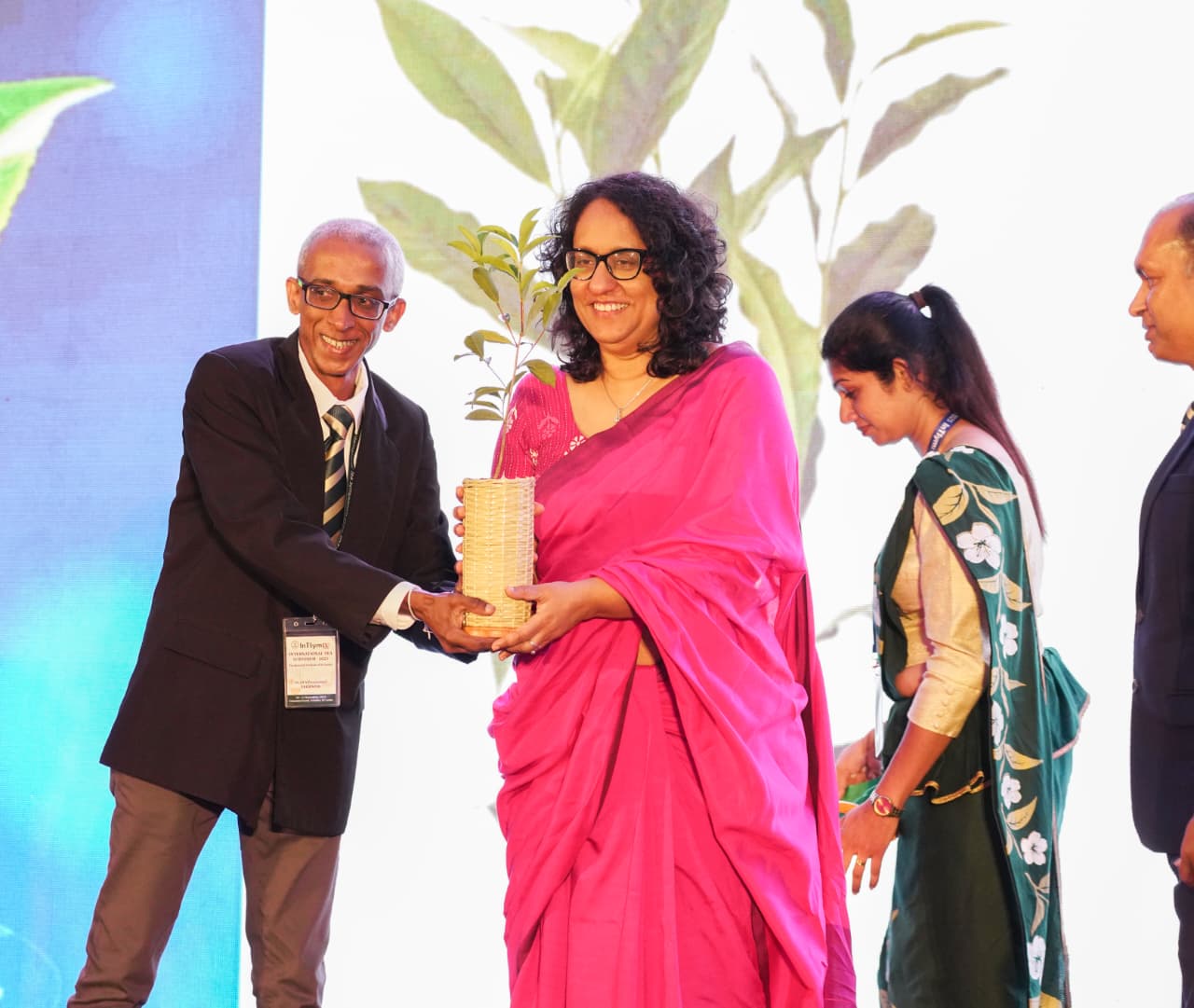
Prime Minister Dr. Harini Amarasuriya addressing the inauguration ceremony of the National Tea Symposium (InTSym100) held on November 10 at the Cinnamon Grand Hotel, Colombo said that in the 2026 budget it has been proposed to increase the daily wage for plantation workers from Rs. 1,350 to a potential Rs. 1,750 and marks the beginning of the government’s efforts to ensure fair compensation and improved living standards for those who sustain the industry.
The Tea Research Institute of Sri Lanka (TRISL) celebrates a century of scientific service to the nation this year, marking 100 years since its establishment in 1925. The Institute commemorates this milestone with the International Tea Symposium 2025, held on November 10–11 at the Cinnamon Grand, Colombo, under the theme “Perfect Sip: Bridging Innovations, Sustainability and Lifestyles.”
This landmark event brings together scientists, researchers, policymakers, and industry leaders from across the globe to share knowledge, explore innovations, and chart the future of the tea industry through collaborative research and development.
A new tea variety, TRI 5000, was presented to the Prime Minister during the ceremony.
The Prime Minister further stated:
“Tea remains a central part of Sri Lanka’s economy, contributing nearly 10% of agricultural exports and supporting the livelihoods of close to two million people. Beyond its economic role, tea is deeply connected to our land, culture, and communities. It sustains families across the sector from smallholders and plantation workers to manufacturers, packers, and exporters.
Approximately 90% of Sri Lanka’s tea production is exported to more than 140 countries. Since its introduction, tea has represented Sri Lanka on the global stage, with Ceylon Tea recognized internationally for quality and authenticity. As a government, we aim to further expand this progress and have set a target of 400 million kilograms of made tea and US$2.5 billion in export earnings by 2030.
At the same time, we must acknowledge the human dimension of the tea industry. Women have long played a central role, from plucking to research and administration. More than 60% of the labour force in the sector comprises women. During the COVID-19 pandemic, they continued to work, generating income for the state while others were under lockdown. Their contributions deserve recognition. They have faced significant hardships, from snake bites to injuries sustained while plucking tea leaves. Many still lack proper housing and access to childcare facilities, which adds to their challenges. These women must be provided with access to education, training, safe working conditions, fair wages, and equitable opportunities for advancement.
Our government remains committed to improving the quality of life for the plantation community. Recently, President Anura Kumara Dissanayake handed over 2,000 housing deeds to members of the plantation community who had long been denied the right to hold property, providing them with greater security and stability.
In the 2026 Sri Lankan budget, presented on November 7, a proposal was made to increase the daily wage for plantation workers from Rs. 1,350 to Rs. 1,750. This includes an increase in the base daily wage to Rs. 1,550, along with a government-proposed daily attendance incentive of Rs. 200, scheduled to take effect from January 2026. This marks the beginning of our efforts to ensure fair compensation and improved living standards for those who sustain the industry.
At the same time, the government is committed to advancing the tea sector itself. Our vision is to make the industry more sustainable, competitive, and inclusive.”
The event was attended by Minister of Plantation and Community Infrastructure, Samantha Vidyarathne, Deputy Minister Sundaralingam Pradeep, Secretary to the Ministry, . Prabath Chandrakeerthi, and other distinguished guests.
[Prime Minister’s Media Division]






Business
NSB Group delivers Rs.22.5bn operating profit in 1H 2026 as lending and core income strengthen

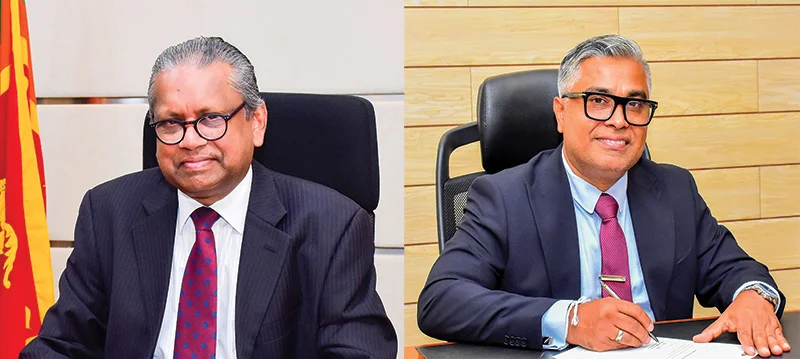
National Savings Bank Group (NSB) recorded resilient core banking performance during the first six months of 2026, supported by stronger net interest income, a notable expansion in fee-based earnings and continued growth in loans and advances. The results demonstrate the Bank’s capacity to maintain business momentum while navigating cost pressures and volatility in market-related income.
The Bank reported total operating income of Rs. 45.8 billion for the period, an increase of 3.1% compared with Rs. 44.5 billion in the corresponding period of 2025. Net operating income increased by 2.3% to Rs. 49.1 billion from Rs. 48 billion reported a year ago, providing a stable foundation for the Bank’s operations and customer-focused growth agenda.
Net interest income rose by 5.5% year-on-year to Rs. 44.2 billion, compared with Rs. 41.9 billion in the first half of 2025. This improvement was supported by a 4.7% reduction in interest expenses to Rs. 54.5 billion, despite a marginal moderation in interest income to Rs. 98.6 billion. The result reflects disciplined balance-sheet management and the Bank’s continued focus on maintaining a sustainable funding and asset mix.
The Bank also achieved substantial growth in fee-based earnings. Net fee and commission income increased by 37.0% to Rs. 1.40 billion, from Rs. 1.02 billion a year earlier. The increase underlines the growing contribution from transaction-led services and the Bank’s ongoing efforts to broaden non-interest revenue through customer-centric and digitally enabled banking solutions.
Profit before Tax (PBT) amounted to Rs. 22.6 billion, compared with Rs. 24.1 billion in the first half of 2025, while profit after tax stood at Rs. 13.4 billion, compared with Rs. 14.7 billion. The moderation in profitability principally reflected higher operating costs and the lower contribution from trading and derecognition gains. Personnel expenses increased to Rs. 13.8 billion from Rs. 11.5 billion, while other operating expenses rose to Rs. 4.3 billion from Rs. 4.1 billion.
Despite these pressures, the Bank preserved a substantial earnings base and continued to invest in the people, systems and service capabilities required to improve operational resilience and the customer experience. Income tax for the period amounted to Rs. 9.14 billion, while VAT and the Social Security Contribution Levy on financial services together exceeded Rs. 7.29 billion. In addition, the Bank declared a dividend of Rs. 7.4 billion to the Government as its sole shareholder. Accordingly, NSB’s total contribution to the Government through dividends, taxes and levies amounted to Rs. 23.8 billion, underscoring the Bank’s significant contribution to public finances and national development.
Commenting on the results, National Savings Bank Chairman Dr. Harsha Cabral PC said: “The first-half results reflect the resilience of NSB’s core business model and the enduring confidence placed in the Bank by generations of Sri Lankans. Our priority remains the prudent stewardship of public savings while supporting productive economic activity, financial inclusion and sustainable national development.”
NSB’s total assets increased by 2.1% during the first six months of the year to Rs. 1.87 trillion, from Rs. 1.83 trillion at end-December 2025. Loans and advances recorded a strong 9.1% expansion to Rs. 601.01 billion from Rs. 550.83 billion, demonstrating the Bank’s continued support for the financing needs of individuals, households and eligible institutional customers within its mandate.
Deposits, the principal source of funding for NSB, increased by 1.5% to Rs. 1.63 trillion from Rs. 1.61 trillion. The sustained growth in the deposit base reflects continued public confidence in the Bank and provides a stable platform for its savings-led business model. The Bank’s financial position remained sound, with total shareholders’ equity increasing by 4.1% to Rs. 123.91 billion from Rs. 119.05 billion. Retained earnings rose by 12.4% to Rs. 52.34 billion, further strengthening the Bank’s capacity to support future growth and absorb potential shocks.
Acting General Manager/CEO of National Savings Bank, Mr. Rohana Bandara Weerakoon, said: “Our focus is on translating the Bank’s trusted savings franchise into sustainable customer value. The growth achieved in lending, fee income and shareholder’s equity is encouraging. We will continue to strengthen digital access, service quality, cost discipline and risk management while delivering on NSB’s national mandate.”
The Bank’s profitability indicators continued to reflect the strength of its core banking activities, although higher operating expenses moderated overall returns. The net interest margin improved to 4.81% from 4.74% at the end of 2025, demonstrating an improvement in the Bank’s core interest spread. Return on assets before tax remained broadly stable at 2.46%, compared with 2.48%, while return on equity stood at 22.30%, compared with 25.08% at the end of 2025.
Asset quality improved during the first half of 2026. The net Stage 3 loans ratio declined to 2.05% from 2.52% at the end of 2025, indicating a reduction in net impaired credit exposures relative to the loan portfolio. At the same time, the Stage 3 impairment coverage ratio strengthened to 59.77% from 58.54%, reflecting improved impairment coverage against Stage 3 loans.
NSB maintained capital buffers comfortably above the applicable regulatory minimum requirements. The Tier 1 capital ratio stood at 19.72%, compared with the regulatory minimum of 8.5%, while the total capital ratio stood at 21.1%, well above the minimum requirement of 12.5%. These ratios demonstrate the Bank’s capacity to absorb potential risks while supporting continued business growth.
The Bank also maintained a strong liquidity and stable funding position. The all-currency liquidity coverage ratio stood at 311.88%, substantially above the statutory minimum of 100%, reflecting the availability of sufficient high-quality liquid assets to meet short-term liquidity requirements. The net stable funding ratio stood at 196.17%, also comfortably above the regulatory minimum of 100%, demonstrating the stability of the Bank’s longer-term funding profile.

By Hiran H. Senewiratne
CSE data indicated yesterday that the benchmark All Share Price Index moved up 0.11 percent mainly due to the petrol price reduction among some categories of fuel, market analysts opined.
Despite the lingering tensions in West Asia the market performed well.
The ASPI was up 22.93 points at 21,338.84, while the more liquid S&P SL20 was up 0.22 percent, or 13.03 points, at 6,018.37.
Market turnover was Rs 1.014 billion. Capital goods led turnover with Rs 300.64 million. During the day two crossings took place. Those crossings were reported in Access Engineering 1 million shares crossed to the tune of Rs 75 million and its shares traded at Rs 75 and Sierra Cables 850,000 shares crossed for Rs 31 million; its shares traded at Rs 36.70.
In the retail market, companies that mainly contributed to the turnover were; Sierra Cables Rs 77 million (2 million shares traded), Brown’s Investments Rs 68 million (13.3 million shares traded), CCS Rs 60 million (494,000 shares traded), Citizens Development Bank Rs 30 million (866,000 shares traded), Overseas Realty Rs 27 million (513,000 shares traded), Sampath Bank Rs 26 million (185,000 shares traded) and Commercial Credit and Finance Rs 24 million (217,000 shares traded). During the day 51 million share volumes changed hands in 15669 transactions.
Positive contributors to the ASPI were; Browns Investments (up 8.16 percent at Rs 5.30 ), Carson Cumberbatch (up 4.13 percent at Rs 749.50 ), Windforce (up 4.63 percent at Rs 40.70 ), JKH (up 0.51 percent at Rs 19.90 ) and DFCC Bank (up 0.99 percent at Rs 128.00 ).
Vallibel One (down 2.64 percent at Rs 88.50 ), Melstacorp (down 0.52 percent at Rs 190.00 ), and Hatton National Bank (down 0.33 percent at Rs 380.25 ) were top negative contributors.
Ceylon Land & Equity announced a proposed first and final scrip dividend of Rs 0.043 per ordinary share for the financial year ended March 31, 2026, subject to shareholder approval at its Annual General Meeting on September 23, 2026.
The dividend involves capitalizing Rs 39.61 million to issue 4,553,230 new ordinary shares at a consideration of Rs 8.70 per share, in the proportion of 1 new share for every 202.33 existing shares.
Shares of Ceylon Land & Equity closed down 1.16 percent at Rs 8.50.
Maharaja Foods announced a final scrip dividend of Rs 0.10 per ordinary share for the financial year ended March 31.
Following a 15 percent withholding tax deduction, the net dividend entitlement of Rs 0.085 per share will be satisfied by issuing 730,468 new ordinary shares at a consideration of Rs 16.00 per share, in the proportion of 1 new share for every 188.2354873861 existing shares held.
Shares of Maharaja Foods were trading up 0.61 percent at Rs16.50.
Yesterday the rupee was quoted at Rs 327.68/75 to the US dollar in the spot market, stronger from Rs 327.98/328.04 Friday, while bond yields were broadly steady, dealers said.
The telegraphic transfer rate for the dollar was 323.50 buying, 332.50 selling; the euro was 372.5779 buying, 386.3587 selling; and the pound was 437.1858 buying, 451.2942 selling.

Ai-CHA, the Indonesian origin, ice cream and bubble tea brand is establishing itself as an irresistible, super-cooling refreshment among consumers in the bustling coastal town of Negombo, besides proving a big hit among other Sri Lankan urban populations as well. The numbers visiting the initial Ai-CHA ice cream parlour in Negombo is solid evidence that the ice cream brand is proving a crowd-puller of the first magnitude.
Ai-CHA Ice cream and bubble tea is already present in over 2000 locations world wide and has made striking inroads into global consumer palettes. Referred to as ‘a popular international soft-serve ice cream and bubble tea brand’, these ideal thirst quenches are made of high quality ingredients such as, milk, milk powder, cream, sugar and water. The prices are purse-easy and affordable.


Amendment of the Quarantine and Prevention of Diseases Ordinance No. 3 of 1897
Cabinet approves donation of USD One Million to the Government of Nepal

Nahida, Marufa help Bangladesh brush aside Indonesia

Showers will occur in the Western, Sabaragamuwa, Southern and Uva provinces and in Kandy and Nuwara-Eliya districts

Sun directly overhead Kalpitiya, Talawa, Sinharagama, Galkadawala, Nachchaduwa, Padikaramaduwa, Gomarankalla and Verugal about 12.10 noon today (01)

SJB asks what Speaker intended to do about allegations against CJ

‘Dates have the highest sugar content to fight Coronavirus’

Sunday Island 27 December – Headlines

#SundayIsland 17th December – Headlines

Sunday Island – 28th March

Sunday Island Headlines – 21 March

Sunday Island – 21st February – Headlines
-

 News4 days ago
Eight politicians in drug kingpin probe
-

 Features3 days ago
“Wrap Me Up in My Blazer”— A Gentlemanly Bradby Reminiscence
-

 Business4 days ago
Sri Lanka opens up: A new season of direct connectivity
-

 Features4 days ago
Redefining ageing in Sri Lanka
-
 Features6 days ago
Insights from Chieftains of Uva: Genealogy of two Kandyan Families – Part II
-
 Latest News5 days ago
Nepal-Tibet floods: What happened, what caused them and who is missing?
-

 Editorial6 days ago
Warning of power cuts: El Niño and corruption
-

 Features6 days ago
Export diversification: Missing the wood for the trees – Part I