
Opinion
Issues of academic freedom and forced ‘voluntary’ retirement of Prof. Sasanka Perera: A call for reflection and dialogue

Prof. K.K. Aggarwal President
South Asian University New Delhi
Mr Ranil Wickremasinghe President of Sri Lanka President’s Office Colombo
Mr. Sagala Ratnayaka
Chief of Staff to the President of Sri Lanka President’s Office
Colombo
Mr. Saman Ekanayake
Secretary/President of Sri Lanka President’s Office
Colombo
Mr. Ali Sabry
Minister of Foreign Affairs Government of Sri LankaMr. Tharaka Balasuriya
State Minister of Foreign Affairs Government of Sri Lanka Ms. Kshenuka Senewiratne
High Commissioner of Sri Lanka to India
Ms. Aruni Wijewardane,
Secretary/Foreign Affairs Ministry of Foreign Affairs Government of Sri Lanka
Mr Niluka Kandurugamuwa
Director General SAARC Ministry of Foreign Affairs Government of Sri Lanka
Dr. S. Jaishankar
External Affairs Minister Government of India
Mr. Vikram Misri
Foreign Secretary, Ministry of External Affairs Government of India
Mr. Jaideep Mazumdar
Secretary [East] Ministry of External Affairs Government of India
Mr. CSR Ram
Joint Secretary [BIMSTEC & SAARC] Ministry of External Affairs Government of India
Mr. Puneet Agrawal
Additional Secretary/ Indian Ocean Region Ministry of External Affairs
Government of India Mr. Santosh Jha High Commissioner
High Commission of India Colombo
Mr Md. Golam Sarwar
Secretary General/SAARC SAARC Secretariat Kathmandu
Ms Irosha Cooray
Director/ Education, Security and Culture SAARC Secretariat
Kathmandu
We, the alumni of the South Asian University (SAU), are extremely appalled by the recent treatment meted out to Prof. Sasanka Perera by the University. Prof. Perera is one of the founding faculty members of this institution and has been crucial to not just the evolution of the Department of Sociology but also to the blossoming of the university in varied roles as professor, Head of the Department of Sociology, Dean of Social Sciences and Vice President of this ‘international’ University over thirteen years of dedicated efforts.
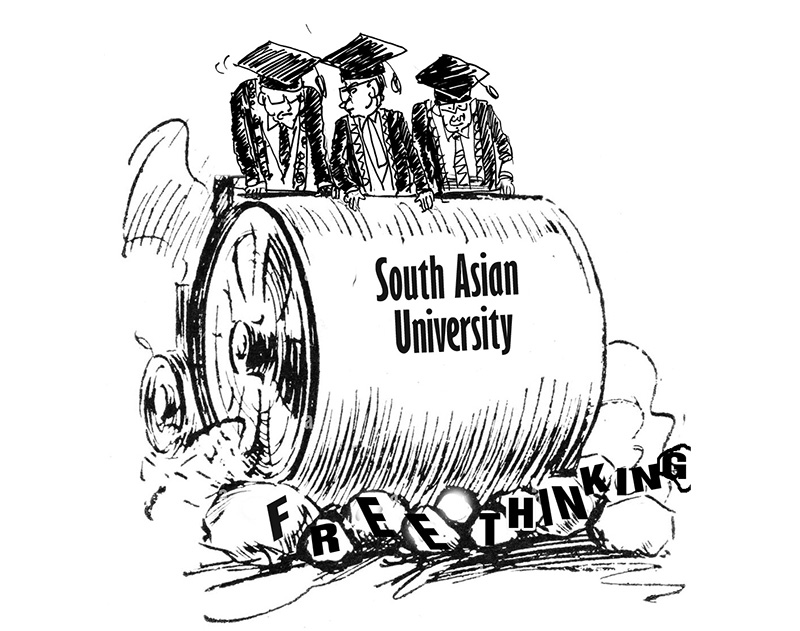
The systemic institutional harassment that Professor Perera was made to undergo since April this year initially launched by the Dean of Social Sciences Sanjay Chaturvedi and the Head of Sociology Dev Nath Pathak, is however not surprising given the recent ongoing chain of events regarding the suspension of four core faculty members and the witch-hunt of students who dared to speak out for their basic rights as an intrinsic part of life and learning in what is supposed to be an international university. In these last few years, it is, perhaps, a matter of routine to institutionally hound and effectively extinguish any notion of free speech and liberty in this institution of higher learning. The notoriety that SAU has brought upon itself globally in the last few years is hard to retreat from.
For alumni of SAU working in leading universities in and outside South Asia and the larger international academic world, the punitive and arbitrary measures by the administration against its faculty and students for merely speaking out for their minimum rights — and in this case for solely supervising the writing of a PhD research proposal — is indeed shocking and unfathomable! No matter what the University may claim to wash its hands off the egregious situation it has created, it is evident that Prof. Perera was left with no option but to voluntarily retire in the horrific circumstances to preserve his dignity and integrity, characteristics appallingly lacking at the university and in its leadership. But with the wrongful ouster of a founding faculty and, not to mention, an internationally acclaimed scholar in the field of Social Sciences, the University has effectively plunged to new depths of academic degeneration and international embarrassment.
This recent issue of sending a show-cause notice to a PhD candidate and setting up an inquiry committee to investigate his supervisor merely for citing a world-renowned intellectual on a research topic that is solely within the bounds of academic history and present practices of research across the world are tragically farcical operations. The dissertation proposal, which cites linguist Noam Chomsky’s view, argues that Narendra Modi represents
a ‘radical Hindutva tradition’—a perspective that aligns with the views of many progressive thinkers. Chomsky himself has critiqued the Modi administration of undermining Indian secular democracy and promoting a discriminatory ideology. Adding to the complexity, the student in question is a Muslim from Kashmir. The situation, where a student is being questioned for citing a scholar and a professor is forced into retirement for supervising the student, ironically seems to validate Chomsky’s critique by indeed demonstrating a grave threat to Indian secular democracy and a violation of academic freedom.
Adding to the irony, Professor Sasanka Perera is one of the few international faculty members at South Asian University that touts itself as an ‘international’ university, and the treatment meted out to him underscores the rapid erosion of the institution’s global and cosmopolitan character and its reinvention as a North Indian institution of ill-repute. While universities have historically emerged within the dominant socio-political and economic frameworks of their times, the more established and reputed ones have progressively transformed into bastions of democratic values and critical inquiry. Today, they are expected to champion the principles of academic freedom and foster environments where diverse perspectives are engaged with and respected. Sadly, rather than serving as a beacon of critical thinking in the current socio-political climate, South Asian University has become a mere apparatus of the Indian State. Its South Asian sensibility and ownership by the South Asian Association for Regional Cooperation (SAARC), which established it, is irrevocably lost. This is a new low in the history of this University’s enterprise of harassment of its faculty. The future of authentic, serious and unbiased research in SAU is at stake if the minimum good practices of research and academic writing cannot be upheld within a university that claims global repute.
What is worse is that the institutional harassment of Prof Perera did not come from external sources. As clearly authenticated by documents of the inquiry process, it came from the Head of Sociology and the Dean of Social Sciences augmented by the deafening silence of the faculty members of the Department of Sociology, other Social Science fields in the university and more generally, across the university. It must also be asked why the two other faculty members who were part of the PhD candidate’s Research Committee and the Academic Committee of the Department of Sociology, which cleared the proposal, were not subject to the inquiry and only Prof. Perera was singled out. Is it because he is non-Indian? All this begs the question: what has happened to the social sciences at SAU and what has become of their practitioners’ sense of ‘doing social science’ and the ethics this involves? With this kind of silence and choreographed timidity in the face of injustice displayed by the great majority of faculty members in the university, one cannot envisage SAU ascending to the heights its pioneers, including Prof Perera, initially envisaged and worked towards.
The exit of Professor Perera is not just a colossal loss for the present students of Sociology at SAU, but also marks the end of honing young and budding minds in the future. Apart from his extensive scholarship, he was a cherished teacher in the classroom who encouraged
critical, reflective and analytical thinking — a highly valuable skill set for knowledge production in social sciences. Professor Perera has been a North Star for many students who have gone on to pursue PhD and research in some of the top international universities. Many of us could pursue a doctoral programme in the top 100 Universities of the world due to his motivation and guidance. His timely and always unstinted and unwavering support for students in their time of need (many times even financial needs) attests to his magnanimity and altruism, a rare quality at SAU.
This entire episode also opens up a series of other crucial questions. That is, what have the SAARC Secretariat, the Secretary-General of SAARC, the SAU Governing Board and the Government of Sri Lanka done to ensure academic freedom and impartiality at the university while safeguarding the interests of a Lankan citizen who does not have access to courts of law in India? Moreover, what has the Indian Government done in this situation which championed the appointment of the present President under whose watch the current episode unfurled, hiding behind the protection the Indian government has gifted to SAU in the form of rights of immunity which has so far allowed SAU to engage in these kinds of unprofessional and unethical activities relentlessly.
All this is to say that the prolonged institutional harassment faced by Professor Perera that led to his early and unplanned retirement is a deep blemish on the academic integrity, ethics and authenticity of knowledge production in a university that claims to be of international standing. Hegemonic geopolitics and extreme pettiness in positions of leadership and power in the university must stop negatively influencing academic practices if SAU genuinely aspires to reach the potential that was envisioned in its creation. As of now, SAU is nose diving into the void of intellectual censorship and academic captivity, effectively taking a toll on its fee-paying students and their futures.
Concerned Alumni of South Asian University
Anushka Kahandagamage
2017-2020 Sri Lankan Sociology (Mphil/PhD) Doctoral Candidate, School of Social Sciences, University of Otago.
Magna Mohapatra
2020, 2022 India Sociology (MA), Sociology (MPhil) Doctoral student, University of Wisconsin-Madison
Sakuna M Gamage
2019 Sri Lankan International Relations (MA) Independent Reseacher & Journalist
Zunayed Ahmed Ehsan 2020 Bangladesh Sociology (MA) Doctoral Student, University of Wisconsin-Madison
Sukanya Maity
2023 India Sociology (MA)
Vishal Singh Raghuvanshi
2017 India Sociology (MA) Working at TR Abir Mazumder 2015 India Sociology, PhD Visiting Faculty, NLSIU, Bangalore
Kaushalya Kumarasinghe
2016 Sri Lanka Sociology, PhD Visiting Academic, Faculty of Graduate Studies, University of Colombo
Buddha Prakash Dhamma Piya Asoka
2021 India Sociology, MA Doctoral Student, Department of Anthropology, CUNY Graduate Center
Kathirtharsini Parameswaran
2023 Sri Lanka LLM
Mst Sabina Tabasum
2023 Bangladesh Sociology, MA Research Associate, Dnet- Development Research Network
Keshav Sawarn
2023 India Sociology, MA Junior Research Fellow, Indian Statistical Institute
Prabudh Singh
2017 India Sociology, MA
Yasangi Handunge
2024 Sri Lanka LLM
Aishwarya Ahmed
2022 Bangladesh Sociology, MA Doctoral Student, Oklahoma State University
Sivaselwam Arulnesan
2022 Sri Lanka MA in International relations Doctoral Student, Christ University, India
Keerthika Suntharalingam
2023 Sri Lanka MA in Sociology Visiting Lecturer, The Open University of Sri Lanka.
Aditya Kumar Pandey
2024 India MA in Sociology Doctoral Student, Shiv Nadar University
Rajashree Chowdhury
2018 India MA in Sociology Doctoral Student, Department of Sociology, Delhi School of Economics
Sridhar Krishnan
2018, 2024 India MA & PhD. International Relations Writing Tutor, Centre for Writing and Communication, Ashoka University.
Pranav Menon
2019 India LLM Doctoral Student, University of Minnesota, Twin Cities
Amrita Sachdev
2016 India Sociology, MA Screenwriter, Mumbai
Kalyan Kumar K
2016 India Sociology, MA Research Fellow, Westminster Business School, London
Jyothika Rimal
2016 India Sociology, MA Ngo, Nepal
Bhimraj M
2019 India LLM MPhil (Law) Student, University of Oxford
Rachna
2022 India LLM Litigation
Swapnil Tiwari
2019 India LLM Assistant Registrar, Customs Excise and Service Tax Appellate Tribunal
Vijayan M
2018 India LLM Asst.Professor Govt.Law College Calicut, Kerala
Nishit Sharma
2022 India Sociology, MA Doctoral Student at University of Nevada Las Vegas
Nazi Karim
2018 Afghanistan MA(Sociology) Phd student at Victoria University of Wellington
Shyamjith
2022 India MA in Sociology Project Fellow, National Institute of Rural Development
Violina Barman
2020 India Sociology, MA Research Associate, CSDD India
Namrata Sedhain
2018 Nepal LLM Officer, Supreme Court of Nepal
Md. Sharifur Rahman
2020 Bangladesh LLM Senior Officer, Zubion Development Solutions Limited
Shashi Kumar
2020 India IR
Haaris Moosa
2020 India LLM Advocate, Kochi
Anukuvi Thavarasa
2020 Sri Lanka Sociology, MA Researcher at the Central European University, Vienna
Tuisha Sircar
2019 India MA Sociology Doctoral Student, IIT Bombay, ADCPS
Chamika Wijesuriya
2020 Sri Lanka MA International Relations Independent Researcher
Bonna chakraborti
2024 Bangladesh Sociology Ma
Ahana Chakrabarti
2018 India MA Sociology Doctoral Student, CSSSC
Sheikh Raisul Islam
2018 Bangladesh LLM Lead Specialist, Trade, BIMSTEC Secretariat
Md. Raihan
2020 Bangladesh LLM Project Officer-Legal, INGO
Mohammad Dawood
2019 Afghanistan MA International Relations Director Research Alternative Spectrum, USA
Anusha Bhansali
2020 India MA International Relations
Deyasinee Bhattacharyya
2020 India MA Sociology
Syed Eesar Mahedi
2022 India PhD IR
Irshad Arshad
2021 Pakistan MSc Biorechnology
Amol Shaila Suresh
2023 India MA Economics Research Associate, University of Maryland
A.S.M Riad Arif
2018 Bangladesh MA Sociology icddr,b
Pooja Kumari
2022 India LL. M. Research Fellow, IIT Kharagpur
Abu Raihan Sarkar
2022 India MA Sociology
Kanika Rai Dhanda
2015 India MA Sociology Doctoral student, Northwestern University
Neranjan Maddumage
2019 Sri Lanka MA Sociology Consultant Researcher, INFORM Human Rights Documentation Centre
Rohan Basu
2020 India MA Sociology Doctoral Scholar, Dept of Historical Studies, Central European University, Vienna
Manvika Shivhare
2022 India LL.M. Project Lead, ActionAid
Lopamudra Gogoi
2022 India MA Sociology Assistant Accounts Officer, Assam Finance Service.
S. Vasudev
2024 India M.A. Sociology Doctoral Student, Department of Sociology Shiv Nadar University
Fawaz Basheer
2021 India M.A. Sociology
Mortaza Mandegar
Hassani 2019 Afghanistan M. A. Sociology Doctoral Student, History, UCLA
Venkata Narayana
2016, 2021 India MA Sociology, MPhil Sociology Coordinator, Department of Sociology, Loyola College, Chennai.
Abdullah Al Mozahid
2023 Bangladesh MA Sociology Lecturer, Premier University, Chittagong
Riya Choudhary
2024 India M.A Sociology
Madhubanti Talukdar
2019
India M.A. Sociology Consultant Researcher, Climate Loss and Damage project funded by IWMI
Shray Mehta
2018 India MPhil Sociology PhD, NUS Sociology
Mostafa Shabuj
2016 Bangladesh M.A Sociology Journalist, The Daily Star


Mr. R.M.Amerasekera’s recent article on how improving rural households and villages contributes to national development (Sunday Island Aug. 23) was interesting reading as I, during my long years in the public service, was privileged to be associated with projects to improve the living conditions of rural folk.
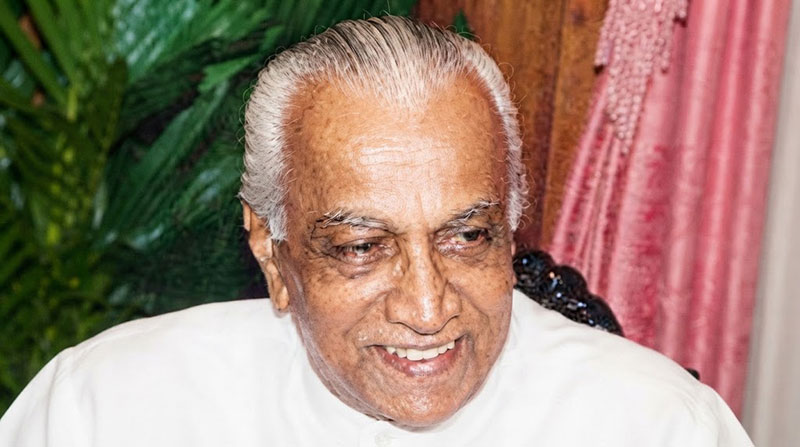
In this context, mention should be made of that down to earth politician, D.B.Wijetunga who as
Minister for Highways and Power & Energy focused much attention on uplifting the living standard of villagers with projects to improve their lot. As Minister for Highway he successfully pushed the Treasury to increase inadequate provision in the estimates to improve roads under Provincial and District Road Committees.
Having done so, he instructed area engineers to see that the full allocation was utilized giving top priority to improve minor roads. Foot paths were widened and made motorable and farmers who carried their produce to market on their heads or shoulders had tractors. School children had small vans or two-wheeled tractors to take them them to school. It should also said that the interest shown by the government inspired villagers themselves to organize shramadana activities that were guided by Area Engineers.
Then D.B.Wijetunga as Minister for Power & Energy was keen on providing electricity to villages. Finding there was no provisions in government estimates he consulted his Secretary to the Ministry, Prof. K.K.Y.W. Perera, who suggested that we approach Asian Development Bank (ADB). Thanks to Prof. Perera’s influence with the ADB a loan was arranged subject to the condition that only financially viable villages be connected.
To satisfy this condition, a survey had to be carried out. Special mention should be made of Engineer Maxie Tissera who devotedly with the assistance of Area Engineers, prepared a list of such villages and
work started with all enthusiasm. Members of Parliaments, seeing that some villages in their electorate had been not listed, provided funds from their Decentralized Budget to provide electricity to such villages. A recent news item says that almost the entire country has now been electrified.
I am happy that I was involved in these two projects during my public service career as an Assistant Secretary to the Ministries for Highways and Ministry for Power & Energy.
G.A.D.Sirimal, SLAS,
Rtd. Asst. Secretary,
Ministry for Power & Energy

by Sunil Abhayawardhana
After the economic crisis of 2022, and the IMF programme that followed, some are of the opinion that ‘stability’ was achieved, but followed by ‘not out of danger yet’. Where is the ‘stability’ then?
We know that the cause of the crisis was a lack of foreign exchange. However, the IMF programme focused on the fiscal aspects, not one that enhanced export earnings. So, we are once again in a situation, facing the same problem, with the ‘fiscal discipline’ thrust on us.
Therefore, it is clear that if we seriously want to achieve ‘real’ stability, we need to use our heads much more and get out of the ‘epistemic insularity’ that has been around for so long. (Epistemic insularity is a state where an individual or group becomes isolated from alternative perspectives, data, and frameworks of knowledge. It occurs when individuals, groups or communities construct a protective bubble around their beliefs, making them resistant to outside evidence or challenging viewpoints).
It applies also to guys who have recently got into the bubble and being taught Neo-liberal lessons.
Fixing targets for budget deficits and tax collection is ok if it is in relation to a development drive. If not, it would only increase the misery of a higher cost of living. That development drive is what is missing in Sri Lanka.
A development drive comes after formulating a development plan, which is not an instant production, takes much time and effort. Therefore, Sri Lanka needs right now an accelerated ‘urgent’ project, that would bring ‘real’ stability, in the shortest possible time. Once ‘real’ stability is achieved, the focus should shift towards a greater development plan.
The only way
The only way for Sri Lanka to achieve ‘real’ stability is by enhancing its export earnings by at least $ 20-25B. Most of the projects that are being thought of are not capable of bringing in earnings on the scale required, in the shortest possible time.
Over the years, tea, rubber and coconut was the first base of exports. Then there were many smaller products such as gems and petroleum products that were not developed, tough the potential was there, followed by garments and IT, which were small in scale.
Continuing on the same path, is not going to change the story. A radical change of stance is urgently needed. What is amazing is that it has not yet been realised.
A point to note is that a World Bank report issued a few years ago, highlighting the possibility of enhancing exports by the present exporters by as much as $10B, if provided with some assistance, was not even considered. However, this should be an ongoing programme, but conditions of the IMF programme may not be able to give the required support to these industries.
Historically, since Independence, the path chosen has not been able to bring the desired results. Should we then, not change our thinking, to be able to bring about the urgently required outcomes?
Widespread development is going to take time with the existing conditions. The governments programmes would at best, bring in an additional $5B by 2030 at best. Therefore, targeting one specific sector and industry, with total focus for about a year or two, has a better chance of success.
Even if total investment is around 10% of GDP and half of it is diverted to a single project capable of increasing export revenue by 100%, that bold decision should be taken. The shortfall in public investment for a short time should be tolerated.
Sri Lanka has never embarked on such a programme and is the only way it could achieve ‘real’ stability.
Therefore, after much research, the only single project, capable of enhancing export figures by as much as $20 -25B was identified as mentioned below.
Oil refinery in Trincomalee
This is a project that should have been started at the time of Independence in 1948, when the funds were available from the Sterling Balances Agreement. However, it did not materialise and the country paid a heavy price.
Now, to be able to generate $20-25B, a refinery with at least a 400,000 b/d refinery is urgently required to be set up in Trincomalee. India is planning to set up eight new refineries in the coming years. The world’s largest refinery is located in Jamnagar, India, with a capacity of around 1.6 million b/d, owned by Reliance Industries.
The funding of such a project has many options, Multi-lateral sources, Joint Ventures and many more. (However, for a country that could release $2-3B for vehicle imports, should be able to work that out).
An idea of the cost could be determined by the Chinese cost for a 200,000 b/d refinery, which works out to around $3.7B. Sourcing equipment from China is considerably lower, compared with other western sources.
Sourcing the correct equipment, from suppliers at a price that the project can afford becomes critical. Equipment from the west is highly inflated, while Chinese equipment is now available at a much lower price.
The shortest time a refinery has been established is one year, in South Korea, and Singapore’s first refinery, a little over a year. There are many hurdles that have to be got over and a government has the ability to do so, if it is really determined. Most of it is paperwork and environment issues, with site selection.
The Ceylon Petroleum Corporation has been in existence and operating the 50,000 b/d refinery from the late 1960s and should be able to handle such a project, if not outside help would have to be deployed.
Most governments do not see the long- term benefits of such a project, due to the normal long- time frame to commence such a project. However, this is where ‘urgency’ has to be understood. As the CPC is the only institution involved, apart from the state bureaucracy, there is no reason for delay. If there is a strong will, there would always be a way of getting it off the ground, in the shortest possible time.
The discussions already commenced regarding the UAE, India, SL project, could be beneficial. A joint venture with India, is a strong possibility. The pipeline distribution would reduce delivery costs. However, total dependence on the Indian market would not be a good strategic or business decision.
The second refinery
China offered to establish a 200,000 b/d refinery in Hambantota, three years ago. Obviously, the government is under tremendous external pressure on this. This is where diplomacy at its best is required.
Sri Lanka had this ability in the 1960s and early 70s and later in the 1990s and early 2000s. This ability does not seem to be around at present, but needs to be revived.
I remember in the early 1970s during the Bangladesh war, Pakistan requested permission to fly via Colombo to East Pakistan. No one expected Sri Lanka to grant permission. But it was granted, keeping the relationship with India intact.
The proportion to be released to the local market and tax concession, should be worked out with the best interests of the country in mind. Even though the original percentage to be released to the local market was 20%, a further 20% would reduce the export earnings, but would save importing that amount, as SL imports around 100.000 b/d of refined petroleum.
Tax concessions face obstacles with the IMF programme, which could be solved via negotiations, that convince the IMF of the greater benefits to the country, but requires skill, as mentioned earlier.
A project of this nature, which brings immediate results, has never been seen in SL and lacks the confidence needed, but has to be built up to take bold decisions. It would face many obstacles, but as mentioned earlier, if there is a will, it could be done.
The Hambantota refinery could easily add another $10-15B to the aggregate earnings from petroleum exports, which would total around $ 35-40B in total.
Would that not bring ‘real stability’ to the economy?
No other project or projects could bring in the foreign exchange on the scale that these two could. In fact, expanding the refinery capacity in Trincomalee and Hambantota, could be considered later.
Other possibilities
While aiming for ‘real’ stability, it should not be forgotten to bring ‘real’ stability to the farming community in the country.
The mistakes of the past in relation to agriculture development needs to be corrected by the farmer being the ultimate beneficiary from agriculture development. It is ridiculous in an under developed economy like Sri Lanka, where the farmer toils so hard, while the big millers get the ultimate benefit.
Therefore, the thinking should change, where the farmer sells rice, with milling by farmer coops and linking the farmer to the rice market.
Once stability has been achieved and a sizeable reserve built up via earning as against borrowings, Sri Lanka should set its sights on development and not stop at stability. Listed below are a few projects that could be initiated.
* An iron and Steel mill for export in Trincomalee- which could bring in around $10-15B.
* Develop Colombo as The Gem and Jewelry center of the World $ 5-10B.
* R+D into graphene if could be used for semiconductors
* Aircraft repair and maintenance facilities to service the huge fleet in India
* Local IT companies registered in SL, operating out of Jaffna
* R+D to be incentivised in various fields
Sovereignty, Tourism, and the Law:
by Sasanka Perera
(The writer is on X as @sasmester)
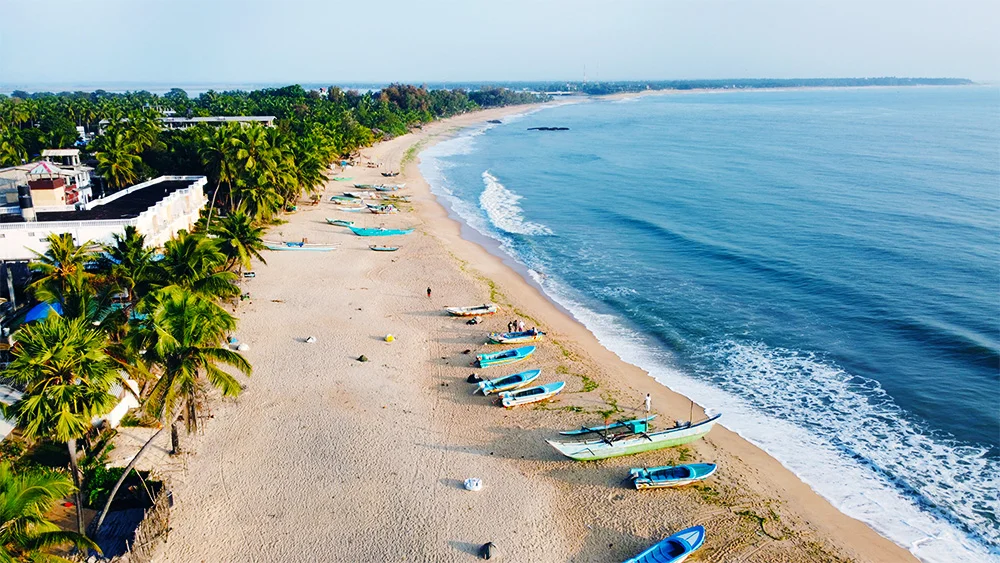
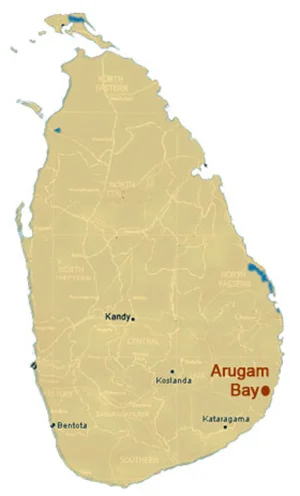
On 28 October 2024, I wrote in this column an essay, titled ‘Israelis in Sri Lanka and the Advent of a ‘Neo’ Colonialism.’ My concern then was the disruption long-term Israeli tourists, often over-staying tourist visas, were causing particularly in the Eastern Province. Government intervention was mostly visible through relative inaction. Over the past year, Sri Lanka’s pristine coastal enclaves, from Hikkaduwa and Weligama in the west to Arugam Bay in the East, have found themselves at the centre of a complex and needless geopolitically-inflected controversy. As I explained in my earlier essay, too, the rapid growth of Israeli tourism has brought to light serious concerns regarding regulatory oversight, economic fairness, and national sovereignty. The latest controversy erupted in August 2026, in Hiriketiya, near Dickwella, in the country’s south. Unlike in the east, where the protesters were mostly from Muslim communities, in Hiriketiya, the protests were led by Buddhists, including monks.
At the centre of latest public debate is the establishment of a ‘Chabad House’, essentially a Jewish community and religious centre, catering to Israeli travellers. One of the primary demands the protesters made, was to investigate if this religious entity was established legally and if the activities of Israeli residents, including running businesses, were legal. In the context of the earlier controversy, Prime Minister Harini Amarasuriya is on record for clarifying in Parliament on 8 January, 2025, that neither the Ministry of Buddhasasana, Religious and Cultural Affairs nor any other government institution had granted official permission for the establishment of Israeli religious sites. In other words, what existed was illegal.
Chabad Houses as private business entities
 Representatives of the local Chabad Houses, of which there are about six at present, claim they operate as registered private business entities. However, operating public religious and communal hubs on standard tourist or corporate permits violates local town planning and immigration guidelines. Besides, despite the claim, it is very unclear even if standard business licenses were issued in the first place. If religious entities were run under temporary business licenses, then, that itself is a clear violation of Sri Lankan law showing scant disregard to both the legal system in the country and its socio-political sensitivities.
This setup stands in stark contrast to how Sri Lanka’s own religious presence is managed in Israel. In Tel Aviv, a Sri Lankan Buddhist temple was established in 2013 to serve thousands of Sri Lankan migrant workers. The effort was facilitated by the Sri Lankan Embassy in the Israeli capital. To respect local Israeli laws and urban regulations, that temple operates discreetly inside a private apartment complex rather than as a prominent, independent public centre with an overt public religious personality as is usually the case with Buddhist temples globally. The Chief Incumbent of the temple, at the time it opened in 2013, Ven. Karavilakotuwe Dhammathilaka, is on record for stating very clearly that in keeping with the religious sensitivities in Israel, the inaugural ceremony itself was also held on a low scale without much publicity. This makes sense given the fact that Israel is one of the most religiously intolerant societies in the world as its track record amply demonstrates. This is more so in the last few years. What is important in the context of the opening of the Buddhist temple in Tel Aviv is, no laws were violated, the temple was meant for long term-residents, and respected local laws and sensitivities. It was also an effort formally facilitated by the Sri Lankan Embassy.
The comparison raises a fundamental question of parity: why should foreign nationals in Sri Lanka, including Israelis, establish public religious and cultural centres without municipal or government authorisation, while Sri Lankans abroad strictly abide by local constraints, as the nondescript Sri Lankan Buddhist temple in Tel Aviv clearly demonstrates?
The debate and anxieties around the Israeli presence in Sri Lanka occurs alongside another pressing concern. That is, the relatively precarious position of thousands of Sri Lankan workers in Israel who are mostly in the construction, agriculture and caregiving sectors. Recently, thousands of Sri Lankan migrant workers faced deportation from Israel due to job category violations, after switching from agriculture or caregiving to unauthorised sectors. The Sri Lankan Foreign Ministry reportedly actively intervened with Israeli authorities to negotiate regularisations and protect these workers. In my view, Illegality is illegality everywhere. If Sri Lankans violated Israeli law, that country had every right to deport them, and we should not have intervened. But I do understand the government’s position, too, as it relates to employment of citizens. Then, there should be a system where such regularisations are managed via the facilitation of the Sri Lankan Embassy, and if citizens do not make use of such a facility, they should clearly face the consequences of Israeli law.
Troubling double standard
Whichever way one looks at it, this highlights a very troubling double standard. That is, while Sri Lankan workers and the government have to cautiously navigate strict Israeli labour and visa laws, Israeli visitors in Sri Lanka frequently evade local visa laws without consequence. This mostly occurs as a result of the institutionalised spinelessness of our law enforcement when it comes to foreigners, and particularly seemingly ‘white’ foreigners. But surely, over 78 years after Independence, spineless meekness on our part must have clear limits. There needs to be clear reciprocity. Besides, Israelis are not here to work as the Sri Lankans in Israel are. They are supposed to be tourists. They should neither work nor establish religious edifices as they feel fit violating our laws and sensitivities as a matter of routine. This is why the ongoing Israeli activities reek of settler-colonialism.
Also, it is not only a matter of Israeli intransigence and official and public Sri Lankan apathy. The latter becomes possible when locals, who rent buildings to visa facilitate in running illegal Israeli businesses depriving their own citizens of legitimate incomes, are not even prosecuted by local law enforcement and judicial systems. As often is the case, foreign arrogance is built upon local meekness and lack of even the most basic sense of national pride. Of course, this does not apply to anyone, including Israelis who are operating a business in Sri Lanka legally, based on legitimate licenses issued by the government.
The proliferation of unlicensed, foreign-run businesses poses severe economic challenges to Sri Lanka’s local tourism industry. Many Israeli visitors enter this country on standard tourist visas but illegally set up guesthouses, surf camps, and cafes. Often operating exclusively in Hebrew, these businesses transact via informal channels or foreign accounts. When foreign visitors, including Israelis, run unregistered businesses, there are numerous local fallouts. For one thing, Sri Lanka loses substantial corporate, local government, and value-added tax revenues. Secondly, these activities severely undercut local livelihoods. Local vendors, tour guides, and small hoteliers are excluded by closed-loop and illegal Israeli operators. One of the common complaints where illegal Chabad Houses have been established is that they provide accommodation and meals to Israeli tourists, seriously disadvantaging local tourism-related businesses.
Adverse economic impact
Much of the income earned from these closed illegal operations, hardly comes to Sri Lanka in any way except for payment for supplies and rentals. Finally, since properties lease informally at inflated long-term rates to these operators, it drives up costs for Sri Lankan entrepreneurs and small business owners. But all this has become possible and so entrenched because of the established track record of relative inactivity of the Sri Lankan government in general as well as local governments and law enforcement in particular.
This brings to my mind the Israeli feature film, Arugam Bay. Directed by Marco Carmel and shot on location in Sri Lanka, including Ella and Arugam Bay. The film follows former Israeli soldiers using Sri Lanka’s coastal towns to process military combat trauma. The production received formal clearances for filming from the Sri Lanka Tourism Promotion Bureau in so far as publicly available information indicates. However, its narrative — framing Sri Lankan beach towns as retreats for Israeli military veterans — with blood in their hands and massive human rights violations to their credit, reaffirms local concerns about the island being used as a backdrop for Israeli human rights violations against Palestinians without sufficient regard for local perspectives.
It is precisely this kind of narrative, through word of mouth as well as social media, that creates an image of Sri Lanka as meek and trouble-free destination for Israelis intent on illegal activities. Do the Sri Lankan government or Sri Lankans want such a label attached to the country? I certainly don’t. It is quite shocking that the Sri Lanka Tourism Promotion Bureau gave permission for a such film to be shot locally. It shows both the Authority’s sorry view of what tourism is and scant disregard for ethical tourism.
Pushback mischaracterised as anti-Jewish sentiment
Public pushback against these illegal activities has sometimes been described by local as well as Israel supporters as anti-Jewish sentiment. But this completely mischaracterises the issue. Global condemnation of Israel’s military actions in Gaza and beyond and massive rights violations of entire Palestinian communities is rooted in international humanitarian law — not antisemitism. Differentiating between opposition towards violating state policies and hostility toward Jewish people is critical. Sri Lankans standing against Israeli military aggression or localised law-breaking are asserting human rights and national law as well as decent and legal behaviour by foreigners in our own country. This is not engaging in discrimination. That is, Israelis must be treated here as our people are treated in Israel. By law and by the book.
Sri Lanka must remain a welcoming host to international tourists. However, hospitality must not replace accountability. The government must strictly enforce visa restrictions, shut down unauthorised commercial and communal spaces, and protect local businesses. By upholding the rule of law uniformly, Sri Lanka can safeguard its economy, preserve its national sovereignty, and maintain harmony along its shores.

If we are to live fulfilling and happy lives, we need unity, mutual understanding, harmony, as well as art – PM

Dr. Roshanie Dissanayake appointed Secretary to the Ministry of Science and Technology

Death toll from Philippines ferry fire rises to 76, with more still missing

Anthropic boss Dario Amodei calls for AI development to slow down

It’s spin vs spin as India and Sri Lanka battle for Asia Cup title

Atmospheric conditions are favorable for afternoon thundershowers in most parts of the Island today [13]

‘Dates have the highest sugar content to fight Coronavirus’

Sunday Island 27 December – Headlines

#SundayIsland 17th December – Headlines

Sunday Island – 28th March

Sunday Island Headlines – 21 March

Sunday Island – 21st February – Headlines
-

 Sports3 days ago
DDS set to lose Test captaincy
-

 Features7 days ago
After the parade: What a traffic OIC’s walk-out tells us
-

 Editorial7 days ago
Arrests as theatre
-
 News6 days ago
Thailand shuts door on undesirables from Sri Lanka
-

 Latest News7 days ago
Harshitha’s composed knock seals Sri Lanka’s semi-final berth
-

 News3 days ago
Sri Lanka faces new grid challenge as rooftop solar surges: former CEB GM
-
 Business6 days ago
CEB successor company breaks into top three in competitive BESS tender
-

 News7 days ago
‘Choka Malli’ slips out of country before travel ban