
News
Islands of Hope: Geoffrey Bawa Trust and WNPS PLANT unite to restore Lanka’s vanishing ecosystems


In a landmark collaboration that blends ecological stewardship with cultural heritage, the Geoffrey Bawa Trust, through its partner The Lunuganga Trust, has joined with the Preserving Land and Nature (Guarantee) Limited (PLANT), to restore and further protect two island locations in the mangrove rich southern region of Sri Lanka. Launched with a Memorandum of Understanding (MoU) signed recently, this long-term initiative revolves around Honduwa and Appaladuwa, two ecologically significant but often overlooked islands nestled in the tranquil waters of the Bentota lagoon, a news release from the Wild Life and Nature Protection Society (WNPS) said.
Spanning over 24 acres of mangrove and semi-forested land, the islands are dedicated to long-term conservation and habitat restoration with specific targets outlined in the MoU. At a time when forest preservation in Sri Lanka is heavily reliant on state-managed reserves, this partnership is a further testament to a visionary model spearheaded by the Wildlife and Nature Protection Society (WNPS) for private land conservation, where civil society and heritage stewards take the lead in protecting biodiversity.
The Geoffrey Bawa Trust: Where Architecture Meets Ecology
Founded to protect and promote the legacy of Sri Lanka’s most celebrated architect, the Geoffrey Bawa Trust manages a portfolio of architectural and landscape treasures, including the iconic Lunuganga Estate. The Lunuganga Trust bears the organization’s ecological mandate, and stewards associated lands such as Honduwa and Appaladuwa, originally set aside by Geoffrey Bawa for environmental preservation. Building on Bawa’s emphasis on ecology and environmental studies as complements to art and architecture, the Trust today advances that vision through conservation projects (www.geoffreybawa.com). The presence of the Critically Endangered Hog Deer (Axis porcinus) on Honduwa island makes the conservation initiative especially significant.
As Channa Daswatte, the Chairperson of the Geoffrey Bawa and Lunuganga Trusts noted, “This is far more than a simple conservation project. It is a deliberate continuation of Bawa’s enduring legacy that invites us to see land not just as a passive backdrop for architectural design, but as a dynamic, living entity that evolves over time. It calls upon us to recognize the intrinsic value of the land itself, honoring it as something sacred and deserving of careful stewardship and protection for generations to come. In WNPS PLANT, we have a passionate partner who shares a vision for Sri Lanka in which people and species can better coexist”.
WNPS PLANT: A Conservation Vision Rooted in Connectivity
Established under the wings of the WNPS, PLANT is a visionary conservation initiative dedicated to restoring habitat connectivity through privately owned lands. Its flagship initiative, Emerald Trails, seeks to build a network of forest corridors and private conservation spaces, especially in the country’s endemic-rich southwestern quadrant, linking fragmented ecosystems and providing safe passage for wildlife. With work already underway in over 30 locations, PLANT combines science, restoration, and long-term land stewardship (www.plantsl.org).
“We are delighted and honoured to partner with the Bawa Trust and its properties,” says Sriyan de Silva Wijeyeratne, Chairman of PLANT. “This partnership is especially meaningful because it allows us to connect conservation with cultural heritage. We are creating ecosystems, and, in this case, we are not just working with land; we are working with legacy. It is a powerful reminder that stewardship can replace ownership and that conservation can be a cultural act as much as an ecological one. Many large cultural locations have the opportunity to allocate some spaces for conservation as well, which is when culture truly embraces humanity holistically. We hope this engagement will inspire other partners to follow this thought process”, he further added.
A Blueprint for Restoration
The MoU outlines a multi-faceted plan centered on habitat protection, research, education, and community engagement. At the heart of the agreement is a commitment to protect the entire island forest area from deforestation, agriculture, or major development. To establish a scientific baseline and monitor ecological progress, the partners will initiate a biodiversity survey in the project’s first year, collaborating with experts across academia and conservation practice. Restoration efforts will include the planting of a few thousand native trees and understory plants, carefully selected for ecological compatibility and planted under expert supervision. Extra focus will also go into the removal of invasive species and the strengthening of the Hog Deer population, with active work aimed at improving their habitat quality, food sources and population health.
“The project also includes a strong educational component. The islands will serve as living classrooms for researchers and conservation professionals, with opportunities for ecological studies and learning exchanges. We also hope to engage local community as conservation practitioners and ecological stewards through dialogue and collaboration. To ensure long-term sustainability of the project, the two organizations will jointly develop a fundraising strategy targeting local and international donors and funds will be used to support habitat restoration, ecosystem monitoring, education, and outreach” said Soham Kacker, Curator of Living Collections at Lunuganga.
Where Nature and Legacy Converge
Bawa’s design ethos celebrated the integration of the built form with the surrounding environment. This partnership reimagines the ecological dimensions of that philosophy through native trees, regenerating undergrowth, and the quiet return of wildlife. As Sri Lanka grapples with climate instability and increasing habitat fragmentation, the significance of this partnership extends beyond the islands themselves. The PLANT initiative serves as a compelling model for decentralized, citizen-led conservation. It demonstrates how visionary landowners, heritage organizations, and conservationists can collectively protect what is too often overlooked- small, fragmented, but ecologically vital landscapes.
Once known primarily for their proximity to cultural heritage sites, Honduwa and Appaladuwa are now being shaped into thriving habitats through ecological restoration. Camera traps will monitor returning wildlife; native species will be reintroduced and nurtured. Slowly, the rhythms of natural forest life will return. In a time when environmental headlines are dominated by loss, this project offers a quiet but powerful counter-narrative: that restoration is possible, that heritage can drive conservation, and that even forgotten forests can be islands of hope.

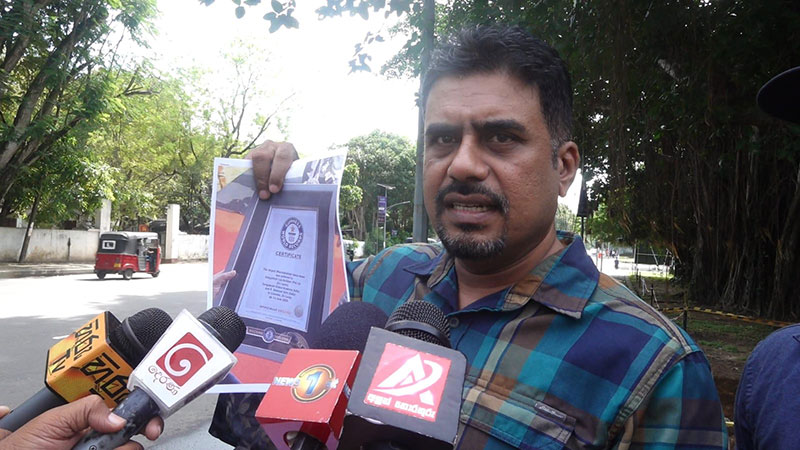
The Jana Aragala Sandhanaya yesterday lodged a complaint with the Commission to Investigate Allegations of Bribery or Corruption (CIABOC), calling for an investigation into Deputy Minister Sundaralingam Pradeep over alleged irregularities related to a Guinness World Record event held in Sri Lanka.
The organisation alleged that state patronage had been extended to a private company for the event and that large sums of money had been collected from around 5,000 families of participating students.
Speaking to the media, after submitting the complaint, Jana Aragala Sandhanaya National Executive Council member and Frontline Socialist Party (FSP) Secretary, Duminda Nagamuwa, alleged that the government had promoted the Bharatanatyam workshop, held on June 14, as an event that secured a Guinness World Record for the participation of the largest number of students.
He said a government politician had taken the lead in organising the event, attended by Deputy Minister Mahinda Jayasinghe.
Nagamuwa questioned the decision to provide state support for an event organised by a private entity, claiming that the Guinness certificate issued for the achievement had been awarded not to Sri Lanka or a state institution, but to a company.
“Why did the government provide state patronage to a private institution’s programme?” he asked.
He alleged that each of the approximately 5,000 participating students had paid Rs. 5,000, resulting in the collection of a substantial amount of money. He claimed that parents were also asked to pay additional amounts of Rs. 3,450 for logos and Rs. 2,350 for certificates.
Nagamuwa alleged that many families, from economically disadvantaged backgrounds, had incurred heavy expenses travelling to Colombo and staying there for several days for the event, with some families spending around Rs. 30,000 each.
News
Opposition MPs sign motion demanding debate on prolonged failure to fill vacancies in superior courts

Opposition MPs yesterday signed a motion demanding an adjournment debate in Parliament on the prolonged failure to fill vacancies in Sri Lanka’s superior courts.
The motion, submitted under Standing Order 83(1), calls for a debate on the implications of leaving more than eight vacancies in the Supreme Court and the Court of Appeal unfilled for over six months.
The Opposition said the proposed debate would examine the impact of the vacancies on the administration of justice, the rule of law, the protection of fundamental rights and public access to justice, while urging the authorities to expedite appointments to the vacant posts.
The motion, bearing the signatures of Opposition MPs, is to be forwarded to Speaker Dr. Jagath Wickramaratne, for approval, to schedule the debate.
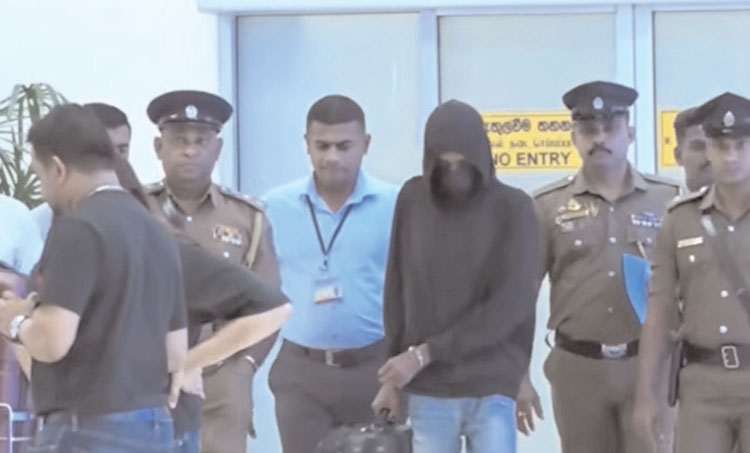
Suranga Sanjeewa Karunaratne, alias ‘Matiya’, an alleged underworld gunman linked to organised crime figure Kehelbaddara Padme, was arrested on arrival at the Bandaranaike International Airport in the early hours yesterday.
Police said the suspect, a resident of Kotugoda, Yagodamulla, had been detained by Malaysian authorities and deported to Sri Lanka. Officers of the CID took him into custody upon his arrival.
Investigators said an Interpol Red Notice had been issued against the suspect.
Karunaratne is wanted in connection with the fatal shooting, near the Gampaha Magistrate’s Court, in July, 2022, in which alleged organised criminal ‘Paspodda’ was killed and several others sustained injuries.
Following preliminary questioning by the CID, the suspect was handed over to the Western Province North Crimes Division for further investigations. Police said a 72-hour detention order had been obtained to facilitate further inquiries.
by Norman Palihawadane ✍️

Showers will occur at times in the Western, Sabaragamuwa and North-western provinces and in Galle, Matara, Kandy and Nuwara-Eliya districts

FSP complains of irregularities in a Guinness World Record event held in Sri Lanka

Opposition MPs sign motion demanding debate on prolonged failure to fill vacancies in superior courts

Another Lankan desperado deported from Malaysia arrested at BIA

SJB swift justice!

Hoarded relief goods brought to light after audit officers force open locked storerooms at Udapalatha DS

‘Dates have the highest sugar content to fight Coronavirus’

Sunday Island 27 December – Headlines

#SundayIsland 17th December – Headlines

Sunday Island – 28th March

Sunday Island Headlines – 21 March

Sunday Island – 21st February – Headlines
-

 Features6 days ago
Nanda Pethiyagoda Wanasundara as three generations of family saw her
-

 Features5 days ago
Sri Lanka developing independent hydrographic capabilities
-

 Editorial6 days ago
Fuel crisis: Beyond price debate
-
 Opinion4 days ago
Ranasinghe Premadasa: The man who would not take ‘No’ for an answer
-

 Latest News5 days ago
Sooryavanshi thumps fastest List A fifty as India A win tri-series
-

 News4 days ago
US Assistant Secretary of State for South and Central Asian Affairs meets President
-

 Business5 days ago
University of West London opens Sri Lanka’s first full UK university branch campus
-

 Features6 days ago
The Sirisena – Ranil conflict and events leading to MR’s return as PM