
Editorial
Interval in hell


Friday 8th December, 2023
President Ranil Wickremesinghe, who has the knack for pepping up serious discussions with zingers, remarked, in his recent budget speech, that what Sri Lanka had faced, in 2022, was an economic hell. One can hardly disagree with him on that score. It was, indeed, a hellish experience, and what we are experiencing at present could be considered an interval in hell! There will be a massive increase in the cost of living when VAT is jacked up to 18% and its application expanded, at the dawn of next year.
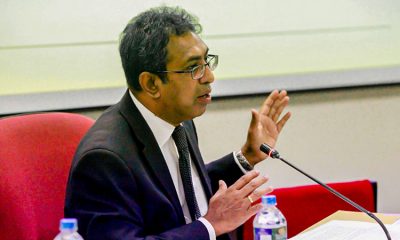
Chairman of the Committee on Public Finance (COPF) Dr. Harsha de Silva has said even infant food items, fertiliser, medical equipment and ambulances will be subjected to VAT. He has urged the government to grant VAT exemptions at least for them. His fervent request has struck a responsive chord with the public. The government must not resort to extreme measures which are bound to trigger social unrest and political upheavals.
Why the IMF has denied Sri Lanka any leeway is understandable. Leniency usually begets noncompliance. But the IMF should not do a Shylock. Its policies have come in for severe criticism from international human rights groups for stoking unrest and leading to social inequality. The Human Rights Watch (HRW) has, in a recent report, IMF: Austerity Loan Conditions Risk Undermining Rights—Compound Problems of Rising Inequality, Flawed Mitigation Efforts, said: “Austerity measures that broadly reduce government spending on essential public services or significantly increase regressive taxes have a well-documented history of undermining rights.
The IMF is pushing policies that have a long track record of exacerbating poverty and inequality and undermining rights’. The IMF’s own internal research indicates that the Fund’s policies are generally not effective in reducing debt, which is their chief objective, HRW has said, noting that the IMF’s World Economic Outlook published in April 2023 observes that fiscal consolidations – a term usually linked to austerity programmes – “do not reduce debt ratios, on average.”
It is doubtful whether some of the IMF policies and conditions are consistent with the UN Human Rights Council’s guiding principles that require strict criteria to be met and human rights impact assessment conducted by governments and financial institutions when austerity measures are adopted .
Beggars are said to be no choosers. Sri Lanka finds itself in such a situation that it cannot do without IMF assistance at all. But the extreme measures that the IMF is pressuring Sri Lanka to adopt are fraught with the danger of triggering social unrest and popular uprisings like the one we witnessed last year. Political stability is a prerequisite for economic recovery, and vice versa.
Both the government and the IMF ought to learn from the politico-social upheavals in countries such as Argentina due to constricting loan conditions. A similar situation prevails in some other countries in Latin America, the Middle East and North Africa. Pakistan is also experiencing problems.
We do not have statespersons who think of the next generation. Instead, we have politicians who do everything in their power to win the next election. So, the grandees of the current dispensation should tread cautiously for their own sake, learning from the experience of other nations that have borrowed from the IMF. Protests erupted against stringent IMF loan conditions in Argentina, and President Mauricio Macri lost the 2019 presidential election as a result and Alberto Fernandez, a bitter critic of the IMF, secured the presidency. (Fernandez also could not straighten up the Argentinian economy and decided against seeking re-election.) Mass protests against a host of IMF-prescribed economic reforms also led to the resignation of Prime Minister of Jordan Hani al-Mulki in 2018.
There are alternative ways and means of boosting state revenue and the SLPP-UNP government ought to explore them instead of milking the hapless public dry. A rupee saved is a rupee earned, cliché as it may sound. If the government cares to curtail wasteful expenditure, eliminate corruption and streamline revenue collection, it will not have to resort to oppressive taxation to satisfy IMF conditions. It defies comprehension why planeloads of government delegates have to be taken overseas for conferences, etc., and why so many politicians are using armed convoy escorts, which only boost their egos. Corruption is rampant in revenue generation agencies. The government itself is involved in mega rackets that cost the state coffers dear, the sugar tax scams being a case in point.
The government had better overcome the arrogance of power, abandon its cavalier attitude, stop bulldozing its way through, and take on board dissenting views of economists such as Dr. de Silva if it is to avoid trouble and consolidate whatever gains the country has made on the economic front during the past few months.








Monday 12th January, 2026
Corruption has eaten into the vitals of Sri Lanka’s power and energy sectors to such an extent that one wonders whether ‘C’ in the initialisms of the Ceylon Electricity Board (CEB) and the Ceylon Petroleum Corporation (CPC) stands for ‘Corrupt’. Pressure is mounting on the government to cancel a questionable coal tender which is causing staggering losses to the state.
We reported on the coal scam at issue about three months ago, turning the spotlight on the fraudulent procurement of substandard coal. Following our report, the Opposition and the anti-corruption outfits did their own investigations and unearthed more information about the questionable deal. It has been revealed that the government extended the closing date for bidding and changed the eligibility criteria for the bidders in favour of a company of its choice. The company that won the tender has a history of supplying low-quality goods to Sathosa, and its owner and local agent are reportedly under a cloud. A complaint has been lodged with the Commission to Investigate Allegations of Bribery or Corruption (CIABOC) against Minister of Energy Kumara Jayakody over alleged misappropriation of state funds when he was in the Fertiliser Corporation. It is against this backdrop that the coal scam in question should be viewed.
The Opposition took up the issue of substandard coal imports, in Parliament, last week, accusing the NPP government of trying to cover up the scam. SLPP MP D.V. Chanaka told the House that only 107 metric tonnes of coal were usually required per hour to generate 300 megawatts of electricity but now 120 metric tonnes of newly imported coal had to be burnt to produce the same amount of power. About 13 extra tonnes of coal are required per hour due to the scam, according to Chanaka, who also said tests conducted at the Lakvijaya Coal Power Plant had revealed that the calorific value of the first two newly imported coal shipments ranged from 5,600 and 5,800 kilocalories per kilogram (kcal/kg). But under the coal tender guidelines, the minimum required calorific value was 5,900 kcal/kg. Energy Minister Kumar Jayakody is reported to have said the Lakvijaya laboratory is not an accredited facility, and therefore its test results are not acceptable; action will be taken when the test report from an accredited laboratory is received.
Curiously, the government has questioned the integrity of tests conducted by a Sri Lankan laboratory that has tested coal shipments all these years to ascertain their quality. How come the NPP government has suddenly refused to accept the accuracy of the tests conducted by this lab? Is it trying to go on testing the substandard coal until it gets the result it wants so that it can continue to import low-quality coal and help its members line their pockets? In fact, there is no need for any laboratory testing to prove that there is something terribly wrong with the coal procured under the current dispensation; that is clearly borne out by the fact that it takes 120 tonnes of newly imported coal to produce a particular amount of electricity previously generated with only 107 tonnes of standard of coal.
The NPP government seems to have taken a leaf out of the book of the previous administration, which became a metaphor for corruption. It too resorts to dilatory tactics and obfuscation to cover up scams. It has succeeded in diverting the public’s attention from the Ondansetron scam by claiming that more tests need to be conducted; the Opposition, the media, and civil society organisations have forgotten that pharmaceutical racket for all intents and purposes. It is using the same modus operandi in the case of the coal scam. Anti-corruption campaigners must remain intensely focused on all questionable deals and monitor the progress in investigations into them. It was their vigilance and relentless campaigning that led to the arrest and prosecution of Minister Keheliya Rambukwella and some panjandrums over the procurement of a fake cancer drug.
Given the sheer number of corrupt deals and shameful attempts to cover them up, under the incumbent government, which came to power, vowing to eliminate corruption and usher in good governance, one may say, with apologies to Immanuel Kant, out of such crooked wood as that which politicians and officials are made of, nothing straight can be fashioned.

Trade unions and professional associations have been cranking up pressure on the NPP government to put its education reforms on hold and invite all key stakeholders to a serious discussion. Prime Minister Dr. Harini Amarasuriya struck a conciliatory note in Parliament the other day, indicating that the government was willing to take dissenting views on board. But President Anura Kumara Dissanayake has said in no uncertain terms that the government will go ahead with its education reform programme. Speaking at the launch of the Rebuilding Sri Lanka project yesterday, he made his government’s position on education reforms clear. The university teachers who naively sought President Dissanayake’s intervention to have the education reforms halted must be disillusioned.
Arguments against the education reforms, particularly the recently created modules, are tenable. Teachers and principals have highlighted serious flaws in them, and the government is trying piecemeal remedies such as removing pages containing errors. Some modules have already found their way into the hands of private tutors, according to teachers’ unions.
Prime Minister Amarasuriya met the Mahnayake Theras in Kandy on Thursday and briefed them on the government’s education reforms and related issues. The prelates expressed their concerns, and requested the government to resolve the issues other stakeholders had flagged. Addressing the media subsequently in Kandy, the PM put a bold face on the situation and sought to make light of the no-confidence motion the Opposition is planning to move against her. Claiming that her political rivals’ efforts had no chance of succeeding, she said a debate on the no-confidence motion against her would provide the government with an opportunity to elaborate on its education reforms. However, it is the Opposition parties that usually gain propaganda mileage in debates on no-confidence motions. The beleaguered SLPP government also defeated no-confidence motions against its members in the last Parliament, but could not prevent public opinion from turning against it.
There is no gainsaying that religious leaders should be kept informed of reforms in vital sectors such as education, but what matters most in implementing education reforms is not their support or blessings however important and valuable they may be. The government should make a serious effort to enlist the support of teachers and principals if it is to achieve its goal of reforming the education system properly. They are the frontline stakeholders who interact with students and perform core operational tasks.
Teachers and principals are on the warpath, insisting that the education reforms are ill-conceived and flawed and therefore they cannot implement them. The government must heed their voice and make a course correction. Most of all, it must ensure that all schools are provided with necessary facilities, such as smart boards. Parents must not be made to pay for them. General Secretary of the Ceylon Teachers’ Union Joseph Stalin has said some schools are already collecting money to buy smart boards, etc. The government is testing the public’s patience.
Doomed is a government that succumbs to hubris. Workers’ Struggle Centre Secretary Duminda Nagamuwa has likened the NPP government’s education reform package to the organic fertiliser drive of the Gotabaya Rajapaksa administration, which tried to bulldoze its way through and drove the public to stage an uprising. Gotabaya secured 52.24% of the total number of valid votes in the 2019 presidential election, and the SLPP mustered a two-thirds majority the following year. He and his party did not heed public opinion and views of independent experts, whom they considered enemies, and committed political hara-kiri.
Overwhelmingly dominant governments become complacent and unresponsive to dissenting views, and this is known as the supermajority syndrome, which has affected five governments led by the SLFP, the UNP, the SLPP and the JVP since 1970. It will be a mistake for the NPP administration to cross the Rubicon in its efforts to railroad key stakeholders into accepting its education reforms.

Saturday 10th Junuary, 2026
Prime Minister Dr. Harini Amarasuriya has revealed in Parliament that as many as 65 court cases, withdrawn during previous governments, have been refiled since the current administration came to power. Attorney General’s Department and the Commission to Investigation Allegations of Bribery or Corruption (CIABOC) had withdrawn those cases, she said yesterday in answer to a question raised by an Opposition MP. In this country, governments are notorious for perverting the legal and judicial processes to let lawbreakers among their members off the hook. They employ various methods for this purpose, and the state prosecutor and the national anti-graft commission have drawn severe criticism for facilitating such sordid operations. One of the NPP’s main campaign promises was to terminate this despicable practice, which has led to a severe erosion of public trust in the legal and judicial processes.
Cases must be neither filed nor withdrawn nor refiled for political reasons. Newly elected governments in this country abuse their power to have their political opponents arrested and prosecuted for various offences. Instances are not rare where charges are trumped up against Opposition politicians and activists, who are arrested and remanded for extended periods. The fact that the Attorney General’s Department, the CIABOC and the police are under the Executive’s thumb has helped governments launch political witch-hunts in the name of pursuing justice.
Governments also abuse their power to protect their members involved in various rackets and help them cover their tracks. But for intense pressure the Opposition, the media and civil society organisations brought to bear on the SLPP government, Minister Keheliya Rambukwella and several state officials would not have faced legal action for the procurement of fake medicines for cancer patients and enriching themselves. Thankfully, that administration, on its last legs, was not politically strong to open an escape route for the culprits.
Meanwhile, the Opposition has accused the NPP government of trying to cover up a mega coal scam. SLPP MP D.V. Chanaka has alleged in Parliament that the state has incurred massive losses due to the procurement of substandard coal for power generation. He has told Parliament that only 107 metric tonnes of coal are usually required per hour to generate 300 megawatts of electricity but 120 metric tonnes of newly imported coal are needed to produce the same amount of power. In other words, 13 extra tonnes of coal are required per hour and six extra shipments of coal a year.
MP Chanaka has said tests conducted at the Lakvijaya Coal Power Plant revealed that the calorific value of the first two newly imported coal shipments ranged from 5,600 and 5,800 kilocalories per kilogram (kcal/kg). But under the coal tender guidelines, the minimum required calorific value was 5,900 kcal/kg.
Energy Minister Kumar Jayakody has said the test reports issued by the Lakvijaya laboratory cannot be accepted because it does not have an accredited laboratory and action will be taken once the report from an accredited laboratory is received. One is intrigued. Coal has been tested at the Lakvijaya laboratory all these years, according to the Opposition and media reports, and why has the government refused to accept its test reports? What guarantee is there that the coal samples will be tested properly at the so-called accredited lab? Is the government trying to obfuscate the issue?
A thorough probe must be conducted into the alleged coal scam without further delay. What the members of the incumbent government must bear in mind is that they will not be in power forever; they will have to face legal action for their transgressions one day. Former ministers have been jailed for misusing fuel allowances and offences such as causing staggering losses to the state through coal scams will not go unpunished.

President proposes; Speaker disposes

Sri Lanka loses Rs.7.5 bn due to coal tender irregularities: FSP

CID summons SJB MP for criticising education reforms

Dengue cases escalate

CID probes alleged hacking of Public Security Ministry website

‘Sea Shark’ killing: Police suspect underworld link

‘Dates have the highest sugar content to fight Coronavirus’

Sunday Island 27 December – Headlines

#SundayIsland 17th December – Headlines

Sunday Island – 28th March

Sunday Island Headlines – 21 March

Sunday Island – 21st February – Headlines
-
 News1 day ago
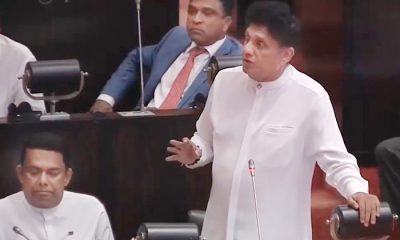
Sajith: Ashoka Chakra replaces Dharmachakra in Buddhism textbook
-

 News6 days ago
Interception of SL fishing craft by Seychelles: Trawler owners demand international investigation
-

 Features1 day ago
The Paradox of Trump Power: Contested Authoritarian at Home, Uncontested Bully Abroad
-

 Business1 day ago
Dialog and UnionPay International Join Forces to Elevate Sri Lanka’s Digital Payment Landscape
-

 Features1 day ago
Subject:Whatever happened to (my) three million dollars?
-
 News6 days ago
Broad support emerges for Faiszer’s sweeping proposals on long- delayed divorce and personal law reforms
-

 News1 day ago
65 withdrawn cases re-filed by Govt, PM tells Parliament
-

 Opinion3 days ago
The minstrel monk and Rafiki, the old mandrill in The Lion King – II