
Editorial
Games kleptocrats play


Wednesday 29th November, 2023
The SLPP-UNP government finds itself in the same predicament as the proverbial cat that defecated on a rock and struggled to cover the stinking mess. Having sacked Sports Minister Roshan Ranasinghe for taking on Sri Lanka Cricket (SLC) officials and ruffling the feathers of some members of President Ranil Wickremesinghe’s kitchen Cabinet in the process, the SLPP-UNP combine is trying to justify its action to protect the corrupt responsible for ruining cricket in this country. Government propagandists are doing their darnedest to dupe the public into believing that Ranasinghe was sacked because he had violated collective responsibility.
The government has granted the beleaguered cricket administrators’ wish by sacking Ranasinghe and appointing Harin Fernando as the Sports Minister. Now that it has demonstrated it has no qualms about shielding the corrupt and defenestrating the campaigners for transparency, integrity and accountability, the newly-passed Anti-Corruption Act might as well be relegated to the wastepaper basket. There is nothing stupider than to expect a government that does not even allow a sports governing body to be cleansed to resist the lure of filthy lucre and go all out to rid the country of corruption.
The IMF, which has tied transparency, integrity and accountability to its bailout packages as conditions ought to take cognisance of the unspeakable manner in which the government of Sri Lanka is protecting the interests of the corrupt responsible for ruining cricket.
It may be recalled that in 2012, some crooks in the cricket administration sought to safeguard their interests vis-à-vis a move to oust them as part of a campaign to cleanse SLC; they urged the ICC to impose a ban on SLC so that they could use it as a bludgeon against the government, but the then President Mahinda Rajapaksa summoned the SLC officials concerned and warned them against having SLC banned; they fell in line and stepped down. But President Wickremesinghe waited until the ICC suspended the SLC to use the suspension to pressure Sports Minister Ranasinghe to dissolve the newly-appointed cricket interim committee.
The unfolding drama in Parliament reminds us of what the current strange bedfellows used to say about one another before joining forces to safeguard their own interests. One may recall that during the Yahapalana regime, the Joint Opposition (JO) consisting of the dissident UPFA MPs opposed to the UNP-SLFP unity government, and their UNP counterparts staged two dramas in Parliament.
During a stormy parliamentary session, the UNP MPs burst into a noisy protest with the then Prime Minister Ranil Wickremesinghe himself asking, “Kauda hora (who is the thief)?” and others chanting in chorus, “Mahinda hora (Mahinda is the thief)”. Not to be outdone, the JO members invaded the Well of the House, with one of them asking, “Kauda hora?”, and the other Rajapaksa loyalists shouting, “Ranil hora.” (Videos of these protests are available in the digital realm.) Today, Ranil and Mahinda are savouring power, together! Interestingly, Mahinda yesterday blamed the Yahapalana government for the current economic crisis, according to a news item in today’s edition of this newspaper.
Kleptocracy is not of recent origin in this country, which has been plagued by it for decades. Last year, the people took to the streets, asking for a system change, but the SLPP-UNP combine has succeeded in hoodwinking them and perpetuating the corrupt system, which is geared to serve the interests of crooks. There is no future for a nation in the grip of a kleptocracy.
It is incumbent upon all Sri Lankans who cherish democracy and good governance and are concerned about the future of their children, most of whom the corrupt in the garb of people’s representatives are driving out of the country, to summon the courage to stand up and be counted.
Those who intrepidly stick their necks out, as Ranasinghe has done, by taking on the politically-backed crooks, must be protected at any cost.

Tuesday 29th September, 2026
The government is busy concocting various theories in a bid to justify the manner in which the 22nd constitutional amendment (22A) was enacted. Its leaders claim that even in India, the retirement ages of judges have been increased recently, but there have been no protests. Their reference is to an order of the Indian Supreme Court in All India Judges Association v. Union of India case, directing seven states to raise the retirement age of district judicial officers from 60 to 62, subject to an assessment of their suitability and performance by the concerned High Court at the age of 60.
What the Indian Supreme Court order envisages and what 22A seeks to achieve are as different as chalk and cheese. The judges of the Indian Supreme Court did not seek to increase their own retirement age, which is constitutionally fixed at 65 years. The JVP-NPP politicians are therefore comparing apples and oranges. What drew criticism here was basically the arbitrary manner in which the government increased the constitutionally set retirement ages of the incumbent judges of the Supreme Court and the Court of Appeal; it did so even without any stakeholder consultation.
22A bears comparison only with a 2021 constitutional amendment that raised the retirement ages of the serving judges in Zimbabwe. As we pointed out in a previous editorial comment, President Emmerson Mnangagwa’s government hurriedly secured the passage of a constitutional amendment Bill to raise the retirement ages of judges, provoking a debate over whether it was proper to amend the Constitution to increase judicial tenure just in time to keep an incumbent Chief Justice in office. That amendment was obviously not part of a wider judicial reform initiative; it immediately opened the way for the then Chief Justice Luke Malaba to remain in office for another five years. Sri Lanka now finds itself in the exalted company of Zimbabwe.
Now that a precedent has been created, what guarantee is there that the JVP-NPP government will not seek to increase the mandatory retirement ages of the superior court judges again? A future government with a two-thirds majority will also be able to amend the Constitution and extend the retirement ages of the Supreme Court and the Court of Appeal judges.
The JVP-NPP politicians are asking the Opposition to stop protesting and come to terms with 22A, which has become law. Curiously, former Minister Vasudeva Nanayakkara is ‘rooting for’ the government. He has fully backed 22A, insisting that there is nothing wrong with increasing the retirement ages of the superior court judges. Addressing the media, yesterday, Nanayakkara claimed that it was an exercise in futility to keep on protesting against 22A, and the Opposition should face reality. He is entitled to his opinion, but the question is why he has led so many protests against the current Constitution and the Executive Presidency, since 1978, instead of coming to terms with them.
Government leaders are also asking the Opposition and the Bar Association of Sri Lanka to abandon their protests as 22A, reviewed by the Supreme Court and passed by Parliament with a special majority, is now part of the Constitution. Will they explain why they took up arms in the late 1980s in a bid to scuttle the 13th Amendment (13A), the establishment of the Provincial Councils (PCs) and the first PC elections? 13A also passed muster with the Supreme Court and was passed by Parliament with a two-thirds majority. Had the JVP leaders done at that time what they are now urging the Opposition to do, there would have been no bloodbath. They also campaigned hard against the 18th and 20th Amendments, and rightly so. Why didn’t they stop protesting after the enactment of those bad constitutional amendments?
One may argue that 22A differs from 13A, 18A and 20A in many respects, but that does not make it any less inimical to democracy. One may recall that the SC in its determination on the Inland Revenue (Amendment) Bill in 2022 held that a constitutional amendment affecting the retirement age or the period of office of the incumbent judges of the superior courts would impinge on judicial independence and therefore require approval at a referendum.
No amount of rhetoric and propaganda will help the government silence the critics of 22A, and their protests are bound to intensify.


Monday 28th September, 2026
All low-enrolment schools across the country are being assessed for restructuring, according to media reports. While many of them are facing the prospect of amalgamation or closure, the performance of one such school has strengthened the argument against a blanket approach to low-enrolment schools.
Students of Panahetagala Primary School, located in the backwaters of the Ratnapura District, have demonstrated their ability to overcome challenges and achieve academic excellence. They have proved what rural students are capable of, when properly guided. Four of the eight Panahetagala Primary School students who sat this year’s Grade Five Scholarship Examination (GFSE), have scored above the Ratnapura District cut-off mark of 135; three others obtained 100 marks out of 200. The remaining candidate scored 81 marks. The school has 22 students on its roll, and five teachers including the principal. None of the GFSE candidates had the benefit of private coaching, and the credit for preparing them for the highly competitive examination should therefore go to their dedicated teachers.
One may argue that the success story of Panahetagala Primary School is the exception that proves the rule, but the challenge before the JVP-NPP government, which flaunts what its describes as a pro-poor agenda, is to devise a strategy to make the exception the rule by developing the low-enrolment schools and making them attractive to more students.
The Ceylon Teachers Union has accused the government of trying to close down low-enrolment schools across the country, and redeploy teachers currently working in them to fill vacancies elsewhere. There are 10,146 state-run schools in Sri Lanka. Of them 9,750 are under Provincial Councils and 396 are national schools. About 800 rural schools have already been closed down during the past several decades, and it is feared that many more will face the same fate in the near future.
President Anura Kumara Dissanayake, speaking in Parliament in July 2025, said 3,144 government schools had fewer than 100 students. He said some schools would have to be permanently closed, while others would have to be amalgamated. According to teachers’ trade unions and organisations dedicated to protecting universal free education, most of these low-enrolment schools are situated in rural and remote areas. This situation has been attributed to several factors, including improved public transport, which has enhanced students’ mobility and reduced their dependence on rural schools that have suffered from neglect.
The NPP’s 2024 manifesto, A Thriving Nation, A Beautiful Life, promises “a government school system for primary education within 3 km of one’s home or parents’ place of work.” One can argue that the school merger programme, which is said to be on the cards, is not inherently contrary to the NPP manifesto, which envisages a more rationalised school network. But the NPP has not sought a mandate to close down any school. Most of all, will the government be able to fulfil its three-km access commitment if it opts to close down rural low-enrolment schools?
During its second uprising in the late 1980s, the JVP coined many pithy slogans to mobilise the disadvantaged rural folk, particularly the youth, by highlighting the glaring urban bias in state resource allocation. One of them was ‘Kolombata kiri, gamata kekiri’ (‘milk for Colombo, melon for the village’). However, villages have been left with no alternative but to settle for kekiri even under the current government led by the JVP.
Students and teachers have to walk long distances, with some of them even using a makeshift ferry to cross a river, to reach Panahetagala Primary School. Buses have stopped operating on the road that leads to Panahetagala due to its dilapidated condition. Shouldn’t the incumbent government, which is spending billions of rupees on developing the metro bus service in Colombo, allocate some funds to repair the road that links Panahetagala with the main road?
President Dissanayake, in his parliamentary speech under discussion, revealed that the number of children leaving school prematurely had risen from 16,673 in 2019 to 20,759 in 2022, before virtually plateauing at 20,755 in 2024. Everything possible must be done to bring the number of school dropouts down in the shortest possible time.
A high number of school dropouts is much more than a mere statistic; it is a symptom of wider social problems. As we have pointed out in a previous comment, the state has a strong justification for bearing the cost of operating low-enrolment schools to make education easily accessible to rural children, for such expenditure helps reduce dropouts, promote educational equity, prevent social problems and build human capital across the country. The government must handle this sensitive issue with great care.

What’s this world coming to when the United Nations itself is not united? This rhetorical lament about the current state of the world crosses discerning minds when world leaders gather in New York for the UN General Assembly’s annual sessions, where threats, rhetoric and protest apparently take precedence over diplomacy expected of the civilised world.
Critics argue that US President Donald Trump regards the UN headquarters as his country’s backyard. The Trump administration has again denied visas to Palestinian Authority President Mahmoud Abbas and other senior Palestinian officials for the UN General Assembly, making this the second consecutive year of such restrictions, which have drawn criticism as a violation of the 1945 UN-US Headquarters Agreement. Trump’s boastful claims of economic growth, immigration, and other domestic issues at the UN summit were widely seen as being pitched to the American voters rather than the international community, with the US midterm elections looming.
What Trump intended for the consumption of the world, in his UN address, was basically a chilling message. He gave Iran a stark choice between a deal and annihilation. True, his threat was followed by some diplomacy. He disclosed that US and Iranian representatives had met on the sidelines of the summit, describing the meeting as “very good”. His threat however cannot be dismissed as mere rhetoric; he has already given free rein to his ‘epic fury’ and wreaked havoc on Iran. How does he intend to annihilate Iran? All the weapons used by the US so far have failed to frighten Iran into submission. Is he planning something far worse to achieve his goal?
The western world made a hue and cry in 2005, when the then Iranian President Mahmoud Ahmadinejad made a remark that was widely translated as a call to “wipe Israel off the map”. He said so in Tehran and not at a UN summit. But the western governments ignored Trump’s threat to Iran for all intents and purposes.
Aggression of the world powers runs counter to the raison d’etre of the UN, established in 1945, to replace the League of Nations, following the devastation of the Second World War, which exposed the limitations of the existing international system, principally to prevent another global conflict. UN founders sought a permanent international organisation through which countries could collectively maintain peace and security, settle disputes peacefully and prevent aggression. Trump, his allies, and their enemies have reduced the UN to a mere spectator. Their unbridled aggression makes one wonder if the world is sliding back into the League of Nations era.
The Global North’s pontification to the rest of the world about the virtues of peace, human rights, and good governance goes on ad nauseam. The US and its allies, particularly the UK, advocate for negotiations to resolve conflicts, and call for stringent action against the violators of human rights in the developing world, but when they deal with threats, perceived or real, to their security and economic and geopolitical interests, they let ballistic missiles, stealth bombers and warships do the talking with no heed for the human cost of their military onslaughts.
Perhaps, the biggest threat to global peace and the future of humankind emanates from the nuclear-armed world powers, whose ruthless competition for resources and aggression seem to reflect an ancient human propensity for violence. In Sapiens: A Brief History of Humankind, Yuval Noah Harari argues that Homo sapiens’ rise was accompanied by the disappearance of several other human species, including Neanderthals and Denisovans. He presents two possible explanations: competition for resources, which gradually displaced other populations, and direct violence when competition intensified. The fear that a fate similar to that of those unfortunate human species might befall the people in developing countries may not be totally unfounded, given the superpowers’ proclivity for violence and abililty to annihilate nations.

Cabinet nod to increase the number of new automated passenger clearance gates at the Bandaranayake International Airport to 12
Draft Bill for amending the Trust Ordinance
Implementing further relief programme to Public sffected by the Middle East conflict situation
Establishment of a Spectrum Management and Monitoring System and a Quality of Service and Quality of Experience System for the Telecommunications Regulatory Commission of Sri Lanka
Appointment of a Committee for the Restitution of Sri Lankan Cultural Heritage Held Abroad
Ten-Year National Action Plan on the Social Protection Sector (2026–2035)

‘Dates have the highest sugar content to fight Coronavirus’

Sunday Island 27 December – Headlines

#SundayIsland 17th December – Headlines

Sunday Island – 28th March

Sunday Island Headlines – 21 March

Sunday Island – 21st February – Headlines
-
 News7 days ago
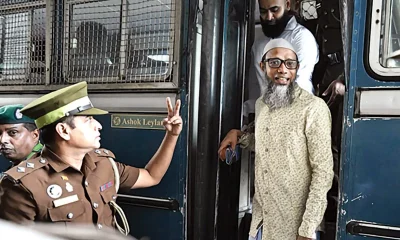
Mastermind Naufer Moulavi among 15 found guilty
-
 Midweek Review7 days ago
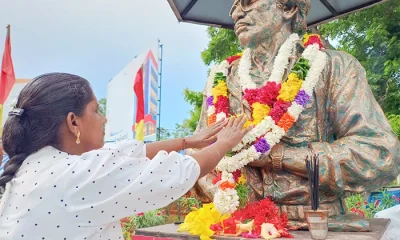
Thileepan’s fast unto death: An authentic narrative that many missed
-

 Latest News6 days ago
Showers above 100 mm are likely at some places in the Western, Sabaragamuwa, Central and North-western provinces and in Galle and Matara Districts
-

 Editorial7 days ago
Big Bad Bills
-
Editorial6 days ago
Crimes punished and unpunished
-

 Features5 days ago
Beyond traditional jobs: Why Sri Lanka needs to facilitate the gig economy
-

 News7 days ago
No referendum needed for passage of 22 A: SC
-

 News7 days ago
One clause in Anti-Corruption (Amendment) Bill requires referendu: SC