
Business
Inivos and UK’s Muzulu’s milestone partnership provides end-to-end ERP solutions

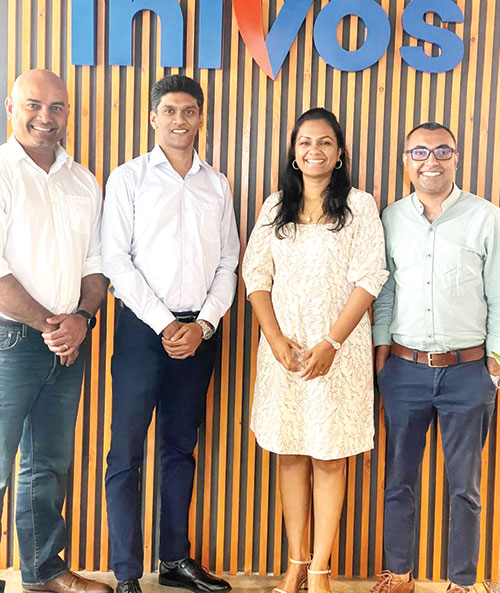
Inivos the fully-fledged Sri Lankan Business Consultancy and Technology solutions provider continues and expands its partnership with Muzulu, the UK-based provider of industry-leading ERP business solutions. Established in 2019 with enduring values of integrity, innovation, and agility, Inivos is a growing end-to-end corporate business solutions service provider.
This partnership aims to continue supporting a wide base of customers globally, with the initial focus being on Sri Lanka and Europe. The partnership between Inivos and Muzulu goes as M. I. Consultancy, and both Inivos and Muzulu share similar business philosophies when it comes to the provision and extension of ERP services to a gamut of industries such as engineering, construction, infrastructure, manufacturing, energy, and utilities. In addition to IFS services, both companies specialize in providing end-to-end solutions in Customer Relationship Management (CRM), Enterprise Asset Management (EAM), Enterprise Resource Planning Management (ERP), and Supply Chain Management (SCM).
Commenting on the progress and future plans for this partnership, Partner/CTO of Muzulu Ravi Edirisinghe said, “With my recent visit to Sri Lanka to lay the plan for 2022, I found that our partnership with Inivos had received positive feedback from customers, as they understood the difference between our services and the rest. Our future plan and vision is to make Sri Lanka a one-stop-shop for staff augmentation, expand 24/7 operations to support our customers globally, and provide end-to-end solutions of ERP. Our implementation teams have an enviable track record delivering successful global ERP projects. By working with Inivos, we saw a huge opportunity to use our successful, solution-focused approach to deliver even greater success for both Muzulu’s and Inivos’s current and future customers.”
The Sri Lankan workforce is highly skilled in software development, UI/UX, quality assurance, and project management. And the overall ICT industry of Sri Lanka with its sub-sectors, which include IT/ITeS and telecommunications, is projected to generate USD 1.8 billion revenue by 2022. Furthermore, it is to become a USD 3 billion industry by 2024, through export revenue, entrepreneurship, innovation, and digital adoption, creating around 300,000 direct jobs and enabling 1,000 startups in the country. And currently, Sri Lankans are working on global IT projects to increase the revenue by this year.
The digital transformation post-COVID-19 makes sure that more business, agriculture, health, and education services are provided without leaving anyone behind, which in turn will have a far better outcome on equity and social justice objectives. All of these efforts need resources if it’s human capital, funding, or technical know-how, which is why there is a wealth of experience that is brought by the IT industry to the table fueling the strategy in creating user-friendly and compellingly easy to access business solutions.
Inivos is able to supply the best in quality employees by positioning them at the edge of expertise, providing real-time access to valuable business data and market insights that in turn result in flexible, customer-friendly solutions for any business. They also operate as one united strong team governed by a deep commitment to their corporate values; the enduring integrity to deliver on their promise, the headstrong collaboration through which they build on innovation, and their agility in adapting themselves to a wide range of business systems, solutions and client expectations.
Based in Colombo, Sri Lanka, Inivos (www.inivossl.com) has emerged as a key player in the ERP segment under the consultancy arm. Inivos has been able to build a strong client base in Sri Lanka, The Middle East, South Africa, Scandinavia, North America, Australia and Europe within a short time span. Apart from being a business consultancy, Inivos also carries out software development, managed services and quality assurance. All of the aforementioned services are offered through Inivos’ Technology arm.
Muzulu, headquartered in Oxford in the United Kingdom, delivers industry leading ERP consultancy interwoven with high quality supporting products and solutions, consistently delivering high satisfaction and return-on-investment for our clients. Our expert team of functional and technical implementation consultants average more than a decade of experience implementing ERP solutions across a diverse range of industries. We have direct experience implementing ERP solutions for every region of the globe. To further this approach, we have partnered with key software organizations to support improving our client’s businesses, including IFS, Dell Boomi and Pagero.

By Ifham Nizam
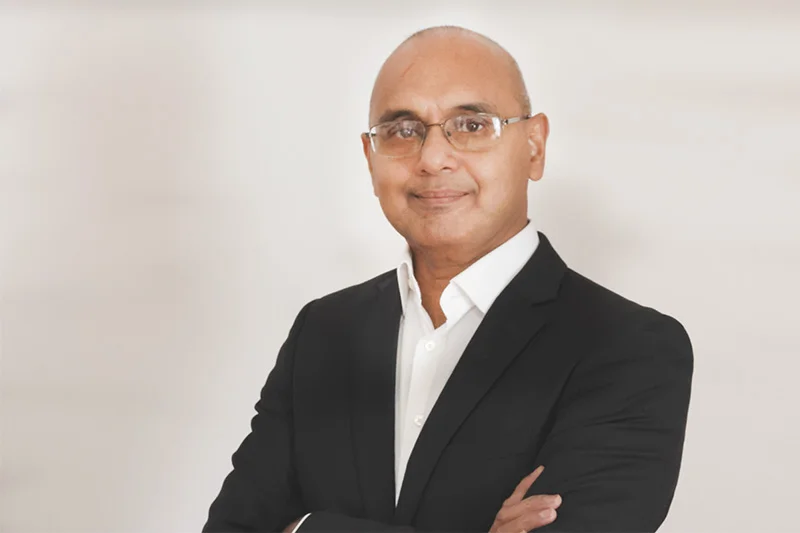
At a time when Sri Lanka continues to grapple with limited fiscal space and structural economic constraints, Gehan de Silva Wijeyeratne, a renowned naturalist who works in finance, is urging a shift in thinking—one that moves away from capital-heavy models and toward the strategic use of global expertise. Keeping his observations deliberately broad, de Silva Wijeyeratne frames Sri Lanka’s challenge in simple but candid terms: the country cannot afford to develop in the same way as wealthier nations, but it can still accelerate progress—if it learns how to access and use knowledge effectively.
“One of the big-picture things we need to do is improve how we find and use expertise,” he said. “If you look at countries like the United Arab Emirates and Singapore, they developed very quickly by buying in expertise and accelerating their progress. They didn’t develop everything on their own.” However, he is quick to point out the key difference. “They had the money to do it. They could afford to go out and buy expertise,” he said plainly. “But Sri Lanka doesn’t have that spending power.” This reality, de Silva Wijeyeratne notes, should not be seen purely as a limitation—but as a reason to think differently.
Sri Lanka’s economic condition makes it difficult to spend on paid foreign consultants, technical specialists, and large-scale advisory services. But according to de Silva Wijeyeratne, the global workscape has changed in ways that make expertise far more accessible than before.
He told The Island Financial Review: “We are in a world now where you can access some areas of expertise without necessarily paying for it in the traditional sense,” he said. “There are people who genuinely enjoy sharing knowledge and contributing, if you create the right work environment. We have to ensure that people who are willing to share their expertise can arrive in the country with their intentions clearly stated up-front and with an appropriate visa obtained quickly and easily so that they know that their visit is legitimate and one which is welcomed.’’
He referenced his article ‘A visa for bringing in expertise and expanding tourism’ published in The Island on Friday 23 May 2025. In this he proposes a special visa to address four strands, volunteering, internships, academic exchange and short term study. The idea is that the visa should be as easy as to obtain an online tourist visa, but the visitor can now apply for a longer term visa for a declared purpose such as volunteering. He was careful to emphasize that the proposed visa is not for paid work and does not give the visitor special rights and any relevant permits and permission need be obtained by the local partner. He suggests that Sri Lanka should begin to see itself less as a capital-constrained economy and more as a platform—one that can attract knowledge flows. “You don’t always need heavy investment upfront. You design a system that people want to engage with, and then value starts to build.” Countries like the United Arab Emirates and Singapore continue to use financial strength to import expertise. De Silva Wijeyeratne notes that Sri Lanka can use an un-paid model to attract expertise using a special visa as proposed to attract people who will be attracted to volunteer or work in Sri Lanka for free due to other reasons. In areas like biodiversity exploration and other nature-based academic work, foreign academics would love to partner with local academics if there was a simple and straightforward way for them to obtain a visa to do so and to arrive for periods for anything from 3 months to a year. As they will be on salaries paid by their academic employer overseas, it will not drain money out of Sri Lanka. On the contrary they will be long staying visitors who are bringing in money like any other tourist but additionally will also bring in knowledge. There are also many retired conservationists who are on a stable retirement income in G20 countries who would be happy to volunteer in projects in Sri Lanka. He notes that countries like India already have a visa for volunteering. “We can make Sri Lanka the go to country for people with expertise in nature who want to work in Sri Lanka on an unpaid basis because they are here to volunteer or work in partnership with local academics” he said. De Silva Wijeyeratne notes that this model will only work in sectors such as the academia or nature conservation where the day job is also a person’s passion. ‘”This will not work in every sector. We will not find a senior city person in finance, working in a voluntary role in a Sri Lankan financial institution. But in many nature-based areas of work, whether is to explore and discover new species of fungi or mosses or to train local naturalists who work in tourism, a special visa that facilitates this and can be obtained within a few minutes will enable Sri Lanka to tap into foreign expertise for free. The interaction with foreign collaborators will also open doors for Sri Lankan counterparts to be invited abroad to jointly present their work at conferences.
For Sri Lanka, the lesson is not to replicate any one model, but to adapt principles that fit its own constraints. “We need to recognise where we are and design accordingly,” he said. “We cannot copy-paste another country’s path. The proposed special visa idea which will also enable foreign interns to come to Sri Lanka for internships will also help grow the economy. For example, we have many large IT companies that develop software for companies in G20 economies. Foreign interns work in Sri Lanka will at a future date be middle or senior managers who may outsource work to Sri Lanka because they have the connections and trust the quality of work coming out of Sri Lanka. He also notes that when local companies engage with foreign interns through their universities, they may find themselves in a more structured programme which will make it easier for companies to also create places for local interns.
De Silva Wijeyeratne’s central argument is straightforward: Sri Lanka must focus on building systems that make it easy—and worthwhile—for experts to engage. “At the moment, we don’t have a clear way of connecting with global expertise,” he said. “Even when people are willing to help, there isn’t a structured mechanism to bring them in and make use of what they offer.”
He stresses that the issue is not a lack of goodwill or global interest, but a lack of organisation. “There is no shortage of people who are willing to contribute,” he said. “The problem is that we haven’t created the channels to absorb that contribution. De Silva Wijeyeratne also highlights the importance of creating a broader ecosystem where expertise translates into economic activity. “It’s not just about getting advice,” he said. “It’s about creating a market environment where that knowledge can lead to real outcomes—business opportunities, innovation, and growth.”
In his view, Sri Lanka must become more open to collaboration and more willing to act on external input. “If you create a system that works, people will come,” he said. “And when they come, they will add value.” While the idea of accessing free or low-cost expertise may sound idealistic, de Silva Wijeyeratne insists it is grounded in reality. “This is not theory,” he said. “We’ve already seen it happen in different sectors. People are willing to contribute, especially when they feel their input will make a difference.” At the same time, he acknowledges that Sri Lanka must improve its own internal capacity to benefit from such engagement.
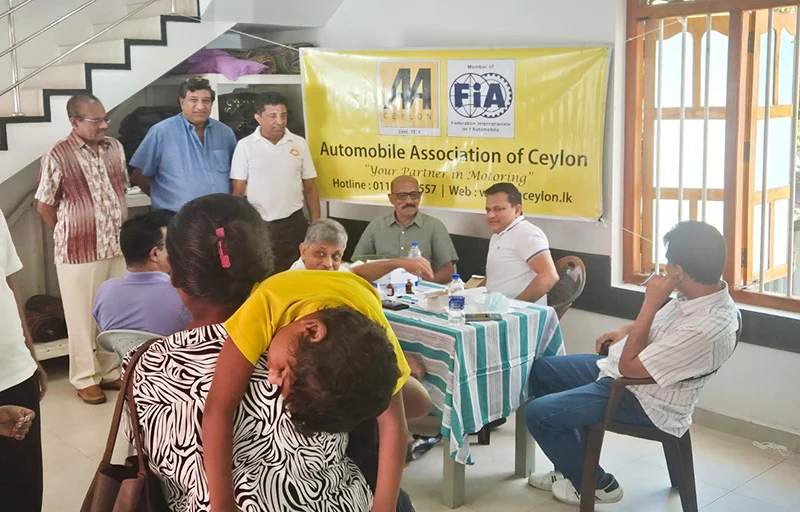
Automobile Association of Ceylon (AAC) sponsored an Annual Medical Camp which was organized by the Uva Wellassa Sansadaya for over 2500 people in the area of Hewana Kumbura Poorwarama Temple in Welimada, Badulla District.
35 doctors including 15 specialists from the Peradeniya & Kandy General Hospitals attended to the patients who needed assistance.
The Association was represented by Dhammika Attygalle President, P B Kulatunga Sectional Chairman Staff Welfare & Kandy Branch Office Management & Dampiya Banagala, Executive Committee Member.
It was a useful and much needed event for the people of the area and they look for this day yearly.

National Development Bank PLC (NDB) commemorated raising LKR. 16 bn with its first ever issuance of BASEL III compliant GSS+ (Green, Social, Sustainable & Sustainability Linked) bonds and the country’s largest issuance of GSS+ bonds to date by way of a market opening ceremony conducted on the trading floor of the Colombo Stock Exchange (CSE) .
Subscriptions were opened on 10th March 2026, with an initial issuance of 120mn BASEL III compliant tier 2, listed, rated, unsecured, subordinated, redeemable GSS+ bonds with a non-viability conversion of five & seven years, at a par value of LKR 100 each. The issue was rapidly oversubscribed within the same day, allowing NDB to issue a further 40mn bonds, thus issuing a total of 16mn bonds by days end. The bonds, whose issuance was managed by NDB Investment Bank Ltd, constitutes the largest issuance of GSS+ bonds in Sri Lanka to date.
The GSS+ bonds form a part of a series of sustainability debt instruments that CSE offers with the bond issuance commemorated at the ceremony falling under the special BASEL III compliant category. NDB, which has an early entry into renewable energy funding beginning in 2004, will utilize the proceeds from the bonds to finance SMEs (Small-to-medium enterprises), women’s empowerment, and green and blue initiatives.
. Kelum Edirisinghe, Director and Chief Executive Officer of NDB, and keynote speaker at the ceremony remarked upon NDBs history, stating “NDB has long played a pioneering role in advancing environmental and social progress, as a trusted development financier to individuals, businesses, and key sectors of the Sri Lankan economy. Since our inception in 1979, we have channelled capital toward national development priorities. Today, this GSS+ bond represents the evolution of that legacy, where decades of expertise in development financing are being actively aligned with emerging sustainability imperatives and innovative capital market instruments.”
Delivering her welcome address at the event, Ms. Nilupa Perera, Chief Regulatory Officer of CSE, remarked upon NDBs success as a statement on the effectiveness of sustainable debt instruments stating: “The success of NDBs BASEL III compliant GSS+ bonds reflects investors’ interest in equitable and green investments. CSE offers listed companies an innovative means of long-term value creation through the capital market that addresses the pressing need for sustainable and equitable economic prosperity.”

Cabinet approves relief meaures to persons affected due to the War situation in the Middle East

Amendments to the Finance Act No. 35 of 2018 to be Gazetted

Value Added Tax (Amendment) Bill to be Gazetted

H.M.J.M.Herath appointed Commissioner General of Registration of Persons

Water Resources Board Act, No. 29 of 1964, to be amended

Securing public sector employment opportunities for Athletes demonstrating National-Level sporting excellence

‘Dates have the highest sugar content to fight Coronavirus’

Sunday Island 27 December – Headlines

#SundayIsland 17th December – Headlines

Sunday Island – 28th March

Sunday Island Headlines – 21 March

Sunday Island – 21st February – Headlines
-

 Features3 days ago
Ranjith Siyambalapitiya turns custodian of a rare living collection
-

 News6 days ago
2025 GCE AL: 62% qualify for Uni entrance; results of 111 suspended
-

 News3 days ago
Global ‘Walk for Peace’ to be held in Lanka
-

 Business7 days ago
Hour of reckoning comes for SL’s power sector
-

 Editorial6 days ago
Search for Easter Sunday terror mastermind
-
 Opinion5 days ago
Hidden truth of Sri Lanka’s debt story: The untold narrative behind the report
-
Editorial7 days ago
Ideological confusion and identity crisis
-

 Opinion6 days ago
Is there hope for Palestine?