
Editorial
India squaring up to Trump tariffs


Thursday 28th August, 2025
The doubling of US tariffs up to 50% on Indian goods took effect yesterday. This includes an additional 25% tariff imposed as a punitive measure for buying oil from Russia. The massive tariff hike is bound to send India’s export sector reeling; among the Indian exports affected by the Trump tariffs are chemicals, furniture, footwear, jewellery and garments. India now finds itself in the same bracket as China and Brazil, where US tariffs are concerned. Curiously, the US has given China an easier ride; its tariff linked to Russian oil does not apply to China, the largest purchaser of that product. Self-interest has obviously driven the US to spare China, but the fact remains that it has punished its strategic partner, India, with whose support it is trying to hold rising China in check geopolitically.
The US has no friends as such; it treats all its allies like lackeys, and makes them feel important only when it needs to use them to further its geostrategic interests. It forged close ties with India as part of its strategy to counter China’s global dominance, but has laid bare its true face by imposing a ‘punitive’ tariff on India. India should be able to do what is good for it as the fastest growing major economy, which is thirsting for oil. Any country that becomes a willing cat’s paw for the US should learn from Ukraine’s predicament. Ukraine provoked Russia at the behest of the US-led Western bloc, but the West now considers the provision of military assistance to Ukraine a favour done to that war-torn nation.
Thankfully, the US tariff hike has jolted India into realising the need to mend fences with China. India’s response to the new US tariffs taking effect was not immediately known, but the Modi government has reportedly taken steps to grant financial assistance to the vulnerable exporters and help them open new markets in China, Latin America, West Asia, Europe and elsewhere.
It will be a gargantuan task for India to cushion the US tariff shock, whose political fallout will also be huge, given the economic cost and anticipated job losses. According to international media reports, it was not possible to monitor the reaction of the Indian bourses immediately as they were closed for a Hindu festival, but ‘equity benchmarks logged their worst session in three months on Tuesday after a Washington notification confirmed the additional tariff’.
The Indian rupee has also been on a losing streak. These are no doubt disturbing signs, but the Indian economy is resilient enough to absorb such shocks. However, it will be in India’s interest to have further negotiations with the US to obtain a tariff reduction. The Trump administration has earned notoriety for about-turns, which are legion, and it is possible that President Donald Trump will make another U-turn by way of a reconciliatory gesture as the US has to factor in its strategic partnership with India; the thawing of relations between India and China is a disconcerting proposition for Washington. However, the US has made the mistake of seeking to browbeat a formidable strategic ally, and letting the whole world know once again that it does not hesitate to further its own interests even at the expense of its close allies.
Meanwhile, the Indian media has reported, quoting a German newspaper, that Prime Minister Narendra Modi has been avoiding calls from President Trump during the last few weeks amidst escalating trade tensions between the US and India. Modi is in an embarrassing position, unable to leverage his ‘special’ relationship with President Trump to obtain a substantial tariff reduction. Time was when he and Trump were seen locking each other in a bear hug whenever they met. India is powerful enough for PM Modi to register his protest with the White House by means of a phone call snub, as it were, but one may recall that the leader of a much smaller state did likewise about 16 years ago.
In 2009, President Mahinda Rajapaksa was left with no alternative but to avoid calls from the White House amidst western pressure mounting on his government to stop the Vanni war and spare the LTTE leadership. He also told the Foreign Ministers of France and the UK where to get off when they rushed here to stop the war. He incurred the wrath of the West, but Sri Lanka gained; democracy has been rekindled in the former LTTE-held areas. No wonder the western powers are out for his scalp. PM Modi is lucky that he is too powerful to be bullied in that manner.
How India is planning to handle the US tariffs in the long run remains to be seen, but it has so far stood up to the Trump tariffs admirably.


Saturday 17th October, 2026
There seems to be no end in sight to controversies the JVP-NPP government creates. It has been reported that the ruling party parliamentary group has proposed that the no-confidence motion (NCM) submitted by the Opposition against Speaker Jagath Wickramaratne be referred to the Attorney General for his opinion and recommendations. Some Opposition politicians have claimed on social media that this move could be a bid to block the debate on the NCM. This is something that not even the SLPP-UNP government contemplated. The previous administration allowed an NCM to be moved against Speaker Mahinda Yapa Abeywardena in 2024 and defeated it.
Minister Bimal Rathnayake has gone on record as saying that the government is ready for a debate on the NCM against the Speaker. This is the government’s official position, but anything is possible in Sri Lankan politics characterised by about-turns. The government is wary of taking up the NCM at issue, which is a can of worms. Therefore, the possibility of the NPP doing everything possible to prevent a debate on it cannot be ruled out. It may have sent a trial balloon by leaking information about how it is planning to set about the task.
One may recall that in August 2025, the government effectively blocked an NCM against Deputy Defence Minister Aruna Jayasekara, with the Speaker ruling that the motion was out of order. Thirty-two Opposition MPs, including Opposition Leader Sajith Premadasa, had submitted that motion against Jayasekara, raising serious concerns about a potential conflict of interest arising from his former military role and the ongoing investigations into the 2019 Easter Sunday bombings. But the allegations against Jayasekera have not gone away.
If the government is planning to seek the Attorney General’s opinion as part of a strategy to scuttle the NCM against the Speaker, as reported, such action will be far more politically damaging than facing a debate on it. Legal experts inform us that there are no grounds on which the NCM at issue can be rejected.
Powerful governments have made a mockery of their commitment to upholding parliamentary traditions and good governance by playing politics with NCMs. One may recall that the JVP was among the political parties that condemned the J. R. Jayewardene government for abusing its steamroller majority to do something despicable to an NCM. In 1980, the Opposition sought to postpone the debate on an NCM it had moved against the then Speaker Bakeer Markar for backing President Jayewardene’s efforts to retain Abeyratne Pilapitiya as a UNP MP by nominating him to the Kalawana electorate despite a Supreme Court ruling that his election was void. Speaker Markar echoed President Jayewardene’s assertion that the Kalawana seat had not fallen vacant, and therefore a by-election was not warranted. The NCM against the Speaker was scheduled to be debated on 23 December, 1980, but the Opposition wanted it postponed in view of possible legal implications of the by-election the UNP was trying to avoid. But claiming that the NCM, moved by the Opposition, was of utmost national importance and therefore had to be debated urgently, the UNP government took it up, put it to the vote and defeated it! All UNP MPs, including the proposer and the seconder, voted against the NCM! The Opposition boycotted the NCM debate. The UNP will never be able to live down its shameful action.
The JVP-NPP government would do well to refrain from resorting to tactics that evoke memories of the governments the JVP vehemently condemned as dictatorial regimes and doing what not even its predecessors did. It is fervently hoped that the allegations about a move to block the NCM against the Speaker are not true.
Friday 16th October, 2026
Glad tidings come occasionally amidst doom and gloom. Sri Lankans are elated that the Supreme Court of Saudi Arabia has set aside the death sentence imposed on Anojan Sivarasa. He was initially sentenced to five years’ imprisonment and fined three million Saudi riyals over a Facebook comment deemed insulting to the Prophet Muhammad. The death sentence was subsequently imposed on appeal, forcing Sri Lanka to redouble its efforts to save him. The Opposition lost no time in raking the government over the coals, claiming that it had ruined the chances of saving Anojan.
Anojan has been spared the death penalty, but that does not mean his freedom has been secured. His legal fate remains uncertain. Conflicting interpretations of the Saudi Supreme Court ruling and media reports based on them do not establish whether he will face another sentence at the rehearing or incur other legal consequences for the offence of which he was convicted. A prolonged stay in a Saudi prison could prove a fate worse than death. Anojan has already suffered an assault at the hands of a fellow inmate. His ordeal, therefore, is far from over. It is fervently hoped that he will secure his freedom, return to Sri Lanka and be reunited with his family.
It is both heartening and ironic that a government led by the JVP, an organisation with a history of kangaroo trials and extrajudicial executions, has striven to save a life, and rightly so. One hopes that the government will continue to uphold the same respect for the right to life in its broader sense, a fundamental human rights principle that encompasses not only protection against arbitrary deprivation of life but also the state’s duty to safeguard life. Saving Anojan from the executioner’s blade is therefore a welcome act. But respect for the right to life must extend beyond a single individual facing execution abroad. According to the UN Human Rights Committee, the right to life encompasses protection against unlawful killing, foreseeable threats to life, and conditions that prevent people from living with dignity. These include access to essential healthcare and other basic services, protection against environmental degradation and public hazards, and safeguards against deaths in state custody. The principle applies to everyone, including suspects and convicted criminals, regardless of the gravity of their offences.
It is said that victory has a thousand fathers but defeat is an orphan. So, it is only natural that both the government and the Opposition are claiming credit for saving Anojan. If the Saudi Supreme Court had upheld the death sentence, they would have blamed each other.
Sri Lankan taxpayers, who are struggling to keep their heads above water amidst numerous economic hardships and crying out for relief, have a right to know how much the legal and diplomatic efforts to save Anojan from execution have cost the public purse. The government must disclose the expenditure incurred, including legal fees, travel and other related expenses, and explain the principles governing the use of public funds for such interventions.
The government should also make it very clear that all Sri Lankans working or living abroad must understand that they are subject to the laws of their host countries and that insulting religions or committing other offences can have grave consequences. Those who knowingly violate such laws must be prepared to face the legal consequences. At the same time, any policy must allow for exceptional cases in which fundamental rights, access to justice or the risk of disproportionate punishment warrant direct state intervention.
One important lesson that Anojan’s predicament holds for social media users is that freedom of expression is not the freedom of the wild ass. It has limits, and, as the familiar saying goes, one person’s freedom ends where another person’s nose begins.
Thursday 15th Octobber, 2026
Israeli Prime Minister Benjamin Netanyahu is reportedly cranking up pressure on US President Donald Trump to resume military strikes on Iran ahead of the upcoming elections in Israel and the US. Trump recently declared that there would be no military operations against Iran until the conclusion of the US midterm elections in November, but speculation is rife that Netanyahu may be able to persuade him to change his mind.
Netanyahu appears to view the Iran conflict through the Clausewitzian lens. Prussian General and military theorist Carl von Clausewitz has argued that war is not an isolated military undertaking divorced from political considerations; it is an instrument used by states to achieve political objectives when other means prove insufficient or when leaders choose to resort to force. Critics of Israel claim that Netanyahu is trying to further his own political interests by escalating an international conflict. They argue that Netanyahu’s support base has shrunk considerably at home as he is facing criminal charges of bribery, fraud and breach of trust in three separate cases, and therefore he is using the Iran conflict, etc., to portray himself as a leader best equipped to deal with threats to Israel’s security.
Renewed military confrontation with Iran could give a big fillip to Netanyahu’s election campaign. Political scientists call this phenomenon ‘diversionary war theory’; leaders facing declining popularity, domestic unrest or threats to their tenure tend to use an international confrontation to redirect public attention, stimulate patriotism and rally citizens around their governments.
In the US, the Republicans face a serious risk of suffering a huge setback at the upcoming midterms and losing control of the House of Representatives, while their chances of retaining the Senate are believed to be considerably better, although Democrats now have a realistic opportunity to capture it as well. Current forecasts favour the Democrats in both chambers, but the Senate contest remains much closer. This is an unsettling proposition for President Trump, who will not hesitate to do everything in his power to improve his party’s electoral chances.
Meanwhile, Netanyahu’s desperation to retain his hold on power amidst the Israeli Opposition recovering lost ground has given rise to several conspiracy theories, the most prominent among them being that the recent attempted hijacking of Flydubai flight was an Israeli false-flag operation; the incident was staged for political purposes. It may be recalled that a conspiracy theory about the Hamas attack on Israel in 2023 alleged that Netanyahu had prior knowledge of the assault but deliberately allowed it to happen because the resulting war would strengthen his political position.
World history is replete with instances where rulers fought wars to consolidate their power at home. Historians tell us that Napoleon III involved France in the Crimean War so as to strengthen its legitimacy and restore France’s international standing. Russia’s war in Chechnya enabled Vladimir Putin to establish his image as a decisive leader.
The next phase of the Iran war is very likely to be far more destructive than the previous ones. Future military operations against Iran are bound to have unprecedented global consequences. Oil prices will soar again, making economies scream the world over. Worse, Iran has explicitly threatened to target regional digital infrastructure, including submarine cables and data centres if war resumes. Iran’s threat is credible enough to merit attention, although it does not establish that attacks on every category of infrastructure are inevitable or that Iran has announced a specific operation against US-based facilities.
If Iran carries out its threat in case of the US and Israel resuming strikes, the UAE and Bahrain will face direct risks; the UAE, Bahrain, Qatar, Kuwait and parts of Saudi Arabia will be exposed to damage affecting Gulf submarine cables. Sri Lanka and India are among the potential secondary victims of a wider outage, especially if Red Sea cables are damaged. The possibility of attacks on cables causing widespread disruption to European internet connectivity cannot be ruled out, according to experts, but military might blinds powerful nations to reality and drives them to act recklessly. All one can do is hope that what is feared will not come to pass.

Review of progress in reforms and modernisation of key state revenue-collecting institutions

Rose Bowl expanded to include Australia vs New Zealand T20Is

Trump claims US Navy blockade stops Iranian ships in Hormuz

Showers above 75 mm are likely at some places in the Western, Sabaragamuwa, Central and North-central provinces and in Trincomalee and Mullaitivu districts

Cut power bills by 3-5%, don’t hike them, consumers demand

Asgiri Mahanayake calls for immediate release of Gnanasara Thera

‘Dates have the highest sugar content to fight Coronavirus’

Sunday Island 27 December – Headlines

#SundayIsland 17th December – Headlines

Sunday Island – 28th March

Sunday Island Headlines – 21 March

Sunday Island – 21st February – Headlines
-

 News6 days ago
Sri Lanka escalates anti-graft drive with Shiranthi’s jailing
-

 News6 days ago
Iranian ships stranded, Lanka fears US sanctions
-

 Latest News5 days ago
Farhan and Sadaqat help Pakistan seal series in style
-

 Latest News4 days ago
Nissanka’s return headlines Sri Lanka’s Test squad against Pakistan
-

 Features5 days ago
Intake 16: 45 years of duty and honour
-
 News5 days ago
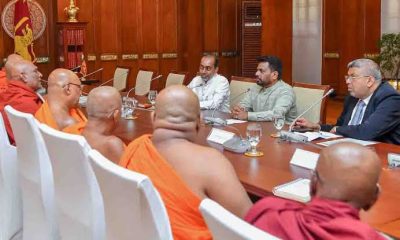
Malwathu Chapter issues statement on talks with President over Gnanasara Thera’s robes
-
 News6 days ago
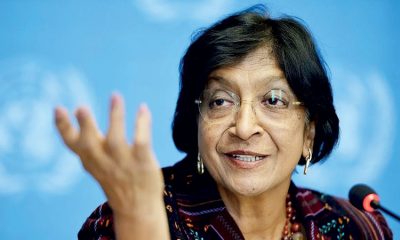
Navi Pillay’s Lankan affairs in focus as she wins 2026 Nobel Peace Prize
-
 News5 days ago
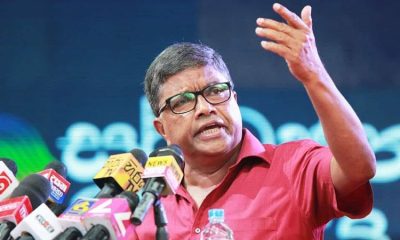
CP alleges NPP has taken the blame for illegal US sanctions on Iranian vessels