
News
Increasing tensions between the Pakistan Army and Imran Khan portend political unrest


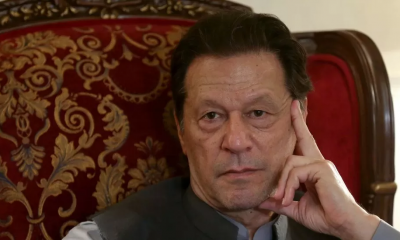
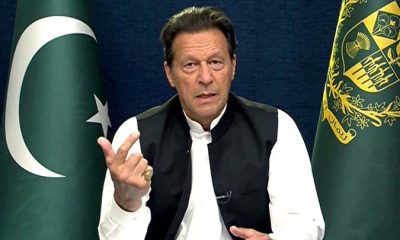
(ISLAM AKBAR) Pakistan is staring at violent unrest in the coming weeks because of intensifying political tensions between Imran Khan-led opposition and the powerful militar establishment-backed Pakistan Democratic Movement (PDM) coalition government. Imran Khan’s Pakistan Tehreek-i-Insaf (PTI) has recently called for a long march to Islamabad without announcing a specific date, causing jitters among the federal government agencies. On the other hand, Khan’s close aide, PTI Senator Azam Khan Swati, was arrested, stripped and tortured for tweeting about Chief of Army Staff Gen Qamar Javed Bajwa. Pakistan’s Federal Investigation Agency registered a case against Swati under the cyber-crime act, accusing him of trying to harm the country and an “attempt to create hatred in the minds of people against chief of army staff and Pakistan army.” Ironically, earlier this year, Imran Khan’s PTI government approved a summary of a five-year sentence for criticising the state institutions including Pakistan army, judiciary, and others on electronic media.
This incident has exacerbated tensions between the military establishment and Imran Khan-led opposition. Moreover, Swati’s arrest is another example of the army’s heavyhandedness against its own citizens and blatant degradation of democratic values in Pakistan. Even a serving senator is not safe in Pakistan and can be a victim of physical torture at the hands of security agencies. In August this year, Shahbaz Gill, senior PTI leader and close aide of Imran Khan, was arrested for sedition and other charges for remarks made during a TV show. He was granted bail after five weeks in custody. Imran Khan backed Gill then and is fully backing his party member now. He termed Swati’s arrest as “another shameful incident in our history.” In an indirect attack on the military establishment and Gen Bajwa, Khan remarked in a tweet on October 13, “Can torture & intimidation make people respect any individual or institution?” Khan’s response indicates that he is not intimidated by such pressure tactics anymore and is prepared for future eventualities as well.
It is clear from Senator Swati’s tweet that the real political struggle is between Gen Bajwa and Imran Khan’s PTI. In his controversial tweet on Oct 12, Swati said, “Mr Bajwa congratulations to you and few with you. Your plan is really working and all criminals are getting free at cost of this country. With these thugs getting free You have legitimised corruption. How you predict now the future of this country?” This tweet is just a no-holdsbarred reiteration of PTI’s allegations against the ‘neutrals’ (reference to the army’s top leadership) for installing a ‘corrupt’ political regime of the PDM alliance in Pakistan. For Gen Bajwa and the army establishment, Imran Khan has become a serious liability, who cannot be allowed to go rogue anymore. However, it is not easy to target Khan considering his mass popularity among locals and overseas Pakistanis. The PDM government officials are finding it difficult to travel abroad without facing heckling from aggressive PTI supporters. It is evident from a recent incident in which Pakistan’s Finance Minister Ishaq Dar was heckled and called ‘thief’ at the Washington D.C. airport. Besides domestic ramifications of the ongoing political turmoil, Pakistan is getting embarrassed globally as well.






Latest News
Heat Index likely to increase up to ‘Caution level’ at some places in the Western, Sabaragamuwa, Southern and North-western provinces and in Monaragala and Mannar districts

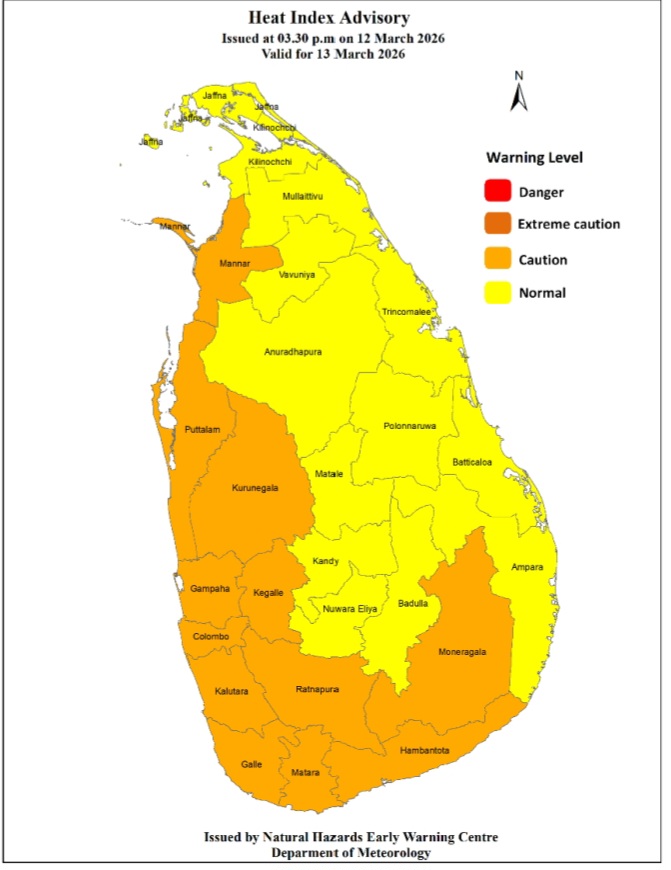
Warm Weather Advisory
Issued by the Natural Hazards Early Warning Centre of the Department of Meteorology at 3.30 p.m. on 12 March 2026, valid for 13 March 2026.
Heat index, the temperature felt on human body is likely to increase up to ‘Caution level’ at some places in Western, Sabaragamuwa, Southern and North-western provinces and in
Monaragala and Mannar districts.
The Heat Index Forecast is calculated by using relative humidity and maximum temperature and this is the condition that is felt on your body. This is not the forecast of maximum temperature. It is generated by the Department of Meteorology for the next day period and prepared by using global numerical weather prediction model data.

Effect of the heat index on human body is mentioned in the above table and it is prepared on
the advice of the Ministry of Health and Indigenous Medical Services.
ACTION REQUIRED
Job sites: Stay hydrated and takes breaks in the shade as often as possible.
Indoors: Check up on the elderly and the sick.
Vehicles: Never leave children unattended.
Outdoors: Limit strenuous outdoor activities, find shade and stay hydrated.
Dress: Wear lightweight and white or light-colored clothing.
Note:
In addition, please refer to advisories issued by the Disaster Preparedness & Response Division, Ministry of Health in this regard as well. For further clarifications please contact 011-7446491.

The Frontline Socialist Party (FSP) yesterday accused the government of trying to award another tender to the Indian company that supplied low-grade coal to the Norochcholai Power Plant and failed to deliver the stipulated amount of coal according to schedule.
The allegation was made by the Education Secretary of the Progressive Socialist Party, Pubudu Jayagoda, during media briefing at the party office in Nugegoda last afternoon.
Jayagoda said that in September 2025, the government had awarded a tender to the Indian company Trident Chemphar to supply 25 coal shipments for electricity generation in 2026.
In August 2025, it was confirmed that the coal delivered by the company was substandard. The company also failed to supply coal on schedule. Although the first shipment was expected in the second week of December 2025, it arrived at the end of the month. By mid-March, only 12 ships had arrived, and biweekly deliveries have been disrupted, putting Sri Lanka at risk of a severe energy shortage.
On 11 March, the government called a sudden spot tender for five coal shipments. Four companies submitted bids, and they include Trident Chemphar. FSP criticiced awarding the tender to the same discredited company, saying it was unethical and could trigger a major national crisis, as the company had failed to supply quality coal reliably in the past.
Previously, coal quality was strictly measured, with a “Reject Value”. But now to help the errant supplier the term of Reject Value has now been omitted altogether and replaced with a new term ‘Minimum Value’ setting it as the minimum calorific threshold—coal producing less than 5,900 kilocalories per kilogram was rejected, and coal with ash content above 16% was also discarded.
However, the government is now reportedly lowering these standards, accepting substandard coal, and changing tender specifications to accommodate the company.
Jayagoda castigated the latest stunt coming especially at a time when the world faces war and oil shortages. Diesel meant for electricity generation is being diverted to school buses, public transport, and emergency vehicles, leaving households at risk of prolonged blackouts. Even if diesel is imported, electricity tariffs could skyrocket.

The Indian Ministry of External Affairs has said it is considering requests for diesel supplies from neighbouring countries, including Sri Lanka, Bangladesh and the Maldives.
Speaking to the Press Trust of India, Ministry Spokesperson Randhir Jaiswal noted that India was a major exporter of refined petroleum products in the region. He confirmed that Bangladesh had formally requested a diesel supply, which is currently under review.
He said that diesel exports to Bangladesh had largely continued since 2017, but any new allocations would take into account India’s refining capacity, domestic demand, and overall fuel availability.
Jaiswal added that similar requests from Sri Lanka and the Maldives were also being considered, with India’s own energy requirements forming a key part of the decision-making process.

Heat Index likely to increase up to ‘Caution level’ at some places in the Western, Sabaragamuwa, Southern and North-western provinces and in Monaragala and Mannar districts

Showers above 50 mm can be expected at some places in the Western and Sabaragamuwa provinces and in the Galle and Matara districts

Govt. bends rules, lowers coal standards in favour of errant company: FSP

Lanka requests diesel from India

Gas shortage pushes up electricity demand, night peak rises: CEB

Navy seizes narcotics haul, lethal weapons in two vessels, arrests 10 suspects

‘Dates have the highest sugar content to fight Coronavirus’

Sunday Island 27 December – Headlines

#SundayIsland 17th December – Headlines

Sunday Island – 28th March

Sunday Island Headlines – 21 March

Sunday Island – 21st February – Headlines
-

 News6 days ago
Peradeniya Uni issues alert over leopards in its premises
-

 News4 days ago
Repatriation of Iranian naval personnel Sri Lanka’s call: Washington
-

 News6 days ago
Wife raises alarm over Sallay’s detention under PTA
-
 Features4 days ago
Winds of Change:Geopolitics at the crossroads of South and Southeast Asia
-

 News3 days ago
Prof. Dunusinghe warns Lanka at serious risk due to ME war
-

 Latest News6 days ago
Heat Index at ‘Caution Level’ in the Sabaragamuwa province and, Colombo, Gampaha, Kurunegala, Anuradhapura, Vavuniya, Hambanthota and Monaragala districts
-

 Sports2 days ago
Royal start favourites in historic Battle of the Blues
-

 Features6 days ago
The final voyage of the Iranian warship sunk by the US