
News
Inciting ethno-religious animosity has become a means of survival for parts of Sri Lanka’s political elite


What is behind the anti-Muslim measures in Sri Lanka?
Farzana Haniffa
Head of the Department of Sociology at the University of Colombo
On March 13, Sarath Weerasekara, Sri Lanka’s minister of public security, announced that the government will ban wearing of the burqa and close more than 1,000 Islamic schools in the country. The minister was quoted as saying that “the burqa” was a “sign of religious extremism” and has a “direct impact on national security”.
The news was picked up internationally and resulted in several statements by human rights organisations and the UN special rapporteur on freedom of religion or belief, Ahmed Shaheed, as well as from Pakistan’s ambassador to Sri Lanka. Three days later the government stepped back from Weerasekera’s statement. Cabinet spokesman Keheliya Rambukwella announced that the decision “requires time” and a consultative process.
The burqa ban announcement caused a stir among Muslims, who saw it as yet another attack on their community. In the past few months, the government has undertaken a number of controversial measures under the banner of fighting extremism, which have increasingly intimidated the Muslim population and disregarded rule of law principles.
The anti-Muslim movement
Since it gained independence from the British in 1948, Sri Lanka has witnessed tumultuous relations between the Sinhala Buddhist majority, which makes up about 70 percent of the population and the Hindu and Christian Tamil minority, which accounts for roughly 12 percent. During the war between the military forces and the Liberation Tigers of Tamil Eelam (LTTE), other minorities, like the Muslims, who make up around nine percent of the population, were targeted less frequently by ultra-nationalist Sinhalese groups.
After the end of the civil war in 2009, an anti-Muslim movement initiated by the Bodu Bala Sena (BBS), with the monk Galaboda Aththe Gnanasara at the helm, began to emerge. The BBS is an activist group led by Buddhist monks which mobilised around what they described as the threat posed by the “social separatism” of “extremist Muslims”. Their definition of extremism, however, seems to encompass the majority of Muslims’ everyday practices.
The BBS’s large public rallies and their strident social media campaigns normalised hate speech and everyday low-intensity harassment of Muslims across the country. Incitement by the BBS and the cultivation of anti-Muslim sentiment over the post-war years also led to violent attacks against small Muslim communities in 2014, 2017 and 2018. The BBS also aligned itself with similar groups in Myanmar.
Following these incidents, the local authorities did not take serious action against BBS and other similar groups and in some cases blamed Muslims for the violence.
In 2019, anti-Muslim hatred escalated further after eight suicide bombers pledging allegiance to the Islamic State detonated themselves at churches, hotels and other locations across the country on Easter Sunday. There was evidence of the failure to pursue available intelligence by the security establishment and negligence on the part of the political leadership. However, the media coverage of the event and government policy discussion in the aftermath primarily targeted the country’s Muslim population.
Experts rarely referenced the role of the anti-Muslim movement in radicalising local Muslims. In May, there were violent retaliatory attacks against Muslim communities in the northwest.
The government response to the attack was to embrace the anti-Muslim language of the BBS and initiate sweeping arrests of suspected followers of the group responsible for the bombings.
Since then, several prominent Muslims have also been arbitrarily targeted by the government, with little or no evidence produced of their wrongdoing. In April 2020, the police arrested Hejaaz Hisbullah, an activist lawyer, on suspicion of aiding the attackers. Then in May 2020, Ahnaf Jazeem, a young Muslim poet, was also detained under the same pretext. Recently, the former leader of the Jamati Islami, Hajjul Akbar was arrested and detained for a second time, again without charges being filed.
In the aftermath of the Easter Sunday attacks, a parliamentary sectoral oversight committee on national security was set up to put together proposals for terrorism prevention measures. It has made recommendations in 14 areas, many of which curb the religious rights of the Muslim minority.
The burqa ban and the closing of Islamic schools stem from these recommendations, as do several other measures recently taken. In early March, the government declared that all Islamic books imported into the country will need defence ministry approval. Several days later, it gazetted a set of regulations ominously sub-titled “Deradicalisation from holding violent extremist religious ideology” under the Prevention of Terrorism Act. The regulations give it powers to arrest and forward persons to a rehabilitation centre to be “deradicalised” for one year on suspicion without requiring any additional process.
Apart from the above, the government has sought other ways to intimidate the country’s Muslims. When the COVID-19 pandemic spread to Sri Lanka in the spring of 2020, it imposed a mandatory cremation policy for the COVID-19 dead and refused to allow Muslims to bury their dead, in accordance with their religion.
Muslims’ call for the burial option on religious grounds was written and talked about as “tribal” and “backward” and as reprehensible behaviour in the middle of a public health emergency. Despite condemnations at home and abroad and guidelines by the World Health Organization emphasising the safety of burials, the government maintained its position for nearly a year. Burial was permitted only recently under international pressure.
Demonising Muslims as a political strategy
Political elites in Sri Lanka have consistently demonised minorities and incited ethno-religious animosity to win elections. After the end of the war in 2009, when victory over the Tamil Tigers was glorified by the government, enmity against all other minorities and especially the Muslims was cultivated with renewed vigour.
The Rajapaksa family, which has dominated the political scene in Sri Lanka since 2005, was complicit in this cultivation until their electoral defeat in the 2015 elections. During their political campaigning after 2015, the Rajapaksas’ new party, the Sri Lanka Podujana Peramuna (SLPP), took on a Sinhala supremacist position, accommodating activist monks and anti-Muslim movement stalwarts.
Rhetoric regarding Muslim business prowess as challenging the ascendence of Sinhala entrepreneurs, Muslims conspiring to upend the majority status of Sinhalese or constituting a terrorist threat was widely used.
In October 2018, the Rajapaksas suffered a significant setback. Former president and then MP Mahinda Rajapaksa, in collusion with President Maithripala Sirisena staged a coup to take control of the government. They were defeated when the Supreme Court threw out their claim to legitimacy and the Rajapaksa brand suffered some damage as a result.
The 2019 bombings energised the Rajapaksas’ familial politics and helped them overcome the momentary unpopularity they were struggling with. The Rajapaksas attempted to leverage the bombings to their political advantage in the immediate aftermath. They accused the ruling regime of concentrating on reconciliation with minorities and neglecting security. When several months later, Gotabaya Rajapaksa, the brother of Mahinda Rajapaksa, was nominated as the SLPP’s presidential candidate, he declared in his platform: “My main task would be to ensure that our motherland which is once again under threat from terrorist and extremist elements is safe and protected.”
Using anti-minority and pro-security rhetoric in his campaign, Rajapaksa won the presidential election by a high percentage of Sinhala Buddhist votes and appointed his brother, Mahinda, the former president as prime minister. Since then, at every opportunity, the president has reiterated his commitment to this majority and outlined his actions to combat Islamic extremism, and the government has pressed forward with anti-Muslim policies.
In this context, the recent flurry of anti-Muslim government activity, including the burqa ban, serve not only to mitigate the fallout from the shift in position on COVID-19 burials, but also to distract from the Rajapaksa administration’s ongoing failures. The cabinet is facing anger over a vast tax scam, mounting opposition to its permission of deforestation, and growing public anxiety over the economic downturn. It is likely that anti-Muslim activities will increase if their popularity continues to decline.
But the anti-Muslim policies of the government may be backfiring. In March, it suffered a defeat at the UN Human Rights Council (UNHRC), which passed a resolution empowering the UN High Commissioner for Human Rights to collect and preserve information and evidence of war crimes committed during the civil war. The motion went through mainly because of the loss of support for the government from some Muslim-majority countries, who abstained from voting. The resolution included reference to the government’s treatment of Muslims in its COVID-19 response and the continued marginalisation of minorities.
The current government’s inability to mobilise its constituency around anything other than ethno-religious animosity is a legacy of Sri Lanka’s post-independence politics that looks set to continue in the long term. The UNHRC resolution was a welcome development. However, the future outlook for minorities in the country remains bleak. Ten years after a devastating war the Sri Lankan polity shows little evidence of having learnt from its past. (Al Jazeera)
The views expressed in this article are the author’s own and do not necessarily reflect Al Jazeera’s editorial stance.
(Farzana Haniffa is Professor and Head of the Department of Sociology at the University of Colombo. She has published on the social and political history of Muslims, gender politics and the anti-Muslim movement in Sri Lanka)

Latest News
No-confidence motion against Justice Minister should be supported by facts as members’ noise does not establish facts – PM

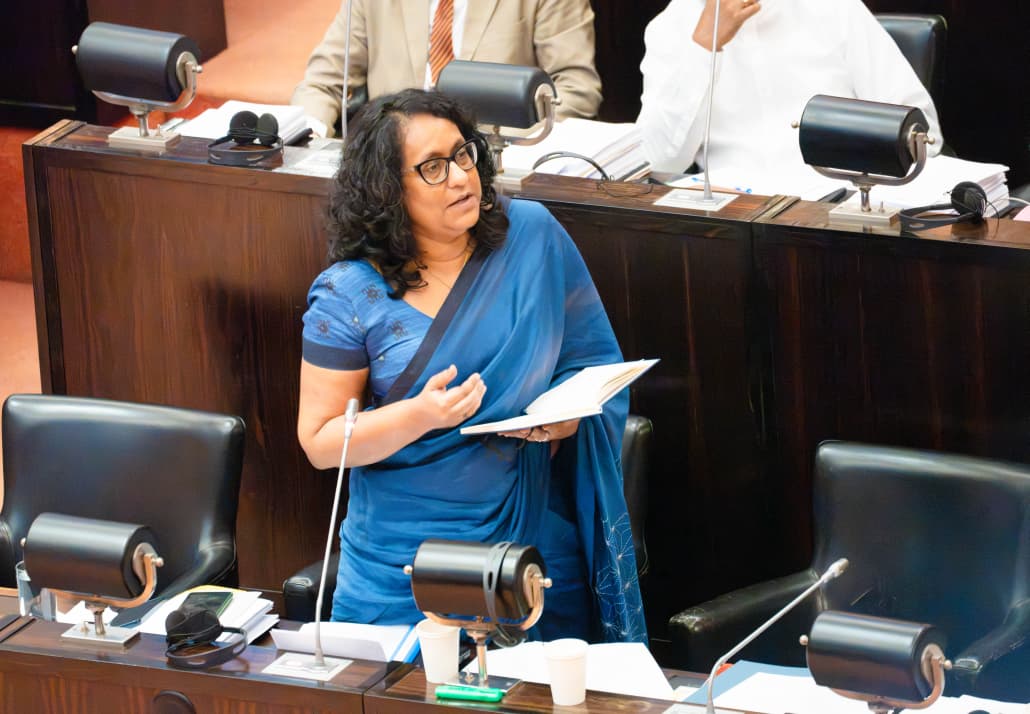
“Our mandate is to establish the rule of law and restore respect and confidence in Sri Lanka’s justice system”
Prime Minister Dr. Harini Amarasuriya made these remarks in Parliament on Friday [July 24] while pparticipating in the parliamentary debate on the no-confidence motion against the Minister of Justice and National Integration, the Prime Minister emphasized that the Opposition had failed to substantiate its allegations with facts and had instead relied on rhetoric and personal attacks.
The Prime Minister further stated,
“There is no doubt that the incident that occurred on 5 and 6 July was tragic, and the loss of life is unacceptable. It is not something that can be accepted or condoned in any way.
Members of the Opposition must establish, through evidence and facts, how exactly the Minister of Justice and National Integration is solely responsible for what happened, and how his conduct before, during and after the incident amounted to a breach of trust. Noise, personal attacks, venom and rhetoric do not establish facts.
What we are hearing today is a distortion of the truth, misrepresentation of facts, half-truths at best, and a deliberate effort to viciously attack a member of the Cabinet. That does not establish the intent of this no-confidence motion.
The Prime Minister further noted that many of the structural deficiencies within the prison system predated the current administration and had remained unresolved for years.
She noted that longstanding vacancies in the prison service had persisted since 2022 but that the present Government had taken steps to address them.
“During the past year, 695 prison guards have been recruited, a further 190 recruitments are underway, and 18 Assistant Superintendents have been appointed. This is the first time since 2022 that these vacancies have begun to be filled.”
The Prime Minister further emphasized that the reforms undertaken to strengthen the Government Analyst’s Department, including filling vacancies, allocating funds for essential equipment, initiating procurement processes, and reviewing procedures to improve efficiency.
Addressing the need to ensure that the numbers of people in the remand are reduced , the Prime Minister stated legal reforms were already in progress, including amendments to the Poisons and Dangerous Drugs Act, which will soon be presented to Parliament. The Prime Minister stated that, “It is not that the Minister has failed to address these issues. Law reform does not happen overnight. It requires due process, and those processes are well underway.”
The Prime Minister also outlined measures taken by the present Minister of justice and national integration to improve prison conditions, including expanding healthcare services for prisoners and prison staff in collaboration with the Ministry of Health, introducing inpatient and specialized medical services, appointing new healthcare personnel, and improving access to treatment.
In addition, she highlighted rehabilitation initiatives aimed at reducing reoffending, including community rehabilitation programmes and vocational training to equip prisoners with employable skills upon release.
Reaffirming the Government’s commitment to comprehensive justice sector reforms, the Prime Minister further stated,
“Our mandate was to establish the rule of law and restore respect and confidence in Sri Lanka’s justice system.”
Prime Minister Dr. Harini Amarasuriya emphasized that the Government inherited a justice system that had been weakened by years of systemic corruption, institutional inefficiencies, and longstanding structural shortcomings. The Prime Minister further stated,
The task of cleaning up such a corrupted system is not easy. This incident is also needed to understand in that particular context of how the prison system was operated in the past It is this corrupted system that the Minister has been entrusted with the responsibility of cleaning up. This involves investigation within the Institution itself. It is not a easy task. This government has undertaken this difficult challenge.
It is very clear that this opposition so far will not be able to establish any facts that support the motion that they have brought forward. This is rhetorical exercises. This is not about justice system. This is another cheap effort by the opposition to get attention and part of a push back against the very reforms the government and the ministry has been undertaken”.
[Prime Minister’s Media Division]
Latest News
Develop a programme to allocate underutilised state land for investment by returning migrant workers – President
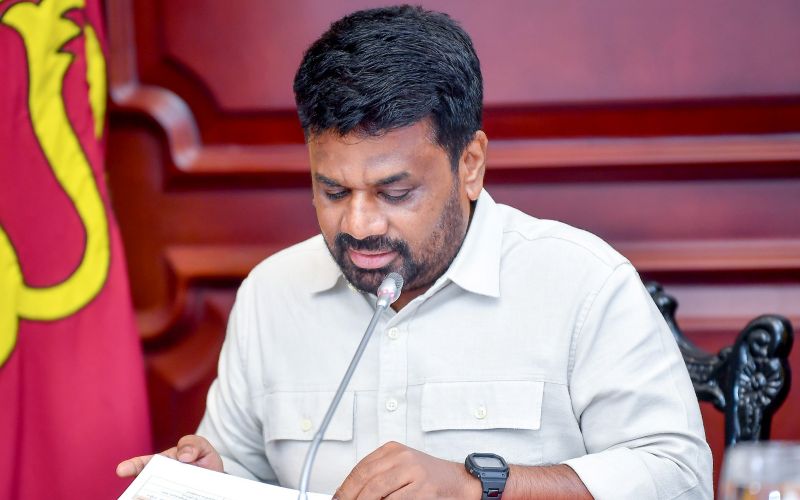
President Anura Kumara Dissanayake has instructed the relevant authorities to formulate a programme to allocate underutilized land, together with the necessary project support services, to Sri Lankan migrant workers returning home upon the completion of their overseas employment.
The President issued these instructions during a discussion held on Friday (24) afternoon at the Presidential Secretariat to review the progress of projects implemented under the 2026 budget allocations for the Ministry of Plantation and Community Infrastructure and to consider the Ministry’s proposals for the 2027 Budget.
The meeting included a comprehensive review of the progress of development projects being implemented by the Plantation Sector, the Community Infrastructure Sector and institutions under the State Plantation Companies operating within the Ministry. Discussions also focused on priorities, funding requirements and planned initiatives for 2027.
The meeting also reviewed key plantation sector initiatives being implemented under capital allocations of Rs. 1,081 million, including the estate land surveying programme, the disease management of coconut, the Kapruka Fund, initiatives to increase coconut production and the Northern Coconut Triangle Programme.
President Dissanayake also assessed the progress of ongoing infrastructure development programmes in the plantation sector. The President emphasised the importance of completing the project to construct 10,000 houses for the Malayagam community within the stipulated time-frame and handing them over to the beneficiaries without delay.
The President further noted that weaknesses in the implementation mechanisms for projects financed through foreign grants and loan assistance had resulted in certain allocated funds remaining underutilised or being returned.
President Dissanayake also reviewed the progress of the relief programme implemented to support the replanting of plantation crops, including tea, coconut and rubber that were damaged by the Ditwah disaster situation.
It was revealed during the discussion that the tea, coconut, rubber, cashew and palmyrah sectors, along with plantation infrastructure development activities, have recorded growth and improved profitability this year compared to the previous year. In particular, six state plantation companies, including Elkaduwa Plantations Limited, Kurunegala Plantations Limited, Chilaw Plantations Limited, Sri Lanka State Plantation Corporation, Janatha Estates Development Board and Kalubowitiyana Tea Factory Limited, are making significant progress in increasing their profitability.
Special attention was also given to crop production and related crop improvement programmes implemented by the Tea Research Institute, research and development activities and initiatives launched to support the replanting of smallholder tea plantations.
It was revealed during the discussion that approximately 60,000 hectares of Sri Lanka’s tea cultivation consists of smallholder tea plantations. Of the Rs. 450.06 million allocated in the 2026 Budget for the replanting of smallholder tea plantations, Rs. 155.07 million has already been utilised.
President Dissanayake also reviewed the progress of the 500 Tea Villages Programme implemented under the Tea Small Holdings Development Authority and instructed officials to expedite its completion by integrating the initiative with other rural development programmes, such as “Prajashakthi”, being implemented at the grassroots level.
The meeting also discussed the programme to revitalise rubber cultivation, including the allocation of Rs. 137 million in the 2026 Budget for the Rubber Research Institute, as well as the progress of rubber replanting initiatives and the challenges encountered during implementation.
In addition, discussions focused on the progress of programmes and research activities aimed at developing the coconut industry, enhancing productivity in coconut plantations, promoting new product development, increasing value addition and improving product quality.
The progress of programmes implemented under the Palmyrah Development Board and the Kithul Development Board to strengthen the palmyrah and kithul industries was also reviewed during the discussion.
It was revealed that Sri Lanka is expected to meet 18,000 metric tonnes of its annual cashew requirement of 25,000 metric tonnes this year, marking a significant increase compared to the previous year. The meeting also discussed the potential to expand cashew cultivation across approximately 15,000 hectares in the Northern and Eastern Provinces.
The progress of ongoing efforts to consolidate institutions within the plantation sector and the implementation of Cabinet decisions relating to non-commercial government-owned institutions were also reviewed. The meeting further discussed the need to update agreements entered into by previous governments when allocating lands to companies. Emphasising the importance of establishing stronger agreements regarding State-owned land allocations, President Dissanayake instructed that a committee be appointed through the Ministry of Finance to examine and address these matters.
The President also instructed officials to explore the possibility of offering courses conducted by the National Institute of Plantation Management through universities, in consultation with relevant higher education institutions.
Among those present were Minister of Plantation and Community Infrastructure Samantha Vidyarathna, Minister of Labour and Deputy Minister of Finance and Planning Anil Jayantha Fernando, Deputy Minister of Plantation and Community Infrastructure Sundaralingam Pradeep, Secretary to the President Dr. Nandika Sanath Kumanayake, Chief of Presidential Staff Prabath Chandrakeerthi, Senior Additional Secretaries to the President Russell Aponso and Kapila Janaka Bandara, Secretary to the Ministry of Finance, Planning and Economic Development Dr .Harshana Suriyapperuma and Secretary to the Ministry of Plantation and Community Infrastructure Gunadasa Samarasinghe. Chairpersons, Director Generals and senior officials of institutions under the Ministry of Plantation and Community Infrastructure also participated in the discussion.
[PMD]
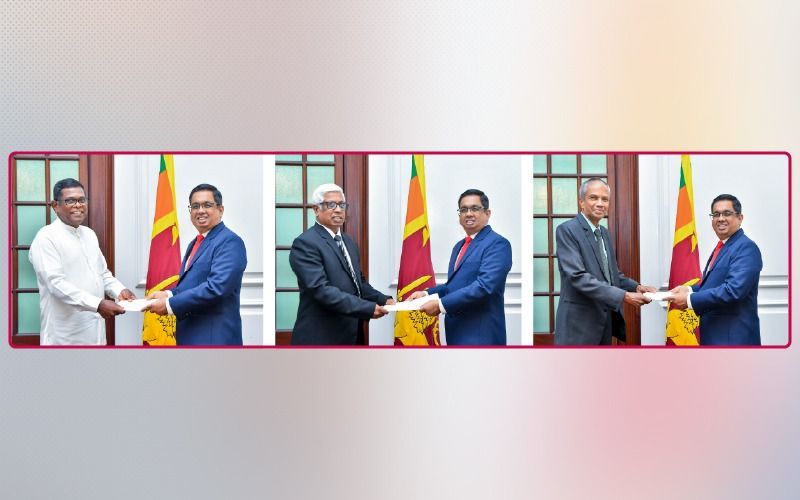
President Anura Kumara Dissanayake has appointed M. K. Saman Sri Ratnayake as the new Chairman and a member of the Delimitation Commission.
M. B. Rohana Pushpakumara and K. Thavalingam have been appointed as the other members of the Commission.
The relevant letters of appointment were presented to them by Secretary to the President Dr Nandika Sanath Kumanayake at the Presidential Secretariat on Friday (24) afternoon .
The appointments have been made to fill the vacancies that arose following the expiry of the terms of office of the members of the Delimitation Commission.
[PMD]

No-confidence motion against Justice Minister should be supported by facts as members’ noise does not establish facts – PM

Develop a programme to allocate underutilised state land for investment by returning migrant workers – President

New Chairman and Members appointed to Delimitation Commission

Kishan, Tilak knocks help India seal the series

Gunaratne 123, Samarawickrama 100* ace 274 chase for 1-1

Savindu, Akeel and Romesh star in Abans Groups’ 8 wicket win

‘Dates have the highest sugar content to fight Coronavirus’

Sunday Island 27 December – Headlines

#SundayIsland 17th December – Headlines

Sunday Island – 28th March

Sunday Island Headlines – 21 March

Sunday Island – 21st February – Headlines
-
 Features7 days ago
Two memorable excerpts from a former SLAF commander’s memoir
-
 Business7 days ago
‘Giving up was never an option’: The fisherman who fought back after losing millions in SL
-

 Life style7 days ago
Taste of the Swiss Alps comes to Colombo
-
 Features7 days ago
Erdoğan’s New Republic
-
 Midweek Review4 days ago
Three high-profile alleged suicides shaping key investigations
-

 News18 hours ago
Fort Magistrate orders arrest of MP Archchuna
-

 News4 days ago
Customs asked to resume probe or face legal action
-

 Editorial18 hours ago
An indictment of all parties