
News
Inaugural session of next Parliament on 21 Nov.

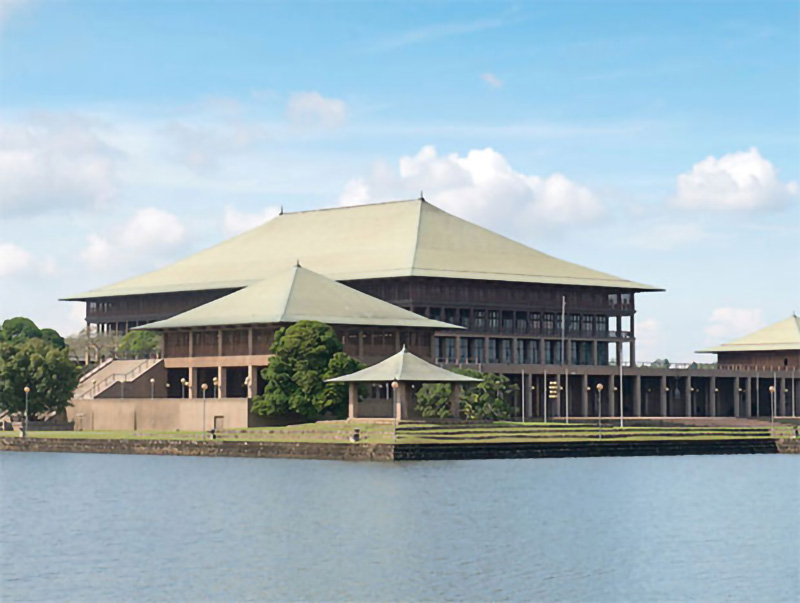
The inaugural session of the 10th Parliament would commence Nov. 21, Parliament announced yesterday.
The parliamentary Communications Department has in a media statement said that the upcoming general election to elect Members of Parliament for the Tenth Parliament is scheduled for Nov. 14. Through this election, a total of 225 Members of Parliament will be elected, comprising 196 members elected by public vote and 29 members entering through the National List, the statement added.
The inaugural session of the Tenth Parliament is scheduled to commence on November 21, as per the Extraordinary Gazette Notification No. 2403/13 dated 2024.09.24 issued by the President, according to the Parliamentary Communications Department.
On the first day, the primary responsibilities within the Chamber are entrusted to the Secretary-General of Parliament. There will be no seats assigned to the new MPs on the first day. Following the placement of the mace in the Chamber, the Secretary-General will present to Parliament, as the first business of the day, the Extraordinary Gazette Notification issued by the President, which specifies the date and time for the convening of Parliament.
Subsequently, in accordance with Article 64 (1) of the Constitution and Standing Orders 4, 5, and 6 of Parliament, the Speaker is elected by vote, followed by the administration of the official affirmation or oath of office by the Speaker. Thereafter, Members of Parliament take their official affirmation or oath, and the Deputy Speaker and Deputy Chairperson of Committees are elected by vote.
A Member of Parliament may be appointed as the Speaker. However, prior to nominating a member for the position, it is essential to confirm that the Member is willing to accept the appointment. The election of the Speaker must proceed based solely on the nominations made by Members, without allowing any debate on the matter.
At this stage, the Secretary-General informs the House that the Speaker must be appointed first. When a member rises to propose a name, the Secretary-General directs the House’s attention to that Member’s nomination. After one name has been proposed, the Secretary-General must ask if there are any other nominations. If no other nominations are presented, that Member is duly elected as Speaker.
It is a long-standing tradition for the two Members who formally proposed and seconded the name of the Speaker to escort the elected Member to the Speaker’s chair, holding them by the arms. The Speaker then takes their official affirmation or oath of office before the Secretary-General. Before taking their seat, it is customary for the newly appointed Speaker to briefly thank the House for the appointment.
Congratulatory remarks are then offered by both the government and Opposition representatives, after which the Speaker delivers a statement of thanks. Following this, the remaining Members proceed to take their official affirmation or oath before the Speaker.
When the names of two Members are proposed for the position of Speaker, a secret ballot is conducted. There are two instances in parliamentary procedure when a secret ballot is held: during the election of the Speaker, Deputy Speaker, Deputy Chairperson of Committees, and also when Parliament elects a President.
During the ballot, a continuous five-minute Quorum Bell shall signal Members to prepare. The Secretary-General then distributes ballot papers to each Member, who must write the name of their chosen candidate and sign the paper. Members then fold the ballot paper discreetly and place it in the ballot box. The authority to determine the voting method and to conduct the count rests solely with the Secretary-General, who tallies the votes at the Table of Parliament. After counting, the Secretary-General announces the result to the House. If a ballot paper lacks the Member’s signature, it is deemed invalid.
If three Members are proposed for the position of Speaker and no candidate secures an absolute majority in the vote, the candidate with the least number of votes shall be eliminated, and a new round of voting is conducted. The candidate who then receives the majority of votes is elected as Speaker. Similarly, in instances where multiple Members are proposed, successive rounds of voting are held, eliminating the candidate with the least votes each time, until one candidate secures an absolute majority. At any point, if a candidate achieves an absolute majority, they are immediately elected as Speaker.
In cases where three Members stand for election and two of them receive an equal number of votes, the Secretary-General has the authority to eliminate one of the tied candidates by drawing lots. Following this, a vote is held between the remaining candidate and the candidate with the highest votes, and the Speaker is selected based on the results.
If there is a vote between two candidates and both receive an equal number of votes, a re-vote is conducted. Should there still be a tie after this second vote, the Secretary-General has the authority to select the Speaker by drawing lots. The Secretary-General has full discretion to determine the procedure for drawing lots.
Following the conclusion of a vote, the corresponding ballot papers must be kept under the custody of the Secretary-General for a period of one month. After this period, they should be destroyed in accordance with the directive from Parliament, and a report of this destruction must be submitted to Parliament.
All Members of Parliament elected must sign the Member roll after taking their oath or affirmation on the first day. The Speaker signs first, followed by the Prime Minister as a tradition, after which the other Members affix their signatures. This signed record is maintained as a highly secure document in accordance with established protocols.
When the Deputy Speaker and Deputy Chairperson of Committees are to be elected, the Speaker, having already been appointed, conducts all notifications and voting procedures. After nominations for the Deputy Speaker and Deputy Chairperson are made, the Speaker will ask the House if there are any further nominations. If none are forthcoming, the nominated Members are elected to their respective positions. Should a vote be necessary, the procedure followed will mirror that of the election of the Speaker, with the notable difference that the voting will be conducted by the Speaker instead of the Secretary General.
After these activities are completed, Parliament will be adjourned. Typically, the adjournment will be until the next scheduled parliamentary day.
However, according to Article 33 of the Constitution, if the President addresses Parliament on that day to present the government policy statement, the House will be temporarily suspended at the end of these initial proceedings. When Parliament reconvenes, the President will preside over the House and present the government policy statement.
Following the policy statement the President will then adjourn Parliament until the next scheduled day, the statement added.



Environmental groups have raised fresh concerns over increasing levels of coal ash generated at the Norochcholai Coal Power Plant, warning of serious environmental and public health risks if proper disposal mechanisms are not urgently implemented.
Environmental scientist and Centre for Environmental Justice (CEJ) Chairman Hemantha Withanage, in a strongly-worded comment yesterday, said the growing volume of ash was being treated as a “blessing” by authorities, while, in reality, it posed a major ecological threat.
He told The Island: “More coal and more ash are being celebrated as a blessing. People around Norochcholai should get ready to apply it on their foreheads — and this will affect everyone, regardless of political affiliation.”
Norochcholai, Sri Lanka’s largest coal-fired power station, produces thousands of tonnes of fly ash and bottom ash annually. Environmentalists say a significant portion of this waste is either inadequately stored or disposed of without proper environmental safeguards.
Withanage said coal ash contains toxic heavy metals, such as mercury, arsenic, cadmium and lead, which can contaminate soil, groundwater and nearby marine ecosystems.
“Coal ash is not ordinary waste. It is a hazardous industrial material. If it leaks into the environment, it can enter food chains and drinking water sources,” he said.
He warned that communities living around Norochcholai were already exposed to air pollution from ash particles, especially during windy conditions, leading to respiratory problems and long-term health risks.
CEJ has repeatedly called for a transparent national policy on coal ash management, including safe storage facilities, independent monitoring, and exploring environmentally responsible reuse options under strict regulation.
Withanage stressed that while some countries recycle coal ash in construction materials, Sri Lanka lacks the regulatory framework and technical safeguards to do so safely.
“Without proper standards, recycling can become another pathway for toxic exposure,” he cautioned.
Environmentalists are also urging the government to accelerate the transition away from coal towards renewable energy, arguing that continued dependence on coal will only multiply waste and health burdens in the coming years.
Norochcholai supplies nearly one-third of the country’s base-load electricity, but has remained controversial, since its commissioning, due to repeated technical failures, marine pollution concerns and its long-term environmental footprint.
“With climate change and public health risks, coal is a problem we should be reducing, not normalising,” Withanage said. “Otherwise, the ash will eventually come back to all of us.”
by Ifham Nizam

The police have arrested one of the two gunmen involved in the killing of Attorney-at-Law Buddhika Mallawarachchi and his wife, at Akuregoda, on 13 February. The suspect has been identified as a legally discharged soldier.
A team of the Homagama Divisional Crime Investigation Bureau personnel apprehended the ex-soldier at Delduwa, Ambalangoda, on Saturday, around 6.20 p.m. Sources said that the suspect, identified as drug addict, had admitted that he was the one who fired the T-56 assault rifle in the attack. The other attacker used a pistol. He is still at large.
Police identified the suspect in custody as a 46-year-old resident of Baddegama. He made use of a general amnesty offered to deserters, after the conclusion of the war, to secure legal discharge. He was with a friend at Delduwa, Ambalangoda, and worked on a nearby cinnamon estate.
The suspect has been detained under PTA and the police given the power to hold him for 90 days.
The police recovered his mobile phone.
The killers arrived at Akuregoda, in a car, and fled the area after killing the couple. The ex-soldier had got off the car, near Kottawa, and then took a bus to Dehiwala, from where he proceeded to Ambalangoda.
Under interrogation, the suspect has revealed that he carried out the hit on a contract given by Karandeniye Sudda, a notorious underworld figure, who paid him Rs 1 mn and provided a quantity of heroin.
The ex-soldier is among nine persons taken into custody in connection with the ongoing investigations into the Akuregoda double murder.
Among those taken into custody are two brothers from Athurugiriya who allegedly transported one of the firearms used in the killing and provided information about the lawyer’s vehicle. Another person, identified as “Polgasowita Dila,” believed to have coordinated the Akuregoda hit, was also taken into custody during preliminary investigations.
The Police Special Task Force’s Southern Province Special Operations Unit arrested six more suspects over the weekend at Ethkandura, Kahaduwa, for aiding and abetting the double murder
Investigations have further revealed that the individual, who moved the gunman to a hotel in Pannipitiya, had fled to Thailand, via the Bandaranaike International Airport (BIA).

Justice Minister Harshana Nanayakkara said in Parliament on Friday that some Opposition politicians who had not even dared to mention the name of Gotabaya Rajapaksa during the Rajapaksa era were now acting like heroes.
Minister Nanayakkara said so when SJB Kalutara District MP Ajith P. Perera asked whether the government would reopen cases against Gotabaya Rajapaksa, who no longer enjoyed presidential immunity. The former UNP Deputy Minister asked the Justice Minister whether the NPP, as promised during the polls campaign, had resumed hearings into 42 cases filed against the Rajapaksas and others.An irate Minister Nanayakkara said that those who had been under their beds those days were now acting as if they were heroes. He refused to answer MP Perera’s question. (SF)

Coal ash surge at N’cholai power plant raises fresh environmental concerns

Akuregoda double murder: Suspected gunman in custody a duly discharged ex-soldier

Those who hid under beds fearing Gotabaya, now talking big: Justice Minister

Demand for accommodating Thimphu principles in promised Constitution: ITAK says it was not party to that move

Tamil politicians tell the UK NPP govt. not fulfilling its promises

Protection of Occupants Bill: Good, Bad and Ugly

‘Dates have the highest sugar content to fight Coronavirus’

Sunday Island 27 December – Headlines

#SundayIsland 17th December – Headlines

Sunday Island – 28th March

Sunday Island Headlines – 21 March

Sunday Island – 21st February – Headlines
-

 Features1 day ago
Why does the state threaten Its people with yet another anti-terror law?
-

 Features1 day ago
Victor Melder turns 90: Railwayman and bibliophile extraordinary
-

 Features1 day ago
Reconciliation, Mood of the Nation and the NPP Government
-

 Latest News2 days ago
New Zealand meet familiar opponents Pakistan at spin-friendly Premadasa
-
 Features1 day ago
Victor, the Friend of the Foreign Press
-
 Latest News2 days ago
Tariffs ruling is major blow to Trump’s second-term agenda
-

 Latest News3 days ago
ECB push back at Pakistan ‘shadow-ban’ reports ahead of Hundred auction
-
 Features1 day ago
Barking up the wrong tree