
Business
Improvements in new orders and production along with employment recovery


SL Purchasing Managers’ Index – January 2022
Manufacturing PMI improved in January 2022 recording an index value of 58.7 with an increase of 0.6 index points compared to December 2021. This was mainly attributable to the improvements recorded in New Orders, Production together with the recovery in Employment during the month. Further, Stock of Purchases increased while Suppliers’ Delivery Time lengthened on a month-on-month basis.
The expansion in New Orders, Production and Stock of Purchases, particularly in the manufacture of textile & wearing apparel and food & beverage sectors, have mainly contributed to the improvement in the PMI. Although Employment sub-index recovered to positive territory in January 2022, employment sub-index with respect to the manufacture of textile & wearing apparel sector continued to decline, reflecting the difficulty in attracting employees to the sector.
Meanwhile, the Stock of Purchases increased in line with the expansion in New Orders and Production.
The Suppliers’ Delivery Time lengthened at a slower pace in January 2022 on a month-on-month basis. Many respondents stressed that they experienced delays in receiving import consignments, partly due to the impediments in the clearance of shipping documents, opening of letters of credit, and congestions at the port.
In the next three months, the expectations for manufacturing activities remain at elevated levels anticipating continuous improvements in economic condition, locally and globally.



By Hiran H. Senewiratne
The CSE yesterday continued to bounce back amid a gradual increase of buying pressure among local and foreign investors.Investors see the market as gradually stabilising, market analysts said.
The All Share Price Index went up by 227.05 points, while the S and P SL20 rose by 48.74 points.
Turnover stood at Rs 1.14 billion with four crossings. Those crossings were; CIC Holdings 1.8 million shares crossed for Rs 47 million; its shares traded at Rs 26, Seylan Bank 400,000 shares crossed for Rs 35 million; its shares sold at Rs 86.50,Distilleries 450,000 shares crossed to the tune of Rs 21 million; its shares sold at Rs 51 and People’s Leasing and Finance 1.2 million shares crossed for Rs 20 million; its shares traded at Rs 17.
In the retail market companies that mainly contributed to the turnover were: CIC Holdings ((Non-Voting) Rs 127 million (5.8 million shares traded ), Commercial Bank Rs 113 million (58,000 shares traded), Hayleys Rs 28 million (127,000 shares traded), RIL Properties Rs 27 million (1.3 million shares traded), Prime Lands Residencies Rs 25 million (735,000 shares traded), Digital Mobility Solutions Rs 24 million (155,000 shares traded) and Sierra Cables Rs 23 million (709,000 shares traded). During the day 68 million shares volumes changed hands in 15619 transactions.
It is said that CIC Holdings led the market both in crossings and retail market trading. Further, banking sector counters, especially Seylan Bank and Commercial Bank, performed well. Sierra Cables also impressed.
Sri Lanka energy firm, Vidullanka, received a Letter of Acceptance for a 1.35 million US dollar mini hydro Engineering, Procurement, and Construction (EPC) contract in Fiji, a market sources said.
The contract was awarded by the Department of Energy under Fiji’s Ministry of Public Works, Meteorological Services and Transport.
Yesterday the rupee was quoted flat at Rs 331.15/25 to the US dollar in the spot market while bond yields were steady, dealers said.
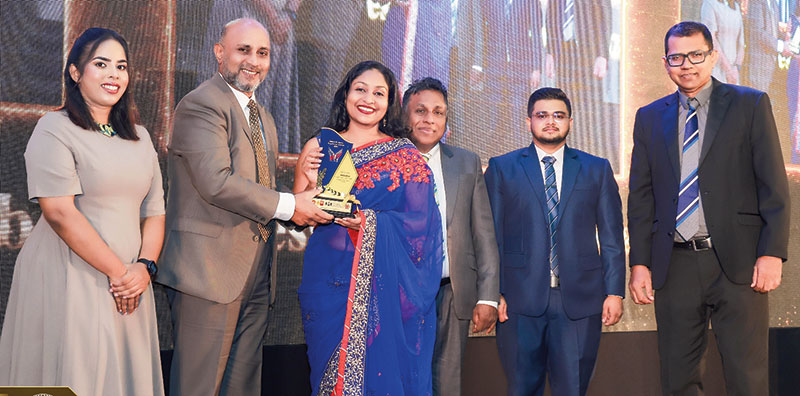
Ambewela, Sri Lanka’s leading premium fresh milk brand, has secured two prestigious recognitions at the Global Business Excellence Awards 2026, being named Most Iconic Brand and Best Dairy Brand.
The dual recognition marks a proud milestone for Ambewela, celebrating both its excellence within the dairy category and the enduring trust it has earned among Sri Lankan consumers over the past 2 decades.
The awards were presented on 6 October 2026 at the BMICH Exhibition Centre Main Hall in Colombo 07. Organized by London Business Consultancy, United Kingdom, the Global Business Excellence Awards recognise achievements and excellence across industries. The programme received institutional recognition from DEC under the Ministry of Industry, Sri Lanka, with business focused research and academic review by the SITC Campus Business Faculty.
Being named Best Dairy Brand recognises Ambewela’s strength and excellence within the dairy category, while Most Iconic Brand reflects the lasting connection the brand has established with Sri Lankan consumers.
Ambewela dairy products is a household name synonymous with freshness and quality. Originating from Sri Lanka’s lushest highland pastures, each Ambewela product is the result of a meticulous process that ensures the highest quality dairy delights, from farm to family. The product range, which includes fresh milk, cheese, and yoghurt, consistently offers superior value and quality, making it one of Sri Lanka’s most beloved brands.
As a leading premium fresh milk brand, Ambewela continues to focus on freshness and quality while championing the value of locally produced dairy. Its journey is closely linked to the development of Sri Lanka’s dairy industry and its contribution to strengthening appreciation for the local dairy sector.
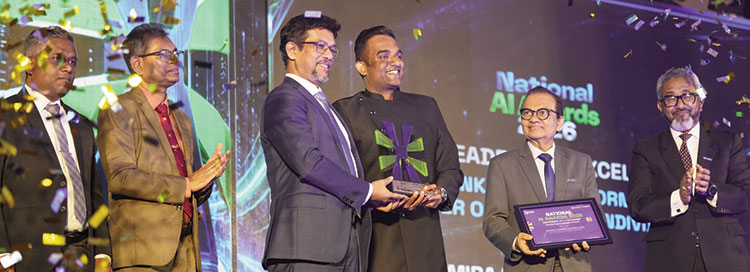
Sri Lanka’s digital innovation trailblazer Arimac secured three national honours at the National AI Awards 2026, recognising achievements across AI leadership, banking and finance, and Sinhala and Tamil AI innovation. Co-Founder and CEO Chamira Jayasinghe received the National AI Leadership Excellence Award, recognising his contribution to advancing AI-led innovation and technology transformation in Sri Lanka.
The company also received Gold for Best AI Solution in Banking, Finance & Insurance under the Industry & Sector Excellence Awards, while its work in local-language technology earned Silver for Best Sinhala/Tamil AI & Localisation Innovation under the Innovation & Future-Focused Awards.
The recognition follows a series of Arimac AI deployments that have delivered measurable business outcomes, including a 32% reduction in cost-to-serve per enquiry, lead response times reduced from four hours to three minutes, and the deployment of more than 100 AI agents across selected international operations. These outcomes demonstrate the practical application of AI across commercial environments, particularly in sectors where speed, accuracy and reliability are critical.

Bourse seen to be stabilizing in the wake of buying pressure

Ambewela celebrates double victory at Global Business Excellence Awards 2026

Arimac Co-Founder & CEO Chamira Jayasinghe named Sri Lanka’s AI Leader of the Year

DFCC Bank honours Sri Lanka’s pensioners

Iyer to lead in last two New Zealand ODIs, Kushagra earns maiden call-up

Pope pictured for first time since surgery and cancer diagnosis

‘Dates have the highest sugar content to fight Coronavirus’

Sunday Island 27 December – Headlines

#SundayIsland 17th December – Headlines

Sunday Island – 28th March

Sunday Island Headlines – 21 March

Sunday Island – 21st February – Headlines
-

 News6 days ago
Sri Lanka escalates anti-graft drive with Shiranthi’s jailing
-

 News7 days ago
NPP govt. reminded of its responsibilities as US warship leaves Colombo
-

 Latest News5 days ago
Farhan and Sadaqat help Pakistan seal series in style
-

 News6 days ago
Iranian ships stranded, Lanka fears US sanctions
-

 Latest News4 days ago
Nissanka’s return headlines Sri Lanka’s Test squad against Pakistan
-

 News7 days ago
Interdicted top House official Kularatne receives special recognition in Mexican Parliament
-

 Features5 days ago
Intake 16: 45 years of duty and honour
-

 News5 days ago
Malwathu Chapter issues statement on talks with President over Gnanasara Thera’s robes