
News
ILO spearheads investment drive in the North

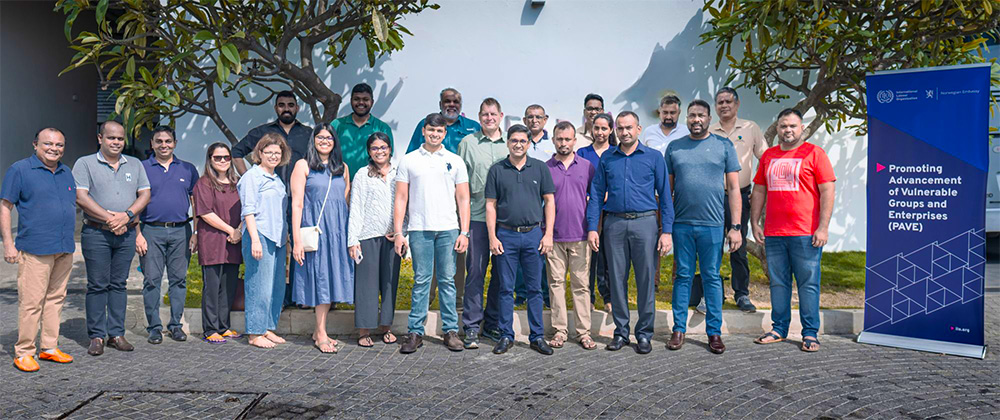
Representatives of 14 leading private sector companies recently visited the Northern Province to explore possibilities for investment. The International Labour Organization (ILO) together with the Employers’ Federation of Ceylon (EFC) has organized the visit.
According to a statement issued by ILO Office in Colombo, the visiting group explored strategic investment, trade, and growth opportunities in key sectors in the Northern Province.
Among the key objectives of the visit were to showcase the investment potential of the Northern Province, foster dialogue, and collaboration among key stakeholders, and facilitate partnerships that benefit both businesses and communities.
The Northern Province was opened for investment in 2009 after the military eradicated the LTTE.
The ILO said that in addition to engagement with Chief Secretary of the Northern Province, Ledchumanan Ilaangovan, there had been stakeholder consultations to provide an analysis of the opportunities and the policy and regulatory landscape for doing business in the North. The delegation also visited the Achchuveli Industrial Estate for a networking event with entrepreneurs and business associations as well as consultations with key sectoral actors including government organizations and regional chambers.
Appreciating the efforts to promote inclusive and investment driven growth in the region, Chief Secretary Ilaangovan, said, “Looking ahead, let’s unite to transform aspirations into actions, we welcome and support the delegation promoting investment opportunities and looking forward to working with them.”
The ILO said: “With the northern region experiencing a surge in opportunities across multiple sectors, infrastructure investments have increased, and domestic and export market focused agriculture and fisheries, as well as aquaculture hold immense potential for growth and development. Moreover, interventions under the PAVE project further emphasizes inclusivity and gender equality, ensuring that the benefits of growth are equitably shared among all members of the community, thereby fostering a more sustainable and just economic development.”
In the current context of Sri Lanka’s economic recovery, the government and other ecosystem players, including private sector entities, have a crucial role in catalysing provincial and regional growth. Commenting on the success of the visit, Director General/Chief Executive Officer of EFC, Vajira Ellepola said ‘’The EFC, as the national employer organization, has been instrumental in creating interest within the private sector, leading up to this site visit of a business delegation to explore investment opportunities in the North. Enterprise development, job creation, diversity and inclusion are some of the core values the EFC stands to promote. The objectives of ILO interventions, which align closely with these values and their overall relevance to Sri Lanka’s commitment towards Sustainable Development Goals and a national policy focused on domestic production, were the driving force of our collaboration in this Project.”
The visit was implemented as part of the ILO “Promoting Advancement of Vulnerable Persons and Enterprises” (PAVE) project interventions, funded by the Government of Norway. The PAVE project is among ILO’s responses toward creating decent work opportunities to support inclusive growth and reconciliation in post conflict districts. The project prioritizes creating decent work opportunities for the most vulnerable, and marginalized women and men in the province, by advancing inclusive growth, private sector investment, entrepreneurship, gender equality and inclusion, and digitalization.
Thomas Kring, Chief Technical Advisor, ILO said “Scaling private sector investments in the northern province not only makes business sense, it also strengthens human capital, and benefits disadvantaged communities with stable sources of income – it’s a win-win propositions that create employment for vulnerable women and persons with disabilities helping crisis recovery and reconciliation.”
Providing delegates with an enhanced understanding of the investment climate and landscape in the Northern Province, this visit laid the groundwork for future collaborations between the private sector and local authorities. The next steps will involve the development of investment plans to promote sustainable economic growth in the region at large.



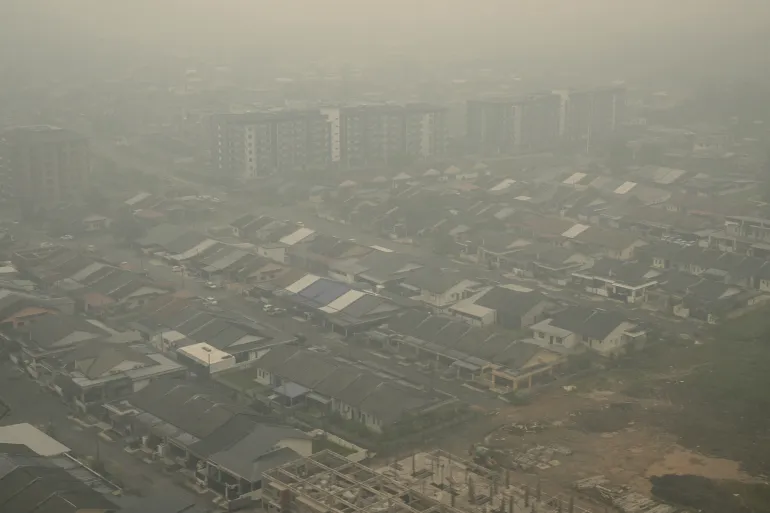
Malaysia has declared a state of emergency in a district in Sarawak state after haze caused by wildfires in neighbouring Indonesia increased air pollution to “hazardous” levels.
King Sultan Ibrahim “has consented to the declaration of emergency throughout Serian Division, Sarawak, following haze conditions that have reached air pollution levels hazardous to public health and safety”, Prime Minister Anwar Ibrahim’s office said in a statement on Thursday.
The declaration followed a formal request from the Sarawak Disaster Management Committee after the region’s Air Pollutant Index reached levels warranting consideration of a local emergency.
Under the order, 647 schools in Serian will close from Monday until at least the end of next week, alongside government and private offices, plantations, construction sites and quarries, with only essential services continuing to operate.
The state’s disaster management authorities said a three-day cloud-seeding operation launched on Thursday would be extended to at least Monday, citing forecasts of “more conducive cloud formations” during that period.
Sarawak State Disaster Management Committee chairman Douglas Uggah Embas, speaking at a news conference in Kuching, stressed that the emergency applied only to Serian, not the entire state, but urged residents there to take the situation seriously.
“Please minimise outdoor activities and avoid strenuous activities outdoors,” he said.
Sarawak, in the northern part of Borneo island, has been heavily affected by haze for weeks, as have the neighbouring states of Sabah and Peninsular Malaysia.
(Aljazeera)
Latest News
Sun directly overhead Moratuwa, Kesbewa, Handapangoda, Idalgashinna, Yudhaganawa, Kotiyagala and Panama about 12.08 noon today (05)


The sun is going to be directly over the latitudes of Sri Lanka from 28th of August to 07th of September due to its apparent southward relative motion.
The nearest places of Sri Lanka over which the sun is
overhead today (05) are Moratuwa, Kesbewa, Handapangoda, Idalgashinna, Yudhaganawa, Kotiyagala and Panama about 12.08 noon

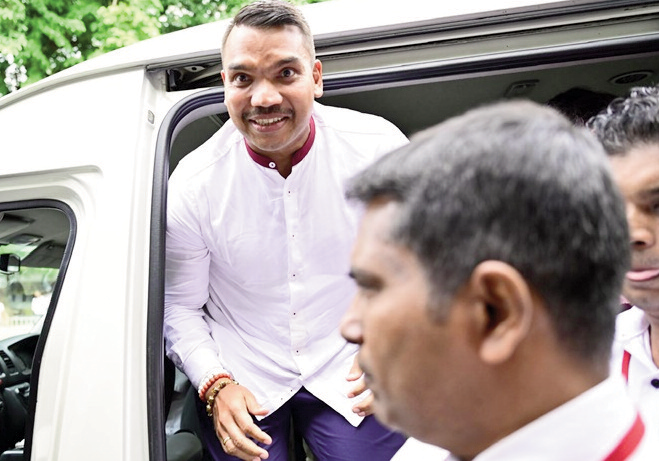
Sri Lanka Podujana Peramuna (SLPP) National Organiser and Parliamentarian Namal Rajapaksa was yesterday remanded until September 18 by the Colombo Chief Magistrate’s Court following his arrest by the Commission to Investigate Allegations of Bribery or Corruption (CIABOC) in connection with an investigation into the controversial SriLankan Airlines Airbus aircraft transaction.
Rajapaksa appeared before the CIABOC at around 9.15 am yesterday to record a statement after being summoned over the transaction. He was taken into custody following several hours of questioning and subsequently produced before the Colombo Chief Magistrate.
The investigation centres on allegations surrounding the acquisition of six Airbus A330 and eight A350 aircraft by SriLankan Airlines in 2013, in connection with an alleged USD 2 million bribe.
Former SriLankan Airlines Chief Executive Officer Kapila Chandrasena and his wife, Priyanka Niyomali Wijenayake, had previously been named in connection with the alleged bribery.
Chandrasena was arrested on March 12 as part of an investigation launched by the CIABOC under the Anti-Corruption Act and was subsequently released on bail. He was later found dead on May 8 while on bail, with police suspecting that his death was a suicide.
Open warrants have been issued for the arrest of Wijenayake, who is named as the second suspect, and Shamindra Rajapaksa, named as the third suspect, in the case pending before the Fort Magistrate’s Court in connection with the Airbus transaction.
The investigation has also received assistance from Airbus, with a delegation from the company’s parent group in France visiting Sri Lanka during the first week of August. The delegation provided statements and other assistance to the CIABOC as part of the ongoing inquiry.
Rajapaksa’s arrest and remand yesterday mark a further development in the widening investigation into the controversial aircraft deal.

Malaysia declares emergency in Sarawak as haze from Indonesia worsens

UAE keep semi-final hopes alive after convincing win over Indonesia

Sun directly overhead Moratuwa, Kesbewa, Handapangoda, Idalgashinna, Yudhaganawa, Kotiyagala and Panama about 12.08 noon today (05)

Showers above 75 mm are likely at some places in the Uva, Central and Eastern provinces and in Polonnaruwa and Mullaittivu districts after 2.00 p.m

Namal remanded until Sept. 18 over Airbus deal investigation

Dengue cases surpass 96,000 this year

‘Dates have the highest sugar content to fight Coronavirus’

Sunday Island 27 December – Headlines

#SundayIsland 17th December – Headlines

Sunday Island – 28th March

Sunday Island Headlines – 21 March

Sunday Island – 21st February – Headlines
-

 Features7 days ago
“Wrap Me Up in My Blazer”— A Gentlemanly Bradby Reminiscence
-

 Features6 days ago
When Sri Lankan stories find their own voice
-

 Features7 days ago
JVP/NPP government as seen from outside by Lionel Bopage now domiciled in Australia
-

 News6 days ago
BASL takes exception to Justice Ganepola being denied a place in SC
-

 Features7 days ago
Prof. Savitri Goonesekere: What has she done?
-

 News3 days ago
Denied of promotion to SC despite vacancies, justice Gurusinghe retires
-
 Latest News4 days ago
Grade 5 scholarship exam results released
-

 News3 days ago
22A: SC urged to suspend hearing, appoint full bench