
Opinion
How to save tourism industry

Statement by Opposition Leader Sajith Premadasa on Tourism industry crisis
Leading up to 2019, Sri Lanka was recognized as one of the most exciting travel destinations in the world by numerous prestigious publications, including the ‘Lonely Planet’, The New York Times and Condé Nast. Improvements to the transportation system, the development of infrastructure, world class hotels and facilities and Sri Lanka’s natural beauty and hospitality were all factors. The Tourism Industry, a critical component of Sri Lanka’s economy and a key foreign exchange generator, was left devastated by the 2019 Easter Attacks as well as by the ongoing Global Pandemic.
The resulting lockdowns have impacted every facet of life and every industry, but especially Tourism; research shows that 36% of low-skilled workers and a further 36% of semi-skilled workers have been laid off; 28% of the junior and middle management segments have also been retrenched. 70% of tourism and hospitality specialists estimate that between 41% and 60% of the total industry workforce would be terminated.
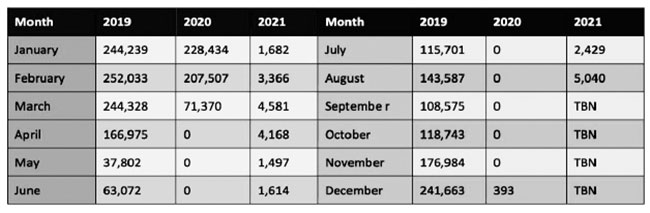
Tourist arrivals have dwindled; only 507,704 between January and December 2020 with zero arrivals recorded between April and end December due to the closure of the airport and suspension of flights since the 18th of March 2020. This represents a decline of 73.5% over the previous corresponding period, when arrivals exceeded 1.9 Mn.
There are numerous service providers directly dependent on Tourism; over 500 travel agents, 250 recreational outlets, 300 tourist shops, 5,000 guides and the airlines as well, with employment opportunities within these service sectors severely restricted.
Over 90% of formal sector outlets and 75% of informal sector outlets remain temporarily closed. Over 75% of the informal sector outlets have closed down operations. Dependent industries have suffered due to sectoral linkages, leading to a multiplier effect, with millions of livelihoods left devastated.
Given the importance of Tourism to the economy, the GOSL must prioritise this industry.
In this regard, we consider certain budget proposals to be counterproductive to uplifting this vital sector. Pricing and margins will suffer due to the proposed 2.5% Social Security Contribution in addition to the 1% TDL on turnover. This impacts competitiveness of the Sri Lankan Tourism offering and these taxes are largely regressive in nature. The upcoming moratorium expiry deadlines will only lead to further cash flow constraints, plunging individuals and businesses into further debt. Disposable incomes will be virtually non-existent, fresh investments become unfeasible.
Based on the above critical issues we submit the following proposals
a) To restructure the debts obtained by the tourism sector from Licensed Commercial Banks for a period of ten (10) years with a grace period of two (2) years.
b) To waive-off the total interest portion of the term loans from April 2019 until 30th June 2022 during the moratorium period.
c) Implementation of the debt restructuring plan recommended by the Monetary Board of CBSL.
We further recommend abolishing the Local Government Levy up to 1% of the Turnover and replace it with a trade license fee similar to all other industries. In fact, this proposal was presented at the last budget by the Hon Finance Minister but has not been implemented to date.
Hotels are also subject to higher electricity tariffs. Tariffs applicable to hotels (i.e., H-1, H-2 & H-3) should be matched with Industrial tariffs (i.e., I-1, I-2 & I-3 which is currently a lower rate than “Hotel purposes”).
The restructure of the Tourism industry’s total debt portfolio of Rs. 350 billion as per recommendations of the Monetary Board of CBSL and the full implementation of concessions granted by the Cabinet of Ministers on the 10th of June 2020 are of vital urgency.
As a measure of immediate relief, the industry has requested authorities to intervene by mandating restructuring and rescheduling of loan facilities. The CBSL must provide clear guidelines to all Licensed Commercial Banks and Finance companies regarding the enforcement of contracts and recovery of facilities.

Effective mediation is necessary, unlike the previously ad hoc approach. Facilities need to be extended to new, approved projects in the tourism pipeline.
The main objective was to ensure worker retention, even on reduced salary terms, yet these have not been met, with a continued spike in terminations across all sectors. Many previously employed in the tourist sector also lack formal social security and are thus vulnerable to bankruptcy and destitution.
Revenue from Tourism was Sri Lanka’s second highest net foreign exchange generator in 2018/19 with earnings of USD 4.3 billion. As per the last budget speech presented by the former Finance Minister and present Prime Minister, the valuation of the hotel industry has exceeded over USD 10 billion.
Apart from the above, the following government institutions have benefited from the inflow of LKR 12.6 billion in 2018/19
It is estimated that the public sector will lose approx LKR 12 Bn in revenue from the Tourism sector in 2020 with similar losses expected by the end of 2021.
The loss of public sector revenue through tourism in 2020, based on 2019 earnings is estimated to be around Rs.12, 000.0 million. Even 2021 will see similar losses. Overall, the economy has lost around US$ 3.5 Bn during 2020 and this trend will continue in 2021. At a time when Sri Lanka has depleted foreign exchange reserves, protecting established and proven avenues for the generation of foreign exchange has to be a primary concern of the government.
Please also note that 90% of all tourism sector investments have been implemented by local entrepreneurs, of which 90% belong to the small and medium category.
It is notable that the 2009/10 registered hotel room capacity of 14,461 increased some 71% to 24,757 by 2018/19, a remarkable growth rate that has supported Sri Lanka’s investment portfolio.
Based on industry recommendations to the government, assurances have been given that steps to re-negotiate and re-structure the facilities extended through commercial banks will be favourably considered. However, in reality, this policy has not been equitably implemented and would not on its own be sufficient to support the industry at this crucial juncture. The following factors need urgent consideration to support the industry:
Repayment of accumulated interest on current borrowings once the moratorium has been granted comes to an end by mid-2022
Repayment of any outstanding capital on borrowings by end December, 2021
Repayment of outstanding statutory payments
Assistance to support a minimum of 6 months working capital
Assistance towards maintenance and product upgrading to ensure conformity with required quality and standards in keeping with classification requirements
Assistance for new, approved development projects that are on-hold as a result of increases in development costs, mainly due to depreciation of the Rupee and increase in construction cost – Bridging finance –
Financial assistance to industry stakeholders to be provided through local commercial banks.
Government on obtaining Cabinet approval, to set up a separate unit to plan, structure, evaluate, control and monitor the entire exercise. It could fall under the Ministry of Finance, Ministry of Planning and Implementation, Ministry of Tourism or at the Sri Lanka Tourism Development Authority (SLTDA) falling directly under the Ministry of Tourism.
The government to provide required guarantees to the fund through local banks. Perhaps a mechanism of the individual entities pledging shares to the value of borrowings or similar to be considered.
Though, the offshore funding made available will be in US$, the lending to industry stakeholders to be in Sri Lanka Rupees. (This will also assist the government to strengthen its depleted foreign reserves to some extent)
After careful evaluation of applications against an established criterion, assistance in the form of soft loans to be offered. – Minimum two year grace period on repayment of capital and interest. Preferential interest rates below 4% per annum. Payback period of 7 years. (In total, covering a period of 10 years)
Special Financial package purely meant for promotions for all local inbound tour operators as local inbound tour operator business volumes equal to 65% of the total arrivals to Sri Lanka during the pre-pandemic period.
We are aware of the forthcoming tourism policy document which has been submitted for public observations. It needs to articulate an action plan for all sectors namely: Development, Promotion and Regulations with clear time lines to prevent these policy documents from gathering dust.
We do not believe that this is the appropriate time to enact a rushed Tourism act, replacing the current Tourism Act 38 of 2005. The current act certainly does require changes but this must include adequate private sector participation in decision-making.
It is also an instrument that determines how the tourism fund has to be managed and disbursed. We note with consternation that the proposed Tourism Act leaves governance aspects to representatives
of state bodies with the private sector invited merely as ‘observers’.
It is also transparent that this proposed act has been orchestrated to suit the needs of certain individuals. This is not acceptable.
The Hon Minister of finance indicated the other day that the tourism fund was likely to be revoked and collections will go directly into the consolidated fund. This was the system that we did away with 15 years ago and brought the current act to enhance effective industry participation towards the development of tourism. We should not forget that the payoff was 2.3 million arrivals with tourism receipts hitting over USD 4 billion.
Sri Lanka is one destination out of over 250 competing destinations and hence it is vital that our country is positioned in source markets. We need to reach out to our primary, secondary and emerging markets aggressively to prevent ourselves from falling behind to other destinations.
We are aware of the massive shortage of foreign exchange in the country and tourism is one effective and sustainable remedy.
Indeed, given the above, it is clear that the economic destiny of Sri Lanka as a whole is closely intertwined with the performance of our Tourism Sector. Thus protection of this sector and related aspects, such as protection of the environment, wild life as well as reduction in pollution are vital to our Sri Lankan National project.

Review
by Colleen Figg, Editor
and Reviewer – Amazon, New Voices Publishing
“Fernando echoes Macbeth with the line, “There is judgment here.” It captures the question running through the novel: can anyone participate in corruption and remain untouched by it? Beneath this satire is a dark story about power and the danger of believing, that someone else will always pay the price.”
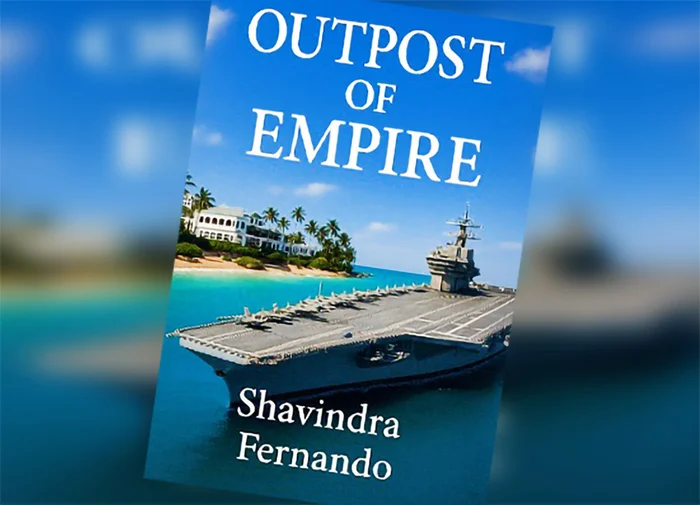
Shavindra Fernando’s Outpost of Empire is a political novel set in the fictional country of Lackadasia. At its heart is a strong idea: an exploration of world politics, terrorism and the ways in which powerful countries manipulate smaller ones. Fernando is clearly writing about political issues that matter deeply to him.
The names immediately establish the book’s satirical character. Lackadasia, Burgherbugaria and the various Klowns suggest a world in which the people and places are exaggerated, but the issues beneath the exaggeration are recognisable. The playful language allows Fernando to approach terrorism, religious conflict and political corruption from an unusual angle.
Henry Stockwell is a central character: an ambassador who arrives in Lackadasia presenting himself as a friend of the country. He believes he understands how power works and treats the country, its politicians and its people as pawns on his personal chessboard. In his arrogance, he never doubts that he controls events rather than being controlled by them. This confidence makes him a compelling figure and in him, we explore the workings of political influence and the potential traps contained therein.
As the story develops, Fernando reveals a political world where causes are adopted when they are useful, people are exploited and discarded, and the truth becomes whatever those in power need it to be. Ordinary people suffer the consequences of decisions made far beyond their reach or knowledge, while those making those decisions continue to justify their actions. Even the people who help keep this world running may not be as important or as safe as they imagine.
Stockwell brings this idea into focus. He recognises corruption in others and willingly takes part in it himself, yet he cannot see that he might also suffer its consequences. Ultimately, he thinks his position will keep him safe. He is intelligent enough to understand the game, but not insightful enough to grasp the limits of his place within it. This blindness gives the novel a strong sense of irony.
The satirical approach gives Fernando room to criticise political hypocrisy without turning the novel into a direct political argument. By using fictional countries and exaggerated names, he creates some distance from specific governments and events while still making the larger targets of the book clear. The humour does not take away from the seriousness of the subject; instead, it makes the cruelty and self-interest beneath the political performance stand out more sharply.
Near the end, Fernando echoes Macbeth with the line, “There is judgment here.” It captures the question running through the novel: can anyone participate in corruption and remain untouched by it? Beneath this satire is a dark story about power and the danger of believing that someone else will always pay the price.
I came away feeling that Outpost of Empire is a valuable and thought-provoking book, particularly in today’s political and social climate. It has a distinctive voice, and the questions it raises about power, responsibility and foreign interference remain relevant far beyond the fictional borders of Lackadasia.
About the Author
Shavindra Fernando has worked as a reporter. He read English & Classics at the University of Peradeniya in Sri Lanka, and took International Relations & Ethnic Politics as a Reuter Fellow at the University of Oxford in England. The Vague Poetess (1999)was his first novel.
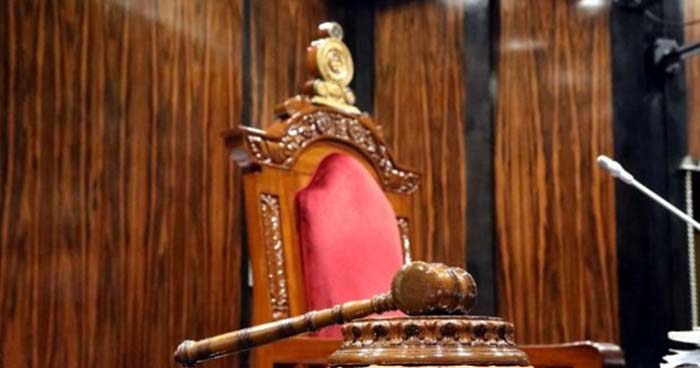
The Opposition, in its wisdom (or perhaps stupidity), has submitted yet another No-Confidence Motion (NCM) against the Speaker of Parliament. Perhaps it hopes to score some brownie points in the eyes of the public, which is hardly indifferent to such developments. Yet, knowing full well that the motion is unlikely to succeed, the exercise may well prove futile — akin to banging one’s head against a solid rock.
Nevertheless, the nearly fifty allegations levelled against the Speaker, whether justified or mere mudslinging, cannot simply be brushed aside. Such allegations may well have a bearing on the individual concerned, particularly where it matters most — his conscience — and few would dispute that possibility.
From a protocol standpoint, the Speaker occupies one of the highest positions in the country, ranking third in the hierarchy of state. He consequently belongs to the uppermost echelons of public life, with acquaintances and associates extending across a wide spectrum of society, including diplomats and other distinguished personalities. Such a position carries with it not merely prestige and privilege, but also an onerous responsibility to uphold the dignity and integrity of the office.
As the guardian of Parliament, the Speaker is expected to maintain standards of conduct, impartiality and discipline that are beyond reproach.
Whether the allegations are justifiable or not may be of little consequence to members of the ruling party, who will undoubtedly defend their colleague to the hilt. Nevertheless, the stigma arising from such allegations may prove difficult to erase, particularly in the eyes of his family, close associates and, ultimately, the voters who placed their trust in him. Of course, it is common knowledge that politics can be a dirty game and that, as Lord Acton famously observed, “power tends to corrupt, and absolute power corrupts absolutely.”
Yet, nothing could be more devastating than a person losing his own soul in the process. On the one hand, stepping down could be construed as an admission of responsibility for the allegations levelled against him. On the other, allowing the No-Confidence Motion (NCM) to proceed could expose him to further public scrutiny and potentially inflict lasting damage on his character, dignity and reputation. Thus, he finds himself caught between two unenviable choices, each carrying consequences that may extend far beyond the immediate political fallout.
The Speaker is therefore confronted with a classic Hobson’s choice, with neither option likely to be without consequences. After all, in politics, there are no permanent friends or enemies—only permanent interests.
WILLIAM


I write this with a sense of profound disappointment, rather than as a critic of the government or any individual public official. For several months, I have been drawing public attention to what I consider one of the most serious long-term challenges facing Sri Lanka—the country’s rapidly changing demographic structure, declining fertility, population ageing and the consequent contraction of the working-age population.
I have written several articles on this subject, believing that informed public discussion could encourage policymakers, academics and relevant institutions to examine the issue before its consequences become irreversible. I went a further step by addressing a detailed letter to the President on 28 August 2026, seeking consideration of a National Demographic Action Plan.
That letter was not merely an expression of concern. It contained practical proposals: long-term demographic projections, assessment of the consequences for labour supply and productivity, examination of declining fertility and delayed family formation, reassessment of education and employment policies, consideration of migration, and the establishment of continuous demographic monitoring.
I deliberately addressed the matter to the highest level because demographic change is not the responsibility of one ministry. It cuts across Finance and Planning, Education, Labour, Health, Higher Education, migration, social protection and national human-resource planning.
Yet, after sending that registered letter, I have not even received an acknowledgement.
This is what troubles me most. I fully appreciate that government has numerous urgent problems to address. Economic recovery, disaster management, employment, education and many other immediate concerns understandably demand attention. But demographic change is different. It operates slowly, almost silently, while steadily narrowing the choices available to future governments.
By the time the shortage of workers, accelerated ageing, increased dependency and the economic consequences of very low fertility become impossible to ignore, remedial action may be enormously more difficult and expensive. What is equally disappointing is the apparent silence of the institutions that should be at the centre of this discussion.
The latest Census has provided the country with an invaluable body of demographic evidence. My own published work has attempted to connect those findings with national development, productivity, education, employment and human-resource planning. On the top of these endeavours, I have seen voluminous articles written by Professor Manori Weerathunga, of the Population Department of the Colombo University, President Population Association of Sri Lanka, and Director Centre for Ageing Studies of University of Colombo. Yet I have seen little evidence of a visible national policy response from the relevant planning and statistical authorities.
Given the multiplicity of the roles and the credentials she possesses, I would strongly urge her to take the bull by the horns and formulate a draft national demographic policy with the expertise of the demographic scientists. This task cannot be delegated to the SLAS or Planning panjandrums. The government should seriously think why the thinktanks are abdicating their mandatory responsibilities and playing a passive role when the country is confronted with burning issues. Are there any sinister plans by disgruntled senior officers to derail the development plans is the question that begs an answer? Alternatively, the government should seriously enlist the support of the IMF or the World Bank, before the demographic bomb explodes!
Are we treating the Census merely as a statistical exercise, rather than as an early-warning the system for national planning? This question deserves a public answer.
I went even further by writing on “Educational Delays, Biological Clock and Sri Lanka’s Fertility Crisis.” My purpose was not to blame the education authorities. I sought to draw attention to the possibility that prolonged delays in university education, examinations, admissions and graduation may interact with delayed family formation and the biological realities of childbearing. I had hoped that this would stimulate examination by the Education sector and other relevant stakeholders.
Unfortunately, I have yet to see any meaningful response. My concern is therefore not whether my own articles have been acknowledged. That is completely irrelevant. The issue is whether the substantive national questions raised in those articles are being examined by anyone in authority.
A citizen who spends considerable time studying a national problem, writing about it publicly and then submitting a constructive proposal to Government should not necessarily expect agreement. But surely an acknowledgement—or better still, a response indicating that the matter is being examined—is not too much to expect.
There is also another dimension which I recently highlighted in discussing Sri Lanka’s transition from an “Age of Longevity” towards an “Age of Experience”. Sri Lanka is simultaneously facing a shrinking younger workforce and an expanding reservoir of older citizens possessing decades of professional and institutional experience.
The demographic challenge, therefore, should not be viewed only through the lenses of pensions, healthcare and elderly care. The country must also ask how the accumulated knowledge, expertise and institutional memory of its experienced citizens can be mobilised for national development.
This is precisely why I find the present silence so difficult to understand. I have no personal or political agenda. I have spent decades working in human resources, productivity and management specialist, and I have chosen in the later stage of my professional life to devote my writing to contemporary national issues which I believe deserve national attention.
Perhaps my concerns are misplaced. Perhaps the government already has a comprehensive demographic strategy under preparation. The relevant institutions have already initiated studies that are not yet public.
If that is the case, I would be delighted to be proved wrong. But if no such comprehensive process exists, then I respectfully ask: how much longer can Sri Lanka afford to remain silent?
The demographic clock does not stop while governments deliberate.
My appeal is therefore not for recognition of my efforts. It is for recognition of the problem. I hope the relevant authorities will prove that the silence I have encountered is not indifference, but merely the silence before meaningful action.
Sri Lanka cannot afford to discover, ten or twenty years from now, that the warnings were visible, the evidence was available, the proposals were made—and nobody acted.
The time to respond to the demographic crisis is now, while choices still remain.
Over to you, the President, the Prime Minister, the Minister of Finance and National Planning, Vice Chancellor of Colombo, Director General of Census and Statistics.
Athula Ranasinghe
Productivity Specialist and Management Consultant

Delegation from Korean Volunteer Association meet Secretary to the President

Imran Khan’s PTI braces to fight federal takeover of Khyber Pakhtunkhwa

Nissanka’s return headlines Sri Lanka’s Test squad against Pakistan

HRCSL issues recommendation on seizure of four books by B. Piratheepan by Sri Lanka Customs

Former Zimbabwe player and umpire Sarah Dambanevana dies aged 36

Deflated Sri Lanka look to prevent whitewash against dominant Pakistan

‘Dates have the highest sugar content to fight Coronavirus’

Sunday Island 27 December – Headlines

#SundayIsland 17th December – Headlines

Sunday Island – 28th March

Sunday Island Headlines – 21 March

Sunday Island – 21st February – Headlines
-

 Features5 days ago
The Sri Lankan who made Scottish history
-

 Sports5 days ago
Nissanka absence opens door for Sri Lanka’s young guns
-

 News4 days ago
NDB fraud Rs 60mn more than reported
-
 News6 days ago
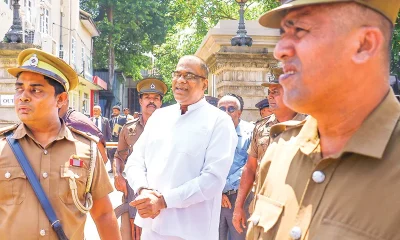
Gnansara Thera to be assigned to prison printing section: Officials
-

 News4 days ago
Removing monk’s robes matter for Sangha to decide: Mahanayake Theras
-
 News6 days ago
OIC of FCID summoned before Maligakanda Magistrate
-
 Features5 days ago
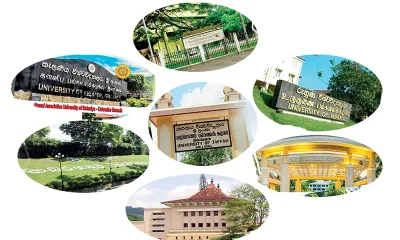
Future of Sri Lanka’s state university system: Should it be shut down and reopened?
-
 News5 days ago
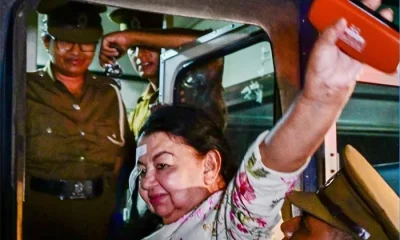
Shiranthi R remanded until 13 Oct.