
Sports
How India has become cricket’s super power

Rex Clementine in Rajkot
Often Virat Kohli’s on field antics doesn’t win him many friends outside India. As a result, Indian cricket is frowned upon by all and sundry. As a norm, most Sri Lankan fans, especially the young ones want India to lose wherever they play. There was this fan who came to RPS one day with this t-shirt. It read, ‘I support two teams. Sri Lanka and anyone playing India.’
Sometimes you tend to believe that the hatred towards India goes beyond cricket. Rajiv Gandhi’s invasion of Sri Lankan airspace to provide dhal and allegations of RAW funding and training the LTTE doesn’t go too well with people. But, let’s not forget that last year alone India provided Sri Lanka aid worth over US$ five billion when most of the western nations turned a blind eye. If not for that, the economic crisis would have been far worse. As for the LTTE, defeating them would have been not so easy without the help of Indian intelligence and military.
Coming back to cricket, India played a lead role in eliminating the veto power that Australia and England enjoyed at the ICC. By jointly hosting the 1987 World Cup between India and Pakistan the competition was taken away from England for the first time. It was a major breakthrough.
But cricket in India didn’t have the financial capacity to host a mega event like the World Cup. Neither did Pakistan. The government’s assistance was sought and with that assurance, the event became a success.
N.K.P. Salve was a powerful government Minister and it helped as he was guiding cricket from the front. There were other visionaries leaders like S.K. Wankhede from the north and M. Chinnaswamy from the south. Together they all challenged the founding members of the ICC. Then a new set of businessmen emerged who made India financially strong.
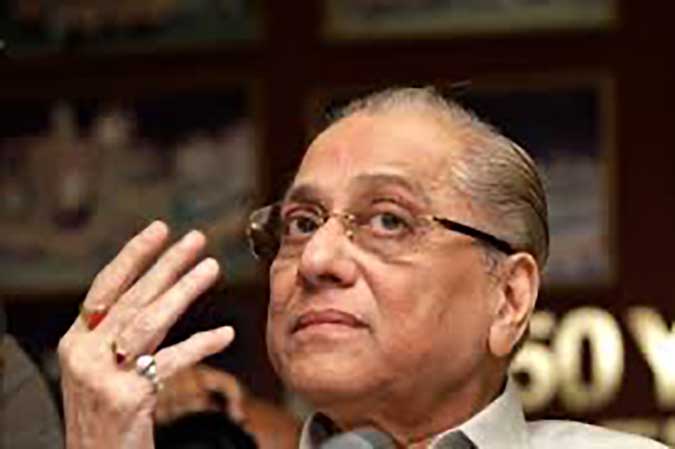
Jagmohan Dalmiya from Calcutta, I.S. Bindra from Punjab and Raj Singh Dungapur from Bombay were key figures in late 1980s and 1990s. Dalmiya was the main man among them having gone onto become the President of the ICC.
The norm was that the Indian board paid the national television station Dooradarshan for telecasting cricket. The ambitious Dalmiya made cricket a product that could be sold. He believed that cricket was a valuable brand and wanted television stations that were interested in taking the game to the homes of world’s second largest population to pay for it.
Soon big money started pouring in and gradually India went onto become the richest cricket board in the world. Then began their domination of world cricket. The arrival of N. Srinivasan changed cricket’s landscape significantly. The holder of a Masters degree in Chemical Engineering and boss of India Cements, Srinivasan was a leading figure in the corporate world before he became known in cricket circles.
Srinivasan’s rise in cricket wasn’t sudden. He worked his way up. In early 2000s, he was the Treasurer of the Indian Board. A former Sri Lanka captain who knew well how Srinivasan operated warned a group of reporters never to cross Srinivasan’s path if we ever met him. At that time we had no idea who this person was, but soon the world would get to know him.
Srini as he’s popularly known had an interesting theory. That was India contributed to cricket’s finance significantly and hence India needed to get bulk of the revenue. He knew pretty well that taking on the rest of the world all alone would be tough. So he created this scenario where it was told that since England and Australia were the two nations that contributed the largest revenue next to India, their portions of profits from ICC events needed to be significantly higher than the rest of the world. It was a deal the likes of Giles Clarke, the English boss and Wally Edwards the Aussie chief couldn’t resist. Then the concept of the Big Three was born.
Not many agree with Srinivasan’s methods or theories. But the interesting point is that he was able to get the rest of the cricketing world at his feet. Whoever who disagreed paid a price. Haroon Lorgat for example, the South African who went onto become the CEO of the ICC. This reminded you the ex-captain’s words. ‘Never cross Srinivasan’s path’. 
The point that needs to be reiterated here is that when Australia and England are playing ball with India, there’s no point that a board like Sri Lanka takes them head on. There’s going to be only one winner.
BCCI has graciously supported Sri Lanka whenever the local board had felt the pinch. India had been quick to come over to Colombo for many a bilateral series.
Along with Srinivasan, there was another individual who changed Indian cricket fortunes. He was the US educated Lalit Modi. The IPL was his brainchild and it soon became a hit. Not only have the players earned handsomely, BCCI has gone onto become such a rich board that it has several schemes helping past player even after their death supporting their families with monthly allowances.
Some may say that Modi and Srinivasan have skeletons in their cupboards. Of course they have. But the reality is that we aren’t living in an ideal world. The bottom line is due to their visionary thinking Indian cricket has benefited. We may disagree with their means but every man who built a sporting empire broke a few rules be it Sepp Blatter or Dr. Ali Bacher.



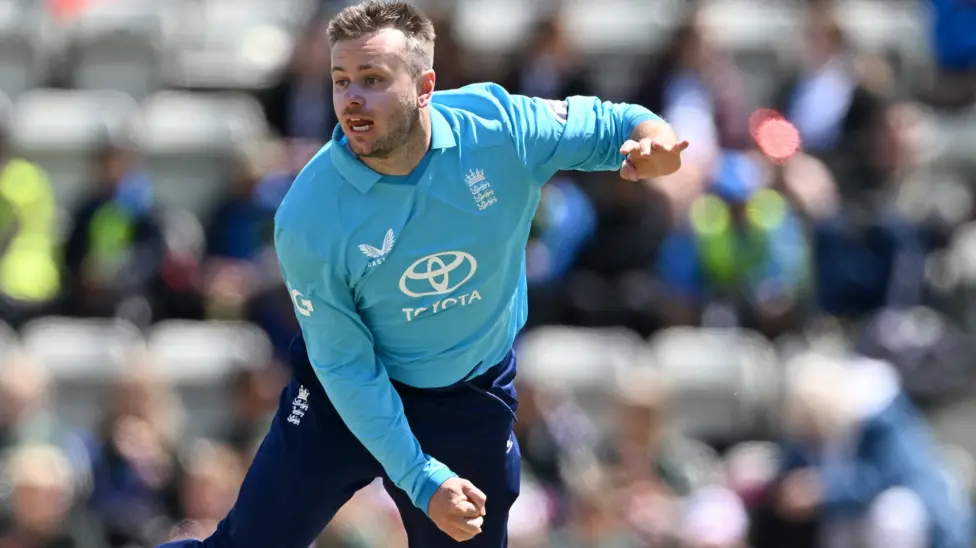
Leg-spinner Mason Crane could play for England for the first time in eight years after being recalled for the one-day international tri-series in Pakistan.
The 29-year-old won his only Test cap against Australia in Sydney in 2018 and is now given an opportunity in the series which also involves Sri Lanka next month.
Crane, who also played two T20 internationals in 2017, could also push his case in the fight to be England’s number one spinner in Test cricket.
Sam Curran and Adil Rashid both return after injuries, and uncapped pair James Coles and Henry Crocombe are included.
Jos Buttler is out with the hamstring injury he sustained last week, while Jacob Bethell is continuing his recovery from knee surgery.
Brydon Carse, who is under an investigation from the Cricket Regulator following an incident outside a nightclub in Derby in August, remains absent.
England are on a diet of white-ball cricket until three Tests in South Africa in December as they build up to the 50-over World Cup in southern Africa next year.
The tri-series in Pakistan involves the three teams taking part playing each other twice, with the top two advancing to the final. Following the trip to Pakistan, England play three one-day internationals and five T20s in Australia in November.
As England continue to shape their backroom staff following the arrival of Stephen Fleming as Test coach, Jeetan Patel, Mike Yardy, David Saker and Carl Hopkinson will assist white-ball head coach Brendon McCullum in Pakistan.
That means Marcus Trescothick, who took temporary charge of the Test team for the series against Pakistan in the home summer, misses the trip.
It is understood the make-up of the coaching staff is part of a plan to rotate the coaches – fielding coach Sarah Taylor and fast-bowling coach Tim Southee are also not going to Pakistan.
All of Trescothick, Taylor and Southee are likely to be part of England’s coaching team for other tours this winter.
England squad for tri-series in Pakistan:
Harry Brook (Yorkshire – captain), Gus Atkinson (Surrey), Sonny Baker (Hampshire), Tom Banton (Somerset), James Coles (Sussex), Jordan Cox (Essex), Mason Crane (Glamorgan), Henry Crocombe (Sussex), Sam Curran (Surrey), Liam Dawson (Hampshire), Ben Duckett (Nottinghamshire), Will Jacks (Surrey), Jamie Overton (Surrey), Adil Rashid (Yorkshire), Joe Root (Yorkshire), Josh Tongue (Nottinghamshire).
(BBC)

Sri Lanka won the toss and elected to bowl first in the Asian games semifinal clash against India.
Sri Lanka XI: Lasith Croospulle, Sineth Jayawardene, Sohan de Livera (wk), Ashen Bandara, Sahan Arachchige (c), Nuwanidu Fernando, Chamika Karunaratne, Wanuja Sahan, Tharindu Rathnayake, Binura Fernando, Vijayakanth Viyaskanth

England call up Crane and rest Archer for Pakistan series

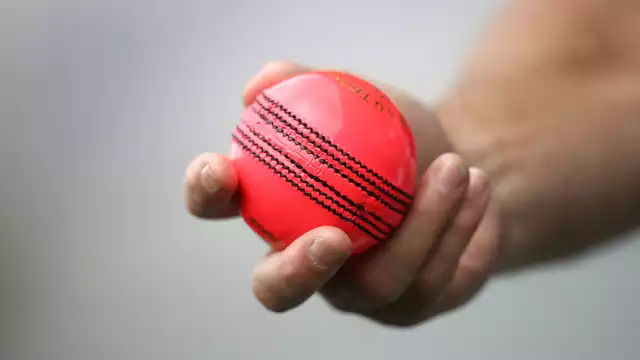
ICC introduces pink-ball daytime Test trial, new time-wasting penalties

Discussion on Anuradhapura Sacred City Development Plan

India enter Asian Games final after Kishan and Bumrah ride roughshod over Sri Lanka

I extend my heartfelt wishes to all the sons and daughters of our country for a Happy World Children’s Day – President

Sri Lanka bowl first in semi final clash against India

‘Dates have the highest sugar content to fight Coronavirus’

Sunday Island 27 December – Headlines

#SundayIsland 17th December – Headlines

Sunday Island – 28th March

Sunday Island Headlines – 21 March

Sunday Island – 21st February – Headlines
-

 Editorial6 days ago
Birth of a bad law
-

 News4 days ago
Police remove Thileepan statue in Jaffna
-

 Features7 days ago
Beyond traditional jobs: Why Sri Lanka needs to facilitate the gig economy
-

 News6 days ago
TIN mandatory for key transactions from Nov. 1
-
 Latest News7 days ago
Kusal, Wellalage star as Sri Lanka defend 322 in Headingley thriller
-

 Features4 days ago
The 22nd Amendment, constitutional recovery and illiberal slippage
-

 Features4 days ago
Of foreigners as CEOs of Lankan ventures
-

 News4 days ago
Sajith rejects Jt. Opp. protest sabotage claim; SJB TU chief demands remedial action