
Latest News
How a star-studded Kashmir cricket league bombed as organisers fled


Srinagar, Indian-administered Kashmir – Aasif Manzoor, a 32-year-old cricketer from Anantnag, a district in the south of Indian-administered Kashmir, was readying himself on Saturday morning to play a match in a star-studded tournament.
Retired global stars, local cricket icons and up-and-coming players were all part of the Indian Heaven Premier League (IHPL), which organisers had billed as a spectacle that they promised would grip the troubled region and draw large crowds.
Instead, Manzoor found himself huddled with his teammates in the corridors of the Radisson, a five-star hotel overlooking the Jhelum River in Srinagar, Indian-administered Kashmir’s biggest city, which was hosting the series.
Their hotel bookings had been arranged by the Yuva Society, a private group based in India’s northern state of Punjab, which had also organised the tournament. “The staff was refusing to let us check out,” Manzoor told Al Jazeera.
The reason? The organisers had vanished the night before, allegedly after running out of money midway through the tournament.
As the hotel bills mounted and ran into millions of rupees, dozens of players like Manzoor found themselves trapped. Scoring runs and taking wickets wasn’t on their minds any more. Getting out of the hotel was.
They eventually were able to leave, but the rest of the tournament was scrapped.
The embarrassing debacle has raised questions about the event’s planning and the role of the region’s administrators. But to many, the episode is also the latest example of the pitfalls of attempts by the Indian government and corporate entities backed by it to portray a sense of “normalcy” in Kashmir, six years after Prime Minister Narendra Modi’s government scrapped the region’s semi autonomous special status.
“It was a shocking experience for us,” Manzoor said.

The fortnight-long cricket tournament kicked off on October 25 in chilly Srinagar as winter set in. The competition had eight teams, including 32 former international cricketers, with the bulk of the rest of the players from Kashmir.
Major global stars included former West Indies champion batsman Chris Gayle, ex-Sri Lankan all-rounder Thisara Perera, New Zealand batsman Jesse Ryder, South African Richard Levi and Omani player Ayab Khan.
“For the first time, we will have international cricket superstars like Chris Gayle playing for a local Kashmiri team,” Nuzhat Gul, who heads the Jammu and Kashmir Sports Council, said at the beginning of the tournament.
“The motive for organising such tournaments was to engage the young positively,” she said, adding that the government had offered infrastructure, publicity and logistical assistance to the organisers.
The tournament was supposed to conclude on Friday [8th November 2025].
But officials who spoke to Al Jazeera on condition of anonymity said the event ran into “sponsorship difficulties”. In other words, sponsors didn’t pay up as they had promised to. That challenge was amplified once it became clear that only a trickle of local Kashmiris was coming to watch the matches at the Bakshi Stadium, a sprawling sports facility in the middle of Srinagar.
Things came to a head when the organisers packed up and left in the middle of the night last Friday, leaving players haggling with hotels over unpaid room rents.
Trapped at the Radisson, Manzoor said he tried calling the organisers. But no one picked up or returned his calls.
“It took a while to understand what was going on.”
Eventually, Manzoor said, a senior member from the English Cricket Board, Melissa Juniper, who was also in Srinagar for the event, rang up the British high commission in New Delhi, whose officials spoke to the hotel staff.
“They worked out something, and the players were allowed to check out, including myself,” he added. Juniper, he said, stayed back at the hotel while British officials figured out how to clear the dues.
The British high commission did not return queries from Al Jazeera on its reported mediation with the hotel staff in Srinagar on behalf of the players. But on Wednesday, Mushtaq Chaya, owner of the Radisson in Srinagar, told reporters that the organisers had defaulted on payments of more than 5 million rupees ($57,531).
Meanwhile, FanCode, a cricket streaming app, has since Saturday listed the remaining matches of the competition as “abandoned”.

According to Manzoor, players had started realising that there was something wrong with the event even before the organisers packed up and left.
“Local players were demanding that the organisers must first sign a contract with them before they can proceed to play. They were assuring us that it would happen. But it did not,” Manzoor said. “Then suddenly, they left without anyone knowing about it. We did not expect it to end this way.”
Kashmiri authorities are now facing mounting questions from locals: How was the event given a go-ahead without background checks on the organisers? And did the tournament go through the rigorous scrutiny any event in Kashmir is usually subject to in a region known for sweeping restrictions and surveillance?
Police in Kashmir have announced an investigation as regional sports authorities — including Gul of the Jammu and Kashmir Sports Council — are now distancing themselves from the organisers.
“If they did this, the law would take its own course,” said Satish Sharma, the minister for youth services and sports in Kashmir. “An inquiry has started, and action will follow. Police have taken up the case.”
Al Jazeera tried to reach the Yuva Society but has not received any response. Meanwhile, the organisation’s website appears to be down since the debacle. Details about the organisers are no longer available on the portal.
All it still has is a single message flashing on the screen: “Get ready, something cool is coming!”

For a while, it did seem like something “cool” could be coming to Kashmir.
Social media visuals for the event show Gayle, who was one of international cricket’s biggest draws for two decades, taking heavy steps on the damp turf in the Srinagar stadium as his hair swung under a black bandana tied around his forehead.
In most shots, the seats around the venue during matches were sparsely occupied. But in one scene, a small crowd of young fans is jumping with jubilation as heavily armed members of the Indian paramilitary forces surround them.
“There was a lot of anticipation for this tournament,” Parvez Rasool, arguably Kashmir’s best-known cricketer, told Al Jazeera. “That local Kashmiri cricketers would share the same dressing room as these megastars was a major thing in itself.”
Rasool was also to play in the tournament. He rose to stardom in 2013 after briefly playing for the Indian cricket team – the first Kashmiri to do so. His inclusion in the national team was lauded by the Indian media and politicians as an example of the “mainstreaming” of Kashmiris at a time when the region was in turmoil after a crackdown on protesters. Since the late 1980s, Kashmir has been in the throes of an armed rebellion with separatists seeking independence from India.
Rasool said his payments have not been settled by organisers so far. “The people who approached me to take part are big names in Indian cricket, so I consented,” he said, without naming the individuals he was referring to.
“I don’t agree with the allegations that the event was organised in bad faith, but it seems that it may not have been properly planned. The sponsors have reportedly failed to turn up, and the audience wasn’t even 5 percent of what was expected,” he added.

Another Kashmiri cricketer who was part of the trials before the main tournament was held, said a lot of his peers were already disappointed with the league because of the absence of any formal contracts or payments.
“They took a fee of $14 from bowlers and batsmen and of $20 from all-rounders who took part in the trials,” the 24-year-old said on condition of anonymity because he feared repercussions for his comments.
“Everything seemed suspicious from the very beginning. Thisara Perera, the Sri Lankan star, played with us. It was embarrassing that even his uniform wasn’t tailored to his size. The size of his sportswear was 46 inches, but they offered him 42,” the Kashmiri player said, chuckling.
While some sports enthusiasts in Kashmir said it was the comparatively high price of the tickets at $4 each that kept spectators away, others blamed the timing of the event, which coincided with the annual apple harvest. As a result, many locals were busy tending to their orchards. Apples provide a livelihood for nearly half the region’s eight million people.
“Some matches lasted from 10am until 5 in the evening,” said a video journalist who filmed the tournament for his Instagram page. He spoke on condition of anonymity. “Obviously, who would turn up in the middle of the harvest?”
But to some analysts, the tournament’s collapse is also emblematic of the attempts by Modi’s government and local authorities to portray a sense of normalcy in Kashmir.
Critics argued that such state-backed events aim to depoliticise Kashmir’s realities even as surveillance tightens, dissent is curbed and political representation remains suspended.
In 2019, Modi’s government annulled Kashmir’s special status and downgraded the region into a federally controlled territory during a crackdown on journalists, human rights campaigners and opposition politicians.
Omar Abdullah, who returned as Kashmir’s chief minister during last year’s polls, has been pleading in vain with New Delhi to reinstate Kashmir’s pre-2019 powers.
Apoorvanand, a Hindi professor at the University of Delhi who writes literary and cultural criticism, told Al Jazeera that the cricket tournament fit a broader pattern.
“It’s been a part of Modi’s political repertoire right from 2014 to organise these celebrations to give an appearance of cheerfulness so that his critics don’t question him,” Apoorvanand, who goes by a single name, said, referring to the year Modi became India’s prime minister.
Similar events held in Kashmir in the past have come under criticism, such as last month when a popular New Delhi-headquartered television news channel organised a concert featuring popular Indian performer Sonu Nigam.
The concert was boycotted by many Kashmiris, citing the performer’s past tweets in which he had criticised the practice of loudspeakers being used for the Islamic call to prayer.
“The principal addressees of these events are Modi’s voters across what is known as the country’s Hindi-speaking belt. The message that his administration wants to telegraph is that everything is hunky-dory in the Kashmir Valley,” Apoorvanand said.
“It is to give them a sense of ownership over the region.”
Kashmiri researchers who have been observing the conflict for decades said that while large events such as the cricket competition are by themselves harmless, any effort to use them to send broader messages about the current state of Kashmir is problematic.
“If these events are meant to suggest Kashmir is ‘normal’, then what better way to demonstrate [that] than withdrawing the military forces, the draconian laws and the suppression of dissent?” said Mohamad Junaid, an associate professor of anthropology at the Massachusetts College of Liberal Arts in the United States.
If the Modi government “wants the world to see ‘normalcy’,” he said, “India could begin by releasing thousands of Kashmiri political prisoners from jails.”
[Aljazeera]


Israel has claimed two high profile assassinations of Ali Larijani, secretary of Iran’s Supreme National Security Council, according to Israel’s Defence Minister Katz, and the commander of the internal Basij militia, Gholamreza Soleimani, neither of which Iran has commented on or confirmed
Iranian state media published a handwritten note by Larijani, it is not clear whether it is intended as proof of life. Larijani’s note published on his social media outlets commemorates memory of Iranian sailors killed, hose funeral is expected to be held on Tuesday, in the US attack on their boat in international waters.
if confirmed, Larijani would be the highest level assassination in the war since United States-Israeli strikes killed the former Supreme Leader Ali Khamenei, and several members of his family on the first day of the war they launched on February 28.
Larijani was last seen publicly on Friday, attending the al-Quds day rally in support of Palestinians in Tehran, along with Iran’s President Masoud Pezeshkian.
Larijani has been a political figure in the Iranian hierarchy for years, at one time leading the nation’s nuclear negotiations with the West. He was also previously the Iranian Speaker of the Parliament.
The Israeli military also claimed in a post on X Tuesday that it had killed Gholamreza Sileimani, the commander of the Basij unit, the internal security paramilitary militia of the Islamic Revolutionary Guard Corps (IRGC).
[Aljazeera]
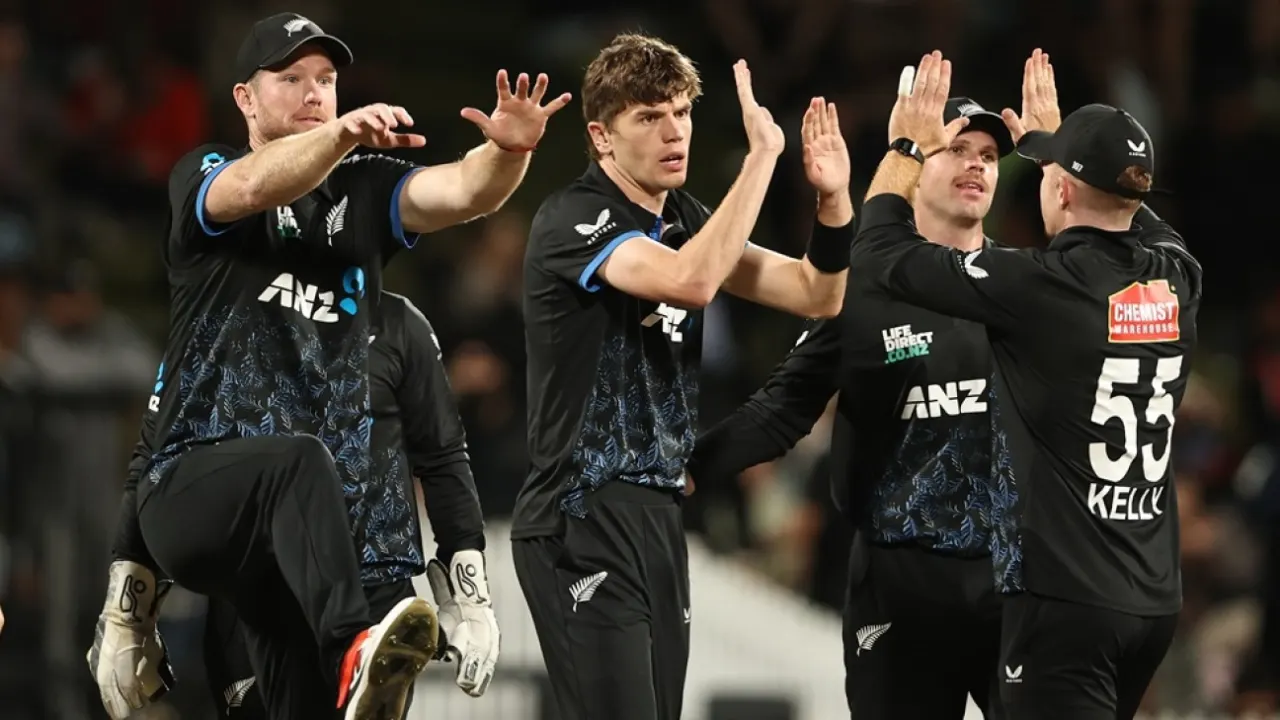
New Zealand levelled the five-match T20I series against South Africa with a dominant performance in Hamilton. After being put in to bat on a surface the women’s sides praised for its batter friendliness, New Zealand relied on Devon Conway’s experience to post a challenging target.
They may even have felt they left a few runs out there as few stayed with Conway with the 48-run opening stand their highest. South Africa’s spinners were particularly expensive as Keshav Maharaj and George Linde conceded 78 runs in the six overs they bowled.
In the end, New Zealand scored exactly the same number of runs as they posted just over a month ago against South Africa, in the group game of the T20 World Cup. Then, South Africa eased to the target with 17 balls to spare. This time, they were bowled out for their 10th lowest score in the format: an exact mirror of what New Zealand’s line-up did in the first match. Only Linde scored more than 30 as Ben Sears and Lockie Ferguson took six wickets between them in an incisive display of quick bowling.
With South Africa women winning earlier in the day, both the men’s and women’s series are locked at 1-1.
Conway collects his highest in two years
Conway didn’t get any games at the T20 World Cup but showed he still has plenty to offer with an innings that provided a solid foundation for New Zealand to build on. He was productive on the leg-side from the get-go, when he flicked the first ball of the match through mid-wicket for four and scored 80% of his runs in that half of the field. That included both his sixes: the slog-sweep off Keshav Maharaj in the over after the Powerplay and his launch over long-on off Wiaan Mulder which brought up his fifty off 39 balls. Conway has not scored this many runs in 20 T20I innings, since February 2024. He was ready to up the ante as New Zealand entered the last five overs and tried to pull Wiaan Mulder but was cramped for room and top-edged. New Zealand were 124 for 4 with 27 deliveries remaining.
South Africa’s death bowling misses a trick
With Conway dismissed, and New Zealand 126 for 5 after 16 overs, South Africa had the opportunity to keep the hosts under 160 but their death bowling plans faltered. Nqobani Mokeona, the 19-year old, bowled a good 17th over that cost only seven runs and finished with excellent figures of 0 for 22 in four overs. Gerald Coetzee’s final over went for eight runs and brought the wicket of Jimmy Neesham before Ottneil Baartman’s last over cost 10 runs.
Keshav Maharaj came on to bowl at the end, and it went awry. Cole McConchie advanced on him to hit the first ball for six and then Josh Clarkson plundered 16 runs off the four deliveries. Maharaj’s plan to go wide of the stumps didn’t work as Clarkson chased it and finished unbeaten on 26* off nine balls. What may irk Maharaj most is that he had another option. Wiaan Mulder, playing a T20I for the first time since September 2024, bowled two overs for 14 runs and could have had one towards the end of the innings. South Africa conceded 42 runs in the last three overs.
New Zealand’s hat-trick of early strikes
South Africa were off to a solid start on 24 without loss after the first three overs but then trouble struck. In the fifth over, Connor Esterhuizen thought he had carved Sears in front of backward point, but Tim Robinson timed his jump well to take a good catch. In the next over, Mulder, opening for the first time in T20Is, worked his way to 16 off 20 balls before he also tried to cut but was beaten by turn and bounce from Mitchell Santer and caught in the covers. With both openers dismissed early, South Africa would have been looking for a big performance from Tony de Zorzi, the No.3 who was originally part of the T20 World Cup squad. But the left-hander fell victim to the McConchie curse (remember he dismissed Quinton de Kock and Ryan Rickelton in the T20 World Cup semi-final?) and top-edged a sweep to short fine. South Africa were 31 for 3 in the seventh over.
Santner gets Smith again and Sears steals the show
It’s gone from tough to tougher for finisher Jason Smith, who has been dismissed by New Zealand’s captain in successive matches. Smith was stumped for 10 in the first T20I off Santner’s bowling, as he lunged forward, and this time was caught for 12 as he top-edged a sweep. Smith handed a simple catch to Sears at short fine and will be concerned with his lack of runs on the tour so far. Sensing an opportunity to finish things off quickly, Santner brought Sears back on to replace and kill the game. Sears responded to plan and used the short ball well. He had both Dian Forrester and Gerald Coetzee caught on the pull to leave South Africa 91 for 7 after 13 overs and the game all but over. South Africa were bowled out in the 16th over.
Brief scores:
New Zealand 175 for 6 in 20 overs (Devon Conway 60, Tom Latham 11, Nick Kelly 21, Mitchell Santner 20, Cole McConchie 18*, Josh Clarkson 26*; Gerald Coetzee 1-28, Otnell Baartman 1-31, Keshav Maharaj 1-45, George Linde 1-33, Wiaan Mulder 2-14) beat South Africa 107 in 15.3 overs (Wiaan Mulder 16, Rubin Hermann 19, Jason Smith 12, Dian Forester 10, George Linde 33; Ben Sears 3-14, Lockie Ferguson 3-16, Mitchell Santner 2-19, Cole McConchie 1-24, James Neesham 1-10) by 68 runs
[Cricinfo]
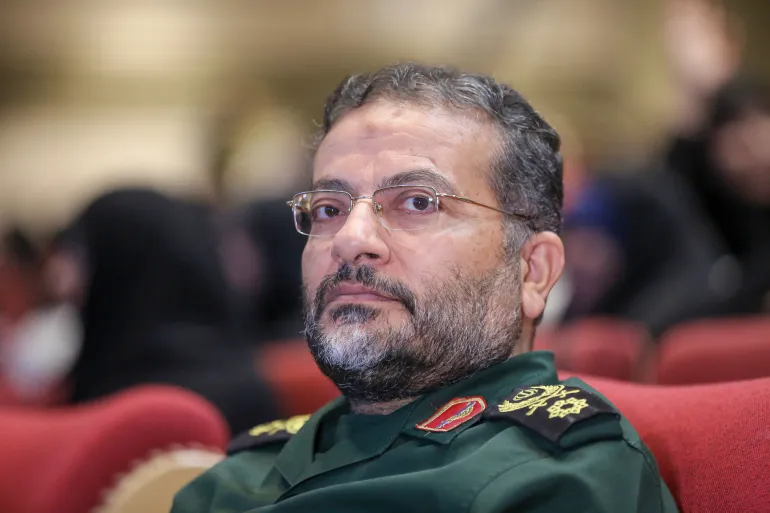
The Israeli military has claimed in a post on X Tuesday that it has killed Gholamreza Soleimani, the commander of the Basij unit, the internal security paramilitary militia of Iran’s Islamic Revolutionary Guard Corps (IRGC).
“Guided by precise intelligence from Military Intelligence, the Air Force conducted a targeted strike yesterday in the heart of Tehran, eliminating Gholamreza Soleimani, commander of the Basij unit over the past six years,” it said on Tuesday.
Iran has not commented on, nor confirmed this claim.
If confirmed, Soleimani would be the highest level assassination in the war since United States-Israeli strikes killed the former Supreme Leader Ali Khamenei, and several members of his family on the first day of the war they launched on February 28.
The US Treasury records Soleimani’s birth year as 1965. He has been sanctioned by the United States, the European Union, and other countries for his alleged role in suppressing dissent through the Basij.
[Aljazeera]

Israel says it’s killed Ali Larijani, Iran’s security chief and Basij commander

Devon Conway, bowlers star as New Zealand make it 1-1

Israel claims to have assassinated commander of Iran’s Basij militia unit

Trump seeks to delay meeting with Xi in China

Pakistan lodge official complaint about Bangladesh’s review at end of chase

Showers or thundershowers will occur at several places in the Central, Sabaragamuwa, Southern and Uva provinces after 2.00 pm.

‘Dates have the highest sugar content to fight Coronavirus’

Sunday Island 27 December – Headlines

#SundayIsland 17th December – Headlines

Sunday Island – 28th March

Sunday Island Headlines – 21 March

Sunday Island – 21st February – Headlines
-

 Business7 days ago
BOI launches ‘Invest in Sri Lanka’ forum
-
 News6 days ago
Historic address by BASL President at the Supreme Court of India
-

 Sports6 days ago
The 147th Royal–Thomian and 175 Years of the School by the Sea
-

 Sports7 days ago
Royal start favourites in historic Battle of the Blues
-

 News7 days ago
CEBEU warns of operational disruptions amid uncertainty over CEB restructuring
-
 Features7 days ago
Indian Ocean zone of peace torpedoed!
-

 Life style3 days ago
From culture to empowerment: Indonesia’s vision for Sri Lanka
-
 News6 days ago
Power sector reforms jolted by 40% pay hike demand