
News
House imbroglio: CPA, IPU urged to intervene

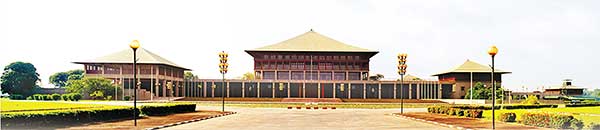
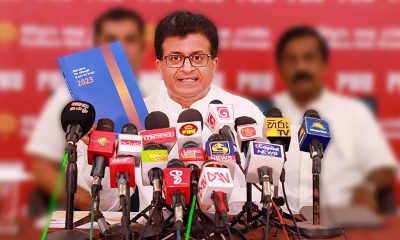
The Opposition has written to the Commonwealth Parliamentary Association (CPA) and Inter-Parliamentary Union (IPU) seeking their intervention to prevent Speaker Mahinda Yapa Abeywardena from conducting parliamentary proceedings in a manner politically beneficial to the SLPP-UNP government.
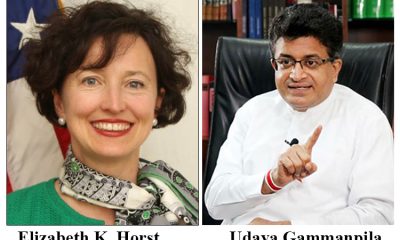
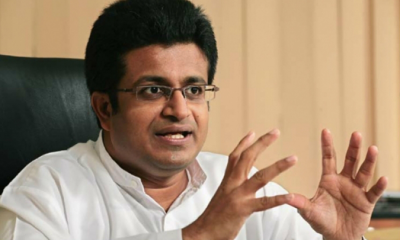
Among the signatories are Opposition Leader Sajith Premadasa, SLMC leader Rauff Hakeem, Tamil Progressive Alliance Leader Mano Ganeshan, SLPP rebel group senior Prof. G. L. Pieris, Yuthukama leader Gevindu Cumaratunga and Pivithuru Hela Urumaya Leader Udaya Gammanpila Referring to the parliamentary traditions and practices here, the Opposition has told the CPA and IPU: “The essential balance between the government and Opposition , the entitlement of all members of parliament to equal dignity and consideration , opportunity for articulation of diverse points of view in parliamentary debates , fairness to recourse to procedures , fidelity to commitments and an environment of comity and mutual respect are, in our view necessary ingredients of a functioning parliamentary democracy.
“We believe that these are not solely ensured by legal provisions, be they contained in the Constitution or in delegated legislation such as the Standing Orders of Parliament.
“No less important, we are convinced, are the concepts of equity, decency and fair dealing which form the very core of the parliamentary process.
“The robust quality of this culture depends, principally, on the role of the Speaker of Parliament. His Office has evolved, historically, as the custodian of the rights and privileges of Parliament and represents the ultimate bulwark against erosion of parliamentary authority by the executive or any other external agency.
“The critical significance of this function is nowhere set out in greater emphasis than in the inspiring words of Speaker Lenthall of House of Commons in England, addressed to King Charles I at the height of a civil war. This classic assertion has resonated down the ages and forms the wellspring of parliamentary authority across the Commonwealth.
“It is against this backdrop that we feel acute concern about some current developments regarding the behaviour and attitude of Hon Mahinda Yapa Abeywardena, the Speaker of Parliament.
“A series of situations indicative of sustained bias and partisanship culminated in the deeply disturbing actions of the Speaker on the occasion of the debate in Parliament, on Saturday, July 01, on the government’s proposals in respect of domestic debt restructuring.
“At a meeting of the parliamentary Business Committee, consisting of party leaders, held on the preceding, Friday 30th June, it was decided that the debate would commence at 9 am on the following day and that the vote would be taken at 7.30 pm, subject to the time being extended if the list of speakers on the published list submitted by the Government and Opposition Whips had not been exhausted at that time.
“Taking the House by surprise, however, the Speaker, at the allotted hour, abruptly brought the proceedings to an end and called for the vote to be taken, dismissing in cavalier fashion vehement protests by the Leader of the Opposition and other members of the House that the letter and the spirit of the agreement arrived at on the previous day, was being flagrantly violated. Regrettably, their pleas fell on deaf ears.
“Look upon this lapse, very much in line with similar arbitrary and prejudiced decisions made by the Speaker constantly in recent months, as a grave infringement of the legitimate rights and privileges of the Opposition in Parliament.
“The substance of this debate, involving as it did the fate of superannuation funds and the monetary entitlements of hundreds of thousands of working people, was of the highest importance to the public.
“Sadly, these considerations received short shrift at the hands of the Speaker whose recurring conduct strikes at the root of objectivity and impartiality, and deprives the proceedings of parliament of the gravitas which we have hitherto taken for granted.
“We consider it our duty to bring to your notice these unfortunate trends, destructive of seminal democratic values which have defined the foundations of our democratic way of life. They seriously diminish, in our view, the esteem of the public for the integrity and stature of the institution of parliament.
“It is our hope and expectation that you will use your good offices, in an appropriate manner, to do all you can to ensure the survival, and hopefully the further strengthening, of sound parliamentary traditions which, up to now, have been a source of amply deserved pride to us all.”







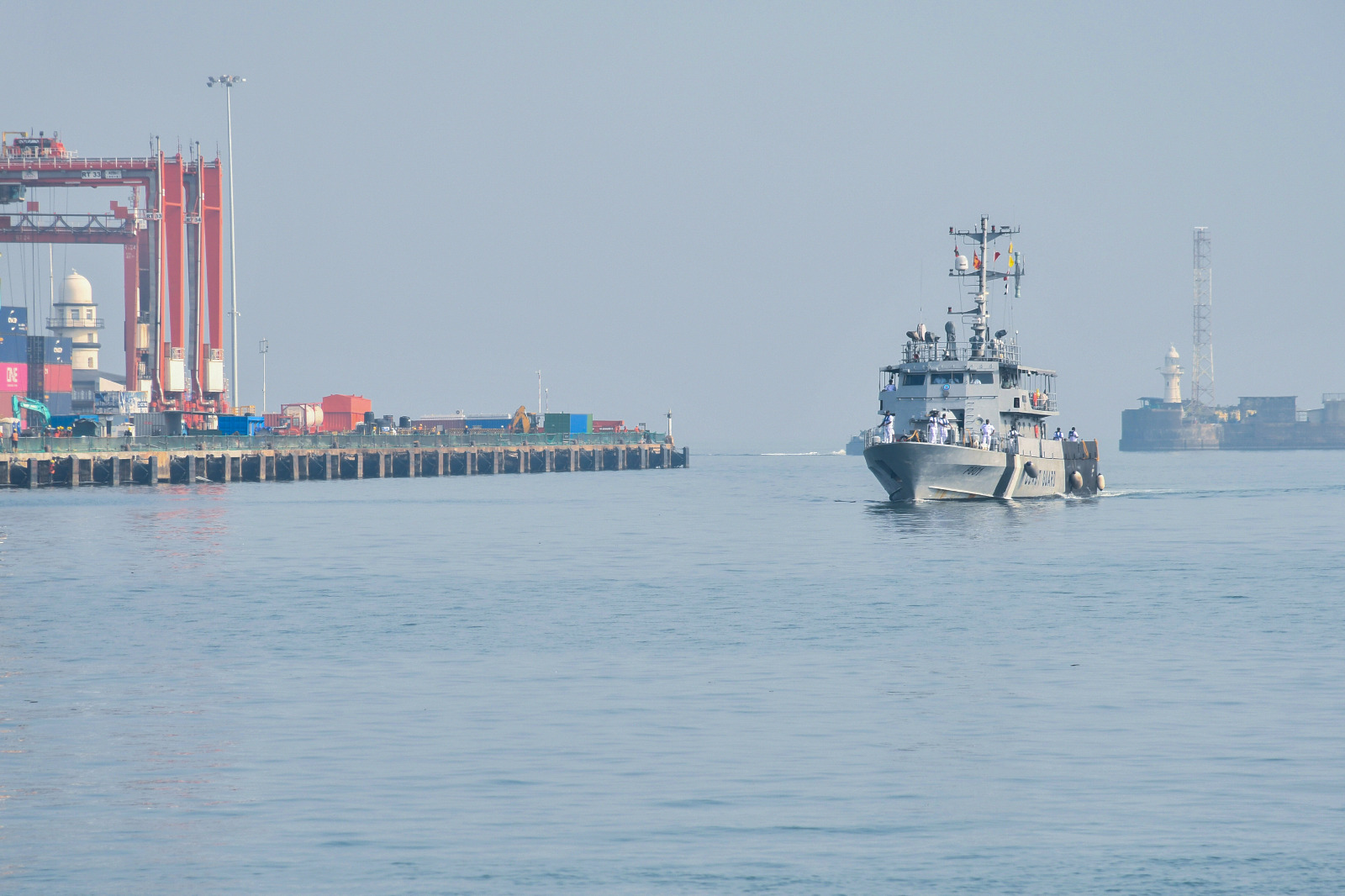
The Maldives Coast Guard Ship Huravee arrived at the Port of Colombo for replenishment purposes on 02 Mar 26. The visiting ship was welcomed by the Sri Lanka Navy (SLN) in compliance with time-honoured naval traditions.
The ship is a 48.9m long Offshore Patrol Vessel which is commanded by Lieutenant Colonel Ahmed Nafiu Mohamed.
Meanwhile, the ship’s crew is scheduled to visit several tourist attractions in the city of Colombo, during their stay in the island.

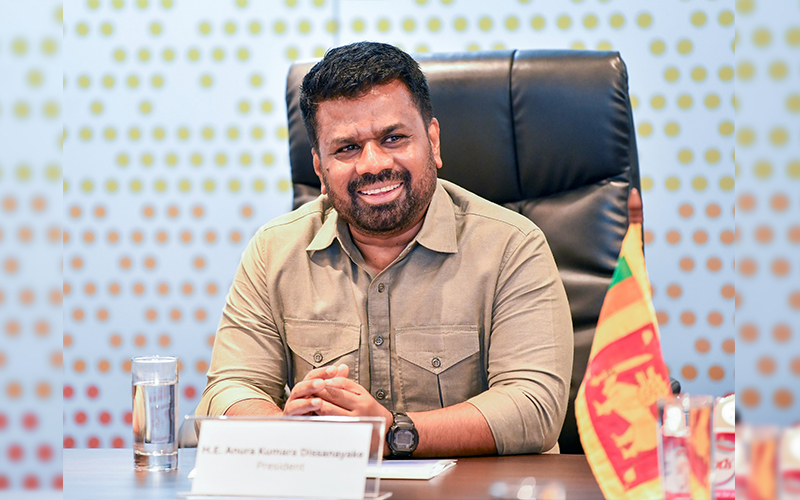
President Anura Kumara Dissanayake yesterday called for an immediate and peaceful resolution of the escalating Middle East conflict, warning that the crisis could have far-reaching repercussions on the global economy, including Sri Lanka.
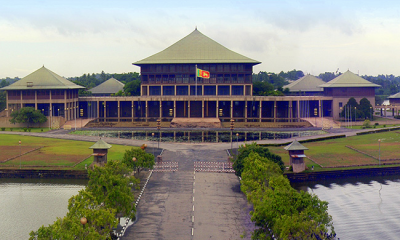
Addressing Parliament, the President stressed that no military conflict benefited humanity, particularly at a time when destructive military technologies were rapidly advancing.
“Any military conflict does not create a favourable situation for any group of people,” he said, urging all parties to make urgent commitments towards peace. “As Sri Lanka, our position is that all parties involved in this war must, as soon as possible, take steps toward a peaceful world.”
He cautioned that Sri Lanka could not remain insulated from the fallout from the conflict, noting that disruptions to global oil and gas supplies, threats to migrant workers in the Middle East, and potential shocks to tourism, remittances, shipping and aviation were real concerns.
A national programme was being formulated to mitigate the impact, he said, adding that its success would hinge on broader international efforts to restore stability, the President said.
Acknowledging public anxiety shaped by past economic hardships, President Dissanayake said social stability could not be ensured through rhetoric alone but required tangible guarantees that citizens would not face another crisis.
While noting that the government had successfully navigated multiple challenges since assuming office, he described the Middle East situation as distinct due to the uncertainty surrounding its duration and outcome.
The government, he said, was closely monitoring developments. The Central Bank had conducted a review with a report on the likely economic impact expected shortly. The Ministry of Finance is also preparing an assessment of the potential effects on public life, alongside measures to ensure the uninterrupted provision of essential services locally and for Sri Lankans overseas.
“The primary responsibility for finding a path out of the crisis rests with the Government,” he said, calling on Parliament and the public to collectively confront the challenge under a unified national plan.
Providing a detailed account of the country’s energy reserves, the President said storage capacity rather than supply remained the key constraint. Excluding the Indian Oil Corporation tanks in Trincomalee, total storage capacity at Kolonnawa and Muthurajawela stands at approximately 150,000 metric tons.
Diesel stocks were currently sufficient for 33 days, with refining contributing around 1,800 metric tons daily. Petrol reserves will last 27 days, with a 35,000 metric ton shipment due on March 7 or 8 expected to extend availability to around 40 days.
Aviation fuel stocks are adequate for 49 days, supported by both daily refining and imports. Scheduled shipments include vessels from RM Parks on March 14, Sinopec on March 17, IOC on March 21 and the Ceylon Petroleum Corporation on March 28.
Crude oil supplies were sufficient to operate the refinery for 26 days, with an additional shipment expected to extend operations by a further 18 days, the President said.
“Because of this, there is no crisis regarding oil,” the President assured Parliament.
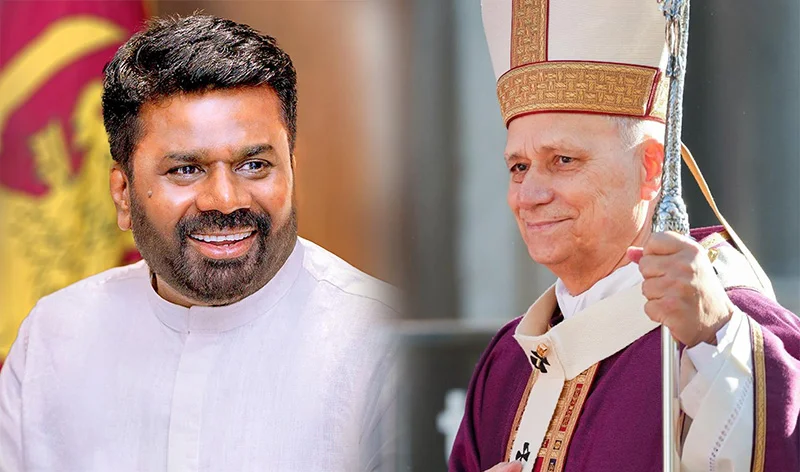
President Anura Kumara Dissanayake has invited His Holiness Pope Leo XIV to visit Sri Lanka.
The official invitation was handed over by Minister Bimal Ratnayaka to the Vatican’s Under Secretary for Relations with the States, at the Vatican, yesterday, during the Minister’s official visit to Italy, the President’s Media Division said.

Maldives Coast Guard Ship Huravee arrives in Colombo

New charges for son of Norway’s crown princess on trial for rape

US sends planes to evacuate nationals from Middle East as Iran conflict spreads

Trump threatens to halt trade with Spain over military base access

Dry weather will prevail in most parts of the island

AKD warns of far reaching economic consequences of Middle East war

‘Dates have the highest sugar content to fight Coronavirus’

Sunday Island 27 December – Headlines

#SundayIsland 17th December – Headlines

Sunday Island – 28th March

Sunday Island Headlines – 21 March

Sunday Island – 21st February – Headlines
-
 Opinion5 days ago
Jamming and re-setting the world: What is the role of Donald Trump?
-
 Features5 days ago
An innocent bystander or a passive onlooker?
-
 Features2 days ago
Brilliant Navy officer no more
-
 Features6 days ago
Ratmalana Airport: The Truth, The Whole Truth, And Nothing But The Truth
-

 Opinion2 days ago
Sri Lanka – world’s worst facilities for cricket fans
-
 Business6 days ago
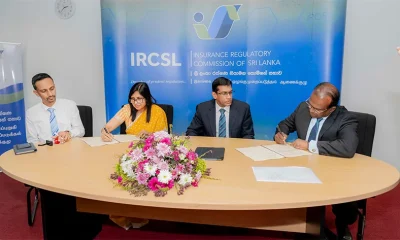
IRCSL transforms Sri Lanka’s insurance industry with first-ever Centralized Insurance Data Repository
-

 Business5 days ago
An efficacious strategy to boost exports of Sri Lanka in medium term
-
 Features3 days ago
Overseas visits to drum up foreign assistance for Sri Lanka