
Features
Hopelessness yet achievements to be proud of; example to follow


We regained hope when Ranil Wickremesinghe came to the forefront of the political scene and was made PM and then President. We expected much of him and he could have delivered. What exactly does that ‘could have’ connote? We expected him to revive the economy,
 eliminate corruption and do what the people were asking for. And what do we have? The appointment of 37 State Ministers – about one fifth of SLPPers in Parliament! Cass failed to see a single truly capable person acceptable to the people among them. None shone forth. Then came the revelation by no less a person than the SLPP nominated MP and ex-Cope Chairman of a huge cooking gas scam and worse, causing so much difficulty to us all who use gas for cooking. And the delay in eliminating the miles long queues for many months for this very basic commodity.
We however applauded Prez Ranil W for his interaction with Samantha Power. We heard her on TV news and his address to both American and Sri Lankan administrators including Ms Julie Chung – US Ambassador to SL. At least we have somebody to be satisfied with as a negotiator who can hold his own, being almost born to it.
The aid given by America and handed over by Ms Power, mentioning specifically there were no strings attached, is something encouraging to talk about. Samantha Power (b Sept 21, 1970), an Irish American journalist, diplomat and government official serving now as the Administrator of the US Agency for International Development. She handed over USD 40 m specifically to help farmers by importing chemical fertilisers; and then an additional 20 m as humanitarian aid. Cass well imagined corrupt human hyenas mouth-watering at these amounts of which they would dearly want to grab some. No go grabbers! We are certain the American aid agency will see the money is spent correctly to help the targeted groups. Originally, the money would be given and left to the govt. to spend as they were wont to do honestly (long ago). Now this wonderful country has been smeared with the reputation of corruption through and through. Isn’t that such a shameful label to be cursed with? But completely justified. And in Cass’ mind passes pictures of those in power and out, bloated with stolen money, even depriving needed nutriment from babes through stealing, such that now the percentage of malnourished children is over 60%. This figure was crassly denied by stooges of the SLPP. Those totally corrupt persons Cass sees through her mind’s eye have not disappeared nor in their rightful place: prison. They continue living in luxury with security guards galore, waiting to return to power. Cass remembers her grandmother’s favourite curse: Hena hathak gahapan! Lightening too is diffused these days!
We expected with Ranil being thrust upon the Prez’s chair that corruption would be investigated and punishments meted out, and very importantly stolen money returned to the empty coffers of government. Nothing doing. We ordinary people who hold honesty sacrosanct are in despair. Our country-reputation will remain sullied. It really is not impossible to eliminate corruption, bribe taking, cheating on imports and exports by over and under valuing. Other countries have succeeded. India was rife with corruption, but now she is respected and even sought after by world powers. At least some of the more corrupt scammers and grabbers of stolen money should be investigated honestly, apprehended, money confiscated and them punished. We do not want investigative teams elected by the Prez or the PM or IGP; the investigators will surely white wash the crime and the criminal, like what happened in the Treasury bond scams and more recently exonerating a minister of the SLFP/ SLPP who solicited a bribe over a inter-country deal and was reported to the Prez by a VVIP of that country. He was exonerated by a dummy investigative team and is smilingly present in Parliament.
One must admit that the new Prez put an end to queues for fuel, but this plus point is totally obliterated by the use of the draconian PTA, which most Sri Lankans ask for repeal, echoed by countries. He should do away with those stringent measures that go contrary to the preservation and promotion of people’s human rights.
Achievements by Sri Lankans here and overseas
We take comfort, solace and draw hope from the successes Sri Lankans have brought to themselves and the country. Our netball team has won the Asia Cup and for the sixth time no less. Same with our cricket team winning the Asia Cup. Love and congratulations to these young ones, who not only bring glory to the country, forex, but consolation to the suffering people.
A video was sent Cass listing achievements of Sri Lankans in 2021, many living abroad who have won prizes, awards, positions and kudos. I will mention only those who caught my attention more. Many were sports persons, handicapped too, and police women who won honours. Respect to them is equal though they are not named here.
Listed were six British resident men and women named in the Queen’s Honours List; Daisy Veerasingham – CEO and Prez of the Associated Press; Shamara Wickremasinghe – the highest paid woman CEO in Australia; Prof Malik Peiris, who is globally renowned for his research on SAARS and Covid-19 presented a prize of USD one million. Kamzy Gunaratnam was elected to Norway’s Parliament. Fields in which awards were won were also very diverse. Thus, Gimhani Perera won first place in teenage beauty contest; Ruwanthi Gajaweera for fashion design in Taiwan; Buddhini de Soysa won a global award for best wildlife photograph; Asha de Vos – Global Leadership Prize; Nimmi Harasgama – British National TV prize and 13-year-old Yevan David, the first Sri Lankan to win Europe’s pre-final go carting race. Anuk Arudpragasam was short-listed for the Booker, but has won other literary awards. To cap it all Stanford University pronounced that 24 Sri Lankan scientists make up 2% of the world’s top scientists who have contributed to the betterment of the world.
I played this video several times over not only to get names and prizes from the speeding track but to forget our woes created by scum of the earth living right here in this beautiful island. Why dwell on them when so much goodness and talent flourish among our people.
A shining example for the entire world
The Queen is dead, Long Live the King! Bells have tolled, last journeys undertaken by the cortege, lying in states, church services and then the funeral of Queen Elizabeth II of Britain and the Commonwealth. Very much has been written about her and all in praise and respect, Dutiful, faithful, affectionate and approachable are constants said. Queen Elizabeth, all through her life, appeared perfect but she too had her sorrows. She said that love brings grief. So very true. She lived long and the promise she made at her coronation in 1953 when she was just 25, she kept always: “I will serve my people and country as long as I live, whether it be long or short.” Mercifully, it was very long. And now we move from the second Elizabethan period to the reign of King Charles III who has been fulsomely welcome all over Britain, and overseas too.
A cousin crowing over the SL cricket victory mentioned Bhanuka Rajapaksa, who proved useful. He added that all is clearly not lost.He sent me a verse which got me in stitches, chasing away the blues. With his permission I share it with you, ending this week’s chat on a lighter note, with joy mixed in.
“The bee he is a busy soul,
Who has no time for birth control,
That is why, in times like these,
We get so many “Sons of Bees!”

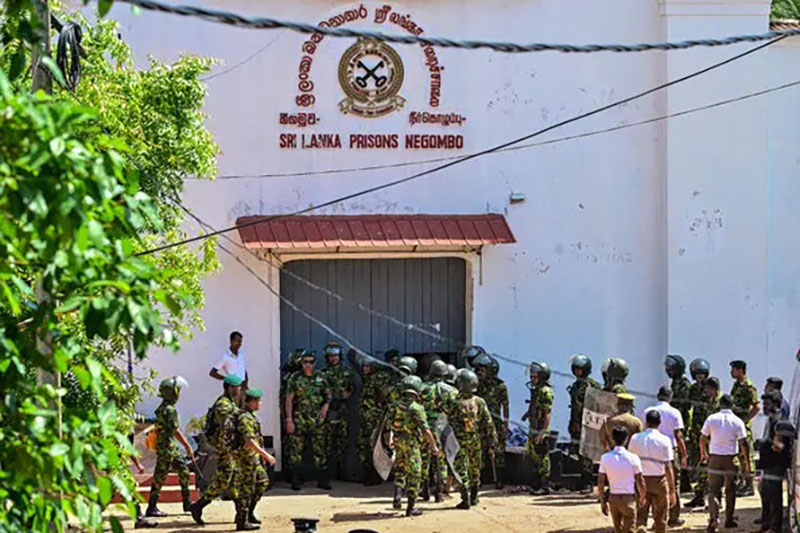
The recent tragedy at Negombo Prison has forced Sri Lanka to confront an uncomfortable reality. While public attention has understandably focused on the deaths that occurred, the incident has also exposed something far more fundamental: the appalling conditions under which thousands of prisoners are compelled to live every day.
Reports indicate that a prison designed to accommodate about 900 inmates was holding nearly 2,400. Such overcrowding is not merely an administrative inconvenience. It inevitably produces conditions that no civilised society should tolerate. Disease spreads rapidly. Sanitation collapses. Food and healthcare become inadequate. Sleeping space becomes scarce. Opportunities for exercise disappear. Human dignity is steadily eroded.
The consequences extend beyond prisoners themselves. Overcrowded prisons create greater tension, violence, corruption, gang influence, drug trafficking, deteriorating staff morale and increased security risks. Eventually, these pressures explode into tragedies that shock the nation until public attention shifts elsewhere and the cycle repeats itself.
It is tempting to regard prison administration as the exclusive responsibility of the Department of Prisons. That would be a mistake.
Every person who enters prison does so because a judicial officer has exercised the authority of the State. Judges remand suspects or sentence convicts. Yet, once the prison gates close, the justice system effectively loses sight of the conditions in which those individuals are confined to.
This institutional separation deserves careful reconsideration.
Courts do not sentence people to disease, degradation or inhumane living conditions. They sentence them to the deprivation of liberty. There is an important distinction between lawful punishment and unnecessary suffering. When prison conditions themselves become cruel, degrading or dangerous, society has gone beyond what the law intended.
This principle is firmly recognised in international law.
The United Nations Standard Minimum Rules for the Treatment of Prisoners, better known as the “Nelson Mandela Rules” , establish universally accepted standards governing accommodation, sanitation, medical care, nutrition, discipline and respect for the inherent dignity of prisoners. They emphasise a simple but profound principle: although prisoners lose their liberty, they do not lose their humanity. Every person deprived of liberty must continue to be treated with dignity and respect.
Sri Lanka has repeatedly affirmed its commitment to these principles. The challenge is not one of aspiration but of implementation.
One practical reform could significantly improve accountability without requiring major legislative change.
Every Magistrate and Judge whose orders result in persons being detained should be required to visit the prisons within their jurisdiction at least once every three months. Following each inspection, they should submit a concise report to the Ministry of Justice, with a copy made publicly available through the media. The report need not interfere with prison management. Instead, it should objectively assess whether basic standards of safety, sanitation, healthcare, accommodation, nutrition and human dignity are being maintained.
Such inspections would not compromise judicial independence. On the contrary, they would strengthen public confidence in the administration of justice by demonstrating that the judiciary remains concerned not only with imposing lawful punishment but also with ensuring that such punishment is carried out in accordance with the law and accepted standards of humanity.
Comparable oversight already exists in many Commonwealth jurisdictions.
In the United Kingdom, prisons are subject to regular independent inspections carried out by His Majesty’s Inspectorate of Prisons, while Independent Monitoring Boards provide continuous civilian oversight of prison conditions. In India, prison legislation provides for regular inspections by judicial officers, recognising that courts retain an enduring interest in the welfare of those whom they commit to custody. Australia and New Zealand similarly maintain independent inspection and monitoring mechanisms designed to ensure transparency, accountability and compliance with human rights obligations.
These systems recognise an important truth: prison oversight cannot be left solely to prison authorities.
Sri Lanka need not replicate these models in every detail. Our institutions and resources differ. But the underlying principle remains equally relevant. Those entrusted with sending individuals into custody should have periodic opportunities to satisfy themselves that those institutions meet minimum standards consistent with law and human dignity.
Such a reform would also have practical benefits. It would generate reliable information for policymakers, encourage timely maintenance and investment, identify overcrowding before crises emerge, strengthen parliamentary oversight and provide prison administrators with objective evidence when seeking additional resources. Above all, it would remind every public institution that prisoners remain under the protection of the law.
The words painted on many prison walls—”Prisoners are also human beings”—express an admirable sentiment. Yet slogans alone do not protect dignity. Walls cannot guarantee humane treatment. Accountability can.
The measure of a nation’s civilisation is not determined by how it treats its most privileged citizens. It is revealed by how it treats those who possess the least power—including those behind prison walls.
If the Negombo tragedy teaches Sri Lanka anything, it should be this: justice cannot stop at the courtroom door. It must travel all the way to the prison cell. Only then can we honestly claim that ours is a justice system worthy of its name.
by Dr. A. N. C. FERNANDO

Tales of Mystery and Suspense 9
From the most orthodox of recent crime writers to a very unorthodox one, J K Rowling of Harry Potter fame. After that series concluded, and one not very successful novel about social problems, she turned to a private investigator called Cormoran Strike who, together with his assistant Robin Ellacott (hired initially as a secretary, but providing sterling support which Strike realizes he needs), solves murder mysteries.
I had read several of them previously but not owned any in the series. But when a friend came out from England earlier this year and asked what I would like, I said the latest Strike would be ideal. He duly turned up with The Hallmarked Man albeit he also brought along a box of Fortnum and Mason Turkish Delight, which was much more delectable.
The Strike indeed was not delectable at all, though it was a most exciting read. Rowling seems more often than not to concentrate on the dregs of humanity, and this particular book had two different sexual perverts, a gang that had fights to the death between killer dogs which they and a whole host of onlookers bet on, and another of girls kept captive for sex. And the less ghastly characters furnished endless episodes of adultery and significant incest.
The plot was based on a body found in the vault of a dealer in silver, the night after he had taken delivery of much of the collection of a Freemason. The body had been mutilated, and could not be recognized, but the police decided very soon that it was the body of a gangster killed at the orders of his uncle who ran the gang. But a woman called Decima Mullins hired Strike to prove if he could that this was the body of her boyfriend, who had suddenly disappeared, after he had fathered a baby with her. She believed he had found employment in the shop under the name William Wright.

Rowling
She was desperate, being the daughter of a rich club owner who despised her, and having finally found love did not want to accept that the much younger man had left her. Strike decided to take on the case, bizarre though it seemed, and soon established that the police had been careless, not even bothering with a DNA test, largely it seemed because the man in charge of the case was a Freemason and seemed to think it his duty to protect the Freemasons from any hint of having been involved.
The police had received two other leads as regards missing persons, but they had dismissed them as not worth pursuing. One was a former SAS man who had been injured in a shady operation, and when Strike was pursuing the case he was told by a worthy who seemed to be from MI 5 that he should back off. The other was a youngster who had left the little town of Ironbridge where he had lived all his life when he was accused of having tampered with a car which led to the death of a boy and his girlfriend, the story being that he had been in love with the girl.
It takes Strike a very long time to arrange interviews with the widow of the SAS man, who lived in Scotland, and the grandmother of the other who was near enough to the border. One reason he had taken on the case, he had to admit to himself, was that he welcomed the opportunity to travel a long distance with his partner Robin Ellacott, with whom he had finally acknowledged to himself he was in love.
Cormoran Strike’s realization that he was in love with his partner could well have come too late, for she was in a steady relationship with a policeman, and they were thinking of moving in together into a house, having been sleeping together at his place or hers for some time. Much of the novel is taken up with the ratiocination about their feelings of the two detectives, compounded by Robin’s unwillingness to let down the policeman Ryan Murphy who is going through a tough time at work, and by the endless affairs Strike had had in the past, one of which came back to haunt him at a particularly bad time.
Life is also complicated by a new assistant who had left the police and joined the firm, who tried to actively flirt with Strike while ignoring Robin. Going into detail about all this would be tedious, but though one often wished Rowling engaged in less repetitive analysis of the diffidence of the pair, I suppose such delicacy is not inconceivable in a pair who had been through so much – Robin’s first marriage had been a disaster, following on her being raped while a student, while Strike’s first love had recently committed suicide, after endless efforts to get involved with him again.
After Strike had made elaborate preparations to stay in a hotel that would provide a suitably romantic setting on the trip to Scotland, Robin said she would not come, after another revelation about Strike’s previous indiscretions. They did meet in Ironbridge, and then worked together well, in interviewing the grandmother and also a neighbour whose daughter had it seemed to have been involved with the now vanished Tyler Powell, but had turned against him after the accident involving his car.
Meanwhile Strike had received a note alleging that the body was that of a porn star and, having traced the woman who had dropped it in, found that he had been used by an unctuous peer to have sex with women which he watched through a two-way mirror. Dick de Lion had attempted some sort of blackmail on the peer, who had then wanted him eliminated.
Strike deduced that de Lion came from Sark, and he and Robin went there, to find him alive and well, but desperate to stay hidden. He was told that the peer was going to be exposed, and advised to tell the police his story first, to ensure he was not charged as an accessory, and he agreed to do this at the urging of his brother, who had previously not believed his story. But they wanted time to break the story first to their mother.
Strike had reason to dislike the peer, since he had got involved in vilifying Strike in association with a journalist who had accused Strike of paying call girls for information and then sleeping with them himself. This in turn was because Strike, or rather his new recruit from the police, Kim, had found that a woman they were trailing because her husband was suspicious was in fact having an affair with the journalist’s wife.
As the above description of its first section shows, The Hallmarked Man is horrendously complex, and the complex peccadilloes of practically all its characters seem excessive even in a wicked world. But all these are put in the shade by the central villainy of the book, which is sexual trafficking which has led to young girls being taken captive for sex, and murder, for a variety of reasons.
Strike and Robin first begin to suspect what is going on when they interview the downstairs neighbours of William Wright, the name used by the man working in the shop, though that brought them no nearer to establishing his identity before he had taken on the persona that had sought a job in the silver shop. The neighbours mentioned a woman and a man who had come to his room to strip it, and they soon deduce that a body found in a wood was that of the woman. The man they suspect is a shady character who called himself Oz on social media, having taken on the identity of a genuine music show producer. The latter had been traced because there were emails to him from the silver shop, but he had an alibi for the time of the murder.
The other man could not be traced, but his technique, of inveigling young girls to go along with him, was clear, and Strike and Robin tried to trace one in particular whom he had tempted. It also transpires that a name Wright had mentioned in front of his neighbours belonged to a woman mentioned in Belgium some years back. Though Strike thought this far-fetched when Robin tried to find more information about her, there was corroboration in that she was Swedish, a single mother, and Oz had told the missing girl, according to her friend, that she reminded him of a Swedish girl he knew.
Strike’s focus begins to crystallize when he realizes that the handyman in the silver shop, Jim Todd, had a shady past, which involved driving for the ring trafficking women including in Belgium. But he had been in jail there when the Swedish woman was murdered. Her body had been found in a wood, and it was assumed her infant daughter too had been killed, and her new partner was jailed for the murder. But the remains had been mutilated and it was possible that there had only been one body there. The parts needed for DNA had been cut away, as had happened with the body in the silver vault.
Watching again and again the video footage, though it was not very clear, of what happened on the afternoon before the murder took place, Strike and Robin noticed some anomalies, most notably that the very heavy crate Todd and Wright had carried downstairs seemed to have had very little in it. And they worked out that a woman who had kept the manager upstairs for some time could well have been Sophia Medina, who had gone to Wright’s room and then been murdered.
When Todd then is murdered, along with his mother, whose flat he had gone to for refuge, Strike begins to understand the rationale for the murder taking place in the vault, with the mutilation of the body designed both to disguise its identity and suggest that Masonic elements were involved. Then step by step the different elements in the whole conglomeration of horrors were resolved.
The man who ran the dogfights was caught trying to take revenge on the person who had destroyed a dog he was looking after which he thought too dangerous to keep – though that was after Strike, in trying to catch him in the act, was mauled by a beast and only saved because Robin carried around with her a pepper spray, which also proved effective when one of the agents of the biggest villain, having tried to frighten her off, then tried to kidnap her.
The loathsome lord had to listen to an account of his misdeeds at a dinner to which he had invited Strike and Robin, and then brought along the dodgy assistant who had left after Strike had made it very clear he found her advances offensive. Strike explained his host’s techniques, and Kim realized that she too had been watched, and filmed, having sex with a stud she had been introduced to. The host departs in high dudgeon, but the expose in the newspapers duly happens and de Lion earns a packet for his story.
And then, having worked out exactly how the murder had happened, in the afternoon, with the murderer brought in in a crate and killing Wright while the manager was distracted, and then leaving the shop disguised as him, Strike sets off to confront him. Robin meanwhile finds the missing silver behind a false wall in the basement, put there by Todd that afternoon, while Wright had been sent to fetch a piece delivered elsewhere by the delivery man who had also been a driver for the trafficking ring – and who also died soon after the incident, though there did not seem to have been foul play in this case.
Strike, along with his toughest assistant, and a police officer who had retired and joined him, breaks into the villain’s house when he had gone to the pub with his mates. But one of the gang is left behind, which is fortunate for he shows the basement used for relentless sex by several men with the girl held captive. Strike knocks him out and subdues the villain who nearly cuts off his ear in the process, and then his assistants turn up and handcuff the two men who had failed to flee in time, and also the two men in the basement. And while the policeman frees the girl, Strike engages in ruthless questioning, helped by some force from his other assistant, since he also wants on record how and why the man in the vault had been killed.
High drama all the way, though interspersed with the story of Strike and Robin, which ends with him proposing to her just before she goes to the Ritz to have dinner with her boyfriend, knowing that he too is about to propose to her. She does not accept Strike, since obviously this story has to run and run. But the story of the client has a reasonably happy ending, because her boyfriend is discovered, and turns out to have had a very good reason for leaving her, namely that he was her half-brother – another quirk in a totally quirky, if gripping, tale.
 (The writer is on X as @sasmester)
Over dinner in Colombo a few nights ago, a friend in the private sector with connections to the hospitality and advertising industries brought up a persistent ‘industry concern.’ Despite a heartening surge in post-crisis tourist arrivals, most visitors treat our capital city as a mere pitstop. They check in, sleep off their jet lag, and vanish the next morning to the pristine beaches of the South, the misty hills of the Central Province, or the cultural triangle.
When hoteliers expressed frustration that it was impossible to retain these visitors for an additional 24 to 48 hours because ‘Colombo has nothing of interest to offer,’ many in the room were taken aback. There is, after all, a fundamental difference between a city lacking substance and a tourism industry lacking the imagination to sell it. Is Colombo truly a dreary concrete jungle, or are we simply blind to its latent potential?
While the state invests heavily in marketing traditional attractions — and shifting focus toward lucrative sectors like destination weddings, the broader spectrum of urban possibilities remains criminally ignored. If we define ‘Colombo’ not just as Fort and Kollupitiya, but everything accessible within a two-hour drive , we possess an abundance of untapped possibilities capable of captivating discerning travellers without exhausting them before their onward journeys.
The Green Lungs of the Capital
For nature enthusiasts, we have the luxury of pristine biodiversity right on the city’s fringes. The Beddagana and Kotte Rampart Wetland Parks offer tranquil, morning or evening walks even in humid conditions that local residents take for granted but visitors might find remarkable. Beddagana, an 18-hectare protected sanctuary nestled along the Diyawanna waterway, features beautifully constructed wooden boardwalks cutting through lush mangroves. It is a haven for birdwatchers, hosting around 80 species of resident and migratory birds. Meanwhile, the Kotte Rampart Wetland Park allows visitors to walk right through a delicate marsh ecosystem while tracing the 14th century fortifications and inner moat (Athul Diya Agala) of the historic Kotte Kingdom.
For those willing to drive just over an hour toward Avissawella, the 106-acre Seethawaka Wet Zone Botanical Garden in Illukowita offers a grander scale of escape. Opened in 2014 to conserve the unique flora of our wet lowland rainforests, it boasts of rolling lawns, a rose garden, a scenic mountain viewpoint, and massive Kumbuk trees flanking freshwater streams.
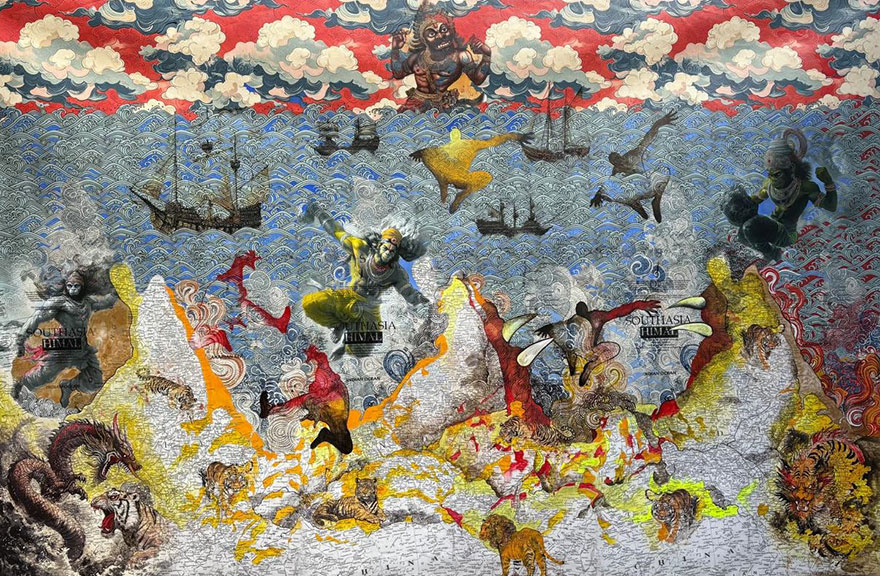
Painting by Pala Pothupitiye
Yet, these locations desperately require institutional polish: regular maintenance, curated culinary spaces, and seamless ticketing systems are non-negotiable if we expect high-spending tourists to visit.
Curating Culture, Cuisine, and Canvas
Beyond nature, our urban spaces, culinary arts, and contemporary visual culture remain heavily siloed from mainstream tourism.
Consider gastronomy. Over the past couple of years, specialty Sri Lankan restaurants like ‘Lisa’s Lanka’ in Bandra, Mumbai, and ‘Zetu’ in Mehrauli, Delhi, have taken the Indian metro culinary scene by storm. Concurrently, well-known local and overseas food writers like Cynthia Shanmugalingam, Meera Sodha, O Tama Carey, Dom Fernando, Rukmini Iyer, and Nuzrath Shazeen have brought global prestige to Sri Lankan cuisine. Yet, look at our standard tour itineraries –– where is the structural and organized push for curated culinary tourism?
Similarly, while cities like Mumbai and Delhi have transformed their colonial quarters into thriving, structured walking and vehicular tours, Colombo lags behind. Mumbai’s colonial quarter covering areas such as Colaba, Fort and Churchgate, as well as Delhi’s much larger older parts have become established aspects of vehicular and walking tours of these cities. Usually, these tours not only take into account where to visit and how, but also climatic conditions and where to rest and refresh. These are mainstream enterprises.
-
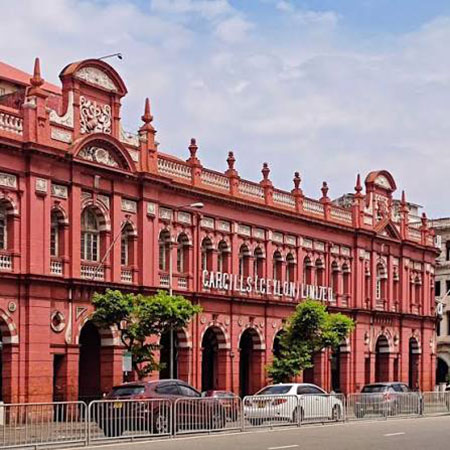
- Colombo Fort
-
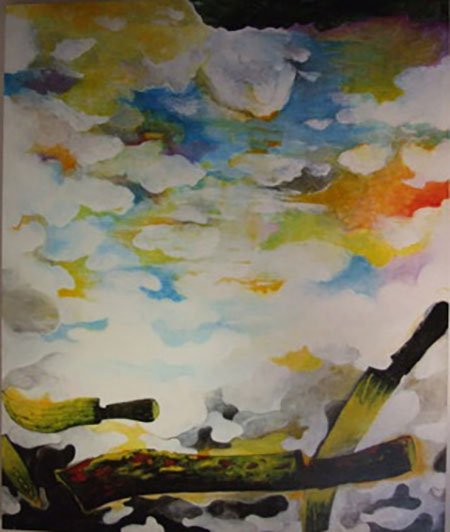
- Painting by Jagath Weerasinghe
Given that our capital is far more compact and our traffic significantly more manageable than India’s messy and congested mega-cities, designing specialised, time-blocked architecture-art tours is entirely viable. We could seamlessly weave the colonial heritage of Fort and Pettah, the Dutch Hospital, and the Independence Arcade,etc., with different kinds of shopping in some of these same locations. Such tours can also combine ‘museum hopping’ linking the Colombo Dutch Museum, Colombo Port Maritime Museum and the National Museum – notwithstanding all these institutions need major upgrading. Museum tourism may also be organised independently depending on the needs of tour groups or individuals.
The vibrant religious architecture of our historic temples, churches, mosques, and kovils offer another possible tour package. This is not merely about architecture but can also have a focus on the elegant late 19th and early to mid 20th century Buddhist murals in temples such as Subodharamaya in Dehiwala, Ashokaramaya and Isipathanaramaya in Thimbirigasyaya and Subdraramaya in Nugegoda as well as Kelaniya Rajamaha Viharaya and much more recent and stylistically different paintings in Bellanwila Rajamaha Viharaya. These tours are not meant to be religious excursions and therefore can also be intermingled with shopping and culinary excursions. Depending on the available time and the distances covered, they can be walking tours or a combination of motorised transport and walking.
At the moment, though such guided tours in Colombo are offered by a few individuals and some overseas companies, there are no specialised tours that consider different interests and tastes.
Furthermore, we completely ignore our visual culture. Over the last two decades, contemporary Sri Lankan artists have made phenomenal strides globally. Their works sit in prestigious international institutions, from the Fukuoka Asian Art Museum and the Kiran Nadar Museum of Art to the Queensland Gallery of Modern Art and the Guggenheim Abu Dhabi. Contemporary Art is one area in which Sri Lanka has been able to compete with the world and has become a considerably important business whose scale and potential is still ill-understood locally. While our National Art Gallery in its current state is unequipped for international tours, the city’s private galleries and suburban artists’ studios could easily be woven into ‘art-viewing-buying and dining’ experiences.
The MICE Frontier: Colombo as South Asia’s Safe Haven
One of the most glaringly overlooked opportunities lie in MICE (Meetings, Incentives, Conferences, and Exhibitions) tourism. Even though the government has made some efforts in this direction, it needs more aggressive promotion. As corporations and international bodies seek premier regional destinations for conference tourism, Colombo stands out as an ideal oasis.
While historical hotspots and conference and meeting locations across South Asia are increasingly marred by geopolitical friction, civil unrest, or complex security and visa paradigms, Sri Lanka offers a stable, peaceful, and highly secure environment. Compared to what Ashish Nandy calls, the ‘garrison states’ of South Asia, Sri Lanka remains the only easily accessible location for anyone from the region or the world. In this situation, Colombo possesses the exact trifecta required for high-end conference tourism: premium five-star coastal hotels, state-of-the-art convention facilities, and an incredibly warm, hospitable populace. By positioning Colombo as the secure, neutral boardroom of South Asia, we can attract thousands of high-net-worth corporate travellers who naturally extend their business trips into leisure stays.
Conclusion: A Call for Collective Imagination
In my mind, the thematic blueprints outlined here — from eco-tourism and heritage walks to contemporary art and corporate conferences — are designed for high-end, niche markets.
To transform Colombo from a transient pitstop into a mandatory two-day destination, these niches must be integrated into a cohesive national tourism strategy and championed by our diplomatic missions abroad as well as the Sri Lanka Tourism Development Authority. The lingering question is whether our state agencies and major tour operators possess the capacity to think beyond the beaten path. If the bureaucracy remains stagnant, the impetus must come from Colombo’s premier hoteliers themselves. By collaborating with local historians, environmentalists, artists, and culinary experts, the hospitality industry can bypass state lethargy and lack of imagination, curate these experiences independently, and finally give the global traveller a reason to stay in our main city. Ultimately, Colombo is not merely a transit point, but a living museum shaped by the tides of history. As a port of call nourished for ages by foreign tongues, multiple cultures, trade, and traditions, it offers a rich tapestry that cannot be unraveled in a single day; it is a city that demands, and richly deserves, more than just twenty-four hours to reveal its true soul.

Dharmaraja and Kingswood set for historic rugby clash on Saturday

Sri Lankan singer Mariazelle Goonetilleke passes away at the age of 68

Tensions erupt in Indian state after 11-year-old raped and murdered

US and Iran trade attacks as Khamenei is buried

Several spells of showers will occur in the Western, Sabaragamuwa and North-western provinces and in Galle, Matara, Kandy and Nuwara-Eliya districts

Canadian PM visits Saudi Arabia to strengthen energy, mining partnerships

‘Dates have the highest sugar content to fight Coronavirus’

Sunday Island 27 December – Headlines

#SundayIsland 17th December – Headlines

Sunday Island – 28th March

Sunday Island Headlines – 21 March

Sunday Island – 21st February – Headlines
-

 News6 days ago
Singapore-based Buddhist monk marks nearly four decades of humanitarian service
-

 News7 days ago
Freedom 250: US Embassy celebrates America’s 250th Independence Day through magic of American cinema
-

 News23 hours ago
Herath warns prospective migrant workers not to get fleeced by racketeers
-

 News5 days ago
AI concerned over proposed SL military deployment in Haiti
-

 Midweek Review3 days ago
Unexpected focus on ‘pieces of tin’ worn by military men
-

 Latest News4 days ago
Nyamhuri and Ngarava stun Bangladesh by defending 141
-

 Features6 days ago
The NPP’s New Challenge: Balancing Easter Lawfare and Economic Welfare
-

 News2 days ago
Negombo Prison riot: Ensuring protection of prisoners fundamental responsibility of the state – UN