
Latest News
Hong Kong and southern China battle widespread flooding from record rains

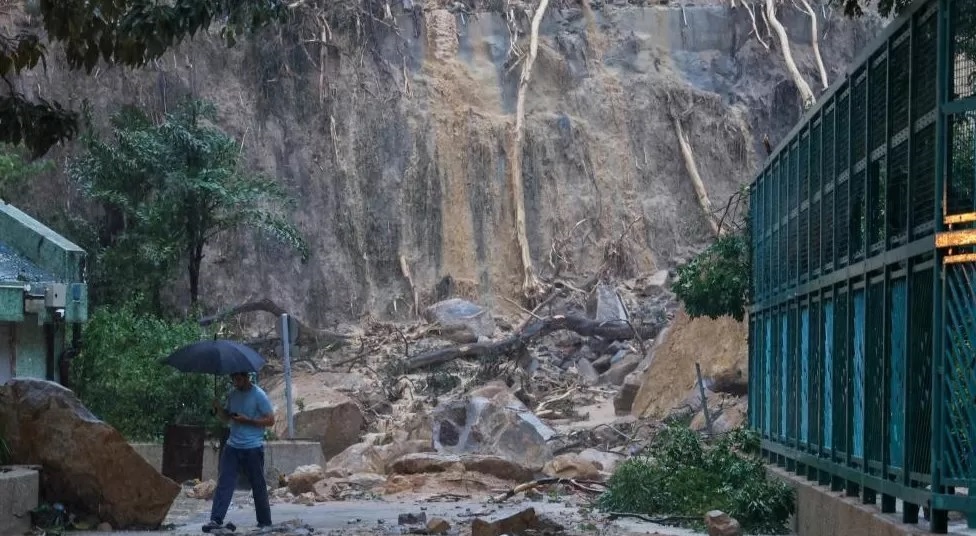
Hong Kong and southern Chinese cities are battling widespread flooding as the region endures some of its heaviest rainfall on record.
On Friday, streets and subway stations were under water in Hong Kong as officials shut schools and workplaces. The weather bureau said the downpour, which began on Thursday, is the biggest to hit the city in nearly 140 years.
Emergency services said more than 100 people had been taken to hospital and several rescues had taken place.
Pictures from the city on Thursday night showed the torrential rain turning streets into raging rivers, flooding shopping centres and public transport.
Videos on social media showed people climbing on to cars and other elevated platforms to escape the waters, which have risen several metres-high in some areas, blocking off subway entrances. The city’s cross harbour tunnel, a key route connecting the main island to the Kowloon peninsula in its north, was inundated. The rain also triggered landslides in Hong Kong’s mountainous areas – blocking some highways.
By Friday afternoon, the downpours had somewhat eased with authorities downgrading the rainstorm from a “black” warning to “amber” alert. But they warned showers were expected to persist until Saturday.
On Thursday, authorities had issued the black warning, which is triggered when rainfall exceeds 70mm an hour. The Hong Kong Observatory later that night reported an hourly rainfall of 158.1 millimetres, the highest since records began in 1884.
More than 200mm of rain was recorded on Hong Kong island, Kowloon and the north-eastern part of the city between 18:00 local time (10:00 GMT) and midnight – a total that exceeds the amount the entire city typically receives within certain months.
Heavy rain has also drenched southern China, with the city of Shenzhen – across the border from Hong Kong – reporting its heaviest showers since records began in 1952.
Hundreds of flights have been suspended in the wider Guangdong province, while local authorities advised residents in low-lying areas to consider evacuations.
Tens of millions of people live in the densely populated coastal areas of southern China.
On Thursday night, Shenzhen discharged water from its reservoirs after issuing a notice to Hong Kong – an action that raised questions from Hong Kong locals online as to whether this exacerbated their city’s flooding.
But Hong Kong’s security chief Chris Tang said on Friday the discharge had no impact on the city’s floods and the action was safe for both Shenzhen and Hong Kong.
China’s meteorological administration expects extreme rainfall to continue in the country’s southwestern region on Friday and Saturday. The latest downpour comes less than a week after two typhoons, Saola and Haikui, hit southern China in quick succession – and sparked a citywide shutdown in Hong Kong.
Climate change has increased the intensity and frequency of tropical storms, leading to an increase in flash flooding and greater damage.
(BBC)


Every team in Fifa’s women’s football tournaments must include at least one female head coach or assistant coach following the introduction of new regulations.
The requirements will come into effect during the under-17s and under-20s Women’s World Cup and Women’s Champions Cup competitions this year.
The decision was made at the Fifa Council on Thursday, and discussed the long-term strategy of female representation in coaching.
Under the new ruling, at least two staff members on the bench of every team at matches must be female, with one in an assistant coach or head coach role.
The rule applies to all youth and senior tournaments, including clubs and national teams.
At the 2023 Women’s World Cup, 12 of the 32 head coaches were female, including England manager Sarina Wiegman.
“There are simply not enough women in coaching today. We must do more to accelerate change by creating clearer pathways, expanding opportunities, and increasing the visibility for women on our sidelines,” said Fifa’s chief football officer Jill Ellis.
“The new Fifa regulations, combined with targeted development programmes, mark an important investment in the current and future generation of female coaches.”
Fifa hopes these new regulations will see a rapid increase in female representation, including at the 2027 Women’s World Cup in Brazil.
Among some of the most high-profile female coaches is London-born Emma Hayes, who is joined by assistant Denise Reddy at the United States.
In 2024, Hayes told BBC Sport that a lack of female coaches in English football is “a massive issue” and urged the game’s administrators to “come up with more creative ways” to address it.
Other female English coaches at international level include Gemma Grainger at Norway, Casey Stoney at Canada and Carla Ward at the Republic of Ireland.
Canadian Rhian Wilkinson led Wales to their first major tournament at Euro 2025 last summer, while Dutchwoman Wiegman has guided England to back-to-back European titles and has been named the Fifa best women’s coach of the year on four occasions.
Wiegman was the only female coach in the quarter-final stage of the 2023 Women’s World Cup.
(BBC)
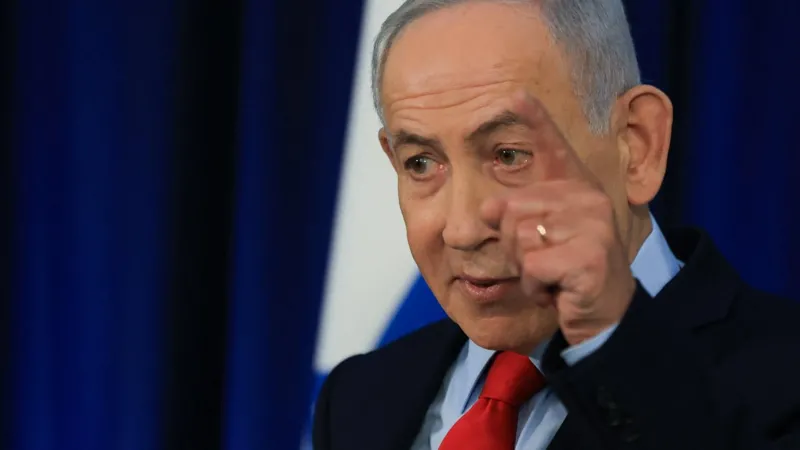
Israel’s Prime Minister Benjamin Netanyahu has said Israel “acted alone” in attacking an Iranian gas field, as tensions mount over strikes on energy infrastructure across the region.
Israel hit Iran’s South Pars – part of the world’s largest natural gas field – and Tehran retaliated by striking an energy complex in Qatar and attacking other energy targets in the Gulf.
The attacks led to a spike in energy prices and US President Donald Trump later posted he had not known about them in advance.
The fallout has raised questions over how united Israel and the US remain in their war aims.
Speaking at a news conference on Thursday, the Israeli leader said Trump had requested that there be no further such attacks on energy targets.
Earlier on Thursday Reuters news agency quoted three unnamed Israeli officials as saying that that attack on South Pars had been coordinated with the US in advance but that they were not surprised by Trump’s reaction.
Netanyahu also denied that his country had dragged the US into the war or “misled” Trump, saying that no one could tell the US leader what to do.
The attacks on energy infrastructure marked an escalation in the war launched by the US and Israel against Iran, which had already responded by restricting shipping through the Strait of Hormuz.
About a fifth of the 100m barrels of oil that the world consumes every day usually travels via the Strait of Hormuz, which runs along part of Iran’s coast.
Following the Iranian attack on Qatar’s Ras Laffan industrial area, which includes the world’s biggest liquefied natural gas (LNG) processing plant, QatarEnergy said about 17% of its export capacity would be affected.
Qatar’s prime minister, Mohammed bin Abdurrahman Al-Thani, warned the attack would have “significant repercussions for global energy supplies” and called it a “very dangerous escalation”.
Iran’s Foreign Minister Abbas Araghchi said that Iran would show “zero restraint” if its infrastructure was struck again.
Gas prices, which had already been rising since the start of the conflict, surged in response to the Iranian attack on Qatar. The UK benchmark peaked briefly at almost 183p per therm on Thursday before easing back to 154.8p, an 11.3% increase from Wednesday’s level. European prices also rose by more than 10%.
Meanwhile the US is weighing lifting sanctions on some Iranian oil, as it scrambles to contain the impact on energy markets.
At his news conference, Netanyahu insisted that Israel was inflicting massive damage on Iran’s military capacity and had attacked Iran’s navy in the Caspian Sea.
He said Israel was working to weaken the Iranian regime but said it was up to Iranians to act if they wanted to overthrow their government.
“We can create the conditions, but they have to exploit those conditions at a certain point,” he said.
“If [the regime] survives it will be a lot weaker, shorn of industries it built over decades.”
Also on Thursday verified footage showed fire and smoke at an oil refinery in Haifa in northern Israel after a reported Iranian missile attack. Israel’s energy minister Eli Cohen said damage to the country’s electricity grid in the north was “localised and not significant”.
(BBC)
Latest News
Heat Index likely to increase up to ‘Caution level’ at some places in Western, Sabaragamuwa, North-central, Southern and North-western provinces and in Monaragala, Mannar, Vavuniya and Mullaitivu districts
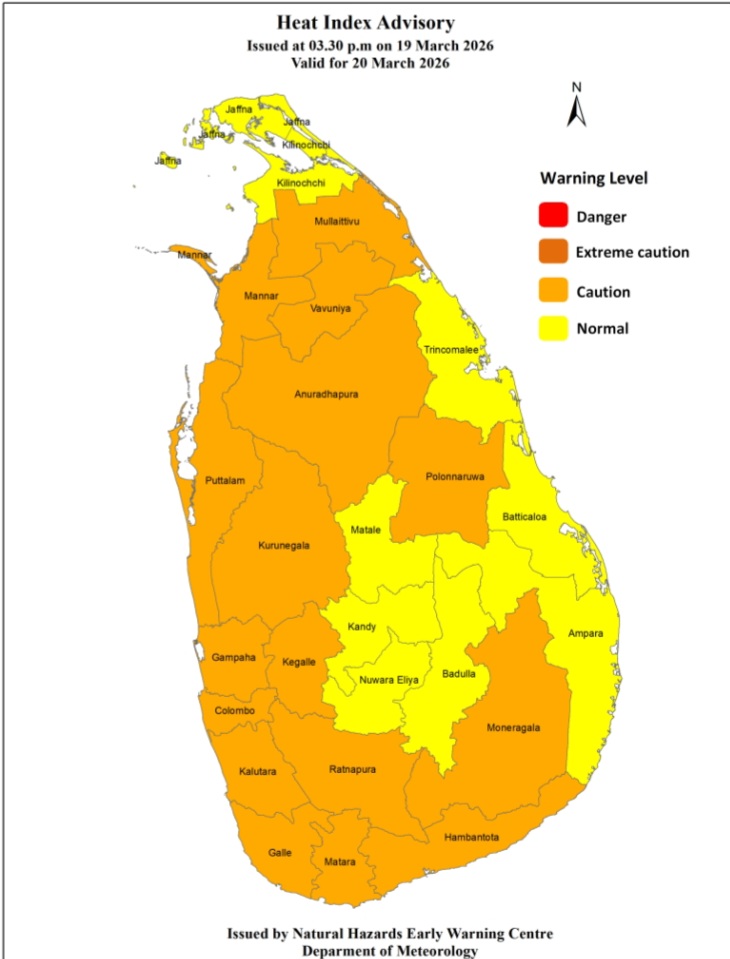
Warm Weather Advisory
Issued by the Natural Hazards Early Warning Centre
at 3.30 p.m. on 19 March 2026, valid for 20 March 2026.
The public are warned that the Heat index, the temperature felt on human body is likely to increase up to ‘Caution level’ at
some places in Western, Sabaragamuwa, North-central, Southern and North-western provinces and in Monaragala, Mannar, Vavuniya and Mullaitivu districts.
The Heat Index Forecast is calculated by using relative humidity and maximum temperature and this is the condition that is felt on your body. This is not the forecast of maximum temperature. It is generated by the Department of Meteorology for the next day period and prepared by using global numerical weather prediction model data.
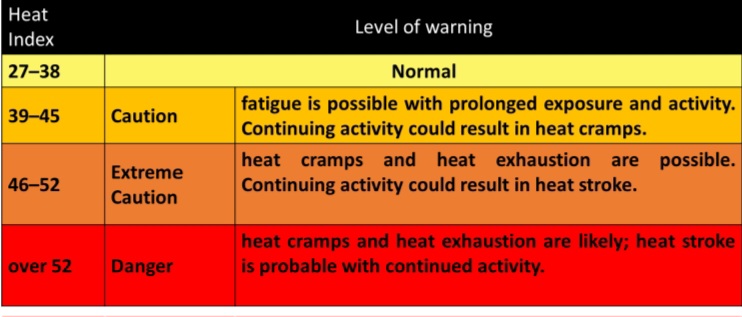
Effect of the heat index on human body is mentioned in the above table and it is prepared on the advice of the Ministry of Health and Indigenous Medical Services.
ACTION REQUIRED
Job sites: Stay hydrated and takes breaks in the shade as often as possible.
Indoors: Check up on the elderly and the sick.
Vehicles: Never leave children unattended.
Outdoors: Limit strenuous outdoor activities, find shade and stay hydrated.
Dress: Wear lightweight and white or light-colored clothing.
Note:
In addition, please refer to advisories issued by the Disaster Preparedness & Response Division, Ministry of Health in this regard as well.
For further clarifications please contact 011-7446491.

CIABOC tells court Kapila gave Rs 60 mn to MR and Rs. 20 mn to Priyankara

Opposition moves no-faith motion against Energy Minister Kumara Jayakody

NJC takes up cudgels on behalf of Sallay, who played pivotal role in combating terrorism

Leopards haunt Pera Uni having already killed several cattle at Vet Faculty

Fifa rules women’s teams must have female coaches

Banks to operate five days a week; shorter hours on Wednesday

‘Dates have the highest sugar content to fight Coronavirus’

Sunday Island 27 December – Headlines

#SundayIsland 17th December – Headlines

Sunday Island – 28th March

Sunday Island Headlines – 21 March

Sunday Island – 21st February – Headlines
-

 Business4 days ago
Browns EV launches fast-charging BAW E7 Pro at Rs. 5.8 million
-

 Life style5 days ago
From culture to empowerment: Indonesia’s vision for Sri Lanka
-

 News2 days ago
CIABOC questions Ex-President GR on house for CJ’s maid
-

 Business6 days ago
Sri Lanka Institute of Information Technology raises the bar for academic excellence
-

 Life style5 days ago
Ranjith Fernando celebrates cricketing journey with Hob Nails to Spikes
-

 Latest News5 days ago
QR code system will be implemented for fuel with effect from 06.00 a.m. today (15th)
-

 News3 days ago
Australian HC debunks misleading travel risk claims for Sri Lanka
-

 News3 days ago
Sri Lankan marine scientist Asha de Vos honoured at UNGA opening