
Sports
History that wasn’t made in the Windies

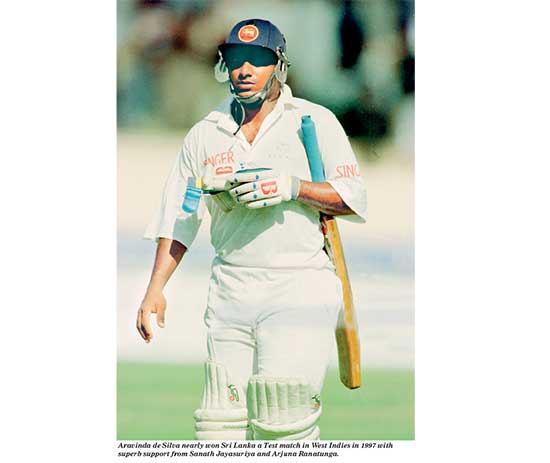
A look back at Sri Lanka’s first Test tour of West Indies
by Aravinthan Arunthavanathan
March 26th marked the 13th anniversary of Sri Lanka’s first Test victory in the Caribbean. Ever since, Sri Lanka has gone on to record only one more victory during the last tour in 2018. Despite these two special wins, the most intriguing Sri Lanka- West Indies Test match overseas remains to be the second Test of Sri Lanka’s maiden tour in 1997. It’s a Test which often goes unnoticed but was special in many ways.
When Sri Lanka set foot in the West Indies in 1997, they were the reigning ODI champs. But the eagerness to prove their mark in white flannels, resulted in an odd schedule consisting of two Tests and a solitary ODI. The late Tony Cozier would call that the equivalent of bringing down Michael Jackson to perform for an opera.
During the first Test In Antigua Sri Lanka were in with a great chance to bat the West Indians out. With a thirty plus lead and the best of batting conditions in hand, Sri Lanka succumbed to the famous West Indies line up for a paltry 152 leaving the Windies with an easy chase. The loss by six wickets on paper did not reveal the closeness of the game. With a golden opportunity lost Sri Lanka moved to the scenic Arnos Vale in St. Vincent’s, one of the most picturesque venues in the world hosting its first Test match.
Ravindra Pushpakumara who had been drafted in as replacement for Chaminda Vass who was injured wreaked havoc by giving the Winides their own medicine bowling fast and straight. The often erratic and colourful Pushpakumara had a great outing claiming five West Indian wickets.
Pushpakumara dealt early blows by blowing away the top-order with short pitched and full-length deliveries ably supported by Sajeeva de Silva who had the big fish Brian Lara caught and bowled leaving the opposition at five for three. Carl Hooper’s back to the wall half-century propelled West Indies to a paltry 147 leaving Sri Lanka in the driver’s seat.
Sri Lanka got off to a solid start propelled by Sanath Jayasuriya’s fireworks getting them to a lead of ten runs with only three wickets down at the end of the day. However tight bowling by the West Indies did not let Sanath go on his merry way and pegged back the Lankan juggernaut the following morning. This resulted in a flurry of wickets and another golden opportunity missed to seal the deal as Sri Lanka were bundled out for 222 with a lead of 75, which was inadequate given the solid start Sri Lanka had. Sri Lanka in fact had lost seven wickets for 44 runs with Hooper claiming a five wicket haul.
Sri Lanka’s grip started to loosen as the opposing openers put on 62 almost wiping out the deficit before Pushpakumara cleaned up Sherwin Campbell to provide an opening. However, the Sri Lankan comeback was short lived as Lara recovered from a slump of form and dominated the bowling in a sign of what was in store for the future by scoring a century. With Lara back in the hut holding out to Jayasuriya at square leg off Dharmasena the lead was 197 with five wickets left. The Sri lanka resurgence was again thwarted by the West Indian pair of Ambrose and Holder who put up a fifty plus stand for the eighth wicket. Murali came to Sri Lanka’s rescue picking up five wickets and keeping the lead to a manageable 268 leaving an achievable target. Nevertheless, it was an era where even chasing 200 in the last innings was a challenge as India realized only weeks prior being bowled out for 81 chasing a mere hundred in Barbados.
The fortunes had fluctuated with the upper hand being rather handed on a platter to the opposition by both teams as opposed to being wrestled back. Nevertheless, with Sanath, Aravinda and Arjuna in good nick there was a good chance Sri Lanka were on the verge of making history posting their fourth overseas win. It would be a remarkable moment given the momentum Sri Lanka had built during the period.
The Sri Lankan chase was dealt a severe blow as Walsh cleaned up Sanath attempting a flick which had fetched tons of runs in white ball formats. This was followed by the dismissal of Atapattu bringing Aravinda to the crease. The maestro showcased his absolute brilliance by smacking eighteen runs off Ian Bishop’s penultimate over of the day.
With less than 200 to chase on the final day with Aravinda at the crease in prime form, Sri Lankan hopes were high. Despite the loss of Mahanama in the morning session Aravinda and Arjuna formed a solid partnership smacking the Windies attack to all parts of the ground prior to lunch deflating the morale of the West Indians. With rain intervening and killing Sri Lanka’s momentum the resumption saw them needing a mere 80 runs with seven wickets in hand. Finally, the game seemed to have been sealed by the Lankans.
True to the pattern of events that had preceded, Walsh nailed a perfect yorker to clean up Aravinda immediately after resumption of play. He made a classy 78. Calamity struck the Sri Lankan camp as a cluster of wickets followed as had been the case with both teams during the series which saw Sri Lanka succumb to 231 for eight from a commanding 189 for three. From a position of dominance Sri Lankans were pushed against the wall hoping for divine intervention to win or at least escape unscathed. The rain gods came to Sri Lanka’s rescue immediately after Murali lobbed a short, pitched delivery to short leg and conceded Sri Lanka’s eighth wicket to the West Indies attack, who were going all out for the kill.
In hindsight, it was an opportunity which Sri Lanka would regret missing. Still with Arjuna at the other end remaining on 72 not out there was the remotest of possibilities of pulling of a miracle, but it was a situation Sri Lanka should never have got into given the commanding positions they were in during the game. Despite the most favorable result being obtained it remains by fast the most intriguing duel between both sides which the nation did not witness due to a coverage black out.
Sri Lanka may not have created history, but they gave the West Indians who were still a force to reckon especially at home a good fight which showed the world that Sri Lanka were not merely a white ball oriented team but had what required to fight it out at the Test level too.





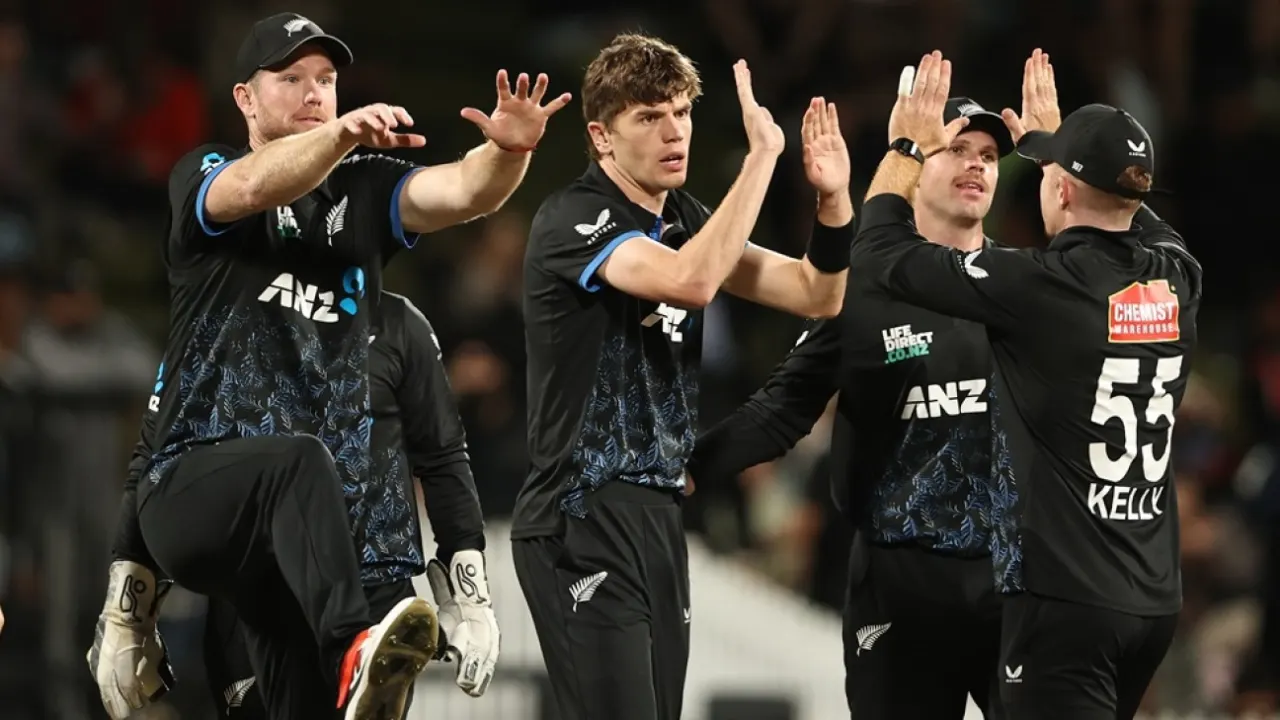
New Zealand levelled the five-match T20I series against South Africa with a dominant performance in Hamilton. After being put in to bat on a surface the women’s sides praised for its batter friendliness, New Zealand relied on Devon Conway’s experience to post a challenging target.
They may even have felt they left a few runs out there as few stayed with Conway with the 48-run opening stand their highest. South Africa’s spinners were particularly expensive as Keshav Maharaj and George Linde conceded 78 runs in the six overs they bowled.
In the end, New Zealand scored exactly the same number of runs as they posted just over a month ago against South Africa, in the group game of the T20 World Cup. Then, South Africa eased to the target with 17 balls to spare. This time, they were bowled out for their 10th lowest score in the format: an exact mirror of what New Zealand’s line-up did in the first match. Only Linde scored more than 30 as Ben Sears and Lockie Ferguson took six wickets between them in an incisive display of quick bowling.
With South Africa women winning earlier in the day, both the men’s and women’s series are locked at 1-1.
Conway collects his highest in two years
Conway didn’t get any games at the T20 World Cup but showed he still has plenty to offer with an innings that provided a solid foundation for New Zealand to build on. He was productive on the leg-side from the get-go, when he flicked the first ball of the match through mid-wicket for four and scored 80% of his runs in that half of the field. That included both his sixes: the slog-sweep off Keshav Maharaj in the over after the Powerplay and his launch over long-on off Wiaan Mulder which brought up his fifty off 39 balls. Conway has not scored this many runs in 20 T20I innings, since February 2024. He was ready to up the ante as New Zealand entered the last five overs and tried to pull Wiaan Mulder but was cramped for room and top-edged. New Zealand were 124 for 4 with 27 deliveries remaining.
South Africa’s death bowling misses a trick
With Conway dismissed, and New Zealand 126 for 5 after 16 overs, South Africa had the opportunity to keep the hosts under 160 but their death bowling plans faltered. Nqobani Mokeona, the 19-year old, bowled a good 17th over that cost only seven runs and finished with excellent figures of 0 for 22 in four overs. Gerald Coetzee’s final over went for eight runs and brought the wicket of Jimmy Neesham before Ottneil Baartman’s last over cost 10 runs.
Keshav Maharaj came on to bowl at the end, and it went awry. Cole McConchie advanced on him to hit the first ball for six and then Josh Clarkson plundered 16 runs off the four deliveries. Maharaj’s plan to go wide of the stumps didn’t work as Clarkson chased it and finished unbeaten on 26* off nine balls. What may irk Maharaj most is that he had another option. Wiaan Mulder, playing a T20I for the first time since September 2024, bowled two overs for 14 runs and could have had one towards the end of the innings. South Africa conceded 42 runs in the last three overs.
New Zealand’s hat-trick of early strikes
South Africa were off to a solid start on 24 without loss after the first three overs but then trouble struck. In the fifth over, Connor Esterhuizen thought he had carved Sears in front of backward point, but Tim Robinson timed his jump well to take a good catch. In the next over, Mulder, opening for the first time in T20Is, worked his way to 16 off 20 balls before he also tried to cut but was beaten by turn and bounce from Mitchell Santer and caught in the covers. With both openers dismissed early, South Africa would have been looking for a big performance from Tony de Zorzi, the No.3 who was originally part of the T20 World Cup squad. But the left-hander fell victim to the McConchie curse (remember he dismissed Quinton de Kock and Ryan Rickelton in the T20 World Cup semi-final?) and top-edged a sweep to short fine. South Africa were 31 for 3 in the seventh over.
Santner gets Smith again and Sears steals the show
It’s gone from tough to tougher for finisher Jason Smith, who has been dismissed by New Zealand’s captain in successive matches. Smith was stumped for 10 in the first T20I off Santner’s bowling, as he lunged forward, and this time was caught for 12 as he top-edged a sweep. Smith handed a simple catch to Sears at short fine and will be concerned with his lack of runs on the tour so far. Sensing an opportunity to finish things off quickly, Santner brought Sears back on to replace and kill the game. Sears responded to plan and used the short ball well. He had both Dian Forrester and Gerald Coetzee caught on the pull to leave South Africa 91 for 7 after 13 overs and the game all but over. South Africa were bowled out in the 16th over.
Brief scores:
New Zealand 175 for 6 in 20 overs (Devon Conway 60, Tom Latham 11, Nick Kelly 21, Mitchell Santner 20, Cole McConchie 18*, Josh Clarkson 26*; Gerald Coetzee 1-28, Otnell Baartman 1-31, Keshav Maharaj 1-45, George Linde 1-33, Wiaan Mulder 2-14) beat South Africa 107 in 15.3 overs (Wiaan Mulder 16, Rubin Hermann 19, Jason Smith 12, Dian Forester 10, George Linde 33; Ben Sears 3-14, Lockie Ferguson 3-16, Mitchell Santner 2-19, Cole McConchie 1-24, James Neesham 1-10) by 68 runs
[Cricinfo]

Pakistan have complained to match referee Neeyarmur Rashid over the on-field umpire Kumar Dharmasena’s decision to allow Bangladesh to take an lbw review off the penultimate ball of the third ODI in Mirpur. ESPNcricinfo has learnt the Pakistan management registered their complaint on the grounds that they believe Bangladesh took the review after a replay of the delivery flashed up on the big screen.
The decision to take the review, and its ultimate consequences helped Bangladesh assume an unassailable position in the game. Before that delivery, Pakistan needed 12 to win off two balls. Rishad Hossain flighted one up onto leg stump that spun down the leg side, away from Shaheen Afridi. The umpire called it a wide as it went down leg. After brief discussions, Bangladesh decided to take a review for lbw, even though, to the naked eye, the ball was nowhere near Afridi’s legs or any part of his body.
*As per the playing conditions, the fielding team can seek a review for a dismissal only once they have appealed. Also, the appeal can be made any time before the next delivery is bowled. It could not be ascertained whether the on-field umpire, after signalling the wide, informed Bangladesh that in case they want to review, they would need to appeal for lbw or whether Bangladesh asked for the review themselves. Only once the review is signalled by the on-field umpire does the 15-second timer start.
Pakistan have argued normal protocols were not followed, with the big screen at the stadium showing the ball passing the bat, and potentially giving Bangladesh enough information to suggest it may have made contact. Pakistan are also understood to be aggrieved at the possibility Bangladesh were allowed to review outside the maximum 15 seconds within which such a decision must be made. No timer appeared on the broadcast, so whether Bangladesh reviewed in time could not be independently confirmed.
However, the reason for Afridi’s visible frustration became clear as soon as the DRS went to Hawk-Eye, with a spike at the moment the ball passed the bottom of his bat, suggesting it had kissed the toe end and could not, therefore, be a wide. Bangladesh lost the review, but the wide decision was reversed and the equation became 12 in one ball. Afridi was stumped off the final delivery and swung his bat over the stumps in frustration. It secured victory for Bangladesh by 11 runs, and a 2-1 series win.
It is not yet clear yet what action the PCB wants from the match referee, though it is believed they expect at minimum a public acknowledgment that an error was made.
The decision is the second in as many games Pakistan have felt they may have come out the wrong side of. Salman Agha was run out after being caught outside his crease trying to hand the ball to Mehidy Hasan Miraz in the second ODI. Agha’s frustration spilled over and he had heated words before throwing his bat and gloves down, earning him a demerit point.
[Cricinfo]

Today marks the 30th anniversary of Sri Lanka’s unforgettable World Cup triumph. Ask any Sri Lankan where they were on the 17th March 1996 and chances are they will recall it in vivid detail. It was a red-letter day for a small island nation that punched above its weight, became world champions and changed the course of its cricket forever.
It had been a crazy, turbulent month. The Central Bank bombing had shaken the country to its core, crippling the economy and casting a shadow over the tournament. Australia and the West Indies refused to travel to Colombo, forfeiting their games amid security fears. Yet capable hands steadied the ship. Foreign Minister Lakshman Kadirgamar and cricket board president Ana Punchihewa ensured the show went on, steering the nation through stormy waters.
Adversity, as it often does, forged resolve. The troubled times brought the country together and the team responded by playing the brand of cricket that would become their trademark; fearless, inventive and unapologetically bold. Sri Lanka went through the tournament unbeaten, finding a man for every crisis and a solution for every problem.
The signs had been there from 1994 onwards. Sri Lanka were knocking on the door, threatening to do something special, and when the big stage arrived, they did not merely walk through it, they kicked the door down.
Three years earlier, Sir Garry Sobers had been asked who might break his world record of 365 in a Test innings. The great West Indian reckoned the race was between Brian Lara, Sachin Tendulkar and Aravinda de Silva. Aravinda never quite threatened that particular milestone, but what he did in Lahore remains etched in cricketing folklore. His majestic century in the final, steering a tense run chase with the composure of a grandmaster, remains one of the finest innings played under pressure. Kumar Sangakkara may have better numbers, but for many Sri Lankans Aravinda remains the darling of their cricketing hearts. Travel anywhere in the cricketing world, India, Pakistan, New Zealand or the West Indies and once people learn you are from Sri Lanka, the inevitable question follows: “What is Aravinda doing these days?”
Then there was Sanath Jayasuriya, the man who turned the Powerplay into a demolition derby. Bowlers barely had time to loosen their shoulders before the ball was disappearing over midwicket. His whirlwind starts tore attacks to shreds and rewrote the playbook of one-day cricket. Such was his impact that England captain Michael Atherton famously suggested the ICC should intervene and rethink the playing conditions. Jayasuriya had simply taken the first 15 overs away from them, lock, stock and barrel. Limited-overs cricket has never quite been the same since.
At the helm was Arjuna Ranatunga, a captain cut from rare cloth. Leadership, after all, is not just about calling the shots on the field but about standing by your men when the chips are down. Ranatunga literally opened the doors of his house to more than half a dozen members of that World Cup squad, treating them like family and backing them through thick and thin. Like Allan Border, Clive Lloyd and Imran Khan before him, Arjuna was a leader of men whose tactical acumen and fighting spirit sometimes overshadowed his considerable contributions with the bat.
Every great side also has its unsung heroes. Asanka Gurusinha was one of them. Naturally an aggressive striker of the ball, he curbed his instincts and played the anchor role, allowing the stroke-makers around him to cut loose. That willingness to put the team before personal glory summed up the camaraderie and collective spirit that defined the side.
The World Cup win did more than fill trophy cabinets , it changed the game at home. Cricket in Sri Lanka turned professional almost overnight. Players who once juggled day jobs with the demands of international sport found themselves with central contracts and proper match fees. Schools across the island embraced the game and its popularity soared, inspiring a new generation to pick up bat and ball.
Some argue that Sri Lanka later rested on their laurels. While other nations took a leaf out of our book and modernised their cricket structures, we were slow to move with the times. There may be some truth in that argument.
But what is also true is that players of the calibre of Arjuna, Sanath and Muttiah Muralitharan come along perhaps once in half a century. And as for Aravinda, well, there won’t be another like him, not in our lifetimes.
by Rex Clementine

Israel says it’s killed Ali Larijani, Iran’s security chief and Basij commander

Devon Conway, bowlers star as New Zealand make it 1-1

Israel claims to have assassinated commander of Iran’s Basij militia unit

Trump seeks to delay meeting with Xi in China

Pakistan lodge official complaint about Bangladesh’s review at end of chase

Showers or thundershowers will occur at several places in the Central, Sabaragamuwa, Southern and Uva provinces after 2.00 pm.

‘Dates have the highest sugar content to fight Coronavirus’

Sunday Island 27 December – Headlines

#SundayIsland 17th December – Headlines

Sunday Island – 28th March

Sunday Island Headlines – 21 March

Sunday Island – 21st February – Headlines
-

 Business7 days ago
BOI launches ‘Invest in Sri Lanka’ forum
-
 News6 days ago
Historic address by BASL President at the Supreme Court of India
-

 Sports6 days ago
The 147th Royal–Thomian and 175 Years of the School by the Sea
-

 Sports7 days ago
Royal start favourites in historic Battle of the Blues
-

 News7 days ago
CEBEU warns of operational disruptions amid uncertainty over CEB restructuring
-
 Features7 days ago
Indian Ocean zone of peace torpedoed!
-

 Life style3 days ago
From culture to empowerment: Indonesia’s vision for Sri Lanka
-

 News6 days ago
Power sector reforms jolted by 40% pay hike demand