
Business
Has Sri Lanka finally learned its lesson on emotional vs evidence-based agri policies?

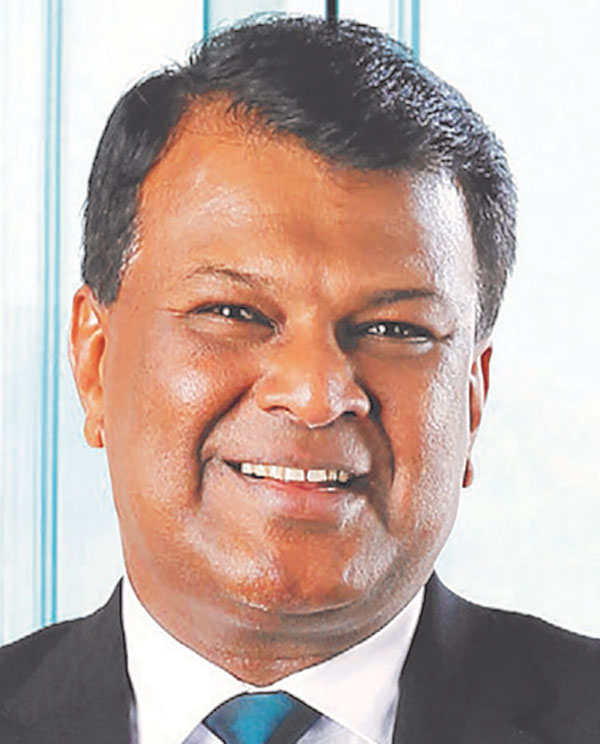
By Dr. Roshan Rajadurai
Inflation looms large over every Sri Lankan as the price of food and other essentials continues to skyrocket. At the center of this historic economic, political, social and humanitarian disaster are a series of deeply flawed and widely criticized policy decisions which have plunged the nation’s agriculture sector into complete disarray.
Among the decisions being singled out for criticism both locally and globally is the now infamous overnight ban on the importation all agrochemicals including synthetic fertilizer, weedicides, pesticides, and fungicides.
At the time, the policy was held out as the first and only preliminary measure needed to drive an immediate, island-wide shift to organic agriculture. Dubious “organic agriculture experts”, as well as medical doctors and monks were found in abundance, loudly proclaiming the virtues of a “100% organic agriculture strategy”.
These once vocal champions of organic agriculture claimed at the time that the ‘declining health of the average Sri Lankan’ and the negative impacts of agro-chemicals on the environment, as well as the annual US$ 48 billion that could be saved by halting fertilizer imports was sufficient justification for the ban.
These same “experts” were quick to dismiss the warnings, counter-arguments, and volumes of scientific data of respected academics and professionals with actual agricultural experience as being nothing more than the dishonest lies of what the former Agriculture Minister imaginatively dubbed a “Fertilizer mafia larger than the Sigiriya Rock”.
Deadly consequences
Back in September of 2021, after many months of frantic discussions with the leadership of the day, I stated the following in a widely published article titled: ‘Sri Lankan tea’s current crisis only reinforces the value of productivity-linked wages’
“Without any prior planning or notice, our entire sector has been coerced into blindly participating in the most unscientific experiment ever attempted in Sri Lanka’s history…The broad consensus among those with expertise is that we can start to see exponentially worse crop losses starting from the end of 2021, hitting approximately 30-40% by next year.
“If RPCs were to have disregarded basic agronomic practices and norms in such a manner, it would have been called criminal mismanagement. With agricultural best practices now being roundly ignored in favour of a undefined and unplanned strategy “100% organic agriculture”, this historic, and intentionally misinformed self-sabotage is being repackaged as visionary and progressive…
“Regardless of short-term political expediency, reality has a way of asserting itself…With insufficient balanced nutrients as a result of the unplanned push for organic, we anticipate a series of cascading failures stemming from a collapse in productivity. No amount of rhetoric will be able to turn back the tide of negative sentiment against such developments.”
Less than a year later, all that we have stated has come to pass. Agricultural productivity in Export crops has dropped by 20%. While export values of tea and rubber have increased, volumes have plummeted by 20% and 30% respectively. Had we been able to maintain production at pre-fertilizer ban levels, we estimate additional export earnings of US$240 M from plantation-related exports.
These shortcomings are reflected in Sri Lanka’s humiliating bankruptcy, and its crippling 54.6% inflation and deadly 81% food inflation. As a result, today the World Food Programme estimates that 3 in 10 Sri Lankans – 6.7 million Sri Lankans – are now facing severe food insecurity. For context, one of the worst famine’s in modern history was the Bengal Famine, which resulted in the deaths of an estimated 3 million Indians. If we allow any further blunders, these are the dangerous waters in which we are now swimming.
Meanwhile, the overnight 100% organic agriculture experts, the doctors and monks whose sole concern was for the health and well-being of all Sri Lankans are nowhere to be seen or heard from. And it is left to the once vilified professionals and academics to now chart a roadmap out of crisis and restore the industry on which more than 10% of our national population depend on for their sustenance.
A common framework for progress
Solving this complex misadventure is going to be extremely challenging, but we do believe it’s possible. And we believe the plantation industry will have an essential role to play in this difficult and necessary journey.
However in order to do so, we must acknowledge and examine all of the decisions that led us to this terrible low point. Moving forward, we need to appoint a Sectoral Task force – made up of credible industry experts, whom the Government must consult, particularly when formulating policy decisions that have the potential to impact the entire agriculture sector. Failure to do so even at this late juncture will risk even further irreversible damage being done to our industry and the millions of lives that are impacted by it.
This means that the Government in particular needs to commit to a strict regime of evidence-based policy at all times. If drastic policy adjustments are required, the Government has to take a consultative approach, seek out balanced and credible opinions, and obtain broad approval from stakeholders.
With this common agreement in place, we can finally begin to bring together the best minds in our respective industries and work in partnership towards developing a viable roadmap for a sustainable path to a true Sri Lankan economic renaissance. As Sri Lanka’s first true export industry, we believe the Sri Lankan plantation industry should be the first to take up this challenge.
For over a decade, our industry has painstakingly sought to articulate what the plantation sector requires to move forward. At present, the consensus is that reforms, investment, and knowledge sharing are most needed in our industry are in the areas of:
Sustainable, progressive productivity-linked wages that benefit workers and companies
Agricultural and operational best practices
Research and development towards greater local value addition
Factory, and supply chain modernization
Implementation of a consistent, science-based national agriculture policy framework
We call on all those with the knowledge and expertise to join us in this difficult and long over-due enterprise.
Abouts the Author:
Dr. Roshan Rajadurai is the Managing Director of the Plantation Sector of Hayleys PLC (which comprise Kelani Valley Plantations, Talawakelle Tea Estates and Horana Plantations). A former Chairman of the Planters’ Association of Ceylon, Dr. Rajadurai has 36 years of experience in the plantation sector.

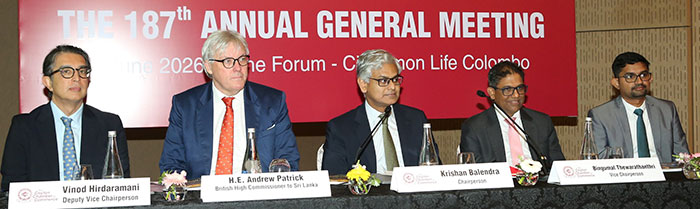
The Ceylon Chamber of Commerce announced the re-election of Chairperson Krishan Balendra and the election of its Board for the Year 2026/27 at the Chamber’s 187 th Annual General Meeting on June 25. High Commissioner of Britain to Sri Lanka, Andrew Patrick, attended as Chief Guest.
The 2026/27 office-bearers are Chairperson Krishan Balendra, – Chairperson John Keells Holdings PLC, Vice Chairperson Bingumal Thewarathanthri – CEO, Standard Chartered Bank Sri Lanka, and Deputy Vice-Chairperson Vinod Hirdaramani – Chairman, Hirdaramani Group.
Jayanthi Dharmasena – Managing Director, Hayleys Agriculture Holdings Ltd., Kasturi Chellaraja Wilson – Chief Operating Officer, Head of APAC – 5Hour International Corporation Singapore, Shibani Thambiayah – Managing Director, Renuka Hotels PLC,Supun Weerasinghe – Director/Group CEO – Dialog Axiata PLC, and Shiran Fernando – Secretary-General and CEO will serve as Board Members. Rohana Dissanayake – Group Chairman and Managing Director of David Pieris Motor Company Pvt. Ltd. will also join the Board, replacing Bernhard Stefan – Managing Director – Nestlé Lanka PLC, who relocated overseas.
In his remarks, Balendra noted that over the past year, the Chamber adopted a more solutions-oriented approach to advocacy, focusing not only on identifying challenges but also on developing constructive recommendations in collaboration with government, industry stakeholders, and development partners, with this approach yielding stronger results. “Through our engagement in the Budget 2026 process, eighteen recommendations proposed by the Chamber were incorporated into the national budget, covering areas such as trade facilitation, investment promotion, digitalisation, infrastructure, and improving the ease of doing business.
This builds upon the strong momentum established in previous years and demonstrates the value of evidence-based, constructive engagement.
The Chamber also contributed to addressing emerging global trade challenges, including tariff-related issues affecting Sri Lankan exports. By representing private sector perspectives in Presidential Committees, we supported efforts to safeguard export competitiveness and strengthen trade resilience.”
Beyond advocacy, it significantly expanded its engagement footprint, strengthening bilateral partnerships across more than twenty countries, and supporting more than 1,800 SMEs through training, advisory services, and market access initiatives.
He added that over the next year, the Ceylon Chamber is committed to deepening engagement with members, strengthening global partnerships, enhancing support for SMEs, and accelerating efforts to promote exports and attract investment, and is committed to working with the Government and stakeholders to ensure a resilient and prosperous Sri Lanka.

In the hill capital of Kandy, a husband-and-wife duo has won the admiration of music lovers with their shared passion for singing and their dedication to the art.
Vijitha Kingsley Bandara and Umesha Kalhari Navaratne have become familiar voices among audiences in Kandy, entertaining crowds with their musical talents while building a reputation as a versatile singing couple.
Kingsley began his musical journey at the age of 17, performing at outdoor musical shows before gaining opportunities to showcase his talent at several hotels in the Kandy area. His performances for local and foreign tourists further enhanced his reputation as a singer. He later took his musical talents overseas, entertaining audiences in several countries.
For the past 12 years, Kingsley has been engaged in singing at establishments operated by the Devon Group and The Grand Kandyan Hotel in Kandy, following an opportunity extended by Group Chairman Gamini Weeraratne.
Supporting him both in life and music, Umesha has also established herself as a singer, performing at Devon establishments. She also runs a home-based cake-making venture.
The couple, who continue to receive appreciation from music enthusiasts, said they are ready to accept invitations to perform at musical events across the country. They can be contacted on 071-1519130.
Text and Pic by SK Samaranayake

Recognising the rapid emergence of the gig economy in Sri Lanka, the Commercial Bank of Ceylon has introduced ‘ComBank GIG+’ – a specialised banking solution designed for freelancers, digital entrepreneurs, social media influencers, and individuals and businesses earning in foreign currency through overseas engagements to receive their foreign earnings, including PayPal-linked withdrawals, through a structured banking account.
ComBank GIG+ reflects a decisive shift in the country’s employment landscape, where a growing number of professionals are leveraging global digital platforms and remote work opportunities to build independent income streams. From freelance service providers operating on platforms such as Fiverr, Upwork and Freelancer.com, to content creators monetising audiences across YouTube, TikTok, Meta and X, this segment represents a dynamic and increasingly influential contributor to foreign exchange inflows.
ComBank GIG+ is tailored to meet the specific needs of these digital earners, offering account options in Sri Lanka Rupees as well as major foreign currencies including USD, EUR, GBP and AUD. The account is available to Sri Lankan citizens aged 18 and above residing in the country, as well as duly registered business entities, subject to verification of foreign currency income derived through recognised digital and remote work channels.
Commenting on the introduction of ComBank GIG+, Hasrath Munasinghe, Chief Operating Officer of Commercial Bank said: “The rise of independent digital earners represents a structural shift in how value is created and exported from Sri Lanka. With ComBank GIG+, we are establishing a banking framework that not only recognises this segment, but also integrates it more meaningfully into the formal financial system. This enables individuals and businesses operating beyond traditional employment models to build a verifiable financial track record, access formal financial services, scale their operations, and contribute more visibly to the country’s economic growth.”
The launch of ComBank GIG+ is particularly timely following Sri Lanka’s recent enablement of PayPal linked withdrawals, which has simplified the process of bringing overseas digital earnings into the country.
In addition to facilitating PayPal-linked withdrawals and foreign currency inflows, the Bank said the ComBank GIG+ account offers a range of value-added benefits including first-year fee waivers on credit cards and digital banking services, preferential foreign exchange rates for qualifying conversions into Sri Lanka Rupees, and the opportunity to establish a structured banking relationship that may support future access to financing and other financial solutions. These features are designed to enhance financial efficiency while supporting the day-to-day banking needs of digitally active customers.
By aligning its product innovation with evolving global work patterns, Commercial Bank continues to strengthen its position as a forward-looking, technology-driven institution. The introduction of ComBank GIG+ underscores the Bank’s commitment to supporting new economic segments, enhancing financial inclusion, and enabling Sri Lankan talent to participate more effectively in the global digital economy.

Zafar, Feroza lead Pakistan to consolation win

Jangoo 233, Chase 194 put West Indies in commanding position

Showers will occur at times in the Western, Sabaragamuwa and North-western provinces and in Galle, Matara, Kandy and Nuwara-Eliya districts

Venezuelans dig for earthquake survivors as death toll rises to 1,430

Chemmani mass graves: Govt to seek international forensic help

ADB approves $57.4 million package to boost Lanka’s rooftop solar drive

‘Dates have the highest sugar content to fight Coronavirus’

Sunday Island 27 December – Headlines

#SundayIsland 17th December – Headlines

Sunday Island – 28th March

Sunday Island Headlines – 21 March

Sunday Island – 21st February – Headlines
-

 Features7 days ago
Sri Lanka developing independent hydrographic capabilities
-

 Opinion6 days ago
Ranasinghe Premadasa: The man who would not take ‘No’ for an answer
-

 News1 day ago
Another 1,132 Sri Lankan Personnel to be deployed for United Nations Peacekeeping Missions
-

 Opinion5 days ago
Sri Lanka’s national security: Justice, reconciliation, and forward-looking vigilance
-

 News5 days ago
US Assistant Secretary of State for South and Central Asian Affairs meets President
-

 News3 days ago
Kelaniya emerges as highest ranked Lankan uni in Times Higher Education Sustainability Impact Ratings
-

 Opinion4 days ago
A triumph for Pakistan’s skilled diplomacy at Iran-US talks
-

 Business7 days ago
University of West London opens Sri Lanka’s first full UK university branch campus