
Business
Has Sri Lanka finally learned its lesson on emotional vs evidence-based agri policies?

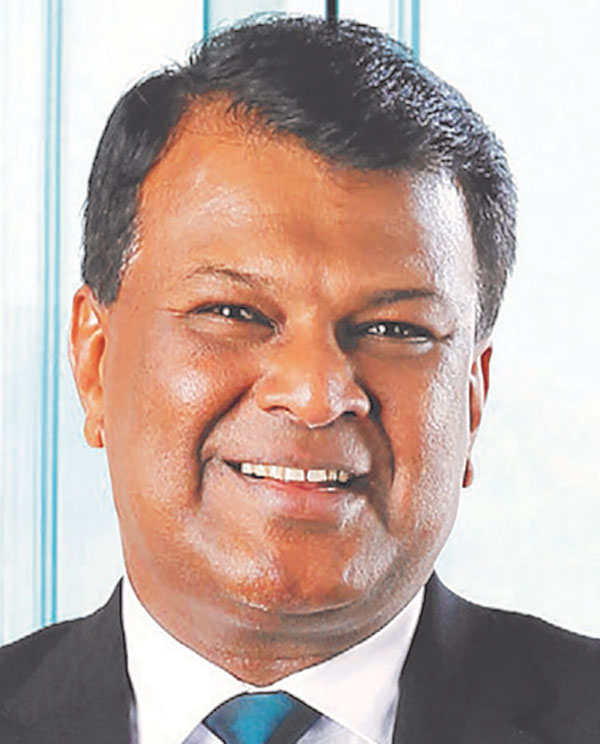
By Dr. Roshan Rajadurai
Inflation looms large over every Sri Lankan as the price of food and other essentials continues to skyrocket. At the center of this historic economic, political, social and humanitarian disaster are a series of deeply flawed and widely criticized policy decisions which have plunged the nation’s agriculture sector into complete disarray.
Among the decisions being singled out for criticism both locally and globally is the now infamous overnight ban on the importation all agrochemicals including synthetic fertilizer, weedicides, pesticides, and fungicides.
At the time, the policy was held out as the first and only preliminary measure needed to drive an immediate, island-wide shift to organic agriculture. Dubious “organic agriculture experts”, as well as medical doctors and monks were found in abundance, loudly proclaiming the virtues of a “100% organic agriculture strategy”.
These once vocal champions of organic agriculture claimed at the time that the ‘declining health of the average Sri Lankan’ and the negative impacts of agro-chemicals on the environment, as well as the annual US$ 48 billion that could be saved by halting fertilizer imports was sufficient justification for the ban.
These same “experts” were quick to dismiss the warnings, counter-arguments, and volumes of scientific data of respected academics and professionals with actual agricultural experience as being nothing more than the dishonest lies of what the former Agriculture Minister imaginatively dubbed a “Fertilizer mafia larger than the Sigiriya Rock”.
Deadly consequences
Back in September of 2021, after many months of frantic discussions with the leadership of the day, I stated the following in a widely published article titled: ‘Sri Lankan tea’s current crisis only reinforces the value of productivity-linked wages’
“Without any prior planning or notice, our entire sector has been coerced into blindly participating in the most unscientific experiment ever attempted in Sri Lanka’s history…The broad consensus among those with expertise is that we can start to see exponentially worse crop losses starting from the end of 2021, hitting approximately 30-40% by next year.
“If RPCs were to have disregarded basic agronomic practices and norms in such a manner, it would have been called criminal mismanagement. With agricultural best practices now being roundly ignored in favour of a undefined and unplanned strategy “100% organic agriculture”, this historic, and intentionally misinformed self-sabotage is being repackaged as visionary and progressive…
“Regardless of short-term political expediency, reality has a way of asserting itself…With insufficient balanced nutrients as a result of the unplanned push for organic, we anticipate a series of cascading failures stemming from a collapse in productivity. No amount of rhetoric will be able to turn back the tide of negative sentiment against such developments.”
Less than a year later, all that we have stated has come to pass. Agricultural productivity in Export crops has dropped by 20%. While export values of tea and rubber have increased, volumes have plummeted by 20% and 30% respectively. Had we been able to maintain production at pre-fertilizer ban levels, we estimate additional export earnings of US$240 M from plantation-related exports.
These shortcomings are reflected in Sri Lanka’s humiliating bankruptcy, and its crippling 54.6% inflation and deadly 81% food inflation. As a result, today the World Food Programme estimates that 3 in 10 Sri Lankans – 6.7 million Sri Lankans – are now facing severe food insecurity. For context, one of the worst famine’s in modern history was the Bengal Famine, which resulted in the deaths of an estimated 3 million Indians. If we allow any further blunders, these are the dangerous waters in which we are now swimming.
Meanwhile, the overnight 100% organic agriculture experts, the doctors and monks whose sole concern was for the health and well-being of all Sri Lankans are nowhere to be seen or heard from. And it is left to the once vilified professionals and academics to now chart a roadmap out of crisis and restore the industry on which more than 10% of our national population depend on for their sustenance.
A common framework for progress
Solving this complex misadventure is going to be extremely challenging, but we do believe it’s possible. And we believe the plantation industry will have an essential role to play in this difficult and necessary journey.
However in order to do so, we must acknowledge and examine all of the decisions that led us to this terrible low point. Moving forward, we need to appoint a Sectoral Task force – made up of credible industry experts, whom the Government must consult, particularly when formulating policy decisions that have the potential to impact the entire agriculture sector. Failure to do so even at this late juncture will risk even further irreversible damage being done to our industry and the millions of lives that are impacted by it.
This means that the Government in particular needs to commit to a strict regime of evidence-based policy at all times. If drastic policy adjustments are required, the Government has to take a consultative approach, seek out balanced and credible opinions, and obtain broad approval from stakeholders.
With this common agreement in place, we can finally begin to bring together the best minds in our respective industries and work in partnership towards developing a viable roadmap for a sustainable path to a true Sri Lankan economic renaissance. As Sri Lanka’s first true export industry, we believe the Sri Lankan plantation industry should be the first to take up this challenge.
For over a decade, our industry has painstakingly sought to articulate what the plantation sector requires to move forward. At present, the consensus is that reforms, investment, and knowledge sharing are most needed in our industry are in the areas of:
Sustainable, progressive productivity-linked wages that benefit workers and companies
Agricultural and operational best practices
Research and development towards greater local value addition
Factory, and supply chain modernization
Implementation of a consistent, science-based national agriculture policy framework
We call on all those with the knowledge and expertise to join us in this difficult and long over-due enterprise.
Abouts the Author:
Dr. Roshan Rajadurai is the Managing Director of the Plantation Sector of Hayleys PLC (which comprise Kelani Valley Plantations, Talawakelle Tea Estates and Horana Plantations). A former Chairman of the Planters’ Association of Ceylon, Dr. Rajadurai has 36 years of experience in the plantation sector.

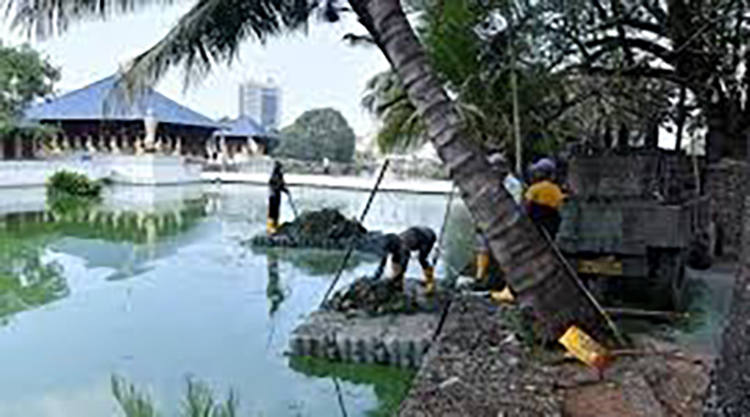
Sri Lanka’s decision to invest Rs. 2.5 billion in restoring the heavily polluted Beira Lake marks one of the most significant urban environmental interventions in recent years, underscoring a growing recognition that ecological rehabilitation is also an economic imperative.
The multi-pronged project—covering the closure of illegal sewage discharge points, large-scale dredging, and the installation of aeration systems—is expected to not only revive aquatic life but also unlock commercial, tourism and real estate value in the heart of Colombo.
Officials say the initiative is designed to transform Beira Lake from a long-neglected liability into a productive urban asset.
A senior official from the Ministry of Environment told The Island Financial Review that untreated wastewater and illegal sewer connections had been the primary contributors to the lake’s degradation for decades. “Closing these illegal sewage points is the most critical intervention. Without that, any dredging or aeration would only offer temporary relief, the official said, adding that enforcement will be carried out in coordination with the Colombo Municipal Council (CMC) and other regulatory agencies.
From a business perspective, the clean-up is being viewed as a catalyst for urban regeneration. Urban Development Authority (UDA) sources noted that a healthier Beira Lake would significantly enhance the attractiveness of surrounding commercial developments, hospitality projects and public spaces. “Environmental remediation directly impacts land values and investor confidence. A clean, living lake changes the entire economic profile of the area, an UDA official said.
The dredging component of the project is aimed at removing decades of accumulated sludge, which has reduced water depth and contributed to foul odours and fish die-offs. According to officials involved in project planning, the dredged material will be disposed of following environmental guidelines to avoid secondary pollution risks—an issue that has undermined similar efforts in the past.
Meanwhile, the installation of modern aerators is expected to improve dissolved oxygen levels, a key requirement for sustaining fish and other aquatic organisms. “Restoring aquatic life is not just about biodiversity; it is about creating a water body that can safely support recreational activities and public engagement, a senior CMC engineer explained.
Economists point out that the Rs. 2.5 billion allocation, while substantial, should be seen against the long-term cost savings and revenue potential. Reduced public health risks, lower water treatment costs downstream, increased tourism activity and higher commercial footfall could deliver returns that far exceed the initial outlay.
By Ifham Nizam

CSE activities kicked off on a negative note initially but later experienced some recovery yesterday because most investors were anticipating positive third quarter result shortly, market analysts said.
Amid those developments, the market indicated mixed reactions. The All Share Price Index went down by 4.13 points, while the S and P SL20 rose by 14.02 points. Turnover stood at Rs 5.17 billion with 11 crossings.
Top seven crossings were reported in Renuka Holdings where eight million shares crossed to the tune of Rs 324 million; its shares traded at Rs 40.50, Tokyo Cement one million shares crossed to the tune of Rs 113 million; its shares traded at Rs 113, Distilleries 1.85 million shares crossed for Rs 111 million; its shares traded at Rs 60, ACL Cables 500,000 shares crossed for Rs 51.5 million, its shares sold at Rs 103 Chevron Lubricants 250,000 shares crossed for Rs 47.5 million; its shares traded at Rs 190, Ambeon Capital 738600 shares crossed at Rs 40.50 each and Melstacope 150,000 shares crossed for Rs 27 million; its shares traded at Rs 180.
In the retail market top seven companies that mainly contributed to the turnover were; Colombo Dockyard Rs 1.26 billion (12 million shares traded), ACL Cables Rs 348 million (3.3 million shares traded), HNB (Non-Voting) Rs 152 million (425,000 shares traded), Hayleys Rs 109 million (507,000 shares traded), Tokyo Cement (Non-Voting) Rs 94 million (989,000 shares traded) Lanka Realty Investments Rs 80 million (1.6 million shares traded) and Sampath Bank Rs 77 million (498,000 shares traded). During the day 135 million share volumes changed hands in 38398 transactions.
It is said that manufacturing sector counters, especially Tokyo Cement and ACL Cables, performed well. Further, Colombo Dockyard became the most preferred share for investors. The Banking sector also performed well.
Browns Beach Hotels said that the company will delist from the CSE, having made arrangements with majority shareholders Melstacope and Aitken Spence Hotel Holdings to buy back shares from minority shareholders at an exit offer price of Rs 30.
Yesterday the rupee was quoted at Rs 309.75/85 to the US dollar in the spot market, from Rs 309.72/77 the previous day, having depreciated in recent weeks, dealers said, while bond yields were down.
A bond maturing on 15.05.2026 was quoted at 8.25/35 percent.
A bond maturing on 15.02.2028 was quoted at 9.00/10 percent, down from 9.05/10 percent.
A bond maturing on 15.12.2029 was quoted at 9.65/70 percent, up from 9.65/69 percent.
A bond maturing on 01.03.2030 was quoted at 9.72/75 percent, from 9.70/76 percent.
A bond maturing on 15.03.2031 was quoted at 9.95/10.00 percent, down from 10.00/10 percent.
A bond maturing on 01.10.2032 was quoted at 10.30/50 percent.
A bond maturing on 01.06.2033 was quoted at 10.72/75 percent, down from 10.70/80 percent.
A bond maturing on 15.06.2035 closed at 11.05/10 percent, down from 11.07/11 percent.
The telegraphic transfer rates for the American dollar were 306.2500 buying, 313.2500 selling; the British pound was 409.9898 buying, and 421.3080 selling, and the euro was 354.1773 buying, 365.5655 selling.
By Hiran H Senewiratne

Ceylon Theatres Limited, in partnership with British Council, is proud to present the first ever screening of National Theatre (NT) Live’s Hamlet starring Hiran Abeysekara in Asia. The first screening will happen at Regal Cinema in Dematagoda (Colombo 9) at 5:30 pm on Sunday, 25 January. Sri Lankan actor Hiran Abeysekera stars in the title role—the first Asian actor to play Hamlet in a National Theatre production.
For Sri Lankan audiences, this screening is both a celebration and a homecoming. It reflects the British Council’s long-standing commitment to nurturing creative talent, widening access to world-class culture, and building deep, people-to-people connections between Sri Lanka and the United Kingdom through theatre and the creative arts. To celebrate the inaugural screening, the British Council is inviting winners and runners-up of the All-Island Inter-School Shakespeare Drama Competition, alongside drama teachers and university actors, to attend the premiere.
Further details on screening dates, venues, and ticketing can be found at: https://ceylontheatres.com/ and on the British Council Instagram page https://www.instagram.com/britishcouncilsrilanka/ or call: 0766192370

Navy seizes 02 Indian fishing boats poaching in northern waters

Prime Minister participates in high-level bilateral meetings at World Economic Forum

Dushmantha Chameera, Dhananjaya de Silva return for England ODIs

T20 World Cup crisis: PCB writes to ICC supporting Bangladesh’s stance

U – 19 world Cup: Rain disrupts New Zealand vs Bangladesh game in Bulawayo

U – 19 World Cup: Will Malajczuk’s 51-ball century helps Australia blow Japan away

‘Dates have the highest sugar content to fight Coronavirus’

Sunday Island 27 December – Headlines

#SundayIsland 17th December – Headlines

Sunday Island – 28th March

Sunday Island Headlines – 21 March

Sunday Island – 21st February – Headlines
-

 Editorial4 days ago
Illusory rule of law
-

 News5 days ago
UNDP’s assessment confirms widespread economic fallout from Cyclone Ditwah
-

 Business6 days ago
Koaloo.Fi and Stredge forge strategic partnership to offer businesses sustainable supply chain solutions
-

 Editorial5 days ago
Crime and cops
-

 Features4 days ago
Daydreams on a winter’s day
-

 Editorial6 days ago
The Chakka Clash
-
 Features4 days ago
Surprise move of both the Minister and myself from Agriculture to Education
-

 Features3 days ago
Extended mind thesis:A Buddhist perspective