
News
Green agriculture: Prez admits shortcomings, reiterates commitment

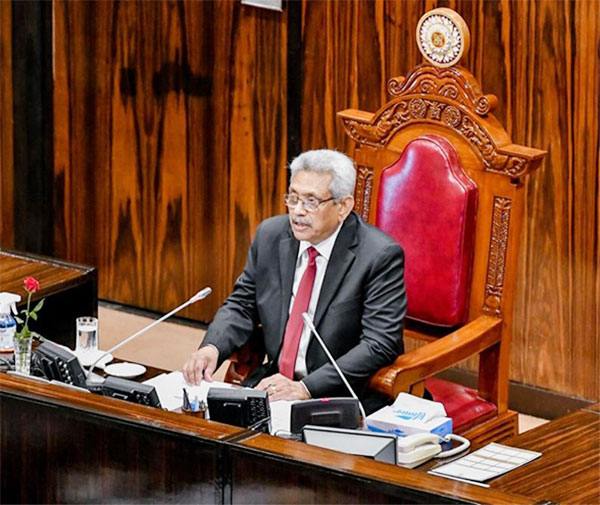
* Will not support any form of human rights violations
* Foreign currency issue most serious challenge
* Non-state universities needed
* PTA to be amended
* N&E members asked to review strategy
* Laws delays stressed
President Gotabaya Rajapaksa yesterday (18) reiterated his government’s commitment to green agriculture regardless of recent setbacks.
Delivering his third presidential policy statement at the re-opening of Parliament, following prorogation, the President said that his government had to face some problems in implementing their nontoxic green agriculture policy. The one time frontline commander said that due to some misunderstanding, their objectives and plans were not properly communicated, and some practical issues were politicised.
The President said: “The broad concept of green agriculture which was sometimes narrowed down to organic fertilisers even by responsible authorities led to the spread of misconceptions. As some decisions led to public hardships we had to make some changes to them.
However, there has been no change in our government’s policy towards green agriculture. Therefore, we hope to rectify the shortcomings and take forward these policies in a more productive manner. Our ultimate goal is to introduce modern technology to achieve higher productivity in agriculture, and to promote the use of bio-fertilisers in order to create an international market for non-toxic agricultural produce,” he said.
President Rajapaksa addressed a spate of issues at hand, including food security, the need to counter accountability allegations, responsibilities of parliamentarians, readiness to amend the Prevention of Terrorism Act (PTA), foreign debt servicing crisis, inordinate delays in the law administration, setting up of high quality non-state universities and the duty of lawmakers representing Northern and Eastern Provinces to review their political strategies, at least temporarily, and the hardships caused by the Covid-19 epidemic. The President also emphasised the restoration of national security.
Declaring that he was ready to provide the leadership, President Rajapaksa assured Parliament that Sri Lanka as a nation had the ability to overcome the challenges the country faced even at the very moment.
Explaining the tremendous hardships caused by the global epidemic and measures taken by the government to provide relief to the people and successful vaccination campaign, President Rajapaksa said: “The representatives belonging to various political parties in this august assembly have various political views, policy differences. However, we all ultimately wish for the good of the country. During this difficult time of a global catastrophe, we all have a national responsibility as people’s representatives to work together and build this country. I invite all of you to join us in fulfilling this responsibility.
While successfully encountering short-term problems, our primary responsibility is to continue to implement the long-term development programme presented by us to the people of the country, and endorsed by a majority. The sustainable future of the country is built on it. Therefore, we must not forget our priorities at any time.
“We are a nation that respects international laws and conventions. We need to correct the misconceptions that have been taken to the international community in the past regarding our human rights. I say with responsibility that during my tenure, the government did not support any form of human rights violations. We will also not leave room for any such act in the future. We do not condone such actions in any manner.
For almost three decades, nearly all sections of the community in this country suffered due to terrorism. In 2009, we were able to end this situation by defeating terrorism and bringing peace back to the country. What we need now, however, is to set aside the dark memories of the past and build a secure country where all sections of the community can co-exist in peace. We must all unite for this purpose, irrespective of ethnic, religious or political differences.
We have made a major investment to bring normalcy to community life in the war torn northern and eastern areas. It was during my time as Defence Secretary that more than 90% of the land in northern and eastern areas used for military activities during the war was liberated. Since we are able to ensure security and maintain peace in these areas, this will enable us to liberate remaining lands in the future.
The issue of missing persons in war is not something unique to a particular group. We will do maximum justice on behalf of all such persons.
We reject racism. The present government wants to safeguard the dignity and rights of every citizen in this country in a uniform manner. Therefore I urge those politicians who continue to incite people against each other for narrow political gains to stop doing so.
I took action recently to pardon and release a group of LTTE members who have been in detention over a long period of time. We are also preparing to make relevant amendments to the Prevention of Terrorism Act that had been in force since 1978.
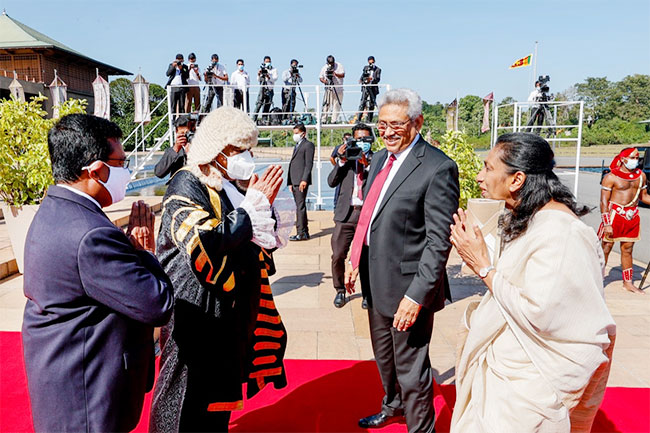 Speaker Mahinda Yapa Abeywardena receiving first lady Ioma Rajapaksa at the entrance to the Parliament. A smiling President looks on(pic courtesy PMD)
We are always ready to respond positively to observations made by the international community while giving priority to the country’s sovereignty and national security.
We are a free sovereign nation. We have no need to intervene in conflicts among powerful nations. While we respect our neighbours, we wish to pursue a policy of friendship with all States.
The people in the North and East who had been battered by the war for a long time wanted economic security above all else. They wanted a good education for children, job opportunities for young men and women, market access for self-employed and entrepreneurs, as well as water for drinking and agricultural purposes, housing facilities, hospitals, roads, and other infrastructure facilities. We regard the government’s prime responsibility towards reconciliation as providing such facilities to these people without discrimination.
Therefore, I urge the Members of Parliament representing the people of the North and East in this House to set aside various political ideologies, at least temporarily, and support the government’s efforts to improve the living conditions of the people in your areas.
I firmly believe that ensuring the rule of law and transparency is essential to strengthen democracy. Strengthening the independence of the judiciary is crucial to ensure the rule of law. Since I became President, appointments to the judiciary and the Attorney General’s Department were never politicized. Appointments were made on the basis of merit and seniority of officers in the judicial service, thereby demonstrating the commitment by my government towards an independent judiciary.
The country needs an efficient judicial system that is fair to all and not a burden to the public. However the present judicial system has many shortcomings. Even fundamental rights petitions, which the Constitution decrees must be addressed in two months, are not completed sometimes even during ten years. It takes years to punish persons who have committed crimes against minors. Often, it takes more than a lifetime to resolve land cases. In this context, it is no surprise that public confidence has eroded in the manner that the law operates.
Governments since 1994 have, on various occasions, attempted to introduce a new Constitution but to no avail. Therefore, I appointed an Experts Committee, with the approval of the Cabinet, to study this subject in depth, broadly consult public opinion and prepare a preliminary draft for a people-friendly constitution.
I hope to submit the recommendations of this Committee to the Cabinet and the Parliament for broad discussion.
We are well aware of the need to develop infrastructure facilities for rapid and sustainable development. Therefore infrastructure development activities continued even under pandemic conditions.
The 100,000 Roads Project, urban development projects, rural housing and urban apartment projects, 5,000-Bridge project, Rehabilitation of 14,000 Tanks Project, Irrigation development projects, programmes to provide electricity and drinking water to all households in the country, provision of high speed internet facilities throughout the country, flood control projects, technological villages and industrial township projects are all being implemented as planned.
Year after year, when these projects get completed, people will be able to see the results of the promises we made to them. Last week we commenced the construction of the Eastern Terminal of the Port of Colombo as promised in the Vistas of Prosperity and Splendour Policy Statement. Construction of the Western Terminal will begin shortly. By the time these projects end in 2024 and 2025, the Port of Colombo would have doubled its capacity and will be among the 15 busiest ports in the world.
Now the economic process in the country is gradually returning to normalcy. Tourists are returning. There is a clear growth in export sectors. However a number of challenges remain before us. Both short-term and long-term solutions are essential to overcome them.
The present budget has allocated a large amount of money for rural livelihood development as such short-term solution. The government hopes to assist a large number of self-employed people throughout the country through this. We fully understand the economic difficulties facing the people today.
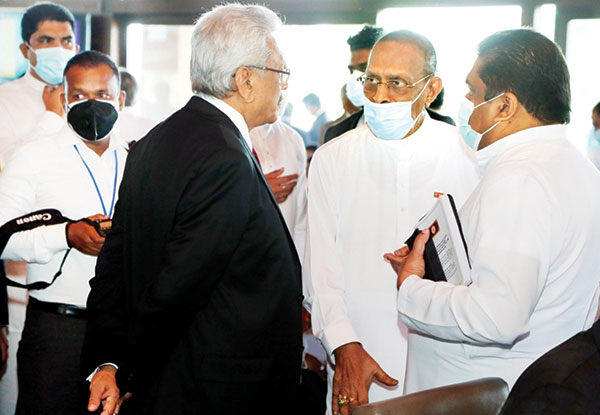 President Gotabaya Rajapaksa speaking with former Speaker Karu Jayasuriya yesterday (18)
Therefore, the government decided at the beginning of 2022 to introduce a Rs 229 billion relief package to the people. Even in the midst of major economic challenges, these reliefs are being provided because the government is sensitive to the problems of the people.
Our government provided free fertilizer to farmers for the past two years. We set a guaranteed price of Rs 50 for paddy. When the government paid 50 rupees, the private sector paid an even higher price to the farmers. Perhaps it was because of that decision taken by the government that a kilo could be sold for 60 to 70 rupees. It is unfortunate that a section of the farming community today has forgotten this.
The most serious challenge we face today in economic management is the current foreign exchange problem. Today we are encountering the climax of a problem for which a number of governments have failed to provide a lasting solution.
When I took over the country in 2019, the country’s foreign exchange reserves were only US $ 7.2 billion. Part of it was short-term loans. By then, more than US $ 6 billion a year in foreign debt had to be repaid over the next two years. It is the loans taken by all previous governments from time to time that we had to repay in this manner.
We had realized that under these circumstances if we fail to control our spending, there will be a foreign exchange problem in the near future. That is why we had to take unpopular decisions such as suspending the import of vehicles and restricting the import of various non-essential imported goods. In this manner, we have been able to control the total import expenditure for the last two years.
Over the years, the country’s average annual trade deficit has been around $ 8 billion. This shortfall was offset by revenues from tourism industry and remittances from Lankan expatriate workers and foreign exchange earned through foreign investment. Of these, we had the highest hopes for the tourism industry. We had planned to increase the revenue from tourism to US $ 10 billion over a few years.
But due to the Covid-19 pandemic, which began in December 2019, the global tourism industry suffered a setback. Thus we lost about $ 4.5 billion in annual revenue flowing into the country through tourism in 2020 and 2021.
We also lost a large amount of monthly remittances sent by about 200,000 Lankan expatriate workers who left their jobs and returned to Sri Lanka due to the Covid pandemic. Due to the continuous closure of the country, we were not able to attract new foreign investments.
Our reserves plummeted and imports were severely hampered by this unavoidable situations beyond our control.
It is not possible to meet our import requirements without increasing our reserves. In order to surmount this problem in the long run, we need to make great strides in our export industry through innovations, export diversification and value adding mechanisms. At the same time, there should be a major development in the areas of foreign currency attracting tourists, employment of skilled workers abroad, and information and communication technology.
All this had been clearly stated in our policy statement. Their implementation should be expedited now.
As a small country, our country has very limited natural resources to earn foreign exchange. We do not have resources like oil, gas and coal.
Today, all countries in the world that developed without natural resources have chosen foreign investment as the solution. They used foreign investment to boost the export industry, create new jobs and support local businesses.
If one acts for purely political reasons to misinterpret and create a wrong opinion among the people about foreign investments, then such a person is not doing any good to the country.
At this time we have a strong need for investment for the development of our country. Therefore, we need to make more efforts in the future to attract new investments to carefully chosen sectors. What matters is not whether they are domestic or foreign investment, but whether they are for the good of the country.
The solution to unemployment lies in job creation. At present most of the employment needs of the country are met by small and medium scale local businesses. Therefore, we must always prioritize the protection and empowerment of local entrepreneurs in various businesses. We understand the needs of the business community and will do our utmost to encourage them.
About 20% of our annual import expenditure is allocated for oil imports. When the total export earnings are less than $ 1,000 million a month, we have to spend about $ 350 million a month on oil alone. About 70% of the imported fuel is used as fuel for vehicles. It costs about 21% to generate electricity. Only 4% is used for industry.
When we allow the import of vehicles in the future, we hope to give priority to electric vehicles. Accordingly, we should plan to use renewable energy sources as much as possible when supplying electricity to vehicles.
The main problem facing industries in Sri Lanka is the high energy costs. Our country does not have fuel resources such as oil or coal. All of them should be imported. But we have rivers, seas surrounding the country, plenty of wind, and sunshine all year round. This is why renewable energy sources were prioritized under our Vistas of Prosperity and Splendour Policy Statement. We have agreed to the target of generating 70% of the country’s energy needs through renewable energy sources by 2030.
We have already made a number of plans to meet future power requirements. In the last two years alone we have been able to add significant renewable energy capacity to the local power grid using wind and solar power. The capacity of the Thambapanni Wind Power Plant, which was commissioned last year and is now successfully operating at 100 MW, will be increased by another 50 MW this year. In addition, under the ‘Gamata Balagarayak’ programme, work has commenced on the construction of 7,000 small solar power plants with a capacity of 100 kilowatts through local investors, of which 560 megawatts will be added to the power grid within the next two years. Also, the installation of Rooftop Solar panels on the roofs of government offices has commenced with a loan facility of Rs 20 billion signed with India last year. Construction of 120 MW Uma Oya and 35 MW Broadlands Hydro Power Plant is nearing completion. Moragolla Hydro Power Plant is expected to be completed by 2023.
Our goal is to achieve the carbon neutral target by 2050. Sri Lanka is already a co-leader in the Global Compact for No New Coal Energy. We will not approve the construction of coal power plants in the future for any reason.
I have always stated that education should play a very important role in the formulation of national policies. We need an education system that matches with the modern world. To this end, we have paid special attention to educational reforms as well as infrastructure development. We are working to increase the number of 379 national schools by a further 1,000. We have allocated a large amount of funds for school development in this budget as well. In the next few years, we will provide basic facilities to every school in the country to reduce the gap between schools.
We recognize the importance of technology education in creating employment and business opportunities for young people in the modern world. Therefore, in the last two years, allocations have been made to all universities to increase the number of students studying Science, Technology, Engineering and Mathematics (STEM) streams.
In addition, reforms have already been introduced to introduce courses in IT, English and Entrepreneurship for all university students, regardless of their subject stream.
We had emphasized the entitlement of every student who passes the Advanced Level to enter a university. Accordingly, steps have been taken to increase the capacity of all universities. All plans have been finalized to start 10 new City Universities covering 10 less privileged districts.
Through these reforms we have already increased the number of students admitted to universities annually by 35%. Accordingly, last year we were able to enroll 10,000 new students in addition to the 30,000 previously enrolled. We also increased the number of university staff by about 500 and allocated funds to improve their educational and welfare facilities. In addition, steps were taken to enroll 10,000 new students for technical degrees at the Open University. The courses are designed to enable these students to pursue their education while on the job from the first year.
However, less than 25% of students who qualify for university annually are still able to enroll in the state university system. Under these circumstances, and in relation to the growing population, we must realize that it is no longer a reality for the government alone to provide a high quality university education to all students who pass the Advanced Level.
Although eligible to enter a university, many young people are frustrated by the lack of space in the state university system and the lack of opportunity to even pay and pursue higher education in Sri Lanka. People with some means will even sell their parents’ properties and go abroad to study. Others become helpless.
Instead of sending money abroad for our own children’s education, we have lost the opportunity to attract foreign students to Sri Lanka through a high quality university system. Many of the world’s top universities are non-profit, non-governmental universities. All those universities offer scholarships to talented students for free education. This model, common to many countries in the world, is not adopted in our country.
If we create a more conducive environment for university education in our country, we will have the opportunity to attract world-renowned higher education institutions of international standard to Sri Lanka.
Through this, the capacity of the university system in Sri Lanka can be increased and higher education opportunities can be provided to more people.
There is no reason, other than the traditional political ideologies, not to give this opportunity to the children of the country. If the country’s legal framework needs to be changed to do this, it can only be done by this Parliament.
Therefore, I propose to this august assembly to discuss at length whether, while increasing the capacity of state universities, then establishment of high quality non-state universities in the country can be permitted.”



Latest News
Complete all projects funded under the LKR. 500 bllion allocation for Ditwah within this year – President

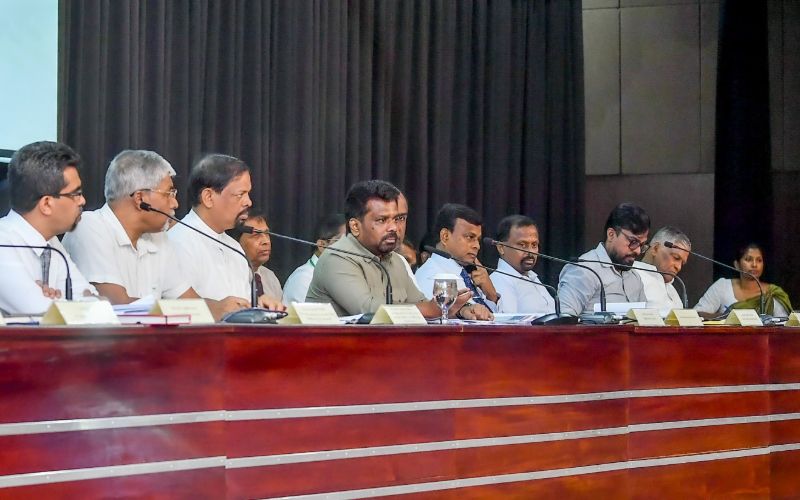
President Anura Kumara Dissanayake emphasised that both the political authority and public officials have a responsibility to ensure that the LKR. 500 billion allocated by the Government in response to Cyclone Ditwah is utilised effectively and efficiently for the recovery and development of the affected communities and areas. The President further stressed the need to complete all related projects before the end of this year.
The President also pointed out that the Government has already taken steps to transform the culture in which the law was selectively enforced based on power, wealth and political connections and to establish a new culture where all citizens are equally subject to the law. The President noted that certain groups are attempting to portray the creation of a law-abiding society as a major crisis, but stressed that, in building a civilised nation, it is essential to create a society in which everyone is accountable under the law.
President Anura Kumara Dissanayake made these remarks while attending the Special District Coordination Committee Meeting for Matale held on Tuesday (12) morning at the Veera Keppetipola Hall in Matale.
The President further emphasised that the law should not be regarded as an obstacle preventing public officials from properly discharging their duties. He called upon all officials to remain fully committed to rebuilding the lives of the people by working within the legal framework and ensuring that public funds are utilised in a planned, efficient and productive manner.
During the meeting, the President also conducted an extensive review of the progress of compensation payments for the loss of lives and property caused by Cyclone Ditwah, as well as the measures taken to restore housing and normalcy to affected communities.
Officials stated that the compensation allowances of LKR 25,000 and LKR 50,000 granted to families affected by Cyclone Ditwah have now been fully disbursed within the Matale District. They further noted that the student assistance allowances of LKR 15,000 and LKR 10,000 have also been fully paid.
Officials also informed the meeting that the disaster had caused complete damage to 254 houses and partial damage to 3,829 houses within the district. Compensation payments have already been completed for all houses eligible to receive assistance without a formal assessment, while assessment procedures for the remaining houses are currently underway.
Extensive discussions were also held regarding alternative solutions to issues arising from various circumstances, including the lack of land ownership, the location of properties within high-risk zones and occupation of protected reserve areas. The meeting further discussed possible amendments to the existing criteria in order to expedite these processes.
The President also reviewed the progress relating to compensation payments for lives lost due to the disaster, compensation for families relocated from high-risk areas, the provision of housing rent allowances, the issuance of National Building Research Institute (NBRI) reports, as well as the progress of housing construction and land acquisition activities.
The President emphasised the necessity of relocating all families currently residing in high-risk areas affected by Cyclone Ditwah. Highlighting the importance of formulating the necessary legal provisions in this regard, the President instructed officials to treat the resettlement of these families in safer locations as a priority matter and to expedite the process.
The President also inquired into the measures being taken to care for children who lost their parents due to the cyclone and to safeguard their future. The President instructed officials to prepare individual support programmes for each affected child and refer them to the Ministry of Women and Child Affairs.
Issues affecting the school system within the district were also discussed during the meeting. The President highlighted the importance of releasing the relevant lands and constructing school buildings in line with the plan being implemented under the Ministry of Education for the relocation and restoration of the school system.
In addition, the President reviewed the progress of the road development programme in the Matale District relating to roads damaged by Cyclone Ditwah.
Officials stated that 16, A and B grade roads and two bridges in the Matale District were damaged by the cyclone. They further noted that reconstruction work on all 16 roads and one of the bridges has now been completed, while discussions were held regarding the expedited reconstruction of the remaining Moragahakanda Bridge as a permanent structure.
The President also inquired into the progress of construction work on the Riverston Road, which is of significant importance to the tourism industry, as well as the Galewela–Matale road project, which has remained a long-standing issue. He instructed officials to expedite the completion of both projects.
The meeting also reviewed the progress of restoration work relating to roads, bridges, culverts and water projects under local government authorities in the Matale District that were damaged by the disaster.
In addition, discussions were held regarding the compensation process under the Ministry of Industry for businesses in the service sector, the tourism sector and the mining sector that suffered losses due to the disaster, as well as the challenges that have arisen in implementing the compensation programme.
The President also reviewed the measures taken to restore the agriculture and livestock sectors. He noted that the Government has placed special emphasis on promoting rural agriculture, with a focus on developing a production-driven economy.
Discussions were also held on the Matale Urban Development Plan implemented under the 2026 Budget allocations, as well as the project to relocate the Dambulla Hospital. The President stressed the importance of ensuring that these initiatives are implemented within the stipulated timeframe and that their benefits are effectively delivered to the public.
The meeting was attended by the Chairman of the Matale District Coordinating Committee and Deputy Minister of Buddhasasana, Religious and Cultural Affairs, Gamagedara Dissanayake, Co-Chairman and Governor of the Central Province, Professor Sarath Abayakon, Members of Parliament Sunil Biyanwila and Dinesh Hemantha and the Chief Secretary of the Central Province, Ajith Premasinghe, along with local government representatives. Also present were the Commissioner General of Essential Services and Chief of Staff to the President, Prabath Chandrakeerthi, Secretary to the Ministry of Defence, Air Vice Marshal Sampath Thuyacontha (Retired), Matale District Secretary, L.P. Madanayaka, senior officials from relevant departments, representatives of the security forces and other state officials.
(PMD)
Prime Minister Dr. Harini Amarasuriya instructed officials to implement development projects by taking into account the practical needs of the people.
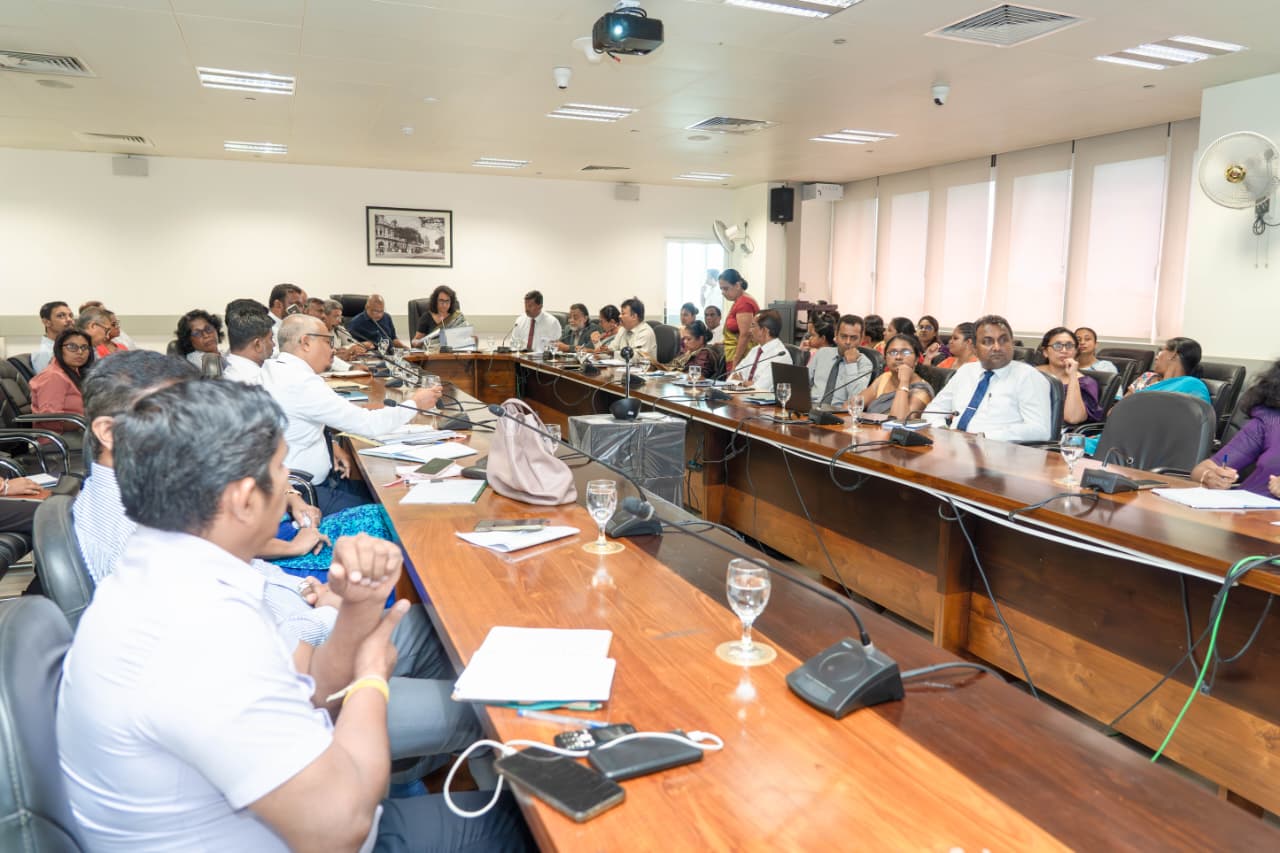
The Prime Minister made these remarks at the Colombo District Planning Committee meeting held on Tuesday (12) at the Colombo District Secretariat to review the progress of development projects in the Colombo District.
During the meeting, discussions focused on a number of development projects scheduled to be implemented in 2026 and 2027, with special attention given to rural road development, alleviation of poverty, and infrastructure development.
Under the Decentralized Budget Programme, more than Rs. 195 million has been allocated for 2026, and Members of Parliament representing the district have submitted their proposals accordingly. To date, 240 project proposals have been received through Divisional Secretaries, and approval has already been granted for 126 projects valued at Rs. 127 million.
An allocation of Rs. 100 million has been made to ensure the safety of the roads in the Colombo District, with priority given to installing safety barriers and traffic signboards in hazardous locations. In addition, officials stated that plans have been prepared targeting 2027 to construct rural bridges with an allocation of Rs. 100 million and to develop 50 kilometres of roads.
A sum of Rs. 1,036 million has been allocated for the “Praja Shakthi” programme aimed at alleviation of poverty, and the Prime Minister instructed officials to complete all related projects by 30 November 2026. Further, discussions were also held regarding the development of school playgrounds with the support of the Ministry of Sports, as well as the implementation of special projects under the Ministry of Buddhasasana and Environment.
The meeting was attended by the Minister of Justice Harshana Nanayakkara, Deputy Speaker Dr. Rizvie Salih, Colombo District Coordinating Committee Chair and Member of Parliament Lakshman Nipuna Arachchi, Members of Parliament Samanmalee Gunasinghe and Asitha Niroshana, Colombo District Secretary Ginige Prasanna Janaka Kumara, along with public representatives and government officials representing the Colombo District.
[Prime Minister’s Media Division]
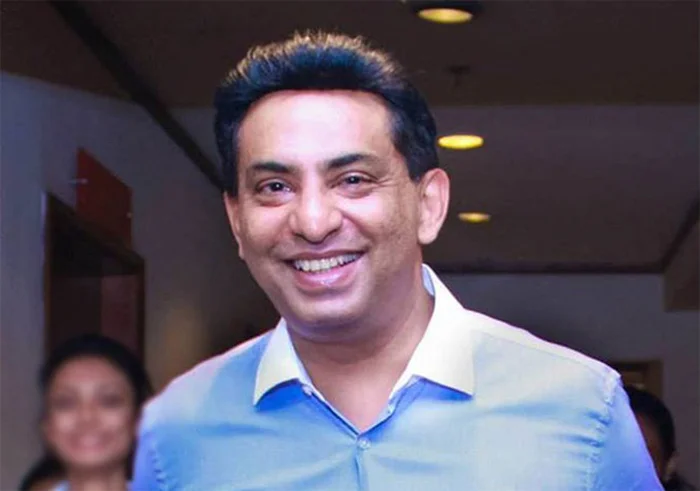
Prof. Prathibha Mahanamahewa has emphasised the need to examine the circumstances under which the court staff executed the bail bond, and the release process, in respect of the late Kapila Chandrasena, former Chief Executive Officer of SriLankan Airlines.
Chandrasena’s body was found in a house at Pedris Road, Colombo 03.
In case of any doubt regarding bail condition/s or any other matter (insufficient surety, identity issues, suspicious documents and unclear order), the Registrar had to get in touch with the relevant Magistrate, Mahanamahewa said.
Mahanamahewa was responding to The Island query regarding the acceptance of two Muslims as sureties. Had they followed the time-tested procedure, court registry/registrar staff would never have accepted sureties as blood relatives of Chandrasena, Mahanamahewa said, alleging a major defect in the execution of the bail bond.
They were arrested by police and remanded by the Colombo Magistrate’s court, till 13 May, pending further investigations.
Colombo Chief Magistrate Asanga S. Bodharagama, on 5 May, granted to Chandrasena cash bail of Rs. 500,000 and three surety bails of Rs. 10 million each. But soon after Chandrasena received bail, the court was told that two of the Rs. 10 million sureties had been produced, after payment of Rs. 15,000 each, were made to those two individuals to act as guarantors.
The bail application had been submitted by Rienzie Arsecularatne, PC, appearing on behalf of Kapila Chandrasena, when the case was earlier taken up, on 28 April.
Police also arrested an elderly person who arranged for the two persons who hadn’t even seen Chandrasena, even once, to offer themselves as sureties.
As soon as the police revealed the fraudulent manner Chandrasena obtained bail, Chief Magistrate Bodharagama issued an order to arrest and produce him before the court. This order was issued consequent to a request made by the Commission to Investigate Allegations of Bribery or Corruption (CIABOC), on the grounds that the defendant had violated bail conditions. The CIABOC wanted Chandrasena held pending the conclusion of the case.
Sources familiar with the execution of bail bond said that the moment the suspects had submitted their National Identity Cards and letters from Grama Sevakas, the court registry/registrar staff should have rejected them. In a such high-profile case, the failure on the part of the lawyers, representing Chandrasena, to check the gsureties’ relationship with Chandrasena, was another glaring shortcoming, sources said, pointing out that after having submitted bail application on 28 April, the defence team should have come prepared to put forward genuine guarantors.
The Island contacted the Bar Association of Sri Lanka for comment on the manner in which the court staff had handled bail for Chandrasena, but there was no response.
Sri Lanka’s former Ambassador to Moscow, accredited to Kiev, Udayanga Weeratunga, said that a thorough investigation should be conducted to ascertain facts about the execution of the bail bond. Asked whether he had been in touch with Chandrasena, Weeratunga said that he spent his first day at Welikada with Chandrasena and Ranjan Ramanayake in one cell. “That happened on 14 February, 2020. I was arrested when I returned to the country, from the UAE, and produced before the then Magistrate Ranga Dissanayake, the incumbent Director General of CIABOC,” Weeratunga said.
Weeratunga said that a couple of months after the change of government in 2024, the US State Department imposed a travel ban on him and Chandrasena and their families over what the US termed as significant corruption.
Weeratunga said that altogether the US designated 14 persons and, of them, two were Sri Lankan, who happened to be him and Chandrasena, accused of corruption in respect of acquisition of MiG 27s from Ukraine and the Airbus deal, during President Mahinda Rajapaksa’s tenure as the President.
SLPP sources said that Chandrasena’s demise shouldn’t prevent proper investigation on his affidavit that claimed pressure brought on him to name Mahinda Rajapaksa as a recipient of the Airbus bribe.
By Shamindra Ferdinando

Complete all projects funded under the LKR. 500 bllion allocation for Ditwah within this year – President

Development projects should be carried out in line with the practical needs of the people – PM

Ayesha Zafar’s rapid ton crushes Zimbabwe

Donald Trump lands in China for high-stakes meeting with Xi Jinping

Gujarat Titans go No.1 after Rabada and Holder rout Sunrisers Hyderabad

Showers will occur in the Western, Sabaragamuwa, Central, North-western and Northern provinces and in Anuradhapura, Trincomalee, Galle and Matara districts

‘Dates have the highest sugar content to fight Coronavirus’

Sunday Island 27 December – Headlines

#SundayIsland 17th December – Headlines

Sunday Island – 28th March

Sunday Island Headlines – 21 March

Sunday Island – 21st February – Headlines
-
 News7 days ago
MIT expert warns of catastrophic consequences of USD 2.5 mn Treasury heist
-
 News4 days ago
Lanka Port City officials to meet investors in Dubai
-
 News23 hours ago
Ex-SriLankan CEO’s death: Controversy surrounds execution of bail bond
-

 Editorial7 days ago
Clean Sri Lanka and dirty politics
-
 News5 days ago
SLPP expresses concern over death of former SriLankan CEO
-

 Editorial6 days ago
The Vijay factor
-
 News5 days ago
Police inform Fort Magistrate’s Court of finding ex-CEO of SriLankan dead under suspicious circumstances
-
Features2 days ago
High Stakes in Pursuing corruption cases