
News
Govt. rejects external evidence gathering resolution


Sri Lanka has rejected the resolution 60/L.1/Rev.1 presented to the UN Human Rights Council as the government couldn’t, under any circumstances, agree to external evidence gathering mechanism.
The following is the text of statement made by Sri Lanka’s Permanent Representative in Geneva Ambassador Himalee Arunatilaka: “Sri Lanka participated in discussions on this resolution in a spirit of open and constructive engagement that we have demonstrated throughout in our interactions with this Council. We appreciate the core group’s engagement on language amendments proposed by Sri Lanka. We, however, regret that we couldn’t find agreement on certain key concerns for us. While we thank all delegations for their constructive participation on the draft text, Sri Lanka particularly wishes to thank very sincerely, those countries which made positive suggestions during informal consultations and bilateral meetings.
As Sri Lanka had indicated from the beginning to the core group, our fundamental issue with the text is the reference to resolution 51/1 of 2022 denoting the external evidence gathering mechanism on Sri Lanka within the OHCHR, which, in our view, is an unprecedented and ad hoc expansion of the Council´s mandate.
Participating in the Interactive Dialogue on Sri Lanka on 8th September, Minister of Foreign Affairs Vijitha Herath reiterated that Sri Lanka does not accept the external evidence gathering mechanism set up by the OHCHR, which it has labelled as the `Sri Lanka Accountability Project`, at a time when the Government is continuing to strengthen the domestic institutions, based on its genuine commitment to reconciliation and human rights in the interests of our own people. The ongoing domestic processes include strengthening the independent Offices on Missing Persons and Reparations, and the Office for National Unity and Reconciliation, as well as the operationalisation of a truth and reconciliation commission, and an independent Public Prosecutor´s Office.
Sri Lanka, as well as many other countries, have repeatedly questioned the credibility and transparency of how this Project, within the OHCHR, was set up, its work and the budget allocated to it. After four years of its existence, this Council is yet to see any benefits of this Project for the people of Sri Lanka. This is clearly evident from the contents of the High Commissioner’s Report as well. The extension of its mandate will only serve the interests of elements with vested interests seeking to create divisions and polarize the communities in Sri Lanka, and will be counterproductive to the Government’s efforts on promoting unity, reconciliation and human rights.
We firmly believe that genuine nationally owned processes are best placed to address matters relating to human rights. National processes are rooted in the local context, allow for greater ownership, recognise unique sensitivities, and make implementation of action more efficient and effective.
The High Commissioner for Human Rights, who visited Sri Lanka in June this year, had the opportunity to experience firsthand the “momentum of change” across all segments of the Sri Lankan society and the “genuine openness of the Government to address issues”. In his report to this Council, too, the High Commissioner highlighted that there is a historic opportunity in Sri Lanka to implement transformative reforms. As set out by the Minister of Foreign Affairs in his statement to this Council, within a very short time, the Government has taken a series of tangible and decisive steps on reconciliation and human rights. Therefore, it is only fair that Sri Lanka be allowed to seize this opportunity to advance the rights of its own people through domestic processes.
For these reasons, we do not agree with coercive international action, and we reject resolution 60/L.1/Rev.1 presented to this Council.”



Appointment of committee eyewash, says UNP
The government is considering changes to prison regulations pertaining to the treatment of Buddhist monks serving jail terms, including their right to wear monastic robes when taken outside prison.
Justice and National Integration Minister Harshana Nanayakkara announced the proposed changes yesterday (14) following the submission of an interim report by a committee appointed to review the rules and procedures governing prisons.
The report was handed over to Secretary to the President Dr Nandika Sanath Kumanayake at the Presidential Secretariat.
One of the key recommendations is to amend Prison Standing Order 356 by introducing a new provision, 356(A). The proposed revision would require prison authorities to consult the Department of Buddhist Affairs on the removal of a monk’s robes upon admission to prison. The Commissioner of Prisons would be allowed 10 days to notify the department and take the necessary steps.
A separate amendment to Departmental Order 550 would allow Buddhist monks to wear their robes whenever they are taken outside prison, unless their respective Nikaya formally requests that the privilege be withdrawn.
The committee has also recommended extending similar arrangements, with suitable modifications, to members of other religious clergy who are imprisoned.
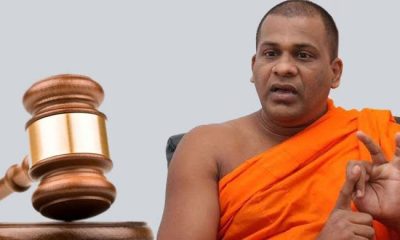
The proposals follow concerns raised over the treatment of Ven. Galagoda Aththe Gnanasara Thera after he was taken into custody. President Anura Kumara Dissanayake subsequently held discussions with representatives of the three main Buddhist Nikayas and appointed the committee to examine the existing legal framework.
Nanayakkara said the interim report had been forwarded to the Acting Commissioner General of Prisons, along with instructions to revise the relevant standing orders in accordance with its recommendations.
The proposed amendments have yet to be confirmed as formally implemented.
Meanwhile, the UNP yesterday criticised the government’s decision to appoint a committee to make recommendations on the attire to be worn by imprisoned Buddhist monks and other religious leaders when taken outside prison, describing the move as unnecessary.
In a statement issued yesterday (14), the UNP said the procedures governing the matter were already clearly set out in the Department of Prisons’ Standing Orders, making the appointment of a separate committee unwarranted.
The party cited remarks by Professor G.L. Peiris, Convenor of the Janathawadi Joint Opposition, who had described the committee’s appointment as a
“complete eyewash” and questioned the need for such a move.
Referring to Standing Order 550 of the Prisons Department, the UNP said convicted prisoners appearing before court for legal proceedings should not be required to wear prison uniforms.
It further stated that the regulations allowed prisoners to wear civilian clothing consistent with what they wore before imprisonment, including attire appropriate to their cultural and religious backgrounds.
The UNP accused the government of unnecessarily prolonging the issue by appointing a committee, despite the existence of regulations governing prisoners’ attire.
The party also called on the government to seek forgiveness from the Mahanayake Thera and the Sangha Council of the Kotte Sri Kalyani Samagri Dharma Maha Sangha Sabha of the Siyam Maha Nikaya over the decision concerning the religious attire of Ven. Galagoda Aththe Gnanasara Thera.
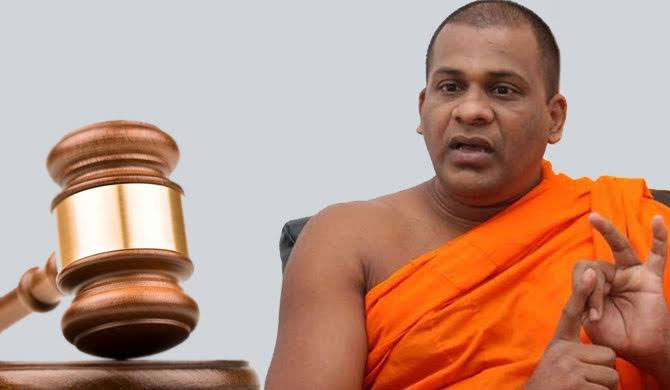
Court of Appeal President Justice Rohantha Abeysuriya yesterday withdrew from the bench hearing petitions challenging the decision by prison authorities to require Ven. Galagoda Aththe Gnanasara Thera to wear prison attire following his imprisonment.
The decision was announced when the petitions seeking to invalidate the prison authorities’ decision were taken up for consideration on October 14.
Following his withdrawal, a three-judge bench was appointed to hear the petitions.
The petitions relate to the prison authorities’ decision to require Gnanasara Thera to wear prison attire after he was taken into custody to serve the remainder of his sentence for contempt of court.
In September this year, the Supreme Court annulled the presidential pardon granted to Gnanasara Thera by former President Maithripala Sirisena in May 2019.
Following the ruling, the Court of Appeal directed the Commissioner General of Prisons to take the necessary steps to enforce the remainder of the monk’s prison sentence.
Gnanasara Thera had originally been sentenced to six years’ imprisonment for contempt of court but had served only around nine months before receiving the presidential pardon in 2019.
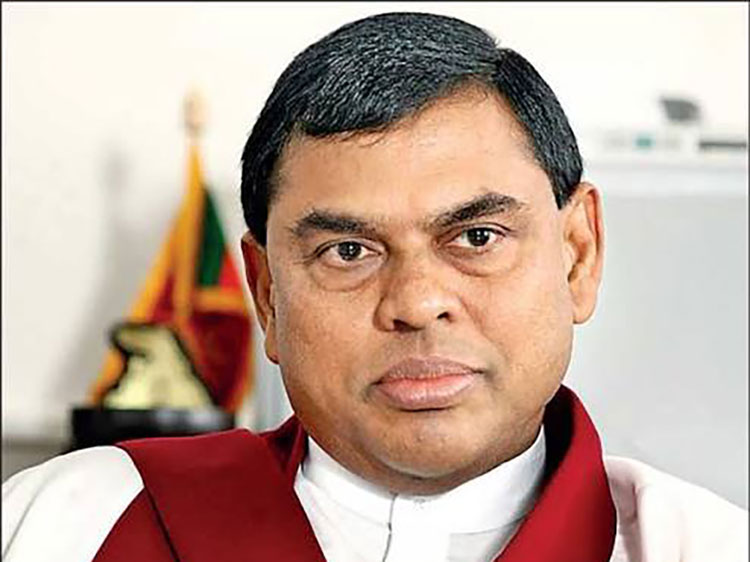
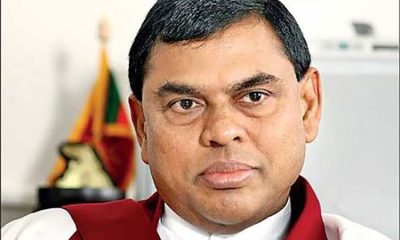
The Fort Magistrate’s Court yesterday issued an arrest warrant for former Minister Basil Rajapaksa over the alleged misuse of funds belonging to the Sri Lanka Tourism Promotion Bureau during the 2014 Uva Provincial Council election.
The Magistrate also directed the CID Illegal Assets Investigation Division to take necessary steps to obtain a Red Notice through Interpol.
The orders were issued following submissions made by the CID in connection with the alleged financial irregularities.
The CID’s Illegal Assets Investigation Unit informed the court that Rs. 7.8 million allocated to the Sri Lanka Tourism Promotion Bureau in 2014 had allegedly not been used for the Bureau’s promotional activities.
Instead, the funds had allegedly been used to provide 12,000 T-shirts during the Uva Provincial Council election, causing a financial loss to the government, the CID told court.

Prison rules to be revised over monks’ attire

AC President recuses himself from hearing prison attire case pertaining to Gnanasara Thera

Court orders steps to obtain INTERPOL Red Notice against Basil

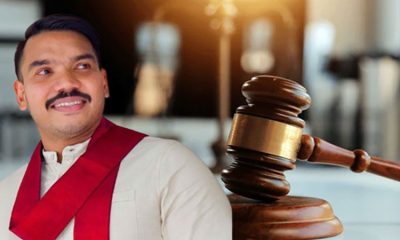
CID informs Fort Magistrate’s Court investigation into money laundering case against Namal completed

No force used to make Gnanasara Thera wear prison garb – Prisons

Saudi SC sets aside death sentence imposed on Lankan

‘Dates have the highest sugar content to fight Coronavirus’

Sunday Island 27 December – Headlines

#SundayIsland 17th December – Headlines

Sunday Island – 28th March

Sunday Island Headlines – 21 March

Sunday Island – 21st February – Headlines
-

 News6 days ago
NDB fraud Rs 60mn more than reported
-

 News6 days ago
Removing monk’s robes matter for Sangha to decide: Mahanayake Theras
-

 News4 days ago
Sri Lanka escalates anti-graft drive with Shiranthi’s jailing
-

 News5 days ago
NPP govt. reminded of its responsibilities as US warship leaves Colombo
-
 Latest News5 days ago
Farhan, Sadaqat help Pakistan ace 183 chase to go 1-0 up
-
 News6 days ago
BHC, Colombo: “LTTE remains a proscribed org. in the UK”
-

 News4 days ago
Iranian ships stranded, Lanka fears US sanctions
-

 Latest News3 days ago
Farhan and Sadaqat help Pakistan seal series in style