
News
Govt. placing Mahaweli lands under Divisional Secretaries: SLPP rebels see sinister move

By Saman Indrajith
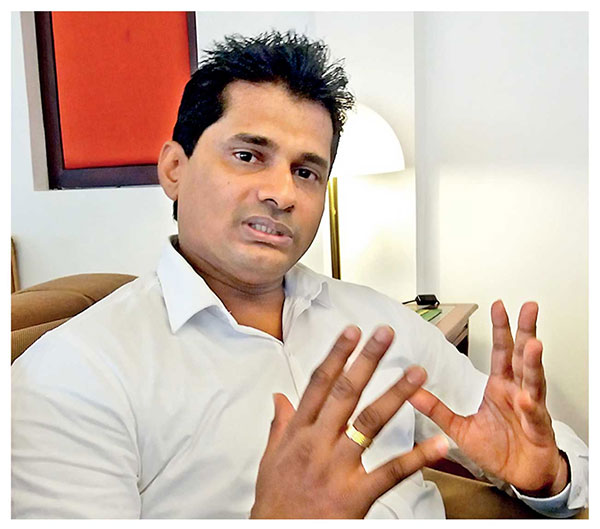
Budget 2023 has sought to deprive the farming community of their land rights by placing the Mahaweli lands under the purview of Divisional and District Secretaries, SLPP dissident MP Prof. Channa Jayasumana says.
“This proposal will take away the farmers’ rights to land. Farmers of Mahaweli lands in 15 districts and their children, will be affected by this move,” Prof Jayasumana said, participating in the debate on Budget 2023.
He said Mahaweli Project encompased 39 percent of the country’s landmass and 55 percent of the lands of the dry zone.
Proposal No: 13 says: “Although preliminary activities related to the disposal of government lands are carried out by District Secretaries/Government Agents through Divisional Secretaries/Additional Government Agents, at a later stage such duties were also allocated to Sri Lanka Mahaweli Authority and the Land Reform Commission which were established for special requirements. It is reported that there are occurrences of discrimination and malpractice as preliminary activities related to disposal of lands are done in various ways by the respective entities. Therefore, as the aforementioned special requirements have already been met, a programme will be prepared during the next year to enable preliminary activities in relation to the disposal of all government lands, including the disposal of lands under the above two institutions, only by the Divisional Secretaries.’
This will enable the government politicians and their cronies to grab the Mahaweli land, Prof Jayasumana said.
A single call from a politician to the Divisional Secretary would help them grab land, he said.
The proposal would be a threat to national security, Prof Jayasumana said.
“Budget 2023 does not offer practical solutions. It is only a concept paper. Instead of an action plan, it offers a theoretical framework. There are some positive proposals, such as amalgamating several public sector institutions working in the same field on the same subjects, is a worthy proposal if implemented properly. It is also proposed to digitize such institutions’ work. That the government has to do with utmost care, because we have the experience of what happened when some public sector institutions digitalized their services during the past 20 years. That process has been given to only a few institutes, known for corruption and frauds. As a result of these digitalization processes some international criminals have obtained Lankan passports. When we go for digitalization, we must understand that we have five cables via this country that receives internet data. These submarine cables come to the country via Colombo Fort, Mount Lavinia and Matara. These five cables are currently owned by Sri Lanka Telecom. It is the very same institute that is proposed to be restructured by this Budget. There is no need for restructuring the SLT. It has already been restructured. As a result of that restructuring, the Treasury owns only 49.2 percent share value, while a Malaysian company, by the name of Maxis, owns 44.5 percent and six percent by the public. There is no need for restructuring what is being planned to do is to sell its remaining shares.
SLT has recorded Rs 2,042 million profit in the first nine months of this year. We know that when SLT is given away the prices from Mobitel to Peo TV will be increased. In addition, the SLT has 3.5 acre land in Colombo Fort, seven acre land at Welikada, 37-acre land in Padukka with satellite equipment too would be sold. If the SLT is sold, we’ll lose our data security and that would affect the country’s cyber security. Selling the SLT off is a serious threat to the national security of the country,” Prof Jayasumana said.




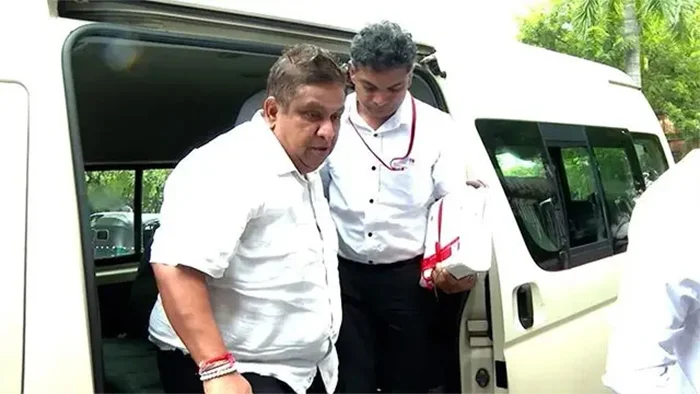
Former Minister and current New Democratic Front (NDF) Member of Parliament Chamara Sampath Dassanayake was yesterday remanded by Colombo Magistrate court until 23 Oct. The Commission to Investigate Allegations of Bribery or Corruption (CIABOC) arrested him after recording a satement from him.
The CIABOC made the arrest following investigations into allegations that the MP solicited a bribe totalling Rs. 8.1 million from three companies in exchange for facilitating phosphate exports and assisting the companies in obtaining export licences.
The NDF parliamentary group consists of five MPs, including two National List members.
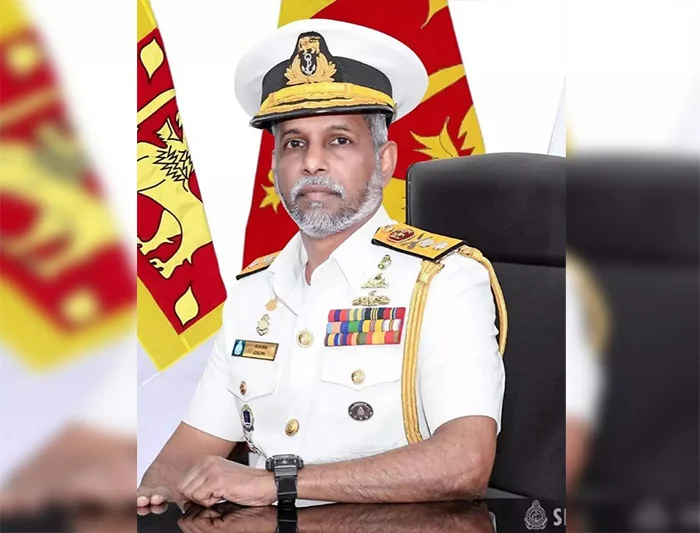
Rear Admiral Rohan Joseph formally assumed duties as the Director General Training of the Sri Lanka Navy at Navy Headquarters today, 12 October 2026.
Rear Admiral Joseph joined the Sri Lanka Navy as an officer cadet of the 12th intake of General Sir John Kotelawala Defence University and was commissioned on 22nd October 1996. Prior to his appointment as Director General Training, he served as the Director General Sri Lanka Coast Guard.

The Central Bank yesterday reported that the country had received a total of USD 6,865.4 million in workers’ remittances from January to September this year.
The CBSL said that it was an increase of USD 1,053.7 million compared with the corresponding period last year, when such remittances totalled USD 5,811.7 million.
The workers’ remittances received in September this year amounted to USD 734.4 million, up from USD 695.7 million recorded in September last year, reflecting a year-on-year increase in remittance inflows.

From food truck to homegrown success: Street Burger celebrates 10 years

Chamara remanded

Unlocking their world: A home-based guide to nurturing children with autism

New post for Rohan

Central Bank of Sri Lanka releases Financial Stability Review for Year 2026

Worker remittances up by one billion dollars in first nine months of the year

‘Dates have the highest sugar content to fight Coronavirus’

Sunday Island 27 December – Headlines

#SundayIsland 17th December – Headlines

Sunday Island – 28th March

Sunday Island Headlines – 21 March

Sunday Island – 21st February – Headlines
-

 Features5 days ago
The Sri Lankan who made Scottish history
-

 Features7 days ago
Preventing grievances from becoming communal
-

 Sports5 days ago
Nissanka absence opens door for Sri Lanka’s young guns
-

 News6 days ago
Gnansara Thera to be assigned to prison printing section: Officials
-

 News4 days ago
NDB fraud Rs 60mn more than reported
-

 News4 days ago
Removing monk’s robes matter for Sangha to decide: Mahanayake Theras
-

 Features5 days ago
Future of Sri Lanka’s state university system: Should it be shut down and reopened?
-
 News6 days ago
OIC of FCID summoned before Maligakanda Magistrate