
Editorial
Govt. in a spot


Saturday 27th February, 2021
The rejection by the SLFP of the final report of the Presidential Commission of Inquiry (PCoI), which probed the Easter Sunday carnage, has come as no surprise. It could not have done otherwise; its leader and former President Maithripala Sirisena is among those the PCoI has held responsible for the serious lapses that made the terror attacks possible. However, if the SLFP thinks it can defend its leader simply by rejecting the commission report, it is mistaken. Attorney General Dappula de Livera will decide whether to institute legal action against those named in the report; he will do so after perusing the report and other documents related thereto.
Sirisena, while he was the President, used to brag that he had a sword (read executive powers), which we jokingly likened to King Arthur’s Excalibur. He said he would not hesitate to use his ‘sword’ for the benefit of the people. In reality, he behaved like a child wielding a Samurai sword. He did not know how to exercise the executive powers which a leader must not monkey around with. The Easter Sunday attacks would not have happened if there had been a sensible President. Terrorist attacks are difficult to prevent, but in the case of the Easter Sunday carnage there had been several warnings.
Others in the yahapalana government were also responsible for the serious lapses that led to the terror strikes. The then Prime Minister Ranil Wickremesinghe became the de facto head of state thanks to the 19th Amendment, which stripped the President of some vital executive powers and vested them in the Prime Minister. Wickremesinghe had the police, especially the CID, under his thumb. The entire Cabinet of ministers at the time was also responsible for the massive security failure that enabled the NTJ terrorists to strike at will.
The UNP is paying for its sins in the political wilderness. Some prominent UNPers who were in the yahapalana government, which failed to prevent the terror strikes, are now in the SJB. They seem to think the people have forgotten their past. They cannot absolve themselves of the blame for the UNP-led administration’s serious lapses on the national security front, but they have shrewdly put the incumbent government on the defensive over the PCoI report. These worthies have adopted a ruse pickpockets employ to make good their escape. When a pickpocket has to outrun his pursuers, he bolts, shouting ‘pickpocket, pickpocket’ so as to dupe others into believing that he is also one of the good guys. The SJB, which is the UNP in all but name, is now demanding to know the truth about the Easter Sunday carnage, which they did not care to prevent!
The SLPP, which, during its Opposition days, rejected a Parliamentary Select Committee report on the Easter Sunday attacks, undertook to launch a thorough probe to get at the truth and bring the culprits to justice, and flogged the issue of security failure hard enough to capture power, stands accused of having reneged on its promise. The SJB/UNP is now on the offensive, picking holes in the PCoI report. We are witnessing a role reversal, aren’t we?
What on earth possessed the government to delay the submission of copies of the commission report to Parliament and the Attorney General? A copy of the report should also have been sent to His Eminence Malcolm Cardinal Ranjith, who was instrumental in bringing the post-carnage situation under control. But for his intervention, the country would have been plunged into another bloodbath. The government resorted to delaying tactics, giving the impression to the public that it was trying to suppress the PCoI findings and recommendations in a bid to defend Sirisena, who is now on its side.
Sirisena became a problem for the Rajapaksas, in 2014, by decamping and securing the presidency with the help of the UNP. They kissed and made up subsequently. It won the last presidential election in spite of Sirisena, whose sympathies were with SJB Presidential candidate, Sajith Premadasa. It, in its wisdom, offered a piggyback ride to Sirisena at the general election; it has thus made him its problem again.
It is being argued in some quarters that the only way the government can prevent the Opposition from cashing in on the PCoI report is to throw Sirisena to the wolves, but the SLFP has 14 members in the SLPP parliamentary group. There’s the rub. The government finds itself in a spot.



Saturday 4th July, 2026
The Police Department has its fair share of rogue elements who have brought the law enforcement authorities into disrepute and make them get bad press. But the police are not short of personnel who even go above and beyond the call of duty to nab lawbreakers and ensure public safety. Sadly, their good work often goes unappreciated.
Unit 2 of the Western Range (North) has done the police proud. On 28 June, its men and officers raided a house in Malabe, where illicit liquor was bottled, and arrested six suspects with as many as 18,000 bottles of illicit liquor.
The bottles of counterfeit arrack complete with security stickers and ready for distribution were virtually indistinguishable from the genuine products, according to investigators. Nobody knows how many bottles of counterfeit arrack had been produced there and how injurious the illicit brew is to health.
Under interrogation, the suspects revealed that the illicit brew had been distributed in the Eastern Province. On Thursday, the police team that conducted the Malabe raid rushed to Batticaloa, where they seized a large number of bottles of illicit liquor transported from Malabe. The police officers who took part in the raid deserve praise.
While the police were busy packing the bottles of illicit brew taken into custody and doing necessary paperwork, a group of Excise officers materialised, and claimed that the police had made a documentation error. Their intervention led to a recount of the bottles of counterfeit liquor in custody, but the allegation turned out to be baseless. Obviously, the Excise Department personnel did not take kindly to the police raid.
One of the police officers told the Excise officers some home truths, one being that the police were doing what the Excise Department should have done. One cannot but agree with him.
The police had to move in as the Excise officers had failed to carry out their duties and functions. The latter should have been able to trace the untested brew transported and sold illegally in liquor outlets in the East. It is possible that the Malabe brew, as it were, was distributed in other parts of the country as well.
Illicit liquor has claimed many lives in this country during the past several years and therefore the brew, seized in Malabe and in some parts of the Eastern Province, must be tested urgently to see if it contains harmful substances. One may recall that in January 2026, six people died in Wennappuwa after consuming arrack purchased from a licensed liquor outlet. Such tragedies occur due to contamination, counterfeit infiltration and supply-chain frauds.
As for the police raids in Malabe and the East, there is reason to believe that so many bottles of illicit liquor could not have been distributed and sold in licensed outlets, unbeknownst to the Excise Department personnel, who are paid with public funds to keep a watchful eye on liquor retailers, among others, and act on any transgressions. That the police had to do their job is an indictment of the Excise officers, especially those under whose nose the illicit brew was sold in the East.
A member of the police team which conducted the raid in the East has asked how the security stickers meant for the legally produced bottles of liquor got into the wrong hands. A thorough investigation should be conducted to ascertain whether Excise officers were involved in the liquor racket and why they confronted the police in the East instead of cooperating.

Friday 3rd July, 2026
The JVP-NPP government has decided to allow the Emergency regulations to lapse, according to media reports. This is something welcome, but it should have been done months ago. Better late than never. The government has apparently made a virtue of necessity. It incurred public opprobrium and came under heavy pressure to end the protracted state of Emergency, which was declared in the aftermath of the landfall of Cyclone Ditwah towards the end of last year to facilitate disaster management and relief operations.
It is said that Sri Lanka has been under emergency rule for more than three decades since Independence, with the longest, uninterrupted periods occurring during the two JVP uprisings and the Ealam war. There is no political party that did not misuse Emergency regulations to further its interests while in power. Politicians realise the need to protect civil liberties and protest only when they lose power and become victims of the Emergency regulations, which grant governments sweeping powers of arrest and detention.
The JVP-NPP government ought to carry out its promise to abolish the PTA (Prevention of Terrorism Act), which has been abused by successive governments to suppress democratic dissent. President Anura Kumara Dissanayake has recently pledged to do so before the end of this year. It is obvious that the government is planning to replace the PTA with the proposed PSTA (Protection of the State from Terrorism Act), which is as draconian as the PTA.
The PTA and the proposed PSTA are Tweedledum and Tweedledee for all intents and purposes. Various human rights groups, civil society organisations, political activists, the UN and the media have pointed out that the PSTA cannot be accepted as an alternative to the PTA. They have echoed the view of the Office of the High Commissioner for Human Rights that the PSTA has not defined terrorism properly, and this fact runs counter to international law. An overly broad definition allows the PSTA to be misused. The PSTA seeks to empower senior police officers to issue detention orders and authorise pre-charge detention for renewable periods of up to two months for a total of up to one year. It has been pointed out by international human rights organisations, such as Amnesty International, that the PSTA seeks to retain untrammelled executive powers; the presidential powers are so extensive that the sole avenue for appeal against Proscription Orders lies with the Executive itself so much so that they undermine the International Covenant on Civil and Political Rights. The government ought to discard the proposed PSTA and introduce an anti-terror law that conforms to international best practices.
Similarly, it behoves the government to fulfill its solemn pledge to discontinue the culture of performative arrests, politically determined detentions, and vilification campaigns against suspects. The police arrest suspects even before conducting investigations, much less ascertaining credible evidence, and have the latter detained or remanded for long periods. Thereafter, the police and the Attorney General’s Department slow-walk the legal process. The current practice of looking for evidence after making arrests must end, as it is antithetical to democracy. A stay in overcrowded, squalid Sri Lankan remand prisons is tantamount to punishment in itself. The condition of detention cells in the CID headquarters is even worse, we are told. Hence, no person should be detained or remanded without credible evidence.
Cabinet Spokesman Dr. Nalinda Jayatissa recently sought to justify the detention of former State Intelligence Service Director Maj. Gen. (Retd.) Suresh Sallay in one of the filthy, tiny cells at the CID headquarters. He stated that those cells had been used to detain suspects for a long time, and Sallay could not be given preferential treatment. However, the JVP/NPP came to power, promising to break the so-called 76-year curse, didn’t it?
Previous governments did nothing about the hellholes that prisons and the CID detention cells are, and some of them and their supporters are now languishing in those places. It will be in the present-day leaders’ own interests to do away with the existing draconian laws and improve the conditions of remand prisons and detention facilities, for the boot will be on the other foot after the next regime change.
Thursday 2nd July, 2026
President Donald Trump is full of himself as he enjoys unified Republican control of the US federal government. He exercises control over the White House and both chambers of the Congress. The composition of the current US Supreme Court (SC) with its conservative majority is also considered favourable to Trump; the apex court is widely viewed as being receptive to his constitutional arguments. Nevertheless, executive powers are far from untrammelled thanks to the robust US Constitution, which helps keep Trump reminded that the US democracy is stronger than he, and he has to be mindful of the separation of powers and act within constitutionally stipulated limits.
Trump’s immigration agenda suffered a huge setback yesterday. In a split decision, the SC has ruled that babies born in the US have a constitutional right to citizenship. This ruling has effectively put paid to Trump’s effort to end a 150-year-old citizenship policy amidst protests. The SC has upheld some of the current crucial immigration policies and helped strengthen Trump’s executive power, but in the present instance, it has stated categorically that all children born in the US “to parents unlawfully or temporarily present are citizens at birth under the 14th Amendment”. Trump and his team took great pains to convince the SC that children of undocumented immigrants and some temporary visitors were not subjected to the jurisdiction of the aforesaid amendment and therefore were not eligible for birthright citizenship. But the court was convinced otherwise.
The birthright citizenship ruling has come close on the heels of an SC judgement that sent the Trump administration reeling. Three days ago, in a ruling seen as affirming the Federal Reserve’s independence, the US SC foiled President Trump’s attempt to sack Lisa Cook, a governor of the US central bank. In a majority decision, the SC held that the Trump administration had not followed due process, which would have allowed Cook to contest her removal. The case will be sent back to lower courts, and the burden is now on the Trump administration to prove its allegation that Cook committed a mortgage fraud. She has vehemently denied the allegation. Trump has drawn heavy criticism for trying to exert greater control over the US central bank.
The US apex court has given several judgements against the Trump administration during the past several months. It has held that the International Emergency Economic Powers Act does not authorise the President to impose sweeping tariffs unilaterally. The ruling has invalidated numerous tariffs imposed by Trump, much to the resentment of the White House. The SC has also upheld a Mississippi law that provides for counting ballots that arrive after election day if they are posted on time. Trump and his fellow Republicans did their best to have that grace period removed, but in vain. In another bold decision, the SC ordered the Trump administration to ensure the return of a man who had been mistakenly deported to El Salvador. Trump’s efforts to deploy the National Guard despite objections raised by local and state officials were also foiled by the SC by upholding a lower court’s ruling.
President Trump has also failed to keep the Congress under his thumb. The House of Representatives and the Senate have passed a vital war powers resolution, directing Trump to withdraw US armed forces from hostilities in or against Iran. They have effectively curbed Trump’s military authority and made it mandatory for him to obtain congressional approval for such military campaigns.
Not that all decisions by the US judiciary and the Congress are flawless and welcome. According to legal experts, there have been several key SC decisions that enabled Trump to expand his executive power. The SC has loosened campaign finance restrictions, and this will benefit Republicans, whose election war chest is bulging while Democrats are reportedly in debt. US midterm elections are due in November 2026.
However, the US judiciary and the Congress assert their power and strengthen checks and balances to ensure that the Constitution takes precedence over politics, and the Executive acts with restraint. This is worthy of emulation for countries where executive power is virtually unrestrained, and the Heads of States act in a way that reduces legislators, including senior university professors, to the level of kindergarten children while making accurate predictions about judgements in high-profile cases and keeping key judicial positions vacant for political reasons, with impunity.

Brutal heat cancels Fourth of July events, from DC to Philadelphia

Arias sends Colombia into World Cup last-16 with 1-0 win over Ghana

Messi scores again but Argentina given World Cup upset fright by Cape Verde

Anguished families left to identify Venezuela quake victims at makeshift morgue

Ukrainian suspect hunted by police after Monaco bomb attack was ‘disguised as a man’

Showers in the Western, Sabaragamuwa and North-western provinces and in Galle, Matara, Kandy, Nuwara-Eliya, Anuradhapura and Mannar districts.

‘Dates have the highest sugar content to fight Coronavirus’

Sunday Island 27 December – Headlines

#SundayIsland 17th December – Headlines

Sunday Island – 28th March

Sunday Island Headlines – 21 March

Sunday Island – 21st February – Headlines
-
 News6 days ago
LAWASIA warns against ad hoc initiative to increase judges’ retirement ages
-
 Features5 days ago
Climate action to bring South Asia together
-
 News5 days ago
Chamuditha to seek removal of injunction on Youtube programme
-

 Features7 days ago
People’s Bank expands digital banking network with 125th cheque deposit kiosk
-
 News2 days ago
CIABOC to question Harak Kata on Rs. 200 mn bribery allegation
-
 News2 days ago
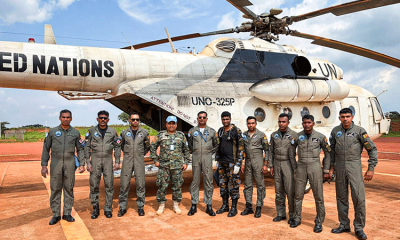
SLAF conducts successful rescue mission under UN command in Central African Republic
-
 News15 hours ago
Freedom 250: US Embassy celebrates America’s 250th Independence Day through magic of American cinema
-
 News5 days ago
CPRP alleges another death in custody, seeks protection for witness