
News
Govt. has to stop money printing now, not in 2024: Harsha

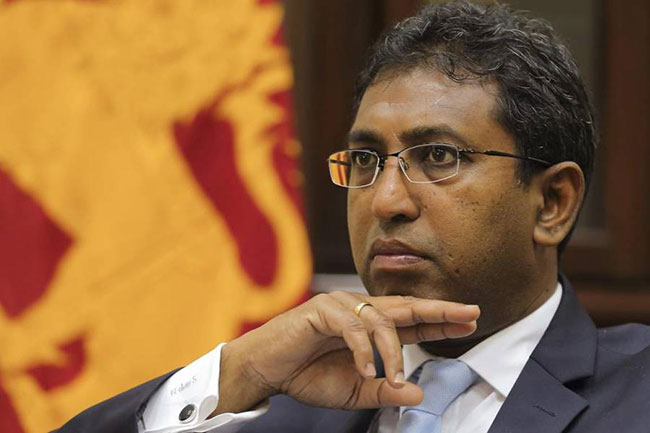
ECONOMYNEXT –Sri Lanka should stop money printing earlier than indicated in a statement by Prime Minister Ranil Wickremesinghe, opposition legislator Harsha de Silva said, though legislators have already given extensive powers to the agency engage in liquidity injections.
“Prime Minister Ranil Wickremesinghe talked about money printing,” de Silva told parliament.
“He said, the inflation is going up and the printing should be stopped. But he also said it can only be stopped by the end of 2023 or in early 2024,” Silva said.
“It cannot happen like that and you have to take a decision right now. We all must understand that if nothing is being done, the inflation will go up until 100 percent from the predicted 60 percent.”
Silva the country has already become an unlivable place for the general public and according to the CBSL data, the food inflation of the country has risen up to 80.1 percent in June, 2022.
Sri Lanka’s central bank has now created the worst currency crisis in its 72-year history.
Sri Lanka’s intermediate regime central bank was set up as a fundamentally flawed Latin America style agency with dual anchor conflicts in 1950 by US money doctor, giving soft-peggers the ability to trigger currency crises and high inflation abolishing a currency board where money printing was outlawed up to then.
However the agency had no active open market operations in the initial stages and it was restrained by a gold peg.
A reserve collecting peg collapses when the central bank prints money to keep rates down. Sri Lanka’s central bank repeatedly prints money whenever domestic credit picks up, regardless of whether state or private credit is picking up including when the US hikes rates under pseudo monetary policy independence, with devastating consequences on the people, critics have said.
However after 2015 with flexible inflation targeting the rupee was hit with extreme open market operations, to target an output gap (printing money to push growth up) creating currency crises and pushing growth down in their wake and impoverishing the people with rupee depreciation.
Under ‘flexible’ inflation targeting a reserve collecting peg was repeatedly bombarded with liquidity injections to manipulate rates down (call money rate targeting) until the currency collapsed.
The currency was depreciated under real effective exchange rate targeting including in 2017 when there was not credit pressure and the rupee was facing upward pressure and large volumes of inflows were sterilized, as growth and private credit slowed.
There is nothing politicians in Sri Lanka can do, whether in power or in opposition when Sri Lanka’s central bank decides to print money to drive interest rates down.
“I don’t know whether you can take that decision now because Nandalal Weerasinghe has been appointed as the CBSL governor,” de Silva told Prime Minister Wickremesinghe perhaps in a reference to central bank independence.
In 2018 as credit recovered, de Silva pleaded with the then leadership with of the central bank in vain to allow rates to go up as the currency was hit with liquidity injections, after giving ‘central bank independence’, to the agency during the ousted ‘Yahapalana’ administration.
Fiscal dominance including de facto fiscal dominance was removed by the Finance Minister Mangala Samaraweera raising taxes, bringing the deficit down and market pricing fuel in 2019.
The central bank printed money anyway ignoring political pleas and busted the currency from 152 to 182 and drove away foreign investors in rupee bond by undermining the credibility of the peg.
However politicians have the legislative power to tame soft-pegging central bank into either hard pegs or true currency boards like Hong Kong, or currency board like pegs like in East Asia and GCC countries with restricted open market operations.
They can also curb flexible pegs with true inflation targeting and a clean floating exchange rate which will also eliminate balance of payments crises and poverty.
Over the past 7 years three currency crises were created in rapid succession under flexible inflation targeting and output gap targeting.
In the 2020-22 crisis, where over 2.6 trillion rupees were printed the rupee has now fallen from 200 to 360 to the US dollar with soft-peggers impoverishing both wage earners and the elderly.
In the 2020-2022 crisis, the banking system was pumped with excess liquidity of up to 200 billion rupees under modern monetary theory up from around 60 billion rupees under call money rate targeting and output gap targeting, which is a milder version of MMT.The entire world is now suffering from liquidity injections made by the Federal Reserve under its dual mandate which is being conveniently blamed on Russia and Ukraine.



The Opposition yesterday called for the entire Cabinet-of-Ministers to accept responsibility for the coal scam. Addressing the media at the Flower Road Office of UNP leader Ranil Wickremesinghe, former Foreign Minister Prof. G. L. Peiris emphasised that Energy Minister Kumara Jayakody’s resignation, in the wake of the damning report issued by the National Audit Office (NAO), has now implicated the entire Cabinet-of-Ministers.
Prof. Peiris asserted that Jayakody, who had been indicted in the Colombo High Court over alleged corruption, during the Yahapalana administration, stepped down after the NPP failed to suppress the truth on the coal scam.
The ex-Minister declared that Jayakody’s resignation, the first since the formation of new government, with a super majority in Parliament, was a devastating setback for the current dispensation.
The internationally recognised legal scholar said that a future government would move courts against the entire NPP Cabinet. Referring to the NAO report submitted to Parliament, Prof. Peiris emphasised that there was absolutely no ambiguity regards allegations directed at the Energy Ministry. The NAO report proved that the Indian company, Trident Champhar, that won the major contract, didn’t even have the required registration.
Prof. Peiris said that the coal scam was three times bigger than the Treasury bond scams, perpetrated during the Yahapalana time (SF)

The Colombo High Court yesterday ordered that the case, filed under the Prevention of Money Laundering Act against Yoshitha Rajapaksa, son of former President Mahinda Rajapaksa, and his grand-aunt Daisy Forrest Wickramasinghe, be recalled on June 10.
The case was taken up before High Court Judge Rashmi Singappuli.
At the hearing, State Counsel informed the court that a related case, on similar charges, had been filed before High Court No. 08. The court was further informed that a revised indictment has been directed to be filed in that case, necessitating the submission of a revised indictment in the present case as well.
State Counsel requested time to report on the progress of those proceedings.
Accordingly, the judge ordered that the case be called on June 10 and directed that progress be reported on that date.
The case pertains to three indictments filed by the Attorney General alleging that between March 31, 2009, and December 12, 2013, the accused had committed an offence under the Prevention of Money Laundering Act by depositing over Rs. 59 million in three private banks, the source of which could not be explained.

A three-judge bench of the Colombo Special High Court yesterday rejected a request by former Inspector General of Police (IGP) Pujith Jayasundera to introduce additional facts to a statement he had previously made from the dock.
Jayasundera is an accused in the case filed over alleged criminal negligence in failing to prevent the 2019 Easter Sunday terrorist attacks, despite prior intelligence warnings.
The order was delivered by the bench, presided over by Justice Priyantha Liyanage.
Meanwhile, retired Senior Deputy Inspector General (SDIG) Nandana Munasinghe and Deputy Inspector General (DIG) in charge of the Eastern Province, Waruna Jayasundera, appeared before court as defence witnesses.

Opposition holds NPP Cabinet responsible for coal scam, three times bigger than bond fraud

Case against Yoshitha and Daisy Forrest postponed

Three-judge bench rejects request by ex-IGP Pujith

Johnston gets bail after four months

Thousands of pets affected by Avurudu firecrackers; over 10,000 cases of trauma reported

Inadequate LPG price hike compels the vulnerable to subsidize the wealthy: Advocata Institute

‘Dates have the highest sugar content to fight Coronavirus’

Sunday Island 27 December – Headlines

#SundayIsland 17th December – Headlines

Sunday Island – 28th March

Sunday Island Headlines – 21 March

Sunday Island – 21st February – Headlines
-
 News4 days ago
Rs 13 bn NDB fraud: Int’l forensic audit ordered
-

 Opinion5 days ago
Shutting roof top solar panels – a crime
-

 News6 days ago
From Nuwara Eliya to Dubai: Isha Holdings markets Agri products abroad
-

 News2 days ago
Lanka faces crisis of conscience over fate of animals: Call for compassion, law reform, and ethical responsibility
-

 News1 day ago
No cyber hack: Fintech expert exposes shocking legacy flaws that led to $2.5 million theft
-
 News5 days ago
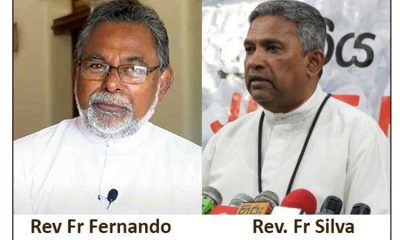
Church calls for Deputy Defence Minister’s removal, establishment of Independent Prosecutor’s Office
-
 News1 day ago
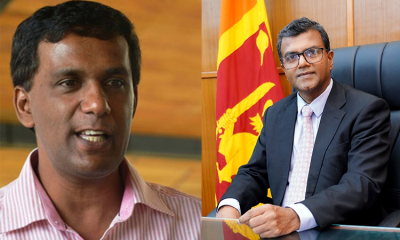
Whistleblowers ask Treasury Chief to resign over theft of USD 2.5 mn
-

 Life style6 days ago
After dark in Sri Lanka: Tiny wild cats step into the spotlight