
News
Govt. accused of giving Indian companies access to Lankans’ biometrics

By Rathindra Kuruwita
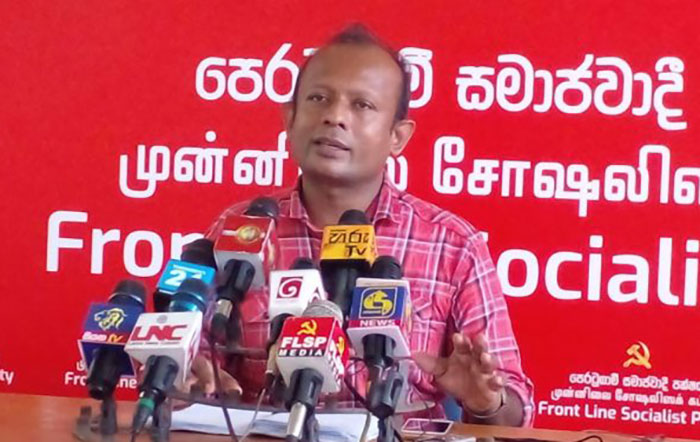
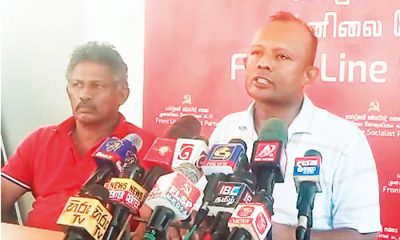
The Frontline Socialist Party (FSP) on Sunday (11) flayed the government for having agreed to grant some Indian companies access to the biometrics of Sri Lankans under the proposed Unitary Digital Identity Framework project.
FSP Education Secretary Pubudu Jayagoda said the High Commissioner of India to Sri Lanka, Santosh Jha had, on 01 February, told the media that an Indian company would print national identity cards with biometric features soon. Jayagoda said there were some issues in the bids made by Indian companies in 2023, but they would be sorted out by mid-2024.
In 2023, the Indian government provided 450 million Indian rupees for the implementation of the Unitary Digital Identity Framework project in Sri Lanka. According to the Memorandum of Understanding (MoU) the vendor should be an Indian company.
The Sri Lankan government called for tenders to select a service provider, but the two Indian companies were disqualified because they were not able to comply with basic criteria.
Jayagoda said: “The ID cards we use now have bio-data like name, date of birth, etc. In 2015, the Registration of Persons Act was changed to allow the issuance of an ID with biometrics.
When this act was amended, only one MP opposed it. We don’t think that the state has the right to access biometrics without a court order. This harks back to the time of kings, when rulers owned the physical bodies of their subjects,” he said.
Jayagoda said that the issue of collecting biometrics had national security implications.
“This started during the Gotabaya Rajapaksa administration. In July 2021, criteria were prepared for a new electronic national identity card. On 28 January 2022, the Cabinet approved Gotabaya Rajapaksa’s Cabinet paper seeking approval to award the digital identification card project to an Indian company. This opened doors for India to step in. On 08 May 2023, the Ranil-Rajapaksa government called for tenders for the project that was only open for Indian companies. The entire project costs 41.09 billion rupees. India will only give about 22 billion rupees and will get access to the biometrics of 22 million Sri Lankans. What an amazing deal for India,” Jayagoda said.
Madras Security Printers (MSP) and Protean Technologies were the Indian companies that offered bids. MSP, who has been blacklisted in India as well as in several other countries, nearly got the tender.
“The project did not get off the ground due to public outrage. Now tenders will be called again. No matter what Indian company wins, this will give access to invaluable data to a foreign state. This is a great threat to national security. No other country has given access to the biometrics of its people to a foreign country.”
Jayagoda said a country like Singapore, which collects biometrics, has gone to great lengths to prevent access to data for private or foreign companies. In the 21st century, data and information are tools that can be used to dominate other states.
“We urge people to not give their biometrics to any foreign company,” he said.








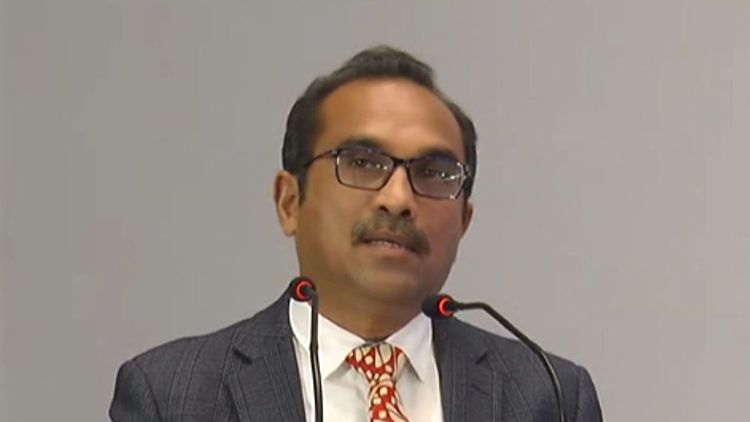
Minister of Transport, Highways and Urban Development Bimal Ratnayake yesterday told Parliament that issues faced by the public in obtaining fuel QR codes would be addressed within the day.
Responding to a query, the Minister said fuel consumption in several districts had risen to nearly double the usual levels, placing added strain on the distribution system.
He said difficulties in accessing QR codes had primarily affected individuals using mismatched vehicle and phone number records, including owners of older vehicles with new phone numbers and those with newly registered vehicles linked to old numbers. He assured that steps were being taken to rectify these issues promptly.
The Minister noted that no such complications had been reported among users with consistent records, such as old vehicles paired with original phone numbers or new vehicles registered with updated contact details.
Providing an update on the system, he said around seven million users were registered under the QR programme in 2023, with the figure expected to increase to approximately 7.2 million this year. At present, about 5.5 million users have completed registration.
He said approximately 2.7 million outdated entries in the database had been removed over a two-day period as part of system improvements.
Minister Ratnayake said some filling stations had reported sales volumes reaching up to two-and-a-half times normal levels, exerting pressure on storage and distribution capacities. He urged the public to avoid panic, expressing confidence that the situation would normalise by today.
He said the “odd-even” fuel distribution system had been introduced to ease unnecessary pressure, although the QR-based system alone was sufficient to manage distribution efficiently.
The Minister also clarified that vehicle owners without number plates could still obtain fuel by producing valid documentation, including a revenue licence, emission certificate, vehicle registration certificate or insurance certificate, all of which carry the registration number.
He added that once the system stabilises, authorities would take action against any fraudulent activities linked to fuel distribution.
By Saman Indrajith
Sri Lanka has been ranked among the least happy countries in the World Happiness Report 2026, placing 134th with a score of 4.0.
The latest report shows Sri Lanka slipping one position from 133rd in 2025, ranking alongside Ethiopia and trailing behind regional neighbours India, Pakistan and Bangladesh.
Finland topped the global rankings as the happiest country, followed by Iceland, Denmark, Costa Rica and Sweden. Norway, the Netherlands, Israel, Luxembourg, Switzerland, New Zealand, Mexico, Ireland, Belgium and Australia completed the top 15.
The report, compiled by the Wellbeing Research Centre at the University of Oxford, is based on findings from the Gallup World Poll, which surveys respondents in 147 countries.
Participants are asked to evaluate their lives using the Cantril Ladder scale, ranging from 0, representing the worst possible life, to 10, representing the best possible life.
Researchers analyse six key factors; GDP per capita, life expectancy, generosity, and perceptions of freedom and corruption to explain differences between countries. Rankings are calculated using a three-year average to minimise fluctuations caused by major events such as conflicts or economic crises.
Latest News
Heat Index likely to increase up to ‘Caution level’ at some places in Western, Sabaragamuwa, North-central, Southern and North-western provinces and in Monaragala, Mannar, Vavuniya and Mullaitivu districts

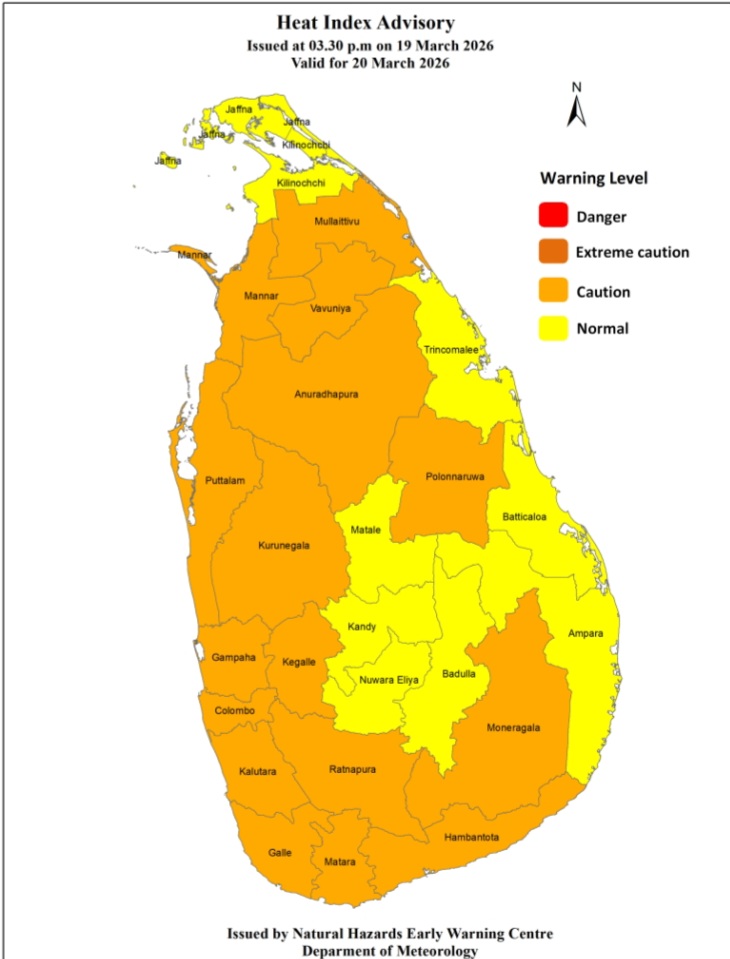
Warm Weather Advisory
Issued by the Natural Hazards Early Warning Centre
at 3.30 p.m. on 19 March 2026, valid for 20 March 2026.
The public are warned that the Heat index, the temperature felt on human body is likely to increase up to ‘Caution level’ at
some places in Western, Sabaragamuwa, North-central, Southern and North-western provinces and in Monaragala, Mannar, Vavuniya and Mullaitivu districts.
The Heat Index Forecast is calculated by using relative humidity and maximum temperature and this is the condition that is felt on your body. This is not the forecast of maximum temperature. It is generated by the Department of Meteorology for the next day period and prepared by using global numerical weather prediction model data.
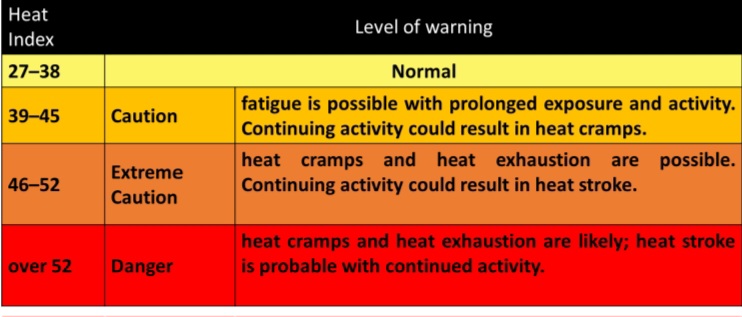
Effect of the heat index on human body is mentioned in the above table and it is prepared on the advice of the Ministry of Health and Indigenous Medical Services.
ACTION REQUIRED
Job sites: Stay hydrated and takes breaks in the shade as often as possible.
Indoors: Check up on the elderly and the sick.
Vehicles: Never leave children unattended.
Outdoors: Limit strenuous outdoor activities, find shade and stay hydrated.
Dress: Wear lightweight and white or light-colored clothing.
Note:
In addition, please refer to advisories issued by the Disaster Preparedness & Response Division, Ministry of Health in this regard as well.
For further clarifications please contact 011-7446491.

Netanyahu says Israel ‘acted alone’ in attack on Iranian gas field

Be a woman who re-designs life!

Transport Minister assures parliament glitches in fuel QR codes will be addressed immediately

Sri Lanka ranks among world’s unhappiest nations in 2026 report

“Fairfirst Trophy at stake when undefeated HNB Assurance meet McLarens Group today

St. Servatius’ looking to break deadlock

‘Dates have the highest sugar content to fight Coronavirus’

Sunday Island 27 December – Headlines

#SundayIsland 17th December – Headlines

Sunday Island – 28th March

Sunday Island Headlines – 21 March

Sunday Island – 21st February – Headlines
-

 Business4 days ago
Browns EV launches fast-charging BAW E7 Pro at Rs. 5.8 million
-

 Life style5 days ago
From culture to empowerment: Indonesia’s vision for Sri Lanka
-

 News2 days ago
CIABOC questions Ex-President GR on house for CJ’s maid
-
 Business6 days ago
Sri Lanka Institute of Information Technology raises the bar for academic excellence
-

 Life style5 days ago
Ranjith Fernando celebrates cricketing journey with Hob Nails to Spikes
-

 Latest News5 days ago
QR code system will be implemented for fuel with effect from 06.00 a.m. today (15th)
-

 News3 days ago
Australian HC debunks misleading travel risk claims for Sri Lanka
-

 News3 days ago
Sri Lankan marine scientist Asha de Vos honoured at UNGA opening