
News
Government’s agreement with the IMF is the only way out of the crisis – President say at the 37th OPA Annual Conference


President Ranil Wickremesinghe emphasized the strength and talent of his team, asserting that they are well-equipped to overcome any challenge facing the country. Speaking at the 37th Annual Conference of the Organization of Professional Associations of Sri Lanka (OPA) at the Shangri-La Hotel, Colombo on Monday (26) evening, the President highlighted the critical role of public support in ensuring the success of the government’s economic recovery program.
President Wickremesinghe outlined his objective of achieving a swift economic recovery for Sri Lanka, noting that substantial progress has been made towards this goal. The President stressed that sustaining this recovery and fostering long-term economic growth require adherence to the agreement with the International Monetary Fund (IMF), describing it as the only viable path to overcoming the crisis. He also acknowledged the significant relief Sri Lanka has received through this agreement.
The annual conference, held under the theme “Towards Sri Lanka’s Sustained Economic Growth,” brought together professionals from various sectors. The OPA, which consists of 52 member associations representing 34 sectors, boasts a membership of over 60,000 professionals.
President Wickremesinghe further elaborated;
“We’ve been discussing the current situation and the challenges we face with the government. Dr. Nandalal Weerasinghe, the Governor of the Central Bank, has already detailed the circumstances, so I won’t repeat them. His explanation alone highlights the magnitude of the issue. Fortunately, we managed a swift turnaround for two key reasons: first, I had a strong team, including Dr. Nandalal Weerasinghe, that helped stabilize the economy; second, we avoided unnecessary delays and made decisive actions.
I was determined not to let us fall into the trap Greece did, where after reaching an agreement, they held an election and a referendum that rejected the deal, leading to another economic collapse. It took Greece a decade to recover. My goal was a quick recovery, and that’s what we’ve achieved.
To sustain economic growth, it’s vital to adhere to our agreement with the IMF, which wasn’t easy to secure. We negotiated with numerous parties, including the IMF, World Bank, ADB, and a diverse group of creditors. Among them were countries in the Paris Club, as well as India and China, who took different approaches. We had to navigate these complex negotiations.
Despite the challenges, the agreement we reached has led us out of crisis and brought hope for growth and relief to the people. For instance, energy prices have stabilized, and we’re seeing positive results in other areas. Some argue we should change or discard the agreement, but that’s unrealistic. The path we agreed upon with the IMF is the only viable one, and it has provided us significant relief, stretching payments and giving us time until 2042 to adjust.
Transforming our economy from being import-dependent to export-oriented is essential. We’ve passed key laws to support this transition, including the Public Debt Management Act, the Public Finance Act, the Central Bank Act, and the Economic Transformation Act. For the first time, policy is enshrined in law, meaning it cannot be easily changed by shifts in leadership.
We must now focus on transforming our economy from being import-dependent to export-oriented and competitive. Achieving this requires increased productivity, particularly in sectors like apparel, where we must move towards high-end markets and backward integration.
Additionally, we need to modernize agriculture, capitalizing on the growing global demand for food. With 300,000 acres available for cultivation and plans to increase paddy productivity, we can free up land for other crops, driving value addition in agriculture and dairy products.
Tourism is another key area, with plans to double tourist arrivals and increase revenue per night. Expanding logistics, advancing technology-intensive manufacturing, and fostering digitalization, including AI, are also critical. We are establishing four new universities focused on technology to build the necessary human resources.
Ultimately, the challenge lies in making a start. We have the talent, and with the right environment, we can succeed. The decision on which path to take is in your hands, and I trust you will make the right choice.”
Governor of the Central Bank Dr. Nandalal Weerasinghe, President of the OPASL Sarath Gamage, President of the 37th Conference Committee and President-elect of the organization Sujeewa Lal Dahanayake, General Secretary of the OPASL Thisara De Silva and a group of distinguished guests including officials of the OPA and members attended the event.



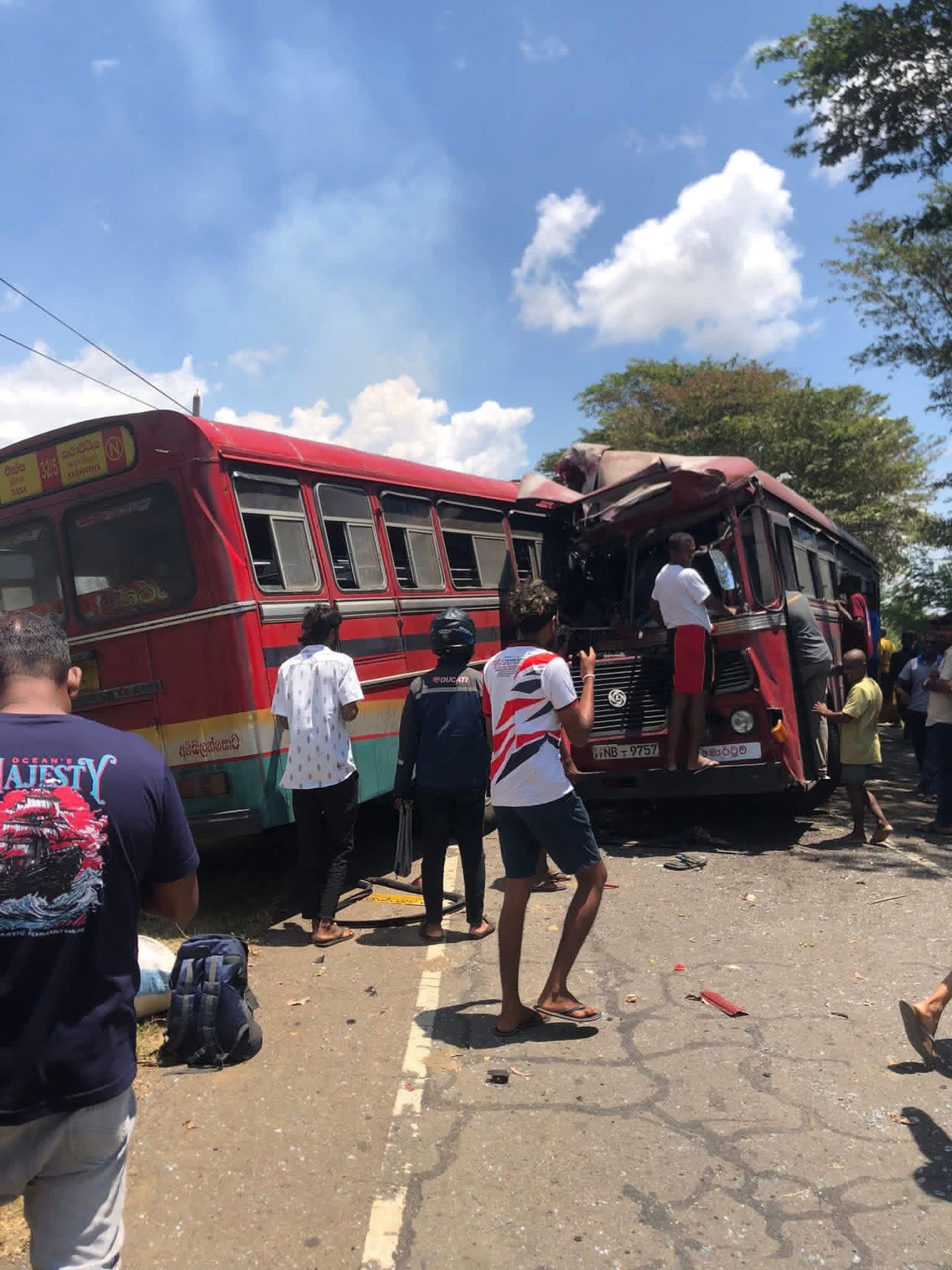
Four persons including a Budhist monk died and 32 others were injured when two SLTB buses collided head on at Weerawila at arond 12 noon today (18).
Three of the deceased were women. 22 of the injured were admitted to the Hambanthota Hospital while 10 others have been admitted to the Debarawewa hospital.
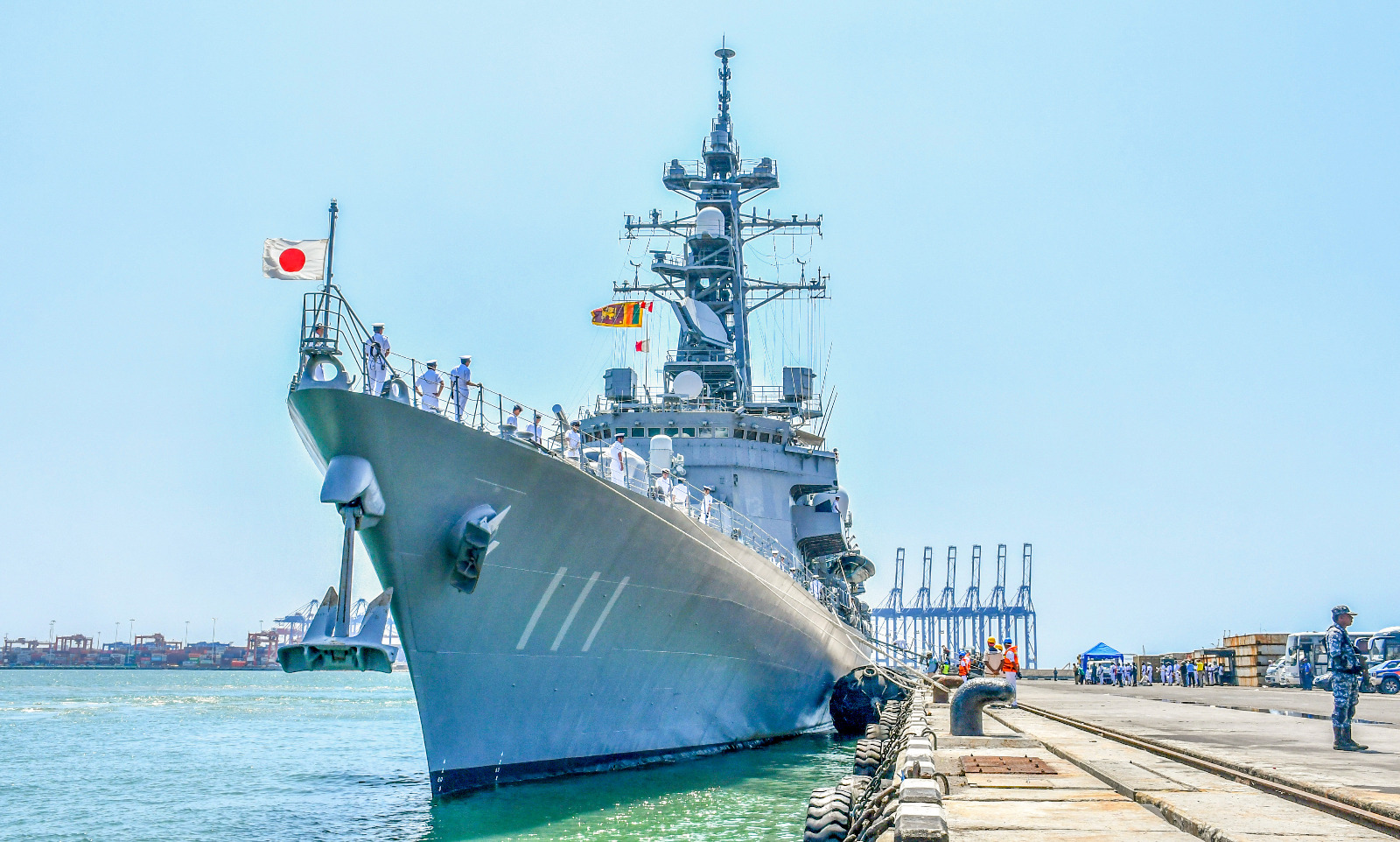
The Japan Maritime Self-Defence Force (JMSDF) ship OONAMI which arrived at the port of Colombo on a goodwill and replenishment visit on 09 Mar 26 departed on 11 March.
The departing ship was given a formal farewell from the Sri Lanka Navy, in keeping with naval traditions at the Port of Colombo.
The 150.5m long JMSDF OONAMI is commanded by Commander IIO Hiromasa.
During the stay in the island, crew members of the ship explored some tourist attractions in Colombo. The itinerary also included a coastal clean-up drive participated by naval personnel of both countries and engagements with the Sri Lanka Navy, designed to strengthen the bonds of friendship and cooperation.
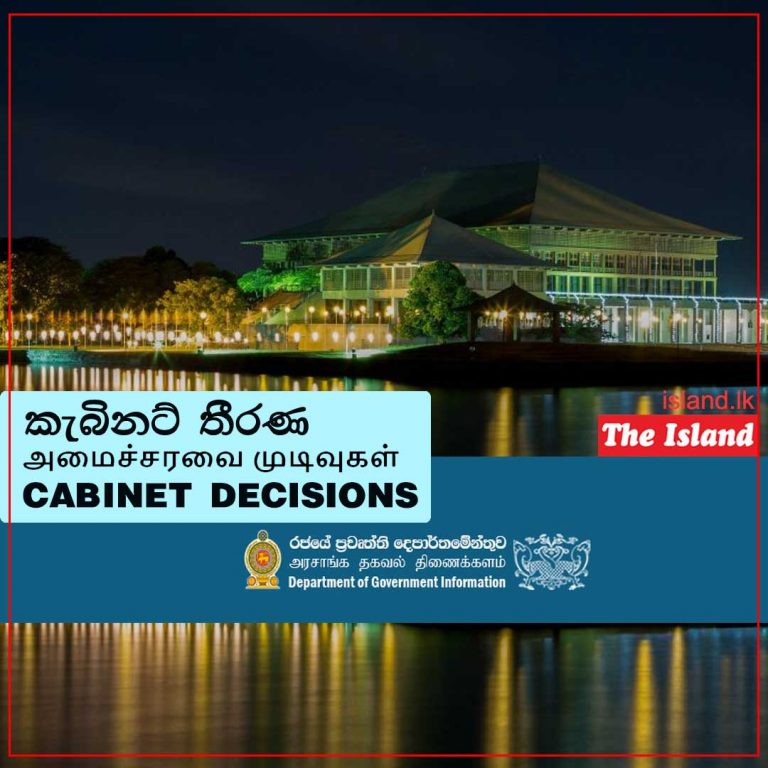
The Central Cultural Fund established under the provisions of the Central Cultural Fund Act No. 57 of 1980 is responsible for development of cultural and religious monuments in Sri Lanka, settling the expenditure borne for development, renovation and conservation of local and foreign cultural monuments, awarding financial donations for artisans as well as awarding those who served the nation in the fields of culture and religious sectors.
The said act has been passed in Parliament 45 years back and, the requirement to revise the provisions of the act according to the contemporary requirements haa been recognized.
Accordingly, the Cabinet of Ministers granted their policy
approval to amend the said act, considering the resolution furnished by the Minister of Buddhasashana, Religious and Cultural Affairs.

SriLankan Airlines Alerts Customers to Social Media Scams

Four dead 32 injured in head on collision at Weerawila

JMSDF ship OONAMI concludes goodwill visit

Cabinet nod to amend Central Cultural Fund Act No. 57 of 1980
’National Namal Uyana’ declared as a National Heritage
Establishment of Supervisory Committees for restoring economic activities.

‘Dates have the highest sugar content to fight Coronavirus’

Sunday Island 27 December – Headlines

#SundayIsland 17th December – Headlines

Sunday Island – 28th March

Sunday Island Headlines – 21 March

Sunday Island – 21st February – Headlines
-

 News7 days ago
Historic address by BASL President at the Supreme Court of India
-

 Sports7 days ago
The 147th Royal–Thomian and 175 Years of the School by the Sea
-

 Business3 days ago
Browns EV launches fast-charging BAW E7 Pro at Rs. 5.8 million
-

 Life style4 days ago
From culture to empowerment: Indonesia’s vision for Sri Lanka
-
 News7 days ago
Power sector reforms jolted by 40% pay hike demand
-
 Opinion6 days ago
M. D. Banda: Memories of Appachchi – II
-

 Latest News4 days ago
QR code system will be implemented for fuel with effect from 06.00 a.m. today (15th)
-

 News2 days ago
Australian HC debunks misleading travel risk claims for Sri Lanka