
Latest News
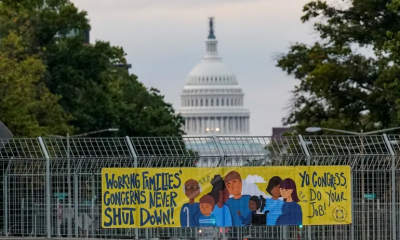
Government shutdown only hours away in the US


A new vote is being held in the US House of Representatives among indications of a government shutdown beginning at midnight on Saturday.
Faced with a rebellion by fellow hard-line Republicans, House Speaker Kevin McCarthy is trying to secure agreement on a temporary 45-day respite. It’s not clear if the measure – stripped aid to Ukraine – will pass.
The fourth shutdown to occur over the past decade, it could affect everything from air travel to marriage licenses. Most government employees will be furloughed without pay, and crucial nutrition programmes will be halted.
It follows a hard-right revolt in the US House of Representatives. Republicans control the House by a slim majority, while Democrats hold the Senate by a single seat.
That means spending bills to keep the government open require buy-in from both parties in order to advance through both chambers to President Joe Biden’s desk.
On Saturday morning, Speaker McCarthy said he would put a 45-day continuing resolution (CR) plan to the floor – a stop-gap would keep federal agencies open until Congress can agree on a new funding bill.
The CR would include disaster relief funding, but would not include US foreign aid for Ukraine, which Democrats have been insisting on.
A rebel faction of right-wing Republicans has, so far, held up negotiations in the House, the lower congressional chamber, with a demand for significant cuts in spending, including a call for no more US funding of the war in Ukraine.
Receiving vocal support online from former President Donald Trump, the hard-liners have tanked efforts by Mr McCarthy to shepherd legislation needed to break the impasse through the House.
While the Speaker could ostensibly turn to Democrats for the votes he would need to approve a spending measure, it is a move that would likely trigger an effort by the rebel faction to oust him from his plum leadership post. McCarthy has also refused to take up a short-term funding bill making its way through the Senate. The bill, which includes $6bn (£4.9bn) for Ukraine and $6bn for disaster aid, is a last-ditch effort to avert a lengthy shutdown and appears to have strong bipartisan support in the upper chamber.
On Friday, House Republicans’ short-term funding measure, which included strict border policies championed by the hardliners, was rejected by as many as 21 members of the party and failed to pass.
In a closed-door meeting, Mr McCarthy said that Republicans would have to opt for the House bill or the Senate’s version, or risk being blamed for a shutdown. But the rebel lawmakers asserted they would not budge for anything less than a long-term spending bill with their priorities addressed. “This take it or leave it or I’ll blame you won’t work on us,” South Carolina Congresswoman Nancy Mace, a moderate who voted against the House bill on Friday, wrote on X. “I’m in this for the long run and have no problem taking on DC to do it.”
Chuck Schumer, the Senate Majority Leader, slammed Mr McCarthy for bringing up “truly radical” proposal that could not make it through both chambers. “The Speaker needs to abandon his doomed mission of trying to please Republican extremists,” he said. The White House backed Mr Schumer’s calls for the House to get behind his spending bill.
“The path forward to fund the government has been laid out by the Senate with bipartisan support – House Republicans just need to take it,” press secretary Karine Jean-Pierre wrote in a statement on Friday.
Treasury Secretary Janet Yellen said: “The failure of House Republicans to act responsibly would hurt American families and cause economic headwinds that could undermine the progress we’re making.” Ms Yellen warned that “key government functions”, including loans to farmers and small businesses, food and workplace safety inspections, and major infrastructure improvements would all be affected.
Shutdowns take place when Congress is unable to approve the roughly 30% of the federal budget it must approve before the start of each fiscal year on 1 October.
This means that, on Monday, hundreds of thousands of federal workers except those deemed “essential” will be at home without pay. Many of these employees live paycheque to paycheque, according to the American Federation of Government Employees.
More than 1.4 million active-duty members of the military and tens of thousands of air traffic controllers will be among those working, without pay.
It is a troubling development for any federal workers holding student loan debt. Loan repayments for over 40 million people will restart on Sunday after being paused since the start of the pandemic.
The shutdown will also have an immediate impact on the Special Supplemental Nutrition Program for Women, Infants and Children (WIC), which provides grocery assistance to seven million pregnant women and new mothers.
A prolonged shutdown could also affect the Supplemental Nutrition Assistance Program (SNAP), a grocery benefit known as “food stamps” that serves 40 million low-income Americans, and hinder the implementation of a new programme to serve free breakfast and lunch to students in high-need school districts.
Museums, national parks, research facilities and communities health centres with federal government oversight or funding are likely to suspend operations for the period of the shutdown.
Additionally, the government agency at the helm of relief and recovery from natural disasters is currently scrambling to conserve cash in the event a shutdown collides with an above-normal Atlantic hurricane season.
Budget disputes that cause this kind of disruption do not occur anywhere else in the world and has been criticised as an example of Washington’s growing dysfunction and partisan divides.
The last government shutdown, under Mr Trump in 2019, lasted a record 34 days.
It erased $11bn in economic output, according to the Congressional Budget Office, and federal workers were seen standing in line at food banks.
(BBC)


Approval has been granted at the cabinet meeting held on 01-03-2023 for the National Curriculum Framework and the methodology for implementing the aforementioned framework, which was initiated by the National Institute of Education in 2019 under the education reform process.
However, considering the modules relevant to Grades 1, 6, and 10 that have been prepared by the National Institute of Education for the implementation of the new education reforms by the time the new government comes into power in 2024, it was planned to implement the new National Curriculum Framework only for Grades 1 and 6 in 2026, ensuring appropriate adjustments to the new government’s policies.
Further, it has also been planned to introduce vocational subjects from grade 10 onwards.
Accordingly, the concept paper required for ‘Transformational Change in Sri Lanka’s General Education’, which has been prepared to inform and make relevant parties aware of the proposed adjustments, has also been submitted to the Parliamentary Subcommittee on Education Reforms on 22-10-2025.
Subsequently, as decided at the Cabinet Meeting held on 13-01-2026, steps have been taken to postpone the implementation of education reforms for grade 6, which had been planned under the first phase of the comprehensive reform agenda for general
education, up to the year 2027, and only to implement new curriculum reforms for grade 1 in the year 2026.
Subsequently, the Ministry of Education, Higher Education, and Vocational Education has followed these steps.
• preparing a new concept paper with policy recommendations after reviewing the concept paper prepared related to bringing about transformational change in Sri Lanka’s general education
by the National Education Commission.
• Having reviewed the revised concept paper by the National Steering Committee established as per the cabinet decision dated 23-03-2026 and subcommittees established under 5 pillars
relevant to the education reforms-namely Curriculum Reform, Human Resource Development, Education Administrative Reforms & Infrastructure Development, Evaluation & Assessment, and Public Awareness & Promotion-and obtaining further observations and recommendations.
• Based on those observations and recommendations, further revising the National Curriculum Framework prepared by the National Institute of Education in 2023 and obtaining approval
from the Academic Affairs Board of the National Institute of Education.
• Obtaining approval from the Council of the National Institute of Education for the National Curriculum Framework approved by its Academic Affairs Board.
• Obtaining concurrence from the National Steering Committee for New Education Reforms on 2026-08-13 for the National Curriculum Framework approved by the Council of the National Institute of Education.
• Printing and preparing activity books and teacher guides for all 3 terms of Grade 1 and Grade 2 for the year 2027, so as to continue carrying forward the primary education reforms
commenced in the year 2026.
• Preparing Grade 6 modules for Terms I, II, and III, as well as teacher guides for all 3 terms.
• Master trainers have been trained by the National Institute of Education for all primary and secondary subjects, and all plans related to teacher training at the provincial level have been
prepared.
• Formulating the policy guidelines on school-based evaluation and assessment—prepared for practical implementation while managing available resources within the school system by the
Evaluation and Assessment Sub-Committee and obtaining the approval of the National Steering Committee.
Accordingly, the Cabinet of Ministers has approved the resolution furnished by the Hon. Prime Minister in her capacity as the Minister of Education, Higher Education, and Vocational Education to further implement the education reform process for grade 1, which has been initiated in the year 2026,
and to further initiate the education reform process for grade 2 and grade 6 in the year 2027, based on the concept paper prepared by the National Education Commission, the National Curriculum Framework approved by the National Steering Committee for New Education Reforms, and the School-Based
Evaluation and Assessment Guideline.
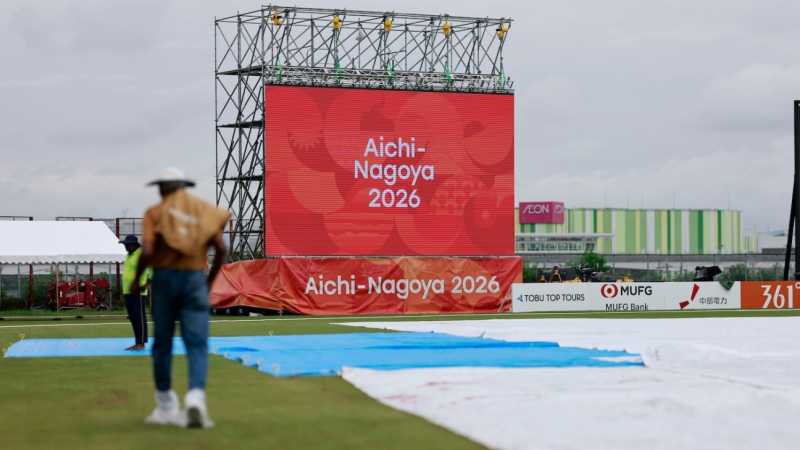
Sri Lanka will face India in the semi-finals of Asian Games men’s tournament after their quarter-final clash against Nepal was abandoned without a ball being bowled in Nisshin, Japan. The game was called off prior to the toss, with rain having begun hours prior to the scheduled 9am local start and not looking like abating.
Sri Lanka’s progression was assured by virtue of their higher seeding in terms of the ICC T20I rankings – Sri Lanka, alongside India, Pakistan and Bangladesh are the four seeded teams in the tournament. On Monday, India had qualified over Afghanistan after another washout, again by virtue of their higher. Similarly, Pakistan’s qualification was assured following a rain abandonment in their quarter-final against Hong Kong.
In the 2022 Asian Games, Sri Lanka had been eliminated at the quarter fial stages by Afghanistan. Another washout in the semis against, India though, will see the latter qualify for the final.
A few hours later, the fourth quarter-final between Bangladesh and Malaysia was also washed out. Bangladesh will now face Pakistan in the first semi-final on October 1, followed by India vs Sri Lanka later on the same day
(Cricinfo)

The Bangladesh vs Malaysia abandonment on Tuesday completed a quartet of rained off matches in the Asian Games men’s tournament. The match was called off two hours before the toss, with the teams told not to even turn up at the venue.
Bangladesh, by virtue of higher seeding, go through to the semi-finals where they will now face Pakistan on October 1. Earlier in the morning, the Sri Lanka vs Nepal fixture was also called off due to rain, with Sri Lanka advancing into the semi-finals where they will meet India.
There is, however, some good news, as the weather forecast in Nisshin is better for the semi-final and the medal match day, on October 1 and 3, respectively.
In the last edition (2023), Bangladesh had lost to India in the semi-final but won the third-place playoff against Pakistan to take home the bronze medal. They had won the bronze in 2014 as well and Bangladesh’s best finish was winning the gold medal in 2010, when they beat Afghanistan in the final.
(Cricinfo)

Establishment of a Spectrum Management and Monitoring System and a Quality of Service and Quality of Experience System for the Telecommunications Regulatory Commission of Sri Lanka
Appointment of a Committee for the Restitution of Sri Lankan Cultural Heritage Held Abroad
Ten-Year National Action Plan on the Social Protection Sector (2026–2035)
Implementation of Revised National Curriculum Framework under the Education Reforms

Sri Lanka to face India in semi-finals after washout

Bangladesh to take on Pakistan in semis after another washout

‘Dates have the highest sugar content to fight Coronavirus’

Sunday Island 27 December – Headlines

#SundayIsland 17th December – Headlines

Sunday Island – 28th March

Sunday Island Headlines – 21 March

Sunday Island – 21st February – Headlines
-

 News6 days ago
Mastermind Naufer Moulavi among 15 found guilty
-

 Midweek Review6 days ago
Thileepan’s fast unto death: An authentic narrative that many missed
-

 Latest News5 days ago
Showers above 100 mm are likely at some places in the Western, Sabaragamuwa, Central and North-western provinces and in Galle and Matara Districts
-

 Editorial6 days ago
Big Bad Bills
-
Editorial5 days ago
Crimes punished and unpunished
-

 Features4 days ago
Beyond traditional jobs: Why Sri Lanka needs to facilitate the gig economy
-
 News6 days ago
One clause in Anti-Corruption (Amendment) Bill requires referendu: SC
-

 News6 days ago
No referendum needed for passage of 22 A: SC