
News
GMOA takes strong stand, urges Defence Consultative Committee to re-examine project

National Defence University Bill:
‘Uni outside purview of UGC, SLMC, etc., inimical to education system’
By Shamindra Ferdinando
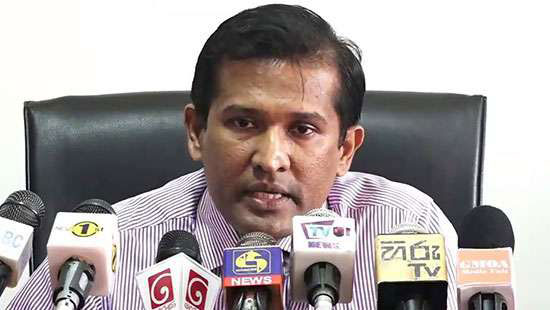
Top Government Medical Officers’ Association (GMOA) spokesperson Dr. Prasad Colambage says the enactment of the General Sir John Kotelawela National Defence University Bill will create an institution outside the purview of the University Grants Commission (UGC) as well as the Sri Lanka Medical Council (SLMC). The proposed University wouldn’t be subject to regulatory bodies of engineering, law and public administration, Dr. Colambage asserts.
In a brief interview with The Island the GMOA official said that the controversial move was contrary to much touted assurances given by the Joint Opposition (JO)/Sri Lanka Podujana Peramuna (SLPP) in the run-up to the 2019 presidential and 2020 parliament elections. Referring to the failed bid to enact the Bill during the previous yahapalana administration, Dr. Colombage said that they were quite disappointed at the way the incumbent dispensation handled the issue at hand.
He strongly denied accusations that the GMOA was pursuing an agenda inimical to government efforts to expand higher education opportunities.
Responding to another query, Dr. Colambage attributed a last minute decision not to present the Bill in Parliament on July 08 to an obvious split in the ruling party. The Consultative Committee on Defence at a meeting chaired by State Minister of National Security and Disaster Management and State Minister of Home Affairs Chamal Rajapaksa was earlier scheduled to table the Bill in Parliament, Dr. Colambage said. Appreciating the decision not to present the Bill for the second reading , Dr. Colombage said that under the leadership of Vice President of the GMOA Dr. Chandika Epitakaduwa a committee was examining the Bill as well as the one prepared by the previous administration.
When The Island questioned the rationale in the GMOA’s opposition to the Bill against the backdrop of it being sanctioned by the Legal Draftsman and the Attorney General, Dr. Colambage said that the whole process in the enactment of laws was dubious. The GMOA official alleged that various interested parties had been pursuing agendas in that regard under the very noses of those who were supposed to ensure national interest. The possibility of some lawmakers being aparty to projects disadvantageous to the country couldn’t be ruled out, Dr. Colambage said.
“Yes, it is certainly a very unfortunate situation. A key issue is whether the Parliament can be exploited by those pursuing agendas for personal benefit,” Dr. Colombage said.
The GMOA official emphasised that the Bill in its present form was not acceptable under any circumstances. How could those in authority seek to establish an institution through parliamentary Act contrary to the Universities Act No 16 of 1978? Dr. Colombage asked.
The Communications Department of the Parliament on July 7 quoted Defence Secretary Gen. Kamal Gunaratne as having told Consultative Committee on Defence chaired by State Minister Chamal Rajapaksa the then President Maithripala Sirisena, in his capacity as the Defence Minister made an attempt to enact the Bill. SLFP leader and Polonnaruwa District MP Sirisena according to the Communications Department had been present at the meeting along with Anura Priyadarshana Yapa, Tiran Alles and Jayantha Weerasinghe, PC.
Dr. Colambage urged all political parties represented in Parliament to state their stand on the proposed Bill. The Parliament comprises 15 political parties with the SLPP being the largest with 145 seats followed by the SJB 54 and the TNA 10. Of the political parties in Parliament, nine are represented by one MP each.
Asked whether the GMOA intended to discuss the issue at hand with political parties, Dr. Colambage said that once Dr. Epitakaduwa made his report available within the next few days, stakeholders could be briefed. Parliament couldn’t absolve itself of the responsibility to thwart calculated attempts to deteriorate higher education sector, Dr Colambage alleged. The official stressed that their objections to the proposed Bill was not political. The primary issues here were that the Bill would result in the creation of a University managed by the military and selection of students outside the Z score, the GMOA spokesperson said.
Dr. Colambage was of the opinion that an independent University would cause deterioration of the entire higher education system and open the country for all sorts of external interventions. It could be a long term objective of interested parties to weaken the once proud University system at a time other countries were bent on tightening laws.
Outspoken GMOA Secretary Dr. Senal Fernando in a statement issued on Monday (12) speculated that the proposed Bill would pave the way for militarisation of the higher education system.
Dr. Colambage said that the GMOA received the backing of student groups and trade unions though the government sought to discourage ongoing protests against the Bill. According to him, a major fault in the proposed Bill was that it would allow admission of students without minimum qualifications. The Bill should be examined against the backdrop of reports that those without basic qualifications had been accommodated in Universities over the years, Dr. Colambage said.
“Our systems are fallible. There is no point in denying that fact,” Dr. Colambage said, alleging unscrupulous elements had proved over and over again systems at any level could be manipulated regardless of catastrophic consequences. “The ongoing high profile project to provide special status to KDU is case in point,” Dr. Colambage said, underscoring how influential persons sustained the operation in spite of the change of government in 2019. The role played by the Consultative Committee on Defence and the stand taken by different political parties on the KDU issue reflected the present crisis, Dr. Colombage said.
According to Dr. Colambage the KDU project could easily secure the support of those willing to exploit an opportunity to make gains at the expense of the national interest. The GMOA official said that the media should seriously cover the developments regarding the KDU matter.
Referring to the controversial circumstances under which Sri Lanka entered into Singapore-Sri Lanka Free Trade Agreement (2018), Access and Cross Servicing Agreement (ACSA) (2017), Geneva Resolution (2015) and the way attempts were made to finalize Millennium Challenge Corporation (MCC) Compact as well as Status of Forces Agreement (SOFA), Dr. Colambage said that the country lacked overall strategy in that regard. Those in authority seemed to be disinterested in working out a common agenda, Dr. Colambage said, urging the government to review contentious KDU Bill.
The GMOA official asserted that the decision to hold back the Bill which was to be presented for the second reading was certainly a victory. They wouldn’t have done that lightly therefore it would be the responsibility of the Consultative Committee on Defence to consult all relevant parties in that regard. The incumbent government wouldn’t want to go down in history as the dispensation responsible for the ruination of the University system. The powerful doctors’ union said that deterioration of higher education standards couldn’t be permitted for the benefit of corrupt elements whose success largely depended on the failure of the political party system.
Dr. Colambage said that the crisis could be easily resolved by accommodating the KDU with 11 faculties within the University system. The controversial Bill had been there for 12 years and first major attempt to operationalise it was made in 2018.


The Law Association for Asia and the Pacific (LAWASIA) has backed the campaign by the Bar Association of Sri Lanka against the government’s effort’s to extend the retirement ages of judges of the Superior Courts.
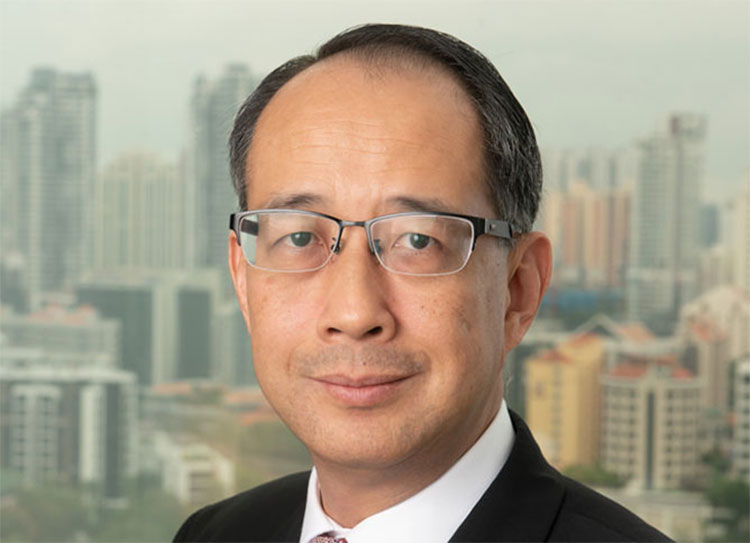
T.L Yap, President of LAWASIA, in a statement dated 26 June, has expressed concern over the NPP government’s move in the wake of President Anura Kumara Dissanayake’s recent statement in Parliament on the delay in making the appointments.
The text of the statement: “LAWASIA shares the concern expressed by the Bar Association of Sri Lanka (BASL) on 25th May 2026 in a letter to His Excellency the President of Sri Lanka regarding the prospect of the Government of Sri Lanka introducing an amendment to the Constitution which would increase the retirement age of the Judges of the Court of Appeal and the Supreme Court.
LAWASIA supports the sentiments expressed by BASL in its letter of 25 May, namely: “Extending the retirement age of the sitting Judges of these Courts at this point of time is likely to be viewed by the public as a blatant attempt to interfere with the judiciary… The independence of the Judiciary and the public confidence reposed in it, are indispensable pillars of the rule of law and the democratic framework of (Sri Lanka).
In that regard it is of paramount importance that the Judiciary must not only remain independent in fact but also must be seen by the public to be wholly independent, impartial, and free from even the slightest perception of influence, favour, accommodation, or impropriety”
The Constitution of Sri Lanka recognizes the independence of the judiciary and its importance in preserving and maintaining the rule of law. The retirement age of senior judges is presently fixed by Article 107(5) of the Constitution. Constitutional amendment in any jurisdiction is a serious matter which must not be undertaken lightly. LAWASIA’s principal concern is that the proposed constitutional amendment has the appearance of an ad hoc initiative without adequate public consultation. This in turn has the potential to undermine public confidence in the judiciary.
An independent, competent and respected judiciary is the cornerstone of any democracy. LAWASIA has long advocated the fundamental importance of this principle.
The essence of LAWASIA’s formal position in relation to the independence of the judiciary lies in the Beijing Statement of Principles on the Independence of the Judiciary in the LAWASIA Region, adopted at the Conference of Chief Justices held in Beijing in 1997 and subsequently signed by 32 Chief Justices from across the Asia-Pacific.
The Beijing Statement in essence emphasizes the fundamental importance of the independence of the judiciary, and comments on a range of related issues including the objectives of the judiciary, the appointment of judges, the tenure of judges, judicial conditions and the relationship between the judiciary and the executive.
Endorsing the concerns raised by another international organization, the Commonwealth Lawyers Association, LAWASIA accordingly calls upon the authorities in Sri Lanka to:
• refrain from proceeding with the proposed constitutional amendments seeking to increase the
retirement age of members of the Judiciary;
• resist piecemeal and ad hoc amendments to the Constitution of Sri Lanka.
• adhere to due process of consultation and stakeholder engagement in constitutional reform;
• desist from taking any steps which would undermine confidence in the Judiciary and
irreparably diminish the independence of the judiciary; and
• ensure adherence to the rule of law and respect for the independence of the judiciary.
A total of 7,300 young people, below the age of 21, had been arrested on suspicion since the launch of the nationwide ‘Ratama Ekata’ anti-drug operation, DIG in charge of the Police Narcotics Bureau, Ashoka Dharmasena, told The Island yesterday.
DIG Dharmasena said the suspects included about 150 females under the age of 21. He added that more than 214,000 suspects had been taken into custody since the commencement of the national anti-narcotics operation.
The operation was launched with the primary objectives of disrupting the supply of narcotics across the country, reducing the demand for illegal drugs and rehabilitating those addicted to narcotic substances, he said.
DIG Dharmasena said law enforcement authorities had so far seized more than 15,000 kilogrammes of narcotics, including cannabis, during the ongoing operation.
He also noted that police had achieved considerable success in intercepting narcotics smuggled into the country by sea, contributing significantly to efforts to curb the illicit drug trade.
The Police Narcotics Bureau said the nationwide operation would continue as part of the government’s broader strategy to dismantle drug trafficking networks and minimise the social impact of narcotics.
by Norman Palihawadane ✍️
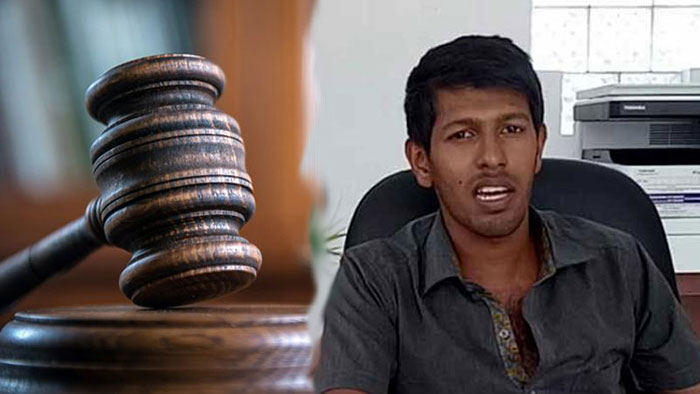
Leader of the Abhinava Nivahal Peramuna, Amit Weerasinghe, was yesterday ordered to be remanded until July 3 by Teldeniya Magistrate Kamal Sanjaya Jayatilake over allegations that he defrauded state officials and businessmen of approximately Rs. 120 million by promising to construct cabana holiday resorts in Ella and Digana.
The suspect was produced before court by the Teldeniya Police Headquarters following his re-arrest on fresh complaints. The Magistrate also ordered an investigation into the suspect’s assets and properties, imposed a travel ban, and directed authorities to freeze his bank accounts.
The Teldeniya Police informed the Magistrate that 26 complaints had been received against the suspect so far and that investigations had revealed a large-scale financial fraud.The Magistrate further directed the police to hand over investigations into the alleged fraud to the CID in Colombo by the next court date.
Weerasinghe had previously been granted bail by court but was arrested again following the receipt of additional complaints.
Investigations are being conducted by Teldeniya Police Headquarters OIC CI D. M. Chandrapala and Teldeniya Division SSP Harsha Amarasinghe under the supervision of Central Province Senior DIG Lalith Pathinayake and DIG Sudath Masinghe.
by SK Samaranayake ✍️

Padikkal fifty, Sudeera five-for before India A, Sri Lanka A settle for draw

Canada score late to beat South Africa and reach last 16 at World Cup 2026

Tector and Moondra headline Ireland’s historic series sweep against India

Roach’s 300th wicket headlines West Indies’ innings win over Sri Lanka

Showers will occur at times in the Western, Sabaragamuwa and North-western provinces and in Galle, Matara, Kandy and Nuwara-Eliya districts.

LAWASIA warns against ad hoc initiative to increase judges’ retirement ages

‘Dates have the highest sugar content to fight Coronavirus’

Sunday Island 27 December – Headlines

#SundayIsland 17th December – Headlines

Sunday Island – 28th March

Sunday Island Headlines – 21 March

Sunday Island – 21st February – Headlines
-
 Opinion6 days ago
Ranasinghe Premadasa: The man who would not take ‘No’ for an answer
-
 News2 days ago
Another 1,132 Sri Lankan Personnel to be deployed for United Nations Peacekeeping Missions
-

 Opinion5 days ago
Sri Lanka’s national security: Justice, reconciliation, and forward-looking vigilance
-

 News6 days ago
US Assistant Secretary of State for South and Central Asian Affairs meets President
-

 News3 days ago
Kelaniya emerges as highest ranked Lankan uni in Times Higher Education Sustainability Impact Ratings
-
 Opinion4 days ago
A triumph for Pakistan’s skilled diplomacy at Iran-US talks
-

 Editorial6 days ago
FCID’s big catch
-

 Features5 days ago
US-Iran war, global exchange rates and Sri Lankan Rupee