
News
GMOA takes strong stand, urges Defence Consultative Committee to re-examine project

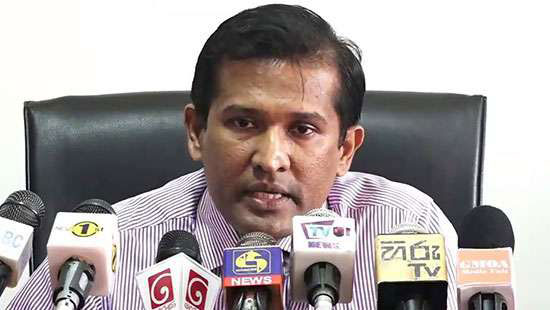
National Defence University Bill:
‘Uni outside purview of UGC, SLMC, etc., inimical to education system’
By Shamindra Ferdinando
Top Government Medical Officers’ Association (GMOA) spokesperson Dr. Prasad Colambage says the enactment of the General Sir John Kotelawela National Defence University Bill will create an institution outside the purview of the University Grants Commission (UGC) as well as the Sri Lanka Medical Council (SLMC). The proposed University wouldn’t be subject to regulatory bodies of engineering, law and public administration, Dr. Colambage asserts.
In a brief interview with The Island the GMOA official said that the controversial move was contrary to much touted assurances given by the Joint Opposition (JO)/Sri Lanka Podujana Peramuna (SLPP) in the run-up to the 2019 presidential and 2020 parliament elections. Referring to the failed bid to enact the Bill during the previous yahapalana administration, Dr. Colombage said that they were quite disappointed at the way the incumbent dispensation handled the issue at hand.
He strongly denied accusations that the GMOA was pursuing an agenda inimical to government efforts to expand higher education opportunities.
Responding to another query, Dr. Colambage attributed a last minute decision not to present the Bill in Parliament on July 08 to an obvious split in the ruling party. The Consultative Committee on Defence at a meeting chaired by State Minister of National Security and Disaster Management and State Minister of Home Affairs Chamal Rajapaksa was earlier scheduled to table the Bill in Parliament, Dr. Colambage said. Appreciating the decision not to present the Bill for the second reading , Dr. Colombage said that under the leadership of Vice President of the GMOA Dr. Chandika Epitakaduwa a committee was examining the Bill as well as the one prepared by the previous administration.
When The Island questioned the rationale in the GMOA’s opposition to the Bill against the backdrop of it being sanctioned by the Legal Draftsman and the Attorney General, Dr. Colambage said that the whole process in the enactment of laws was dubious. The GMOA official alleged that various interested parties had been pursuing agendas in that regard under the very noses of those who were supposed to ensure national interest. The possibility of some lawmakers being aparty to projects disadvantageous to the country couldn’t be ruled out, Dr. Colambage said.
“Yes, it is certainly a very unfortunate situation. A key issue is whether the Parliament can be exploited by those pursuing agendas for personal benefit,” Dr. Colombage said.
The GMOA official emphasised that the Bill in its present form was not acceptable under any circumstances. How could those in authority seek to establish an institution through parliamentary Act contrary to the Universities Act No 16 of 1978? Dr. Colombage asked.
The Communications Department of the Parliament on July 7 quoted Defence Secretary Gen. Kamal Gunaratne as having told Consultative Committee on Defence chaired by State Minister Chamal Rajapaksa the then President Maithripala Sirisena, in his capacity as the Defence Minister made an attempt to enact the Bill. SLFP leader and Polonnaruwa District MP Sirisena according to the Communications Department had been present at the meeting along with Anura Priyadarshana Yapa, Tiran Alles and Jayantha Weerasinghe, PC.
Dr. Colambage urged all political parties represented in Parliament to state their stand on the proposed Bill. The Parliament comprises 15 political parties with the SLPP being the largest with 145 seats followed by the SJB 54 and the TNA 10. Of the political parties in Parliament, nine are represented by one MP each.
Asked whether the GMOA intended to discuss the issue at hand with political parties, Dr. Colambage said that once Dr. Epitakaduwa made his report available within the next few days, stakeholders could be briefed. Parliament couldn’t absolve itself of the responsibility to thwart calculated attempts to deteriorate higher education sector, Dr Colambage alleged. The official stressed that their objections to the proposed Bill was not political. The primary issues here were that the Bill would result in the creation of a University managed by the military and selection of students outside the Z score, the GMOA spokesperson said.
Dr. Colambage was of the opinion that an independent University would cause deterioration of the entire higher education system and open the country for all sorts of external interventions. It could be a long term objective of interested parties to weaken the once proud University system at a time other countries were bent on tightening laws.
Outspoken GMOA Secretary Dr. Senal Fernando in a statement issued on Monday (12) speculated that the proposed Bill would pave the way for militarisation of the higher education system.
Dr. Colambage said that the GMOA received the backing of student groups and trade unions though the government sought to discourage ongoing protests against the Bill. According to him, a major fault in the proposed Bill was that it would allow admission of students without minimum qualifications. The Bill should be examined against the backdrop of reports that those without basic qualifications had been accommodated in Universities over the years, Dr. Colambage said.
“Our systems are fallible. There is no point in denying that fact,” Dr. Colambage said, alleging unscrupulous elements had proved over and over again systems at any level could be manipulated regardless of catastrophic consequences. “The ongoing high profile project to provide special status to KDU is case in point,” Dr. Colambage said, underscoring how influential persons sustained the operation in spite of the change of government in 2019. The role played by the Consultative Committee on Defence and the stand taken by different political parties on the KDU issue reflected the present crisis, Dr. Colombage said.
According to Dr. Colambage the KDU project could easily secure the support of those willing to exploit an opportunity to make gains at the expense of the national interest. The GMOA official said that the media should seriously cover the developments regarding the KDU matter.
Referring to the controversial circumstances under which Sri Lanka entered into Singapore-Sri Lanka Free Trade Agreement (2018), Access and Cross Servicing Agreement (ACSA) (2017), Geneva Resolution (2015) and the way attempts were made to finalize Millennium Challenge Corporation (MCC) Compact as well as Status of Forces Agreement (SOFA), Dr. Colambage said that the country lacked overall strategy in that regard. Those in authority seemed to be disinterested in working out a common agenda, Dr. Colambage said, urging the government to review contentious KDU Bill.
The GMOA official asserted that the decision to hold back the Bill which was to be presented for the second reading was certainly a victory. They wouldn’t have done that lightly therefore it would be the responsibility of the Consultative Committee on Defence to consult all relevant parties in that regard. The incumbent government wouldn’t want to go down in history as the dispensation responsible for the ruination of the University system. The powerful doctors’ union said that deterioration of higher education standards couldn’t be permitted for the benefit of corrupt elements whose success largely depended on the failure of the political party system.
Dr. Colambage said that the crisis could be easily resolved by accommodating the KDU with 11 faculties within the University system. The controversial Bill had been there for 12 years and first major attempt to operationalise it was made in 2018.

News
Mechanism to be established involving university academics and experts for Education Reforms – President

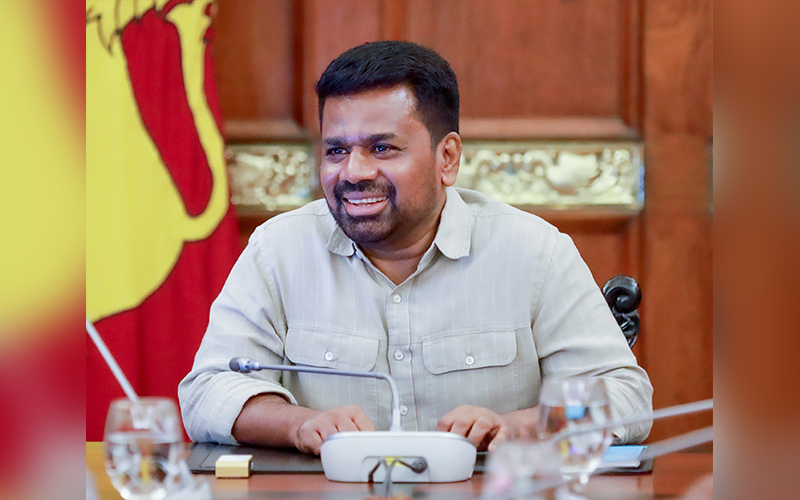
President Anura Kumara Dissanayake stated that the Government is taking steps to establish a comprehensive mechanism, supported by an appropriate legal framework, to bring together university academics, experts and all relevant parties in order to resolve issues arising during the implementation of education reforms.
The President made these remarks during a discussion with the Federation of University Teachers’ Associations (FUTA) held on Wednesday (21) morning at the Presidential Secretariat.
During the discussion, FUTA members emphasized the challenges encountered while trying to implement educational reforms through a framework established by the National Institute of Education, in line with the current laws and regulations.
They further emphasized that while their association acknowledges the need for new education reforms, the urgency of such reforms is greater for students in rural schools than for those in urban schools.
The Federation of University Teachers’ Associations further stated that they appreciate the decision taken by the Government, under the leadership of the President, to address the issues arising from education reforms and affirmed their readiness to contribute to this process.
As a continuation of the previous discussion, proposals addressing the challenges faced by academics within the university system, along with possible solutions, were presented to the President. In response, the President emphasized that the Government would take all possible measures to safeguard the university system and strengthen education.
The discussion also covered proposed amendments to the Universities Act.
President Anura Kumara Dissanayake noted that, in the aftermath of the recent disaster, the Government has been effectively implementing a nationwide rebuilding programme, addressing economic stability, development and all critical sectors. The President also called upon university academics to actively support these reconstruction efforts.
The meeting was attended by Minister of Ports and Civil Aviation, Anura Karunathilaka, as well as representatives of the Federation of University Teachers’ Associations, including its President, Prof. P. R. Weerathunga, Vice President M. A. M. Sameem and Secretary Charudaththe Ilangasinghe.
Latest News
New integrated framework to bring all stakeholders together to safeguard and rebuild Central highlands – President
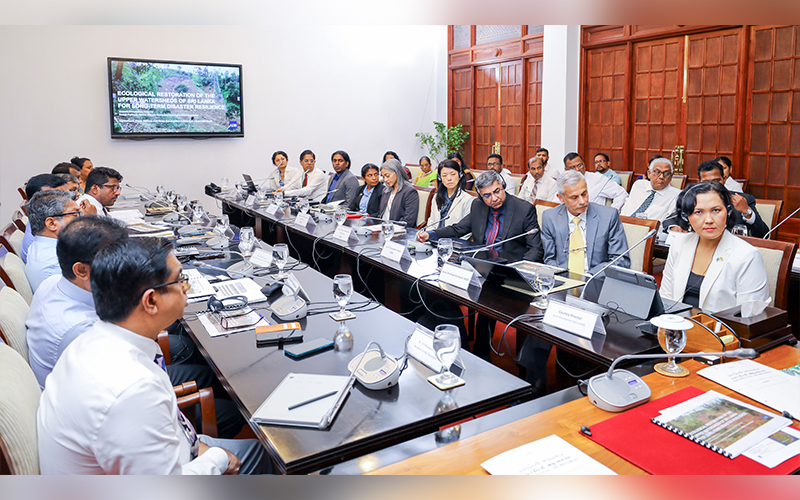
President Anura Kumara Dissanayake stated that the isolated functioning of institutions responsible for construction and land management, agriculture, livestock and environmental conservation has posed challenges in restoring the Central Highlands, which were devastated by Cyclone Ditwah. The President further noted that efforts are underway to establish a new integrated framework, bringing together all relevant parties to swiftly safeguard and rebuild the Central Highlands
The President made these remarks during a discussion held on Wednesday (21) at the Presidential Secretariat with representatives from the Asian Development Bank (ADB), the United Nations Development Programme (UNDP) and relevant government and private sector institutions, focusing on securing the Central Highlands and restoring forest plantations.
It was emphasized that nearly 4,000 landslides have occurred in the Central Highlands due to Cyclone Ditwa and that prolonged unauthorized construction, cultivation activities and lack of proper maintenance have contributed to this situation. The discussion also stressed the urgent need for a national policy to secure the Central Highlands and ensure its preservation for future generations.
The discussion also addressed the need for an Authority empowered under the relevant legislation to oversee these activities and President Anura Kumara Dissanayake instructed officials to expedite the implementation.
Representatives from the Asian Development Bank (ADB) and the United Nations Development Programme (UNDP) emphasized the necessity of maintaining a dedicated financial fund for these initiatives and confirmed their full support to Sri Lanka for the restoration of the Central Highlands.
Representatives who attended included Country Operations Head, ADB Sri Lanka Resident Mission, Cholpon Mambetova, Senior Agricultural and Natural Resources Specialist at the ADB Sumith Pokhrel and Assistant Project Officer Krishanthi Dabare, UNDP Resident Representative in Sri Lanka Azusa Kubota and programme representatives Wageesha Gunasekara and Sugandhi Samarasinghe.
Also participating were Commissioner-General of Essential Services and Secretary to the Ministry of Plantation and Community Infrastructure, Prabath Chandrakeerthi, Secretary to the Ministry of Housing, Construction and Water Supply, Engineer L. Kumudu Lal Bogahawatta along with senior officials from the relevant Ministries and heads of other government and private institutions.
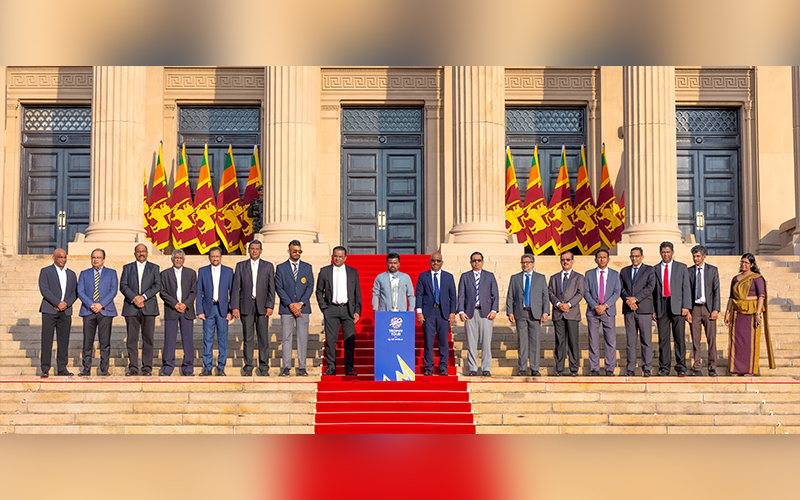
The official tour showcasing the ICC T20 World Cup trophy, which will be jointly hosted by India and Sri Lanka in 2026, was formally inaugurated on Wednesday (21) at the Presidential Secretariat under the patronage of President Anura Kumara Dissanayake.
The trophy will be displayed in several major cities across the island from Wednesday 21st until Saturday 24th, over a period of four days. Cricket fans will have the opportunity to see the golden trophy up close during the Sri Lanka vs England One-Day International match at the R. Premadasa International Stadium in Colombo.
Subsequently, plans are in place to take the trophy to the cities of Kandy, Dambulla and Jaffna, providing cricket enthusiasts in those regions as well with the opportunity to take commemorative photographs with the World Cup trophy and view it. The primary aim of this tour is to generate excitement and build spectator interest in the lead-up to hosting a World Cup tournament in the country.
The ICC Men’s T20 World Cup is scheduled to be held from 7th February to 8th March 2026 co-hosted by Sri Lanka and India. This World Cup is the largest tournament Sri Lanka will host since the T20 World Cup held in 2012.
The tournament schedule was revealed on 25th November 2025 in India, where the International Cricket Council (ICC) selected the R. Premadasa International Stadium in Colombo, the Pallekele International Stadium and the Colombo SSC Ground as the venues for matches in Sri Lanka.
Accordingly, 8 matches are scheduled at the R. Premadasa International Stadium, 5 matches at the Colombo SSC Ground and 7 matches at the Pallekele International Stadium.
Twenty countries are set to participate in this tournament. Twenty matches of the tournament are scheduled to be held in Sri Lanka, with all matches involving the Pakistan team to be played in Sri Lanka. Furthermore, a special feature is that if the Pakistan team qualifies for the semi-finals and the final, Sri Lanka will also host those two matches.
In that event, the final will be held at the R. Premadasa International Stadium in Colombo, increasing the number of matches scheduled for Sri Lanka to 22.
Apart from the host nations Sri Lanka and India, Test-playing nations England, South Africa, New Zealand, Pakistan, West Indies, Bangladesh, Ireland, Zimbabwe and Afghanistan will be represented in this tournament. Additionally, the United States of America, Canada, Italy, the Netherlands, Namibia, Nepal, Oman and the United Arab Emirates are the other contributing countries.
The T20 World Cup to be held in Sri Lanka at the beginning of 2026 can be considered an excellent opportunity to deliver effective value to the country’s economy, tourism industry, sports development, international promotion and society.
In particular, the arrival of teams, media groups and thousands of spectators, including foreign tourists, will generate significant foreign exchange earnings for the country. It is also expected to create short and long-term employment opportunities in various sectors including hotel and food & beverage businesses, transport services and technical and operational services.
By Sri Lanka hosting this tournament, long-term benefits such as increased opportunities for new investments as Sri Lanka is recognised worldwide as a tourist destination, the identification of Sri Lanka as a year-round sports tourism hub and the strengthening of Sri Lanka’s international profile leading to an enhancement of the country’s value, will be attained.
Minister of Youth Affairs and Sports, Sunil Gamage, Deputy Minister of Sports, Sugath Tilakaratne, Director General of Sports, S. Achchudan, Sri Lanka Cricket President, Shammi Silva along with the Executive Committee and a group including Sri Lanka’s T20 World Cup team captain Dasun Shanaka and Head Coach, Sanath Jayasuriya were also present at the occasion.

Jacks out with illness as Sri Lanka bat against England

Mechanism to be established involving university academics and experts for Education Reforms – President

New integrated framework to bring all stakeholders together to safeguard and rebuild Central highlands – President

ICC T20 World Cup Trophy tour in Sri Lanka launched under President’s patronage

Rasooli, Atal and Mujeeb seal Afghanistan series win

U – 19 World Cup: Afghanistan’s Nooristani Omarzai blows Tanzania away

‘Dates have the highest sugar content to fight Coronavirus’

Sunday Island 27 December – Headlines

#SundayIsland 17th December – Headlines

Sunday Island – 28th March

Sunday Island Headlines – 21 March

Sunday Island – 21st February – Headlines
-

 Editorial4 days ago
Illusory rule of law
-
 News5 days ago
UNDP’s assessment confirms widespread economic fallout from Cyclone Ditwah
-
 Editorial5 days ago
Crime and cops
-
 Features4 days ago
Daydreams on a winter’s day
-

 Editorial6 days ago
The Chakka Clash
-
 Features4 days ago
Surprise move of both the Minister and myself from Agriculture to Education
-

 Features3 days ago
Extended mind thesis:A Buddhist perspective
-
 Features4 days ago
The Story of Furniture in Sri Lanka