
News
Global warming blamed for three cyclones battering India in three years


By S Venkat Narayan,
Our Special Correspondent
NEW DELHI: Cyclone Tauktae is the third cyclone from the Arabian Sea to batter India’s west coast in as many consecutive years. Favourable conditions reigning in the Arabian Sea, such as ocean heat and high sea surface temperature due to global warming, are responsible, experts say.
Tauktae intensified from a very severe to an extremely severe cyclonic storm rapidly on Monday, taking weather experts and scientists by surprise. “Tauktae intensified very rapidly this morning. We did not state that it would intensify to an extremely severe cyclone in our forecast. But it did because of extremely favourable oceanic and atmospheric conditions,” said M Mohapatra, director general, India Meteorological Department (IMD).
While forecasting the trajectory of Tauktae at 2.20am on Monday, IMD said it would intensify into a very severe cyclonic storm and cross the Gujarat coast on May 18 (Tuesday). But, by 8.15 am, another IMD bulletin said Tauktae already intensified to an extremely severe cyclonic storm with a maximum wind speed of 180-190 kmph gusting to 210 kmph and that it would cross the Gujarat coast on Monday night.
Tauktae is in keeping with the trend of an increasing number of cyclones in the Arabian Sea. Time was when most of those affecting India were on the other side, in the Bay of Bengal. Scientists have no doubts as to why this is happening — warmer seas on account of the climate crisis.
“Rapid intensification of cyclones is a response to climate change and ocean warming, and cyclone forecast models have a hard time in picking them up. We need to incorporate this in forecast models and be prepared on the ground for future…,” said Roxy Mathew Koll, a climate scientist at the Indian Institute of Tropical Meteorology.
Tauktae also intensified very rapidly from a depression to a cyclone on Friday. “With Cyclone Tauktae, this will be the fourth consecutive year of a pre-monsoon cyclone over the Arabian Sea. This is also the third consecutive year when a cyclone has come very close to the west coast of India. Sea surface temperatures in Arabian Sea have increased rapidly during the past century and this has led to an increase in the frequency and intensity of cyclones in the Arabian Sea… global warming has presented us with new challenges… Improving the Indian Ocean Observing System and incorporating global warming signals in the weather models can help us tackle the challenges,” Koll added.
Still, some experts warned of this. “Conditions are extremely favourable for Tauktae’s rapid intensification. Ocean heat potential is above normal; sea surface temperatures are 1-2°C above normal… We should be prepared,” Sunitha Devi, who studies cyclones at IMD, said on Thursday when a low-pressure area formed over Arabian Sea.
“We are seeing very intense cyclones form over Arabian Sea, they also intensify rapidly… It happens because ocean heat content is higher and sea surface temperatures are also higher… Sometimes our models are able capture this but not always,” said M Rajeevan, Secretary, Ministry of Earth Sciences.



Protesting Development Officers continued their hunger strike near the Presidential Secretariat, Colombo yesterday (01), for the seventh consecutive day.The protesters, who are members of the Lanka School Development Officers’ Association, are demanding that they be absorbed into the teacher service as they have served as teachers in state-run schools for nearly seven years.
Secretary of the Association, Viraj Manaranga, said the protesters were seeking an urgent meeting with the President. He added that a presidential aide had visited the protest site and offered to arrange for a meeting with the President on 03 Feb., but the union insisted on an earlier date. Manaranga warned that failure to grant a meeting could trigger a massive protest in Colombo today (02).
Four officers participating in the hunger strike have been hospitalised due to deteriorating health, while two more joined the fast on Saturday (31).
In a bid to raise awareness of their grievances, on 30 January a delegation of the All Island Development Officers’ Association visited Most Venerable
Warakagoda Sri Gnanarathana Thera, Mahanayake of the Asgiriya Chapter, and subsequently with the Chapter’s Registrar, Ven. Dr. Medagama Dhammananda Thera. The prelates said promises that had been made to them should be fulfilled.
The protest began on 26 January as a satyagraha, after authorities failed to respond to repeated requests to integrate the officers into the teaching service. The escalation into a fast-unto-death underscores the protesters’ frustration over the prolonged delay
by Pradeep Prasanna Samarakoon
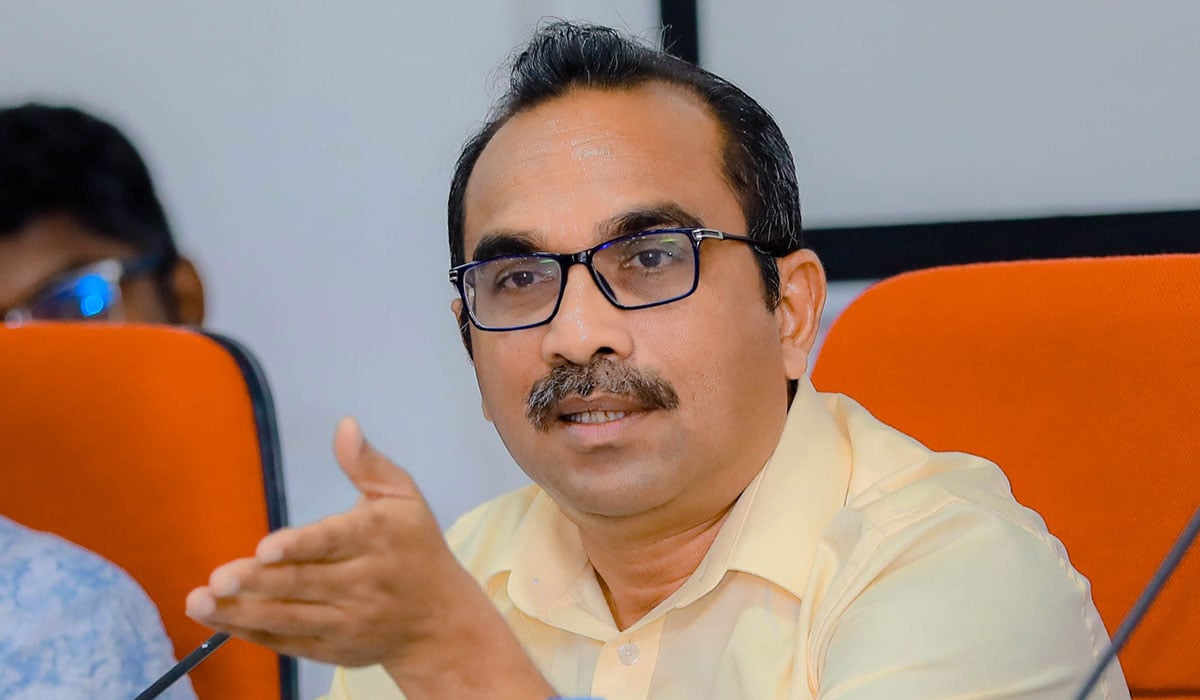
The long-vacant post of Auditor General would be filled on 03 Feb., after months of controversy and delays, Minister of Transport, Highways and Urban Development Bimal Rathnayake said on Friday (31) in Kandy.
The Constitutional Council met at the Parliamentary complex on Friday to discuss the appointment but failed to reach a decision on a suitable candidate. The President had previously proposed four names on four separate occasions, all of which were rejected. The Council is now set to consider the fifth nominee.
The post has remained vacant since April 2025, following the retirement of Chulanta Wickramaratne, who served as the 41st Auditor General. More than 10 months have passed without a permanent appointment.
Sources said a female officer in the Auditor General’s Department has been nominated again, though her previous recommendation was rejected due to some allegations against her.
Meanwhile, senior audit officer Dharmapala Gammanpila, with 31 years of service and the department’s most senior official, has received backing from the Mahanayake Theras of the three Nikayas, the Maha Sangha, and several civil society groups for appointment as the 42nd Auditor General.
Sources noted that the three civil society representatives on the Constitutional Council will play a crucial role in the final decision.
by Chaminda Silva and SK Samaranayake

Two 18-year-old youth were arrested by the Southern Division of the Western Province Crime Division on 31 January for allegedly aiding and abetting two murders carried out in Dehiwala and Kohuwala. ICE (crystal meth) was found in their possession at the time of arrest.
The suspects are residents of Mount Lavinia and Boralesgamuwa, according to the police. They are accused of having helped carry out a murder at a hotel in the Dehiwala Police Division on 9 January, 2026, and an attack on a person travelling in a three-wheeler at Bodhiyawatta, Kohuwala, on 12 December, 2025.
Police said the charges included sending photographs of the victims to a criminal living overseas.
Investigations revealed that the youth had acted under the direction of a criminal known as Sando.
Under the guidance of Janaka Kumara, Director of the Southern Division of the Western Province Crime Division, investigations are being led by Police Inspector Hemanta Kumara, assisted by Sub-Inspectors Prasanna Gunathilaka and Prasanna (40248), and Constables Chaminda (72987), Anil (79598), Kumar (88762), and Senanayake (19363), who are continuing the probe.
by Norman Palihawadane and Chaminda Silva

China executes four more Myanmar mafia members

No decision yet on ICC meeting to discuss Pakistan boycott

Shoulder injury casts doubt over Eshan Malinga’s T20 World Cup

Showers expected in the Northern, North-central, Eastern, Western, Uva, Sabaragamuwa, Southern and Central provinces

Development Officers threaten to intensify their protest

Auditor General to be appointed tomorrow

‘Dates have the highest sugar content to fight Coronavirus’

Sunday Island 27 December – Headlines

#SundayIsland 17th December – Headlines

Sunday Island – 28th March

Sunday Island Headlines – 21 March

Sunday Island – 21st February – Headlines
-
 Business5 days ago
Climate risks, poverty, and recovery financing in focus at CEPA policy panel
-

 Opinion4 days ago
Sri Lanka, the Stars,and statesmen
-

 Business3 days ago
Hayleys Mobility ushering in a new era of premium sustainable mobility
-

 Business3 days ago
Advice Lab unveils new 13,000+ sqft office, marking major expansion in financial services BPO to Australia
-

 Business3 days ago
Arpico NextGen Mattress gains recognition for innovation
-

 Business2 days ago
Altair issues over 100+ title deeds post ownership change
-

 Business2 days ago
Sri Lanka opens first country pavilion at London exhibition
-

 Editorial3 days ago
Govt. provoking TUs