
Foreign News
Gas blast in Kenyan capital kills three and injures nearly 300


A huge gas blast in the Kenyan capital, Nairobi, has killed at least three people and injured nearly 300.
A lorry carrying gas cylinders exploded in Embakasi district at about 23:30 (20:30 GMT) on Thursday, “igniting a huge ball of fire”, an official said.
Housing, businesses and cars were damaged, with video showing a huge blaze raging close to blocks of flats.
An investigation has started and Kenya’s deputy president has said those responsible will be held accountable.
A child was among those who died, according Embakasi police chief Wesley Kimeto, who added that the death toll could rise. Some 271 people were taken to hospital, according to the authorities, including at least 25 children.
Nairobi county Governor Sakaja Johnson said many of these people had been treated and sent home, but at least 39 have been sent to other facilities – some with critical injuries. A further 27 people were treated on site for non-life-threatening injuries.
The government initially said the blast happened at a gas plant where workers were refilling gas cylinders, but the authorities later clarified that a truck had exploded in a parking yard.
According to government spokesperson Isaac Mwaura, a fireball from the blast “spread widely”. A flying gas cylinder hit a clothing and textiles warehouse, burning it down. “The inferno further damaged several vehicles and commercial properties, including many small and medium sized businesses,” he said in a statement. “Sadly, residential houses in the neighbourhood also caught fire, with a good number of residents still inside, as it was late at night.”
The fire has been contained and a search and rescue operation has been launched to find out if people are missing or have simply taken shelter elsewhere.
“There is still a search going on of whether there are bodies which have been burnt in various houses,” said Embakasi East MP Babu Owino.
The Energy and Petroleum Regulatory Authority (Epra) said in a statement that the gas plant was illegal and that it had rejected three applications for construction permits to build a storage and filling facility at the site. Epra said the designs did not meet its safety standards and there was a high population around the proposed site. It is not clear how the facility was still able to operate.
Mr Mwaura, who visited the site, said the owners of the company involved must “compensate the victims” and take “full responsibility” for the explosion. “It is immoral to risk the lives of fellow Kenyans for profit,” he added. “Sometimes we have weak enforcement institutions and of course the element of corruption, which has now led to the death of three of us Kenyans.”
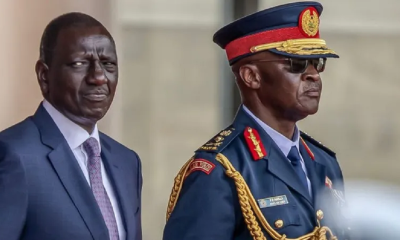
Kenyan Vice-President Rigathi Gachagua promised a tough government response. “As we call for caution and adherence to the rule of law, those culpable in this unacceptable occurrence will be held accountable,” he said.
About 10 trucks were completely burned inside the compound where the explosion occurred. One vehicle landed on top of a block of flats dozens of metres away, partially destroying the building’s front.
Witnesses told the BBC that the explosion sent objects including gas cylinders and a shipping container, flying into the air.
At the Mama Lucy Kibaki Hospital, where many of the injured were initially treated, the BBC spoke to a man named Geoffrey. He said he and his family were woken by a big explosion and thought their building was collapsing.”When I saw that the fire was too much, I used my body to shield my child and sustained burns on my back in the process,” said Geoffrey.”My family members got minor injuries but I got the most severe burns”.
Isaac Mwaura, the government spokesperson, said a command centre has been set up to help co-ordinate rescue operations and humanitarian assistance is being given to those affected.
He also said the government plans to provide two months’ rent for survivors whose houses were razed in the explosion.
(BBC)





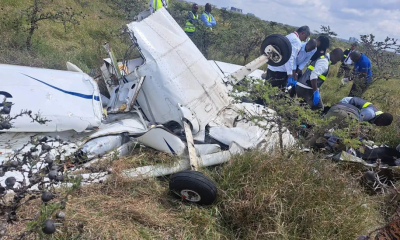



At least 139 people, including 15 children, have died and 84 are missing after a boat capsized off the coast of Djibouti, according to the United Nations migration agency.
In a statement on Sunday, the International Organization for Migration (IOM) quoted survivors as saying that the incident happened near Guhere off Djibouti’s eastern coast in the Gulf of Aden near the Bab al-Mandeb strait from Thursday night to before dawn on Friday.
The boat was heading from Djibouti to Yemen with more than 300 people on board. More than 80 people – all Ethiopians – survived the shipwreck while Djiboutian search and rescue operations continued.
“Our teams are on the ground alongside local authorities to provide emergency assistance,” IOM Chief of Mission in Djibouti Alexandre Coissac said, lamenting the “devastating loss of life”.
That number only includes those buried by authorities in Djibouti. Others have been buried by the migrants themselves but they won’t be added to the official count until authorities can verify the bodies, Alexandre Coissac, IOM Chief of Mission in Djibouti, told the Associated Press.
“This tragedy is a stark reminder of the dangers faced by migrants along this migration corridor as they seek economic opportunities,” Coissac added.
[Aljazeera]
Foreign News
‘Time for Ukraine to get new president,’ says Trump after Zelensky condemns diesel deal

US President Donald Trump has said he thinks “it’s time for Ukraine to get a new president” as he responded to Volodymyr Zelensky’s criticism of the US diesel deal with Russia.
The Ukrainian president warned a new deal to release millions of tonnes of Russian diesel into the US would provide Moscow with money to continue its war against his nation, calling it a gift to Russian President Vladimir Putin.
Trump told reporters outside the White House on Saturday that Zelensky “wants to make problems for the world” by continuing to authorise attacks on Russian refineries.
“He’d better damn well stop,” Trump said, before suggesting Ukraine should “get a new leader who can make a deal”.
Global fuel supplies, including diesel, have been severely limited by the war against Iran launched by the US and Israel, which led to the effective closure of the Strait of Hormuz, through which roughly a fifth of the world’s oil products usually flows.
Russia – a major producer – and Ukraine have recently intensified their strikes on each other’s energy infrastructure and transport facilities, further straining energy markets.
“We said, ‘you can do whatever you want to Russia, don’t hit the refineries’, because that’s a world problem that’s caused,” Trump continued.
“He could have made many deals and for some reason, he never does.”
Putin’s envoy Kirill Dmitriev described Trump’s intervention as “iconic and historic”, saying that Ukraine “needs leadership actually focused on peace”.
The US president confirmed on Friday that an agreement had been reached with Moscow to suspend sanctions on Russian diesel exports until 7 April.
Zelensky reacted by saying it would allow Moscow to raise new funds to source new military equipment to continue the war.
He also accused Moscow of taking the deal “to mean they can keep fighting, to mean they keep dropping bombs on cities” following deadly new strikes on Zaporizhzhia.
The Ukrainian president spoke to several allies on Saturday to discuss the latest developments, calling for “real decisions to protect lives in Ukraine” and to protect European security.
A Downing Street spokesperson said UK Prime Minister Andy Burnham had spoken to Zelensky and offered his “complete solidarity”.
The pair had agreed Russia should acquiesce to “an immediate energy ceasefire” and end its attacks on shipping in the Black Sea, the spokesperson said, as “this would immediately release more energy and food supplies into the global market”.
News of the US-Russia diesel deal was also met with criticism by EU’s foreign affairs chief Kaja Kallas, who echoed Zelensky in saying that suspending sanctions “provides Moscow with more revenues to wage war”, adding: “This is not the time to ease pressure on Russia, and Europe won’t.”
She said European foreign ministers intended to approve the biggest set of sanctions on Russia since the start of its full-scale invasion on Monday.
The deal with Russia is the latest effort from Trump to lower fuel prices in the US ahead of the midterm elections, after months spent grappling with the political consequences of the Iran war.
That conflict, which began in February, has sent the cost of petrol and in particular diesel skyrocketing, which has soured his standing with the American public who have been stung by the higher pump prices and knock-on effects that led to across-the-board inflation.
The average price of diesel is currently $6.28 (£4.74) a gallon, according to the AAA – up from last month’s $5.94 average, and $3.68 last year.
Under the deal, Russia would release an initial 300,000 tonnes of diesel “to the American and global marketplace” followed by an additional 500,000 tonnes in November.
A further million would follow, Trump wrote on Truth Social, and then another 3m tonnes “within a short period of time” – but he noted that this delivery will be “based on the condition of their diesel refineries”.
In the past 10 months, Russia experienced two waves of severe fuel shortages across the country due to Ukrainian drones strikes on its oil refineries.
Diesel production in Russia dropped by an estimated 30%, according to the International Energy Agency.
Trump had already called for new elections in Ukraine last December, saying Ukrainian voters should have the choice to replace Zelensky.
Since the war broke out in 2022 Ukraine has been under martial law, meaning elections are suspended.
[BBC]
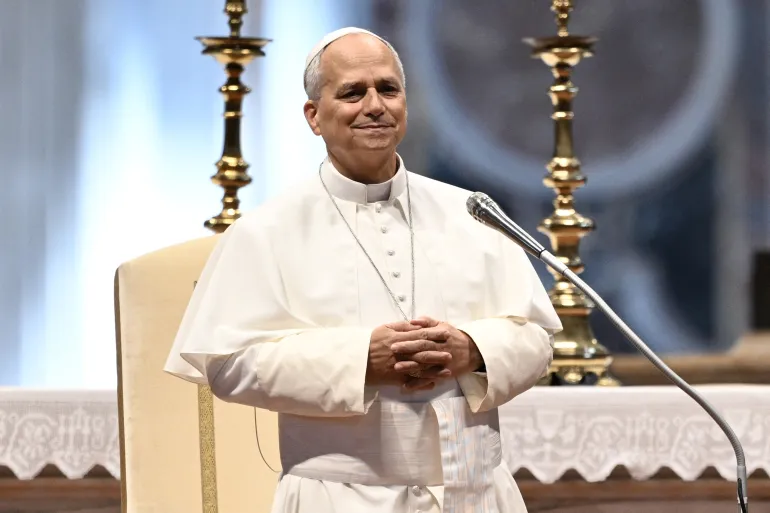
Pope Leo XIV has declared that the death penalty is “inadmissible” while his home country, the United States, announces plans to livestream an execution by firing squad.
Marking World Day Against the Death Penalty on Saturday, the pope reiterated the Catholic Church’s teaching on capital punishment, writing on X that it was “inadmissible because it is an attack on the inviolability and dignity of the person”.
“The common good can be safeguarded and the requirements of justice can be met without recourse to capital punishment,” his post said.
“Effective systems of detention have been developed that protect citizens while at the same time do not completely deprive those who are guilty of the possibility of redemption,” added the leader of the Catholic Church.
The American Pope’s comments come days after US Secretary of Defense Pete Hegseth said on Thursday that the firing squad execution of Nidal Malik Hasan on December 3 will be livestreamed.
Hasan was convicted of killing 13 people and wounding 32 others in a shooting at the Fort Hood military base in 2009.
Pope Leo did not specifically refer to the planned execution, or last month’s botched execution attempt on Christa Pike, who survived two doses of the lethal injection in Tennessee.
But his post came hours after his top deputy, Cardinal Pietro Parolin, the Vatican secretary of state, told Vatican News that the plan to livestream Hasan’s execution was “unacceptable”.
It was Leo’s predecessor, Pope Francis, in 2018 who first amended official Catholic teaching to declare capital punishment “inadmissible” in all circumstances.
[Aljazeera]

Farhan and Sadaqat help Pakistan seal series in style

At least 139 dead, 84 missing as migrant boat capsizes off Djibouti

Rahmat, Malik fifties lead Afghanistan’s strong reply

Showers above 75 mm are likely at some places in the Western, Sabaragamuwa, Central, Uva and North-Western provinces and in Galle, Matara, Anuradhapura and Mannar districts.

Iranian ships stranded, Lanka fears US sanctions

Sri Lanka CERT warns of overseas university admission scams

‘Dates have the highest sugar content to fight Coronavirus’

Sunday Island 27 December – Headlines

#SundayIsland 17th December – Headlines

Sunday Island – 28th March

Sunday Island Headlines – 21 March

Sunday Island – 21st February – Headlines
-

 News7 days ago
Geneva takes up Sallay’s case and govt. ignores opportunity to answer accusations
-

 Features6 days ago
Preventing grievances from becoming communal
-

 Features4 days ago
The Sri Lankan who made Scottish history
-

 Sports4 days ago
Nissanka absence opens door for Sri Lanka’s young guns
-

 News5 days ago
Gnansara Thera to be assigned to prison printing section: Officials
-

 News3 days ago
NDB fraud Rs 60mn more than reported
-

 Features7 days ago
Sri Lanka Cricket Bill: Governance reform is not yet a cricket strategy
-

 News3 days ago
Removing monk’s robes matter for Sangha to decide: Mahanayake Theras