
Features
GALLE AND ST. ALOYSIUS’ COLLEGE


CHAPTER IV
So my life from rags to riches, from elementary education to self-acquired knowledge, from shattering adversity to rewarding accomplishment, is an epitome of the determination, the tenacity, the purposefulness, and, above all, the cultural values, inculcated in me, as a Buddhist, by the teaching and the example of the Christian Fathers and Teachers who moulded my up-bringing in the impressionable age of my youth. I then learnt never to take no for an answer!
(N.U. Jayawardena, The Aloysian 1915-1990 Diamond Souvenir, p.256)
The picturesque town of Galle, with its sea front, harbour, Dutch ramparts and walled city in the Fort, figured prominently in NU’s life in the early 1920s. During Portuguese and Dutch occupation, Galle had been the main port of the island, since it possessed an excellent natural harbour, with trade and commerce with Europe and Asia conducted from there. In the 19th century, Galle continued to be a busy entrepôt and commercial hub, and was the main port of Sri Lanka up to the 1880s. Compared to Tangalle, Hambantota and Matara, Galle was a bustling town, with a variety of ethnic and religious communities – Sinhalese, Tamil, Muslim, South Indian Chettiar, European, and Burghers of Portuguese and Dutch descent – with their temples, kovils, mosques and churches. Galle had several large girls’ and boys’ schools run by Christian missions or by theBuddhist Theosophical Society.
There were government and mercantile offices, banks, hotels, cinemas, and shops. Among the important foreign mercantile establishments in Galle were: E. Coates & Co., Charles P. Hayley & Co., Volkart Bros., and the engineering firm of Walkers. Main Street had several large shops – The Galle Stores, National Stores, Modern Drapery Stores, Abdul Rahims, and Lakmini Jewellers, among others.

St. Aloysius’ teachers residence and college hall (c.1910)
Norah Roberts (1993, pp.10-13) recalls the popularity of Galle’s first cinema hall, the Britannica Picture Palace (later called Queen’s), which opened in 1924 showing Charlie Chaplin’s The Truant. Norah Roberts (the daughter of civil servant T.W. Roberts from Barbados and his British wife Florence Tarrent) was the librarian of the Galle Library from 1940 to 1982. In her book on Galle, she notes the changes in Galle in the 19th and early 20th centuries:
Galle port won international fame. Galle town gained Municipal status. Galle Main Street was built up and the shops sold all kinds of imported groceries, textiles, crockery, cutlery, medicines, iron and steel goods, roads linked villages with the town and with each other and railroads, motor cars, lorries and buses… carried people from Galle to Colombo. (Roberts, 1993, p.115)
At the age of 12, NU was enrolled at St. Aloysius’ College and lived, as mentioned earlier, with his eldest sister Charlotte (1903-90) and her husband, Thevis Nanayakkara (1893-1976) at Mihiripenna, a village near Talpe, 6 miles south of Galle along the coast.
Nanayakkara was the District Sales Manager of the US Singer Company, the largest sewing-machine company in the world, which had stores in Colombo, Kandy, Galle and Jaffna. NU recalled attending their wedding in 1919, going there in a bullock cart. Charlotte and her husband looked after NU and his brothers Peter and David throughout the period of their education at St. Aloysius’ in the 1920s. Charlotte, who was five years older than NU, married at the age of 16.
During the time NU lodged with her, she gave birth to her first two children, Eugene in 1921, and Newton in 1923; she had seven more children, which was not unusual at the time. In fact, NU’s mother had her last two children in the same years that Charlotte had her first two. In later life, Charlotte’s daughter Madeleine recalled how NU would study with a book in one hand while holding a baby on his shoulder with the other (Chandrani Jayawardena, personal communication).
When NU went home for school holidays there were even more babies to look after, as his three younger sisters were born between 1919 and 1923. In 1927 his older sister, Rosalind, married Edwin Wijeyewickrema of Weraduwa, Matara, who was employed in the Postal Department. Edwin had been a student at St. Servatius’ during NU’s time, and according to Rosalind’s daughter Chandrani, it was NU who proposed that his sister Rosalind marry his former schoolmate.
Among the Jesuits
St. Aloysius’, a Catholic school founded by Jesuits in 1895, was situated on an elevated site called Mount Calvary in the northern part of Galle near the railway station. There were many other good schools in Galle, notably Richmond College started by Methodists in 1876, and Mahinda College, the leading English-medium Buddhist boys’ school in Galle founded by the Buddhist Theosophical Society (BTS) in 1892. To such schools, bright male students came from around the Southern Province. The parallel girls’ schools in Galle were the Sacred Heart Convent started by the Catholic Sisters of Charity in 1896, Southlands founded by Methodists in 1885, and Sangamitta School opened by Buddhists in 1919. In the early decades of all these schools, whether Christian or Buddhist, the principals and teachers included Burghers and Europeans with high educational qualifications.

Galle businesses advertising inThe Aloysian
The Jayawardena sisters Charlotte and Rosalind left school at around the age of 12; NU’s three younger sisters, Wimala, Sita and Hilda attended Christ Church school in Tangalle, a Protestant school which taught in the English medium. NU’s family, it seems, preferred an English-medium education, and valued the prestige and reputed academic excellence of Christian schools. One son of a maternal cousin of NU’s was Professor Jothiya Dheerasekera (now Bhikku Dhammavihari), who lived next to NU’s father’s house in Tangalle and attended Christ Church School, accompanying NU’s younger sisters to school. NU was at that time at St. Aloysius’, and on his vacations in Tangalle he used to bring books by British poets and writers and even an atlas to share with the other children (Bhikku Dhammavihari, 2006, interview with K. Jayawardena). Walking daily from the Galle railway station to St. Aloysius’, along Kaluwella High Street, NU would have passed through a busy area where there were several kittangi, or business houses of South Indian Chettiars who were moneylenders and pawnbrokers – the best known at the time being Letchiman Chettiar. Also along this road were jewellery shops, grocery stores, and small shops (kadey) and kiosks, and near the school were also the usual street vendors selling fruits, sweets and snacks. It is likely that NU, as he walked to school, would have observed and absorbed the commercial activity around him.
St. Aloysius’ came under the direct supervision of the Jesuit clergy, who arrived in Sri Lanka in 1893. Jesuits were mainly concerned with education, and establishing their schools in the colonies, especially in China, India, Indonesia and Japan. St. Francis Xavier was among the early Jesuit missionaries of the 16th century to work in India, and by the 19th century Jesuits were starting high schools and universities in South Asia. In all their educational ventures, the Jesuits abided by the “Loyolan principles,” which promoted excellence in all areas of activity.

Fruit Vendors
Many Jesuit schools throughout the world were named in honour of St. Aloysius Gonzaga (1568-91) the Catholic patron saint of youth. (St. Aloysius Gonzaga (1568-91) was born into nobility, and at the age of 18 joined the Jesuit Order. He was afflicted by illness from childhood and devoted his short life to caring for the sick, serving in a hospital during an outbreak of the plague of 1587. He died at the age of 23, after contracting the disease.) It is said that he was inspired to join the Jesuit order after having read a book about their missionary work in India. There is also a school named after St. Aloysius in Mangalore, India, which was founded around the same time as St. Aloysius’ College, Galle. It is also situated on top of a hill and is similar in its architecture.
Catholic schools developed fairly rapidly, and by 1892 the Catholics in Sri Lanka had the largest number of schools teaching in Sinhala and Tamil (209), as well as 14 English-medium high schools (Boudens, 1979, p.170). This hierarchy of schools was class-based. The small free schools teaching in Sinhala or Tamil catered to the urban and rural poor, while the more-prestigious English-medium schools were for the aspiring middle and lower-middle classes of the country.
In 1893 five Catholic dioceses – Colombo, Jaffna, Kandy, Trincomalee and Galle – were established. The Galle diocese included the districts of Galle, Matara, Ratnapura and Hambantota. In this carving up into religious ‘spheres of influence,’ the Galle diocese was allocated to the Jesuits. There were few Catholics in the Southern Province diocese, but many Buddhist children attended Catholic schools. A high proportion of the teachers and heads of these schools were Italian, Belgian, Irish and French priests. NU may have been enrolled at St. Aloysius’ College through contacts with Catholic clergy in his two earlier schools, St. Mary’s (Hambantota) and St. Servatius’ College (Matara). In February 1920, NU aged 12 entered St. Aloysius’ in Form 1, and studied at this school up to January 1925. St. Aloysius’ College provided a good education and training, which enabled boys to obtain positions in the colonial administration and in mercantile establishments. The levying of fees shut out children from poorer homes, but the families who could afford it, or managed to raise the money, found the expense a good investment, which could bring them status. The curricula of these schools, their methods of teaching, and extracurricular activities, were modelled on the lines of the public schools in Britain.
Studying in the Train
NU’s life was heavily regulated by train schedules from Talpe, where he lived with his sister Charlotte, to Galle. He described his train journey to school:
My period in College was in the aftermath of World War I and the ensuing depression. I travelled by train to Galle and back from Talpe. Trains were invariably late, particularly the Colombo-Matara Express scheduled to arrive in Galle at 7:30 p.m., but [which] usually made it by 9 p.m. to 10 p.m. So, I arrived home rather late in the night. (The Aloysian 1915-1990, p.255)

Galle Ramparts
NU would talk with emotion of his experiences and the hardships he endured, travelling between his home and school:
I used to get three cents as pocket money, which at that time was enough for a tea, a bun and a plantain. However, though I had the opportunity of travelling to school by train, it was yet a very tedious journey. Once again I would get up at about five in the morning and walk to reach the (Talpe) railway station, for the train arrived any time between 7:00 and 7:30. I reached school by 8:00 or 8:30. On my return journey there was only one train, which was usually delayed, and invariably, I would get home at about 9:00 in the night or sometimes as late as midnight. However, this travelling did help me in my schoolwork. (interview by Manel Abhayaratne)

St. Aloysius de Gonzaga
NU frequently recalled, with some pride, how he spent the time while waiting for trains:
All my reading and homework was done at the railway station in Galle. Perhaps, that is what helped me in developing the formats of grammar and spelling and even the pronunciation of words. At that time the people in rural areas were not very conversant in English. In fact, many of them did not even speak the language, and so the dictionary was my teacher and companion. (interview by Manel Abhayaratne)
He utilized the hours spent in the train and station waiting-room, which became his ‘study’ for reading and memorizing, while his brothers played cricket on the platform of the station. The many accumulated hours of study paid dividends in later life. As his daughterNeiliya Perera writes:
His language and versatility of writing, even at the age of 94 years when he died, was something unbelievable! He impressed on us the need for education and reminded us that when he had to stand on the way back home as the train was invariably crowded, he would stand under a light with an Oxford Pocket Dictionary in his hand and memorize the words and their meanings.
NU epitomized the Victorian slogan of ‘Self-help,’ popularized by a best-selling book of that name by Samuel Smiles, about the virtue and rewards of hard work and individual enterprise. This book in later years had pride of place in NU’s library.

Drawing of vendors by an Aloysian schoolboy
The Rail-Bus Phenomenon
The excitement of train travel for schoolchildren, including NU and his younger brothers, is reflected in an article in the school magazine written by NU in 1922. (The article was signed: “D.U. Jayawardena (Form 6)” – an obvious mistake. Reading this interesting essay in the school magazine, the ideas, flow of writing and content flag the article as having been written by NU, who would have been in Form 6, and not his younger brother DU, who would have been only 12 at the time.) The amusing and surprisingly perceptive essay lends some historical insight into the introduction of an interesting mode of rail transport, the ‘rail bus.’ It is also significant as probably the earliest article with an economic angle published by NU, aged 14 – and his next known article would not appear until 12 years later.
In the school article, NU explains how the creation of the ‘rail bus’ occurred after the motorbus – a more economical and comfortable form of travel – was introduced into Sri Lanka. NU describes the ‘rail bus’ as:
… a long bogie carriage which can go either way like a centipede. It runs on the ordinary rails, and is driven by steam. The carriage is lit with electricity and it has even electric fans.
According to the article, while in theory it may have been a good idea, in reality the rail bus was often overcrowded, and frequently broke down, resulting in delays and inconvenience for its passengers. He concluded the article by questioning the logic of running
the rail bus, pointing out that “an ordinary train run at the same time and at the same rates would give the same return at less cost” (The Aloysian, 1924, pp.315-16).
(Excerpted from N.U. JAYAWARDENA The first five decades)
By Kumari Jayawardena and Jennifer Moragoda
To be continued


World DNA Day falls on 25 April:
On 25 April 1953, Watson and Crick published an article, in the acclaimed journal “Nature” titled “Molecular structure of nucleic acids: A structure for deoxyribonucleic acid”.
The one-page article largely based on theoretical arguments and the previous work of Rosalind Franklin who examined DNA using X-rays, changed the world forever by explaining how genetic information is copied and transmitted.
Everyone concerned with promoting science in the country should be aware of the story behind the discovery of DNA and tell it to their children and students and remind the policymakers.
The world commemorates the transformative event on 25th April every year. An example vividly illustrates how intense curiosity and imagination, rather than mere indulgence in technologies, leads to groundbreaking discoveries.
DNA Day is also intended to celebrate the completion of the Human Genome Project in 2003. Genome means the entire set of genetic information characterising an organism.
Heredity and inheritance
Heredity is the cause of transferring traits from parents to their offspring. The closely related word “inheritance “refers to the specific nature of the transmitted trait. For example, we say intelligence is hereditary in their family and he inherited his father’s intelligence.
The resemblance of progeny to parentage was common knowledge, taken for granted and considered a blending of maternal and paternal traits. Philosophers of antiquity proposed several theories to explain the inheritance of parental traits by the offspring. Hippocrates believed the essence of all body parts of the parents are incorporated into the male and female germinal essence and therefore the offspring display characteristics as a proportionate blend. Aristotle offered a different explanation. He argued that the active principle is in the male seminal fluid and the mother’s blood provided the original body material. The inaccuracy of these theories was apparent. Sometimes children possess qualities akin to grandparents rather than parents. Fathers or mothers of humans and animals, deformed by accidents or disease, gave birth to normal children- a clear proof that the acquired characters are not inherited. Children of a blue-eyed mother and a brown-eyed father have either blue or brown eyes but not a blend of blue and brown.
Two golden sayings in our culture, “Arae gathi nare” and “Jammeta wada lokuei purrudha” (“Hereditary characters persist” and “Habits overtake heredity “), agree more with modern genetics, than the views of Hippocrates and Aristotle.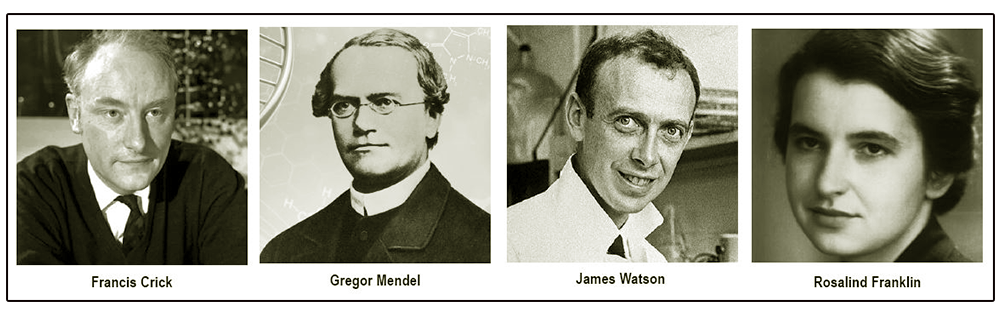
Gregor Mendal’s groundbreaking experiment
The Austrian mathematician cum botanist, Gregor Mendel was the first to conduct a systematic investigation to understand the cause of heredity. Being unconvinced of the traditional explanations, he carried out a series of experiments lasting eight years to determine how the traits (plant height, seed color, flower color etc.) of pea plants are transmitted from generation to generation. When Mendel cross pollinated tall and short plants, he found that the progeny was entirely tall. However, when first generation tall plants were allowed to self-pollinate, the missing short trait reappeared at a statistically significant probability of 25 percent. Mendel’s work provided an unequivocal proof that traits do not blend but exist as unique entities, manifested from generation to generation following a predictable mathematical pattern.
Mendel’s finding remained unrecognized for more than 30 years. His ideas were too far ahead of time and biologists were shy of mathematics. In the early 1900s several European botanists arrived at the same conclusion based on independent experiments. With the advancement of microscopy, a great deal of information about plant and animal cells was gathered. A key finding was the presence of colored bodies in the cell nucleus named chromosomes, seen separating during cell division, leading to the hypothesis that Mendel’s genetic units (genes) should be physical entities present in the chromosomes.
Chemists and biologists wondered what the genetic material in chromosomes made off. Is it a protein, carbohydrate or a lipid? Most biological materials are constituted of these substances.
Discovery of DNA
Great discoveries are made by unusual people. The Swiss Friedrich Miescher belonged to a clan of reputed physicians. Following family tradition, he qualified as a doctor but did not engage in profitable practice of medicine. He decided to do research to understand the foundations of life. In search for new biological substances, he experimented with pus deposited in bandages and extracted a substance rich in phosphates but very different from proteins. The new substance called “nuclein” was indeed DNA. Later, the German biochemist Albrecht Kossel following the Miescher’s work, showed that DNA contains four crucial compounds, adenine (A), cytosine (C), guanine (G) and thymine (T), known as nucleotide bases.
Avery – MacLeod – McCarthy Experiment
The flu pandemic of 1918 killed an estimated 50 million people worldwide due to the pneumonia that followed the viral infection. Pneumonia was caused by the virulent bacterium Streptococcus pneumoniae. The British bacteriologist, Frederick Griffith attempting to find a vaccine for pneumonia, worked with two strains of Streptococcus pneumoniae, one virulent causing pneumonia in mice, and the other avirulent to them. He found that neither the virulent strain denatured by heating nor the live avirulent strain injected into mice caused the disease, whereas a mixture of the denatured virulent strain and the live avirulent strain was deadly to mice just as the virulent one. He concluded that some chemical compound present in the virulent strain – a transforming principle – has changed the avirulent strain to the virulent strain.
In 1944, Oswald Avery, Colin MacLeod and Maclyn McCarty working at the Rockefeller University, United States, continued the work of Frederick Griffith to identify the transferring principle and found that it is not protein as widely believed, but deoxyribonucleic acid (DNA). Their result pointed to the conclusion that DNA is the carrier of genetic information.
A book by a physicist that triggered a transformation in biology
The insights of brilliant brains engaged in fundamental inquiry have opened the way for major scientific discoveries and technological innovations. In 1944, the Austrian theoretical physicist Erwin Schrodinger, one of the founders of quantum mechanics, published a book titled “What is life? The physical aspect of the living cell “. The American biologist Maurice Wilkins said he was so inspired by Schrodinger’s book and after reading it, he decided to switch from ornithology to genetics. While physicist Maurice was influenced to take up biology. Francis Crick was a physicist working on magnetic mines for the British Admiralty during the war. After reading “What is life” he thought a physicist could find treasures in biology and joined the Cavendish Laboratory in Cambridge to pursue a Ph.D.
Structure of the DNA molecule
When DNA was shown to be the molecular entity that encodes genetic information, chemists rushed to determine its structure.
The pattern formed when X-rays passing through a material cast an image on a screen, provides information about its molecular structure. In 1938, the English physicist William Astbury examined DNA using x-rays and concluded that the molecule has a helical structure. Having heard a group in the United Kingdom was attempting to unearth the structure of DNA, the American theoretical chemist, Linus Pauling, adopted Astbury’s data and proposed a model for the structure of DNA, publishing the results in the journal “Nature” in January 1953.
There was an obscure but remarkably talented person, Rosalind Franklin, pursuing x-ray diffraction studies on DNA at King’s College London. After a painstaking effort, she obtained accurate x-ray diffraction images of DNA. Her colleague, Maurice Wilkins, working in the same laboratory, passed the images to Francis Crick and James Watson at Cavendish Laboratory.
Crick and Watson were more insightful and theoretical in their approach to elucidating the structure of DNA. They, inspired by Erwin Schrodinger’s hypothesis, that the entity accounting for heredity should be an aperiodic molecular entity in cells, arrived at the double helix model, showing that Linus Pauling’s model was erroneous. The Crick – Watson model explained how DNA stores information and replicates during cell division. Their assertions were subsequently confirmed rigorously by experimentation. Crick, Watson and Wilkins received the Nobel Prize for Physiology and Medicine in 1962.
The work following the Crick – Watson model, firmly established that the DNA is a polymer string constituted of two strands made of a sugar- phosphate backbone, connected to each other by linkage nucleotide bases A, T, G, C. The base A links base T and G to C. When one strand is defined by the arrangement of bases, the complementary strand is defined. The arrangement bases store information analogously to a four-letter alphabet. Each individual in a species has a unique sequence of arrangement base pairs. The variation within the species is generally a fraction of a percent.
The Watson-Crick model also explained how the DNA molecule replicates. The two strands unwind and separate, and two complementary strands are inserted. The detailed dynamics of the replication process are not fully understood.
‘DNA is a cookbook’
DNA functions like a multiple – volume cookbook, written in a four-letter alphabet. The volumes are kept in a rack in the kitchen. The rack is the nucleus and volumes on it are the chromosomes, and the cell is the kitchen. A paragraph giving a recipe is a gene. Enzymes act as chefs, who read recipes and give instructions to cell machinery to prepare the dishes, which are proteins. The system is so complex; a complete macroscopic analogy would be impossible.
The significance of the Crick- Watson work
Until Charles Darwin proposed the idea of evolution, biology lacked a theoretical foundation. Darwin hypothesized, when organisms reproduce, the progeny inherit parental characters, but there are variations. The variants, though similar to the parents, have some new or altered characters. If these characters, originating from mutations or cross – breeding are favorable for survival in the environment, they dominate in the population, inheriting advantageous traits. Thus, random generation – to – generation, advancements of living organisms, become possible – a way of improving the design of things in a production process without a designer. Living systems store information and progeny retrieve them, when required. A bird hatched from an egg when matured, knows how to fly.
The discovery of DNA and understanding how it stores genetic information, replicates and mutates explained Darwinian evolution. A mutation is a change in the ordering of base pairs, accidentally during replication or due to external chemical or physical causes. In sexual reproduction, the offspring gets nearly half of its DNA from each parent. Consequently, the offspring does not have DNA identical to one parent. It mixes up DNA in the species. However, mutations generate new genes, driving evolution. Sexual reproduction and mutation acting in concert introduced the diversity of life on earth we see today.
Once science becomes explanatory and predictive, it opens the way for innovations. Theories of mechanics and electromagnetism formulated in the late 19th and early 20th centuries brought forth modern engineering, transforming it from an empirical craft to a scientific technological discipline. Before the discovery of DNA structure and its function, biological innovations were largely empirical. Today we have genetic engineering – genes in organisms can be manipulated. The goal of more advanced genetic engineering, referred to as synthetic biology, aims to induce major genetic changes to organisms by incorporating several genes to alter biochemical, physiological and anatomical functions. Gene technology is rapidly transforming medicine, agriculture and biotechnology. Cures have been found for diseases formerly branded incurable.
How did DNA come into existence
Life is believed to have originated in prebiotic oceans enriched with carbon and nitrogenous substances. How did DNA originate there? Today, chemists can synthesize DNA in minutes, via selective procedures, only humans can do with their knowledge. Even in a vast ocean containing trillions of times more molecular ingredients than in a test tube, a molecule as complex as DNA is most unlikely to be created by random events during the largest possible time scales of the universe. A plausible scenario would be DNA evolving from simpler self-replicating molecules such as RNA (a single strand of DNA) precursors. Unlike RNA, DNA is highly stable and good stability is necessary for the evolution of advanced forms of life.
Epigenetics
Earlier we pointed out there are two golden sayings in our culture: “Arae gathi nare” and “Jammeta wada lokuei purudha (“Hereditary characters persist” and “Habits overtake heredity “). The first is a consequence of our genetic predisposition determined by DNA and explicit genes. However, the character of an individual is also influenced by the physical, social and cultural environment. Although completely non-genetic, our children frequently follow habits we indulge in. Again, the behavior of an individual is also influenced by the physical, social and cultural environment.
The environmental factors also trigger or silence genes. The study of this important genetic effect, which does not alter the sequence of base pairs, is referred to as epigenetics. Epigenetic effects could be deleterious or beneficial. Sometimes, chronic stress causes disease, including cancer. Research suggests engagement in creative and imaginative activities, and establishes favorable epigenetic changes in the brain. Inheritance is dictated mainly by the arrangement of base pairs in DNA. Epigenetic changes involve chemical changes in DNA without altering the sequence. These alterations are erasable but allow transmission to subsequent generations.
Conclusion: World DNA day message to lawmakers
The discovery of the structure of DNA stands as one of the most significant scientific discoveries in human history. It is a lesson to all those involved in research and education, telling how great discoveries originated. It is intense curiosity, imagination and preparation rather than mere indulgence in technologies that clear the path for discovery and innovation. A society that advocates policies conducive to discoveries, also develops new technologies that follow. If we just borrow technologies from places where they originated, hoping for quick economic returns, the effort would be a gross failure. Students, determined to be the best judging from exam performance, engage in professional disciplines and perform exceptionally. Why are we short of discoveries and innovations in those disciplines? Will our lawmakers ever realize the issue? They need to wonder why we are weak in science and poor in innovation. Right policies can even reverse adverse epigenetic attributes propagating in a society!
By Prof. Kirthi Tennakone
ktenna@yahoo.co.uk
National Institute of Fundamental Studies
REVIEWED BY Prof. Rajiva Wijesinha
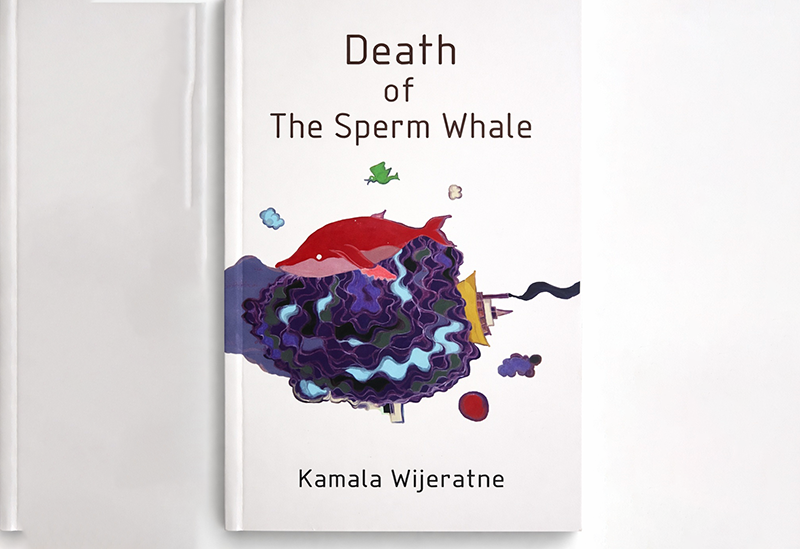
Earlier this year, I sent her most recent book by an old friend, Kamala Wijeratne. Death of the Sperm Whale is her first book of poetry in four years, though in between she has published fiction, two books though both of them too were slim volumes. I am full of admiration for her in that she keeps going, the last of the poets whom I helped to a wider readership in the eighties, when I championed Sri Lankan writing in English, something hardly any academic was prepared to do in those conservative days.
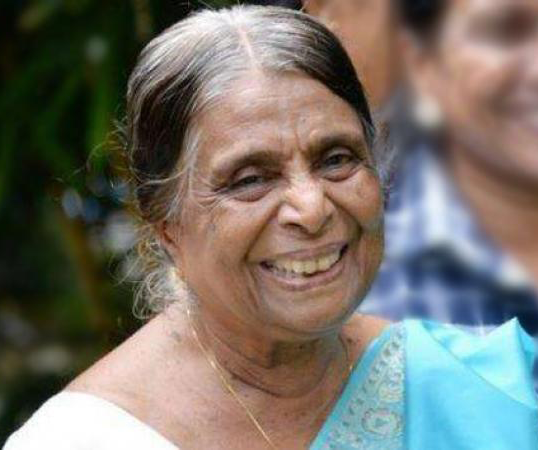
Kamala Wijeratne
Kamala’s subjects are those she has explored in the past, but the use of the plural indicates that her range is expansive. She dwells much on nature, but she deals also with political issues, and engages in social criticism. There are several poems about Gaza, the multiple horrors occurring there having clearly affected her deeply. She repeatedly draws attention to the slaughter of children, the infants sent by God only to be taken back. And she deals with the destruction of the life of a doctor, after his healing, a theme that has kept recurring in the ghastly world which is subject to the whims of the incredibly nasty Netanyahu.
The title poem is about a whale destroyed by ingesting plastic, a tragedy to which we all contribute, though those who ‘loll on the beach, their senses dulled by the burgers they eat’ could not care less. More immediate is the simple account of a friend whose infant had died in hospital, when they diagnosed pneumonia too late.
Contrasting with these urgent statements are Kamala’s gentle perceptions, as when she writes of her son supporting her as she walks, while she thinks back to the days she supported him; of a marigold growing in a crack in a shrine, offering obeisance with its golden flowers to the Noble One; of birds investigating her dining room and deciding not to build there, the male lingering ‘confused and irritated’ but eventually following the female through the window for ‘She was mistress after all.’
She is deeply interested in the passing of time, and its impact on our perceptions. The first poem in the book is called ‘First Poem of 2024’ when she ‘heard the weeping of the dying year’, and went on to meditate on how we have categorised the passing of time, while the universe moves on regardless.
She welcomes the return of the Avichchiya, the Indian Pitta, a bird that has figured previously in her poetry, after six months, but this time she spares a thought for his case against the peacock, which stole his plumes.
There are two personal poems, one about a former student who turned her back on her when she had achieved success, the other about being nominated for a literary award, but not getting it after the excitement of attending the Awards Ceremony. Swallowing her disappointment, she congratulates the winner, noting that she will not go into ecstasies the next time she is nominated.
Paraphrase cannot do justice to Kamala Wijeratne’s gentle touch, which has expanded its reach over the years. So,A I will end by quoting from her tribute to Punyakante Wijenaike, another of the distinguished ladies whose work I promoted, the one before the last to leave us. The tribute ends, recalling her most impressive work Giraya,
Like the nutcracker
That makes a clean cut
You cut the human psyche
To reveal its darkest depths
by Kamala Wijeratne

On the occasion of World Earth Day, the conversation around sustainability often turns to forests, oceans, and climate. Yet, one of the most critical resources sustaining life remains largely unnoticed – soil. Beneath every thriving crop and every secure food system lies a complex, living ecosystem that quietly performs functions essential not just for agriculture, but for the health of the planet itself.
Soil is far more than a passive medium for plant growth. It is a dynamic and living system, teeming with microorganisms that drive nutrient cycling, regulate water movement, and support biodiversity at multiple levels. It acts as a natural reservoir, storing carbon and playing a crucial role in mitigating the impacts of climate change. The productivity, resilience, and long-term viability of agriculture are intrinsically tied to the health of this foundational resource.
However, decades of intensive agricultural practices have begun to take a visible toll. The increasing pressure to maximize yields has often led to excessive and imbalanced use of fertilisers, particularly nitrogen-heavy inputs. While these may provide short-term gains, their prolonged and unchecked use has resulted in significant nutrient imbalances within the soil. Essential micronutrients are depleted, soil organic carbon levels decline, and the rich microbial life that sustains soil fertility begins to diminish. The result is a gradual but steady erosion of soil health – one that ultimately reflects in reduced productivity and increased vulnerability of crops to stress.
Parallel to the challenge of soil degradation is the growing concern of water scarcity. Agriculture remains the largest consumer of freshwater resources, and inefficient irrigation practices continue to strain already depleting groundwater reserves. In an era marked by climate variability, erratic rainfall patterns, and increasing frequency of droughts, the need for efficient water management has never been more urgent.
Adopting scientifically sound and resource-efficient practices offers a clear pathway forward. Techniques such as rainwater harvesting and precision irrigation systems – like drip and sprinkler methods – enable farmers to optimize water use without compromising crop health. Complementary practices such as mulching and proper field levelling further enhance moisture retention and reduce water loss, ensuring that every drop contributes effectively to plant growth.
Equally important is the shift towards a more balanced and holistic approach to nutrient management. Soil testing must form the backbone of fertiliser application strategies, ensuring that crops receive nutrients in the right proportion and at the right time. Integrating organic sources – such as farmyard manure, compost, and green manure – helps replenish soil organic matter, improving both soil structure and its capacity to retain water and nutrients.
Sustainable soil management also extends to cultivation practices. Reduced or minimum tillage helps preserve soil structure, while crop rotation and intercropping promote biodiversity and break pest and disease cycles. The inclusion of cover crops protects the soil surface from erosion and contributes to organic matter buildup, reinforcing the soil’s natural resilience.
In recent years, there has also been growing recognition of the role played by biological and enzymatic inputs in enhancing soil health. These inputs stimulate beneficial microbial activity, improve nutrient availability, and increase nutrient use efficiency. By reducing dependence on excessive chemical fertilisers, they offer a pathway toward more sustainable and environmentally responsible farming systems. The transition to sustainable agriculture is not merely a technical shift – it is a collective responsibility.
Farmers, scientists, industry stakeholders, and policymakers must work in tandem to promote awareness and facilitate the adoption of practices that conserve soil and water resources. The long-term sustainability of agriculture depends on decisions made today, at both the field and policy level. As we mark World Earth Day, the message is clear: the future of agriculture is inseparable from the health of our soil and the stewardship of our water resources. A fertile, living soil is not just the foundation of productive farming – it is the cornerstone of ecological balance and food security. Protecting it is not an option; it is an obligation we owe to generations to come. (The Statesman)
(The writer is Chairman Emeritus, Dhanuka Agritech.)

Iran says ‘fully prepared’ for football team’s World Cup participation

LA 2028 Olympic cricket stadium in IPL proposal

Oil rises above $106 per barrel as US, Iran deadlocked in Strait of Hormuz

UAE captain Waseem fined and handed demerit point for criticising umpiring

Shanto century, Mustafizur five-for seals series win for Bangladesh

Showers above 75 mm are likely at some places in the Western, Sabaragamuwa, Central, North-western and Southern provinces

‘Dates have the highest sugar content to fight Coronavirus’

Sunday Island 27 December – Headlines

#SundayIsland 17th December – Headlines

Sunday Island – 28th March

Sunday Island Headlines – 21 March

Sunday Island – 21st February – Headlines
-

 News4 days ago
Rs 13 bn NDB fraud: Int’l forensic audit ordered
-

 Business7 days ago
Harnessing nature’s wisdom: Experts highlight “Resist–Align” path to resilience
-

 Opinion5 days ago
Shutting roof top solar panels – a crime
-

 News7 days ago
Gratiaen Trust announces longlist for the 33rd Annual Gratiaen Prize
-

 News6 days ago
From Nuwara Eliya to Dubai: Isha Holdings markets Agri products abroad
-

 News2 days ago
Lanka faces crisis of conscience over fate of animals: Call for compassion, law reform, and ethical responsibility
-
 News5 days ago
Church calls for Deputy Defence Minister’s removal, establishment of Independent Prosecutor’s Office
-

 News7 days ago
Heroin haul transported on 50-million-rupee contract