
News
G-77 summit: President RW calls for earmarking 1% of GDP for R&D over a decade


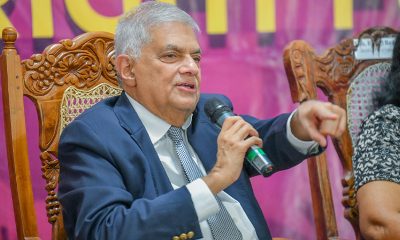
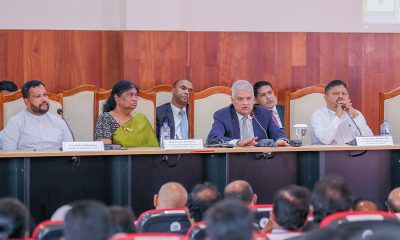
President Ranil Wickremesinghe, in his speech at the Summit of the Heads of State and Government of the G77 and China in Havana, Cuba, on Friday, emphasised the crucial role science, technology and innovation play in overcoming the current development challenges faced by developing nations worldwide.
President Wickremesinghe began his speech by commending Cuban President Miguel Diaz-Canel Bermudez for convening the Summit and acknowledging Cuba’s historic role as a champion of the aspirations of developing nations at various multilateral forums.
Wickremesinghe noted the unprecedented challenges confronting the global South, including the pandemic, climate change, food, fertiliser and energy crises, which threaten the achievement of Sustainable Development Goals (SDGs) and exacerbate the global debt crisis.
President Wickremesinghe delved into the historical perspective of technological development, highlighting how Europe’s advancements in the 15th century, such as gunpowder, cannon and ocean-going ships had enabled it to conquer other parts of the world, resulting in the technological divide seen today. He underscored that a new technological divide is
emerging in the 21st century, necessitating the adoption of digitalisation and new technologies such as Big Data, IoT, AI, Blockchain, Biotechnology and genome sequencing to bridge the gap.The President emphasised the importance of an educated labour force well equipped with knowledge and technological know-how essential for the smooth flow of the much-needed transformation of the developing nations.
The President outlined his government’s initiatives including the evaluation of underperforming Science and Technology Research Institutes and the establishment of a Technology and Innovation Council and a Digital Transformation Agency. Additionally, Sri Lanka plans to create four new universities specializing in new technologies, with one being the result of technological cooperation between India and Sri Lanka. The International Climate University will be the 05th.
Addressing the digital divide, President Wickremesinghe cited challenges such as limited access to costly technology, insufficient digital skills and infrastructure, cultural and institutional barriers and financing constraints. He called for effective cooperation mechanisms within the G77 and China, including the revitalization of the Consortium of Science & Technology & Innovation for the South (COSTIS) and the commitment of member countries to earmark 1% of their GDP for R&D over a decade.
President Wickremesinghe stressed the importance of collaboration between governments and the private sector and proposed creating technological platforms in fields like digitalization, health, medication, AI and renewable energy including green hydrogen, inspired by the European Union’s Technology & Innovation Platforms.
The brain drain from the South to the North and the resulting loss of educated manpower is another threat to the development of Science Technology and Innovation of the South, President Wickremesinghe said, adding that China, India, Japan and South Korea have developed Science Technology and Innovation by nurturing their manpower. “Therefore, we must ask for compensation from the North for the loss of our manpower,” he added.
He also urged increased South-South cooperation and proposed a scheme akin to the Colombo Plan to enhance collaboration, exchange best practices and develop policies that harness the transformational potential of science, technology and innovation.
In conclusion, President Wickremesinghe reaffirmed Sri Lanka’s commitment to supporting the new Havana Declaration and called for the collective voice of G77 and China to be heard in international fora.The President’s address underscored the significance of science, technology and innovation in shaping the future of developing nations, making it a pivotal moment at the G77 and China Summit.








News
Cabinet aporives recruitment of Nursing Instructors for Nursing Schools under the Ministry of Health and Mass Media on Contract Basis

There are 17 nursing schools under the Ministry of Health and Mass Media including the postgraduate primary nursing school.
There are 142 vacancies in the posts of Grade I / Special Grade Nursing Officer (Education) as on 31.03.2026 in those schools while 24 officers are to be promoted to the special grade on 31.12.2025 owing to the vacancies existing in the post of Special
Grade Nursing Officer (Education). Therefore, the number of vacancies is to be 166.
In addition, there are 24 vacancies in the post of Special Grade Nursing Officer (Education).
Although at present action has been taken to upgrade the nursing schools to nursing colleges and upgrade the nursing diploma course to nursing degree course, no action has been taken so far to carry out recruitment for the training relevant to the appointment for the post of Grade I / Special Grade Nursing Officer (Education).
Accordingly, the Cabinet of Ministers granted approval to the resolution furnished by the Minister of Health and Mass Media to recruit retired nursing instructors and nursing instructors who served in the nursing schools belonging to the three armed forces and are retired or have resigned legitimately from service to the post of Grade I / Special Grade Nursing Officer (Education) on contract basis.
Latest News
Signing agreement for the establishment of BIMSTEC Technology Transfer Facility in Sri Lanka
It has been decided to establish a BIMSTEC technology transfer facility in Sri Lanka by entering into a Host Country Agreement at the second leaders’ summit of BIMSTEC (Bay of Bengal
Initiative for Multi-Sectoral Technical and Economic Cooperation) held in New Delhi, India, in 2008, with the objective of enhancing regional cooperation.
The relevant cooperation agreement was signed by the member countries at the 5th BIMSTEC summit on 30-03-2022 in Colombo.
The prime objective of this technology transfer facility is to provide technology, capacity building, and management of intellectual property for the micro, small, and medium-scale
enterprises of the BIMSTEC member countries.
According to the cooperation agreement, an agreement should be entered into between Sri Lanka, as the host country, and BIMSTEC Secretariat for formalizing the legal status, privileges, and immunities of the technology transfer facility.
The drafted agreement has received the relevant institutional approval and legal clearance.
Accordingly, the Cabinet of Ministers has approved the resolution furnished by the Minister of Science and Technology to sign the proposed agreement.
News
The cabinet approves agreement on mutual legal cooperation in criminal matters between the Republic of Sri Lanka and the Republic of Korea
Approval has been granted at the cabinet meeting held on 11-12-2023 to sign an agreement between the Republic of Korea and the Government of Sri Lanka regarding mutual cooperation
in criminal matters.
However, according to the aforementioned approval, the relevant agreement could not be signed between both parties.
Through this agreement, opportunities will be provided
for mutual assistance to other countries in handing over judicial documents and collecting evidence for the use of criminal case matters.
Accordingly, the Cabinet of Ministers has approved the resolution provided by the Minister of Justice and National Integration to sign an agreement between the Republic of Korea and the Government of Sri Lanka to cooperate in criminal matters.

Cabinet aporives recruitment of Nursing Instructors for Nursing Schools under the Ministry of Health and Mass Media on Contract Basis
Signing agreement for the establishment of BIMSTEC Technology Transfer Facility in Sri Lanka
The cabinet approves agreement on mutual legal cooperation in criminal matters between the Republic of Sri Lanka and the Republic of Korea

Misbah-ul-Haq resigns as Pakistan selector after Test squad upheaval
Amendment of the Quarantine and Prevention of Diseases Ordinance No. 3 of 1897
Cabinet approves donation of USD One Million to the Government of Nepal

‘Dates have the highest sugar content to fight Coronavirus’

Sunday Island 27 December – Headlines

#SundayIsland 17th December – Headlines

Sunday Island – 28th March

Sunday Island Headlines – 21 March

Sunday Island – 21st February – Headlines
-

 News5 days ago
Eight politicians in drug kingpin probe
-

 Features3 days ago
“Wrap Me Up in My Blazer”— A Gentlemanly Bradby Reminiscence
-

 Business5 days ago
Sri Lanka opens up: A new season of direct connectivity
-
 Features7 days ago
Insights from Chieftains of Uva: Genealogy of two Kandyan Families – Part II
-

 Features5 days ago
Redefining ageing in Sri Lanka
-
 Latest News6 days ago
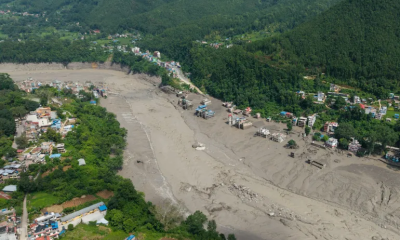
Nepal-Tibet floods: What happened, what caused them and who is missing?
-

 Editorial7 days ago
Warning of power cuts: El Niño and corruption
-

 Features7 days ago
Export diversification: Missing the wood for the trees – Part I