
News
From freedom, liberty, and pursuit of happiness, spring the dynamism and entrepreneurism that can develop a nation – Ambassador Chung


United States Ambassador to Sri Lanka Julie Chung hosted an event in Colombo on June 22 to mark the 247th anniversary of America’s Declaration of Independence. Ambassador Chung took the opportunity to also highlight the anniversary of 75 years of a strong and enduring partnership between the United States and Sri Lanka. Minister of Foreign Affairs Ali Sabry attended the celebration as the Chief Guest.
American citizens around the world celebrate Independence Day, the day on which the country’s founding fathers gathered in Philadelphia, Pennsylvania on July 4, 1776 to sign the Declaration of Independence. With the Declaration, America took its first step toward self-government, based on certain unalienable rights, including life, liberty, and the pursuit of happiness, and government powers derived by the consent of the governed.
Ambassador Chung said at the event, “We firmly believe that from freedom, liberty, and the pursuit of happiness, spring the dynamism and entrepreneurism that can develop a nation, alongside the political and social stability that will secure it. That is true in the United States, in Sri Lanka, and everywhere in between.”
Highlighting that the United States is one of Sri Lanka’s oldest partners, Ambassador Chung emphasized that mutual values and close collaboration have demonstrated that both countries can succeed together. She said, “As we celebrate America’s national independence and our 75th anniversary of diplomatic relations, we are really celebrating a remarkable partnership with all the citizens and the Government of Sri Lanka. For Americans, our founders stated it clearly, and to this day, we follow the course they laid – we respect and adhere to our Constitution in order to form a more perfect union. The objective of the United States’ partnership with Sri Lanka is no less profound.”
Our partnership flourishes in government-to-government and people-to-people ties that deliver benefits to both Americans and Sri Lankans alike. Since 1956, USAID has provided over US $2 billion in assistance across a variety of sectors, including nutrition, health, education, human rights and governance, disaster response, and the environment. Just in the last year, when Sri Lanka was in the midst of an economic crisis, the United States Government provided over $270 million in new support, from fertilizer for farmers to funding assistance for small businesses.
Our military-to-military relationship, which has grown steadily over the years, is focused on bilateral training, exercises, and technical exchanges that will ultimately help to build a resilient force that can contribute to ensuring an open, free, and peaceful Indo-Pacific region. The Peace Corps has helped to form tremendous cross-cultural ties since 1962, with over 500 volunteers having dedicated two or more years of their lives, building capacities in Sri Lankan communities and developing relationships that will last a lifetime.
The United States is Sri Lanka’s largest export market, with $3.3 billion in exports in 2022 alone. It is also one of the preferred destinations of Sri Lanka’s brightest, with 3,000 students travelling to the U.S. to study in the last year. The U.S. Embassy directly supports other academic and professional training through exchanges such as the Fulbright and the International Visitor Leadership Programs, with nearly 3,000 Sri Lankans participating in these programs over the past 75 years.
Looking forward, the partnership that we have established will form the foundation of even greater development of people-to-people relationships; economic, political, and social progress; and a region that remains as free and open as it is geographically vital. America’s friendship, commitment, and support in Sri Lanka have achieved much over the past 75 years, and that is worth celebrating. That same friendship, commitment, and support will endure, and together we can build a brighter future for Sri Lanka and its people.







News
AgriConnect Sri Lanka’ to be launched on 30 October to Modernise the Agricultural Sector Through Digitalisation

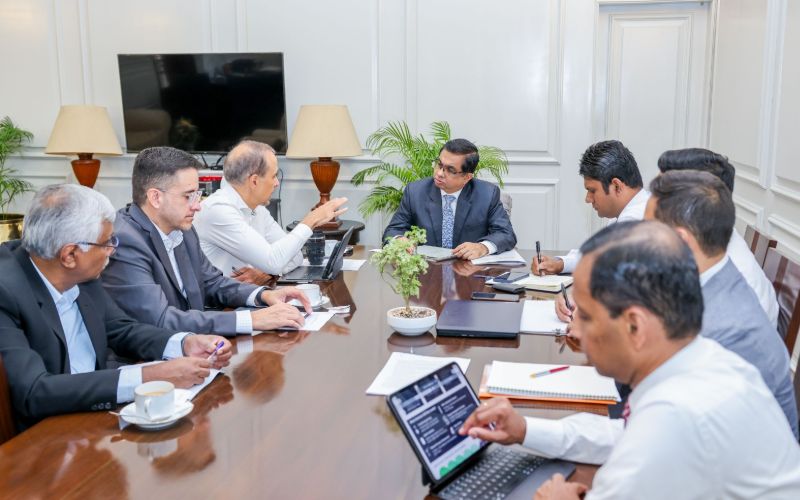
A discussion on the official launch of the ‘AgriConnect Sri Lanka’ programme was held at the Presidential Secretariat on Tuesday (13) morning between Secretary to the President Dr. Nandika Sanath Kumanayake and a delegation led by Gevorg Sargsyan, World Bank Group Manager for Sri Lanka and the Maldives.
The discussion focused on the official launch of the ‘AgriConnect Sri Lanka’ programme, scheduled to take place on 30 October at TRACE Expert City.
The World Bank delegation provided a comprehensive briefing on the programme and emphasised that Sri Lanka is set to become the first country in South Asia to join this global initiative of the World Bank Group, marking a significant milestone.
Victor Anthonypillai, Senior Country Officer of the International Finance Corporation (IFC), Tomas Ricardo Rosada Villamar Practice Manager at the World Bank, Felipe F. Dizon, Senior Economist and Athula Senaratne, Senior Agriculture Specialist, also attended the meeting. The Presidential Secretariat was represented by Senior Assistant Secretary to the President Dr Danushka Perera and Assistant Secretary to the President R. A. Ruwanpathirana.
President’s Media Division (PMD)
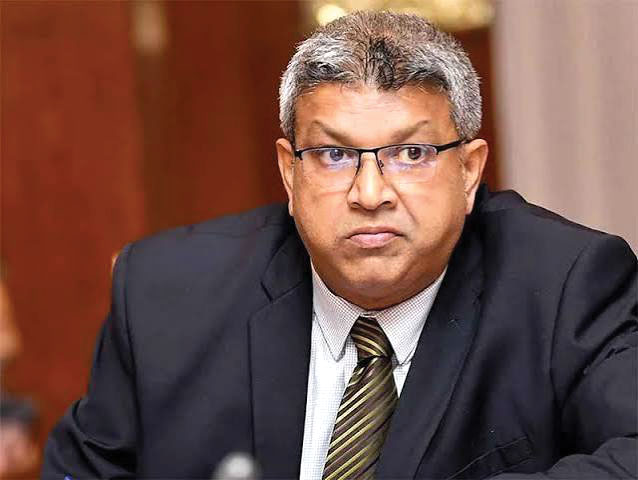
Appointment of committee eyewash, says UNP
The government is considering changes to prison regulations pertaining to the treatment of Buddhist monks serving jail terms, including their right to wear monastic robes when taken outside prison.
Justice and National Integration Minister Harshana Nanayakkara announced the proposed changes yesterday (14) following the submission of an interim report by a committee appointed to review the rules and procedures governing prisons.
The report was handed over to Secretary to the President Dr Nandika Sanath Kumanayake at the Presidential Secretariat.
One of the key recommendations is to amend Prison Standing Order 356 by introducing a new provision, 356(A). The proposed revision would require prison authorities to consult the Department of Buddhist Affairs on the removal of a monk’s robes upon admission to prison. The Commissioner of Prisons would be allowed 10 days to notify the department and take the necessary steps.
A separate amendment to Departmental Order 550 would allow Buddhist monks to wear their robes whenever they are taken outside prison, unless their respective Nikaya formally requests that the privilege be withdrawn.
The committee has also recommended extending similar arrangements, with suitable modifications, to members of other religious clergy who are imprisoned.
The proposals follow concerns raised over the treatment of Ven. Galagoda Aththe Gnanasara Thera after he was taken into custody. President Anura Kumara Dissanayake subsequently held discussions with representatives of the three main Buddhist Nikayas and appointed the committee to examine the existing legal framework.
Nanayakkara said the interim report had been forwarded to the Acting Commissioner General of Prisons, along with instructions to revise the relevant standing orders in accordance with its recommendations.
The proposed amendments have yet to be confirmed as formally implemented.
Meanwhile, the UNP yesterday criticised the government’s decision to appoint a committee to make recommendations on the attire to be worn by imprisoned Buddhist monks and other religious leaders when taken outside prison, describing the move as unnecessary.
In a statement issued yesterday (14), the UNP said the procedures governing the matter were already clearly set out in the Department of Prisons’ Standing Orders, making the appointment of a separate committee unwarranted.
The party cited remarks by Professor G.L. Peiris, Convenor of the Janathawadi Joint Opposition, who had described the committee’s appointment as a
“complete eyewash” and questioned the need for such a move.
Referring to Standing Order 550 of the Prisons Department, the UNP said convicted prisoners appearing before court for legal proceedings should not be required to wear prison uniforms.
It further stated that the regulations allowed prisoners to wear civilian clothing consistent with what they wore before imprisonment, including attire appropriate to their cultural and religious backgrounds.
The UNP accused the government of unnecessarily prolonging the issue by appointing a committee, despite the existence of regulations governing prisoners’ attire.
The party also called on the government to seek forgiveness from the Mahanayake Thera and the Sangha Council of the Kotte Sri Kalyani Samagri Dharma Maha Sangha Sabha of the Siyam Maha Nikaya over the decision concerning the religious attire of Ven. Galagoda Aththe Gnanasara Thera.
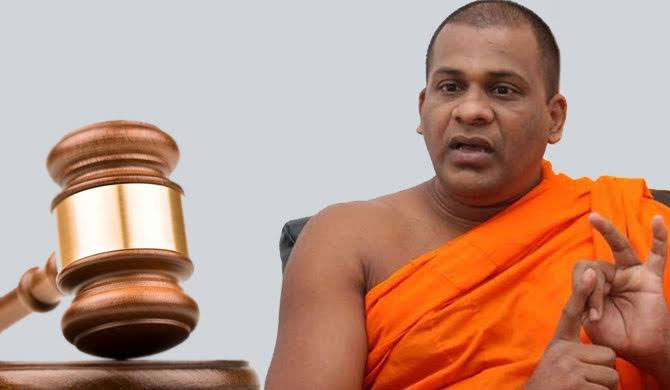
Court of Appeal President Justice Rohantha Abeysuriya yesterday withdrew from the bench hearing petitions challenging the decision by prison authorities to require Ven. Galagoda Aththe Gnanasara Thera to wear prison attire following his imprisonment.
The decision was announced when the petitions seeking to invalidate the prison authorities’ decision were taken up for consideration on October 14.
Following his withdrawal, a three-judge bench was appointed to hear the petitions.
The petitions relate to the prison authorities’ decision to require Gnanasara Thera to wear prison attire after he was taken into custody to serve the remainder of his sentence for contempt of court.
In September this year, the Supreme Court annulled the presidential pardon granted to Gnanasara Thera by former President Maithripala Sirisena in May 2019.
Following the ruling, the Court of Appeal directed the Commissioner General of Prisons to take the necessary steps to enforce the remainder of the monk’s prison sentence.
Gnanasara Thera had originally been sentenced to six years’ imprisonment for contempt of court but had served only around nine months before receiving the presidential pardon in 2019.

AgriConnect Sri Lanka’ to be launched on 30 October to Modernise the Agricultural Sector Through Digitalisation

57th Annual Saints’ Quadrangular Tournament on Saturday and Sunday

Showers or thundershowers will occur at most parts of the island

Prison rules to be revised over monks’ attire

AC President recuses himself from hearing prison attire case pertaining to Gnanasara Thera

Court orders steps to obtain INTERPOL Red Notice against Basil

‘Dates have the highest sugar content to fight Coronavirus’

Sunday Island 27 December – Headlines

#SundayIsland 17th December – Headlines

Sunday Island – 28th March

Sunday Island Headlines – 21 March

Sunday Island – 21st February – Headlines
-

 News7 days ago
NDB fraud Rs 60mn more than reported
-

 News7 days ago
Removing monk’s robes matter for Sangha to decide: Mahanayake Theras
-

 News6 days ago
NPP govt. reminded of its responsibilities as US warship leaves Colombo
-

 News5 days ago
Sri Lanka escalates anti-graft drive with Shiranthi’s jailing
-

 Latest News6 days ago
Farhan, Sadaqat help Pakistan ace 183 chase to go 1-0 up
-
 News7 days ago
BHC, Colombo: “LTTE remains a proscribed org. in the UK”
-

 Latest News4 days ago
Farhan and Sadaqat help Pakistan seal series in style
-

 News5 days ago
Iranian ships stranded, Lanka fears US sanctions