
Features
Foxitis – The New American Plague


by Vijaya Chandrasoma
Legal counsel for some Trump-incited insurrectionists, accused of storming the Capitol on January 6, are using a novel defense, a mental disease they have termed Foxitis, which they claim spurred their clients to “fight for their country”. In their deluded minds, they believed they were heroes, patriots. Foxitis is a disease to which millions of old white Americans and Sri Lankans of all ages have been exposed for decades, some to a level of chronic, sometimes violent lunacy.
Fox News, a multinational, conservative cable news and television channel, is owned by Australian-American media mogul, Rupert Murdoch. It caters exclusively to a conservative television audience in America. Fox has grown from the 1990s to be the dominant news channel, with the largest slice of TV ratings.
Fox News enjoys a predominantly white, Republican audience (over 90%), with a median age in the mid-60s. There are households today who get all their news from Fox and Friends, and refuse to watch any other news channel. Even more after Trump described the media, except Fox News, as the Enemy of the People.
When Donald Trump won the presidency in 2016, he made Fox his own propaganda channel. It became a mouthpiece for the Trump administration, covering up its lies, and misrepresenting or downplaying its criminal acts of incompetence and corruption. Fox became a government-run TV, much like the state owned Russian news channel, TASS.
According to political scientist, David Hopkins, “Fox News tends to raise the profiles of minor scandals and controversies involving Democrats that receive scant attention in other media”, while giving no coverage to, or grossly misrepresenting, the real scandals of the Trump administration.
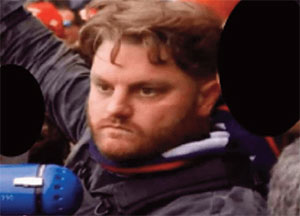 Fox hosts, Sean Hannity, a close confidante of the former president, and Tucker Carlson, sycophantically biased towards Trump, constantly covered up his lies and often criminal acts of corruption and abuse of power. Hannity called the pandemic, at its outset, a “hoax”, and climate change “an unproven science and a disputed fact”. Other Fox stalwarts like the late and unlamented convicted felon Roger Ailes and Bill O’Reilley have disappeared in a cloud of sexual assault. However, there are real journalists at Fox, like Shep Smith and Chris Wallace, who provided a modicum of balance to the lies generated by the network. Smith has since “retired” but Chris Wallace continues to aggravate Trump with the truth, a concept with which the former president was never familiar.
After Trump lost the November election, Fox News bombarded its mainly Trumpist audience with The Big Lie, that the election was stolen from Trump, which has resulted in over 70% of Republicans questioning the legitimacy of the November election, even though every claim of election fraud has been laughed out of court. Such is the nature of the disease. There is no cure. Giving medicine to those afflicted is like giving medicine to a corpse.
Fox News covered the January insurrection in a manner vastly different from other channels. They downplayed it to the level of a peaceful protest. They paraphrased Trump’s incitement to the mob before the Capitol was stormed, when he used the words “fight” and “fight like hell” 14 times. Fox translation: “We’re going to walk down to the Capitol and we’re going to cheer on our brave senators and Congressmen and women”. Cheer them on to repudiate their formal, constitutional duty of certifying the Electoral College votes on the November election, and anointing Joe Biden as the 46th President of the United States.
And assassinate them if they did carry out their constitutional duty. The gallows with a hangman’s noose had already been built for the purpose on the Capitol grounds.
Fox’s description of the violent insurrection which raged for four hours, leaving six people dead, hundreds wounded and the beautiful Capitol building, the seat of America’s democracy, vandalized and violated:
“The doors were already opened to them, and the barricades had been pulled down already”. People simply “wanted to be heard in the Chambers, wanted their voices heard as they were sick and tired of what had been going on – the goings on being The Big Lie that the election had been stolen from Trump.
The relationship between Trump and Fox had soured a bit after the election. The rot started when Fox prematurely gave the Arizona election win to Biden, when the result was still in the balance. No other news channel had given Arizona to Biden at that time. Trump was indignant to the point of lunacy, as he realized that he was losing all the swing states, and the election, to Biden. After the election, Trump claimed, wrongly, that Fox ratings had collapsed because of that premature declaration.
Trump tweeted, “Very sad to watch this happen, but they forgot what made them (Fox News) successful, what got them there. They forgot the Golden Goose”. Which was another attempt at grandiosity, as whatever this particular goose laid cost him at least $130,000 a pop. Fox had been the No. 1 news network from the late 90s, enjoying the highest TV ratings.
Fox News clawed itself back to Trump’s favor, with a 100% sycophantic misrepresentation of Trump’s criminal action during and after the Lame Duck period of his presidency.
At a recent interview with CNN’s Chris Cuomo, Anthony Antonio, a Trumpist insurrectionist said he was at the Capitol on that awful day, “because Trump told him to do so.” He said that he was a devout Christian who believed in God and was taught to have faith in the governance of the President of the United States. He had been watching only Fox News as the main news source of his family since he was a child. When he lost his job because of the pandemic, he was watching Fox News all day. His Bible says “have faith in the government like you have faith in your God”.
After listening to Fox News, that Trump was doing a fantastic job during the pandemic, that it will disappear “like a miracle”, Trump replaced God in his mind. After all, people were calling him The Chosen One. This is the man he looked up to, the Almighty, and when He told him to go to Washington, and fight the “stealing of the election”, he drove 11 hours, expecting to be a part of a peaceful protest. He soon realized that he shouldn’t have been there, that he had been misled.
After a few days, Antonio realized that what had happened shouldn’t have happened. The Bible says “no violence and follow your government whether you believe them or not”. Is that the Newest Testament, According to Fox News?
Antonio takes full responsibility for his actions, and throws himself on the mercy of God and the American people. He insists that this is not a cop out, he believed what the Bible told him. He has only himself to blame. “I have asked God for forgiveness”.
Cuomo then showed him pictures of Antonio carrying a bullhorn and throwing a bottle at a cop, at the epicenter of the violence. There is also a video of Antonio screaming, “You want war? We got war! 1776 all over again”.
His lawyer, Joseph Hurley, who was present at the interview, piped in and said that his client was using the bullhorn to call for peace, and was throwing the bottle not at the cop, but at an insurgent who was trying to attack the cop. Hurley said that the screaming was caused by a sudden act of Foxitis. The “smorgasbord of lies, slanders, calumnies, hogwash and fraud the network had served up for 25 years”, came to head and drove him to temporary and violent insanity.
Scientists have produced several vaccines to eradicate this plague of Foxitis, including new strains of the disease like Newsmax and America One. Strains even more dangerous than the original Foxitis, with the capacity to undermine the very foundations of American democracy. These new strains are suspected to be emanating from the sand traps of a golf course at Mar a Lago, Florida, spread by a demented old lunatic and his minions.
The vaccines to immunize the public from this deadly plague, including the new strains, have been produced in record time, and are now available to the public.
200 million Americans, mainly Democrats and Independents, have been vaccinated against Foxitis and its ancillary strains. Unfortunately, there is resistance against the vaccine from 44% of Republicans. They fear that the main antibodies in the vaccine, which include the twin venoms of fact and truth, may cause further damage to their already flawed mental structure.



 by Kaushalya Perera
Time has, by and large, stood still in the business of academic staff recruitment to state universities. Qualifications have proliferated and evolved to be more interdisciplinary, but our selection processes and evaluation criteria are unchanged since at least the late 1990s. But before I delve into the problems, I will describe the existing processes and schemes of recruitment. The discussion is limited to UGC-governed state universities (and does not include recruitment to medical and engineering sectors) though the problems may be relevant to other higher education institutions (HEIs).
How recruitment happens currently in SL state universities
Academic ranks in Sri Lankan state universities can be divided into three tiers (subdivisions are not discussed).
* Lecturer (Probationary)
– recruited with a four-year undergraduate degree. A tiny step higher is the Lecturer (Unconfirmed), recruited with a postgraduate degree but no teaching experience.
* A Senior Lecturer can be recruited with certain postgraduate qualifications and some number of years of teaching and research.
* Above this is the professor (of four types), which can be left out of this discussion since only one of those (Chair Professor) is by application.
State universities cannot hire permanent academic staff as and when they wish. Prior to advertising a vacancy, approval to recruit is obtained through a mind-numbing and time-consuming process (months!) ending at the Department of Management Services. The call for applications must list all ranks up to Senior Lecturer. All eligible candidates for Probationary to Senior Lecturer are interviewed, e.g., if a Department wants someone with a doctoral degree, they must still advertise for and interview candidates for all ranks, not only candidates with a doctoral degree. In the evaluation criteria, the first degree is more important than the doctoral degree (more on this strange phenomenon later). All of this is only possible when universities are not under a ‘hiring freeze’, which governments declare regularly and generally lasts several years.
Problem type 1
– Archaic processes and evaluation criteria
Twenty-five years ago, as a probationary lecturer with a first degree, I was a typical hire. We would be recruited, work some years and obtain postgraduate degrees (ideally using the privilege of paid study leave to attend a reputed university in the first world). State universities are primarily undergraduate teaching spaces, and when doctoral degrees were scarce, hiring probationary lecturers may have been a practical solution. The path to a higher degree was through the academic job. Now, due to availability of candidates with postgraduate qualifications and the problems of retaining academics who find foreign postgraduate opportunities, preference for candidates applying with a postgraduate qualification is growing. The evaluation scheme, however, prioritises the first degree over the candidate’s postgraduate education. Were I to apply to a Faculty of Education, despite a PhD on language teaching and research in education, I may not even be interviewed since my undergraduate degree is not in education. The ‘first degree first’ phenomenon shows that universities essentially ignore the intellectual development of a person beyond their early twenties. It also ignores the breadth of disciplines and their overlap with other fields.
This can be helped (not solved) by a simple fix, which can also reduce brain drain: give precedence to the doctoral degree in the required field, regardless of the candidate’s first degree, effected by a UGC circular. The suggestion is not fool-proof. It is a first step, and offered with the understanding that any selection process, however well the evaluation criteria are articulated, will be beset by multiple issues, including that of bias. Like other Sri Lankan institutions, universities, too, have tribal tendencies, surfacing in the form of a preference for one’s own alumni. Nevertheless, there are other problems that are, arguably, more pressing as I discuss next. In relation to the evaluation criteria, a problem is the narrow interpretation of any regulation, e.g., deciding the degree’s suitability based on the title rather than considering courses in the transcript. Despite rhetoric promoting internationalising and inter-disciplinarity, decision-making administrative and academic bodies have very literal expectations of candidates’ qualifications, e.g., a candidate with knowledge of digital literacy should show this through the title of the degree!
Problem type 2 – The mess of badly regulated higher education
A direct consequence of the contemporary expansion of higher education is a large number of applicants with myriad qualifications. The diversity of degree programmes cited makes the responsibility of selecting a suitable candidate for the job a challenging but very important one. After all, the job is for life – it is very difficult to fire a permanent employer in the state sector.
Widely varying undergraduate degree programmes.
At present, Sri Lankan undergraduates bring qualifications (at times more than one) from multiple types of higher education institutions: a degree from a UGC-affiliated state university, a state university external to the UGC, a state institution that is not a university, a foreign university, or a private HEI aka ‘private university’. It could be a degree received by attending on-site, in Sri Lanka or abroad. It could be from a private HEI’s affiliated foreign university or an external degree from a state university or an online only degree from a private HEI that is ‘UGC-approved’ or ‘Ministry of Education approved’, i.e., never studied in a university setting. Needless to say, the diversity (and their differences in quality) are dizzying. Unfortunately, under the evaluation scheme all degrees ‘recognised’ by the UGC are assigned the same marks. The same goes for the candidates’ merits or distinctions, first classes, etc., regardless of how difficult or easy the degree programme may be and even when capabilities, exposure, input, etc are obviously different.
Similar issues are faced when we consider postgraduate qualifications, though to a lesser degree. In my discipline(s), at least, a postgraduate degree obtained on-site from a first-world university is preferable to one from a local university (which usually have weekend or evening classes similar to part-time study) or online from a foreign university. Elitist this may be, but even the best local postgraduate degrees cannot provide the experience and intellectual growth gained by being in a university that gives you access to six million books and teaching and supervision by internationally-recognised scholars. Unfortunately, in the evaluation schemes for recruitment, the worst postgraduate qualification you know of will receive the same marks as one from NUS, Harvard or Leiden.
The problem is clear but what about a solution?
Recruitment to state universities needs to change to meet contemporary needs. We need evaluation criteria that allows us to get rid of the dross as well as a more sophisticated institutional understanding of using them. Recruitment is key if we want our institutions (and our country) to progress. I reiterate here the recommendations proposed in ‘Considerations for Higher Education Reform’ circulated previously by Kuppi Collective:
* Change bond regulations to be more just, in order to retain better qualified academics.
* Update the schemes of recruitment to reflect present-day realities of inter-disciplinary and multi-disciplinary training in order to recruit suitably qualified candidates.
* Ensure recruitment processes are made transparent by university administrations.
Kaushalya Perera is a senior lecturer at the University of Colombo.
(Kuppi is a politics and pedagogy happening on the margins of the lecture hall that parodies, subverts, and simultaneously reaffirms social hierarchies.)
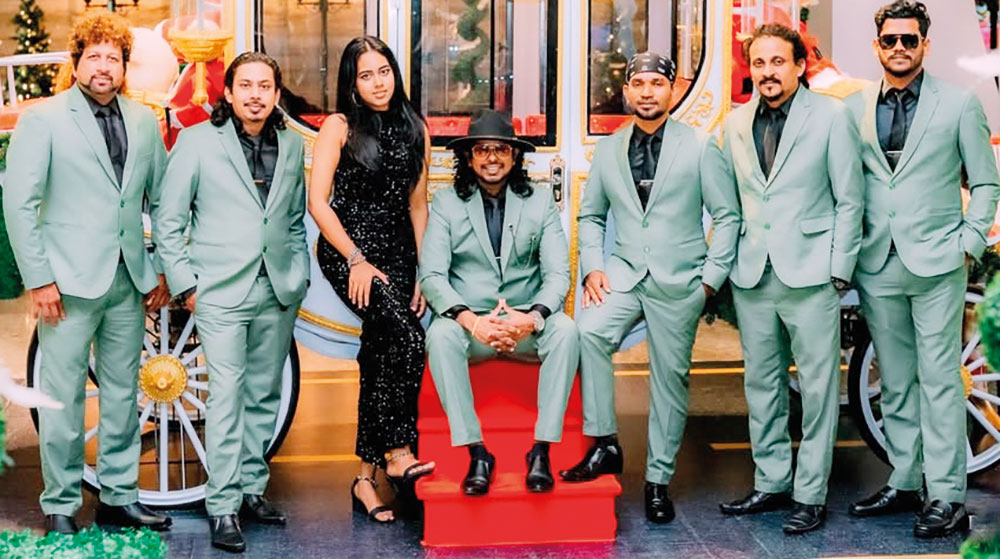
 This week, too, the spotlight is on an outfit that has gained popularity, mainly through social media.
Last week we had MISTER Band in our scene, and on 10th February, Yellow Beatz – both social media favourites.
Talento is a seven-piece band that plays all types of music, from the ‘60s to the modern tracks of today.
The band has reached many heights, since its inception in 2012, and has gained recognition as a leading wedding and dance band in the scene here.
The members that makeup the outfit have a solid musical background, which comes through years of hard work and dedication
Their portfolio of music contains a mix of both western and eastern songs and are carefully selected, they say, to match the requirements of the intended audience, occasion, or event.
Although the baila is a specialty, which is inherent to this group, that originates from Moratuwa, their repertoire is made up of a vast collection of love, classic, oldies and modern-day hits.
The musicians, who make up Talento, are:
Prabuddha Geetharuchi:

Geilee Fonseka: Dynamic and charismatic vocalist
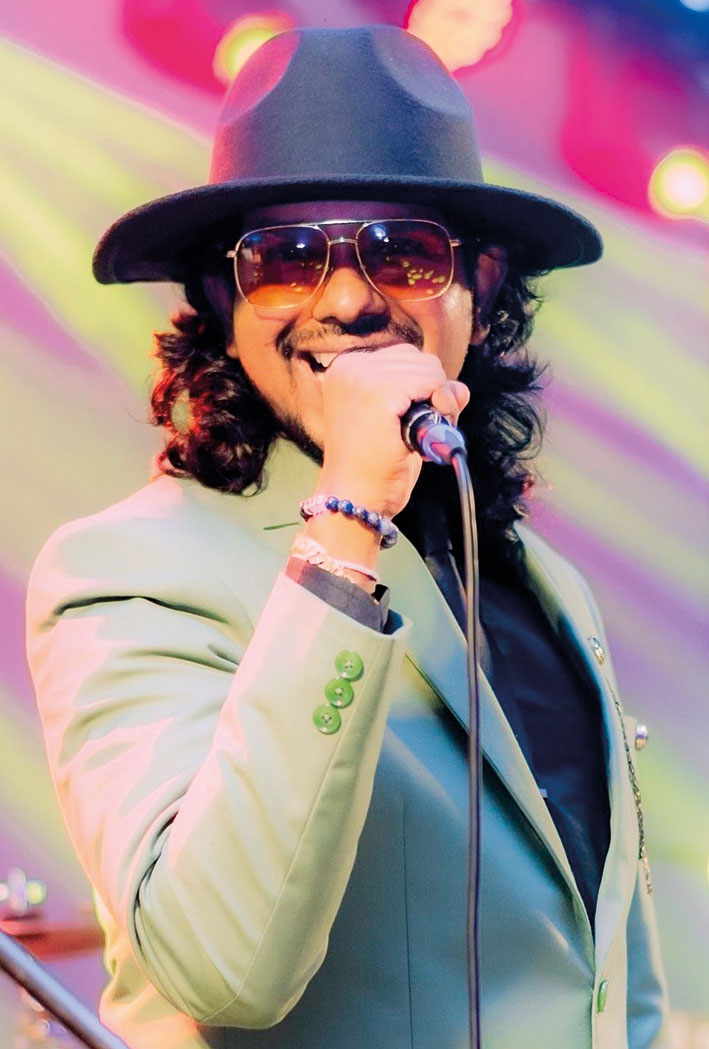
Prabuddha Geetharuchi: The main man behind the band Talento
(Vocalist/ Frontman). He is an avid music enthusiast and was mentored by a lot of famous musicians, and trainers, since he was a child. Growing up with them influenced him to take on western songs, as well as other music styles. A Peterite, he is the main man behind the band Talento and is a versatile singer/entertainer who never fails to get the crowd going.
Geilee Fonseka (Vocals):
A dynamic and charismatic vocalist whose vibrant stage presence, and powerful voice, bring a fresh spark to every performance. Young, energetic, and musically refined, she is an artiste who effortlessly blends passion with precision – captivating audiences from the very first note. Blessed with an immense vocal range, Geilee is a truly versatile singer, confidently delivering Western and Eastern music across multiple languages and genres.
Chandana Perera (Drummer):
His expertise and exceptional skills have earned him recognition as one of the finest acoustic drummers in Sri Lanka. With over 40 tours under his belt, Chandana has demonstrated his dedication and passion for music, embodying the essential role of a drummer as the heartbeat of any band.
Harsha Soysa:
(Bassist/Vocalist). He a chorister of the western choir of St. Sebastian’s College, Moratuwa, who began his musical education under famous voice trainers, as well as bass guitar trainers in Sri Lanka. He has also performed at events overseas. He acts as the second singer of the band
Udara Jayakody:
(Keyboardist). He is also a qualified pianist, adding technical flavour to Talento’s music. His singing and harmonising skills are an extra asset to the band. From his childhood he has been a part of a number of orchestras as a pianist. He has also previously performed with several famous western bands.
Aruna Madushanka:
(Saxophonist). His proficiciency in playing various instruments, including the saxophone, soprano saxophone, and western flute, showcases his versatility as a musician, and his musical repertoire is further enhanced by his remarkable singing ability.
Prashan Pramuditha:
(Lead guitar). He has the ability to play different styles, both oriental and western music, and he also creates unique tones and patterns with the guitar..
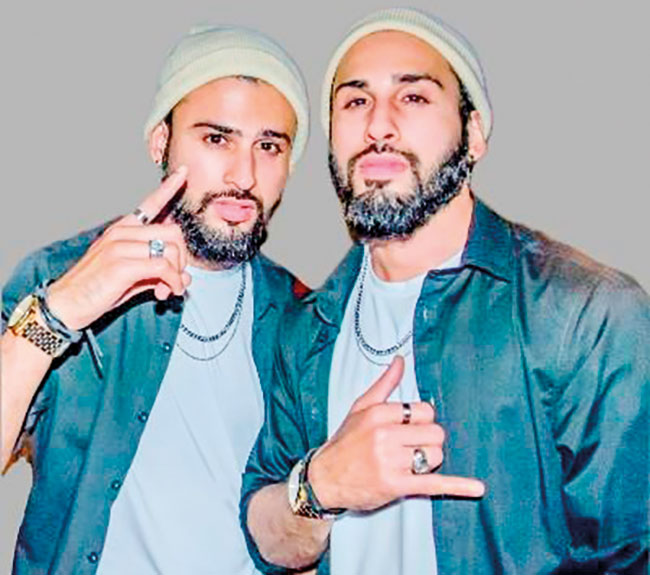
The JJ Twins, the Sri Lankan musical duo, performing in the Maldives, and known for blending R&B, Hip Hop, and Sri Lankan rhythms, thereby creating a unique sound, have come out with a brand-new single ‘Me Mawathe.’
In fact, it’s a very special milestone for the twin brothers, Julian and Jason Prins, as ‘Me Mawathe’ is their first ever Sinhala song!
‘Me Mawathe’ showcases a fresh new sound, while staying true to the signature harmony and emotion that their fans love.
This heartfelt track captures the beauty of love, journey, and connection, brought to life through powerful vocals and captivating melodies.
It marks an exciting new chapter for the JJ Twins as they expand their musical journey and connect with audiences in a whole new way.
Their recent album, ‘CONCLUDED,’ explores themes of love, heartbreak, and healing, and include hits like ‘Can’t Get You Off My Mind’ and ‘You Left Me Here to Die’ which showcase their emotional intensity.
Readers could stay connected and follow JJ Twins on social media for exclusive updates, behind-the-scenes moments, and upcoming releases:
Instagram: http://instagram.com/jjtwinsofficial
TikTok: http://tiktok.com/@jjtwinsmusic
Facebook: http://facebook.com/jjtwinssingers
YouTube: http://youtube.com/jjtwins

Trump says Iran war projected to last 4 to 5 weeks, could go ‘far longer’

Qatar downs two Iranian fighter jets as conflict widens

Jammu and Kashmir’s long road to India cricketing glory

Rembrandt painting worth millions rediscovered after 65 years

Zimbabwe, West Indies delayed from returning home following West Asia airspace closure

Dry weather will prevail in most parts of the island

‘Dates have the highest sugar content to fight Coronavirus’

Sunday Island 27 December – Headlines

#SundayIsland 17th December – Headlines

Sunday Island – 28th March

Sunday Island Headlines – 21 March

Sunday Island – 21st February – Headlines
-

 Opinion4 days ago
Jamming and re-setting the world: What is the role of Donald Trump?
-
 Features4 days ago
An innocent bystander or a passive onlooker?
-

 Features5 days ago
Ratmalana Airport: The Truth, The Whole Truth, And Nothing But The Truth
-
 Features6 days ago
Building on Sand: The Indian market trap
-
 Opinion6 days ago
Future must be won
-

 Business6 days ago
Dialog partners with Xiaomi to introduce Redmi Note 15 5G Series in Sri Lanka
-
 Business5 days ago
IRCSL transforms Sri Lanka’s insurance industry with first-ever Centralized Insurance Data Repository
-
 Opinion1 day ago
Sri Lanka – world’s worst facilities for cricket fans