
Latest News
Four private higher education institutions to be converted to Universities


It has been proposed that rules and regulations are adopted to convert four private higher education institutions, namely NSBM, Sri Lanka Institute of Information Technology (SLIIT), Horizon Campus and Royal Institute as Universities







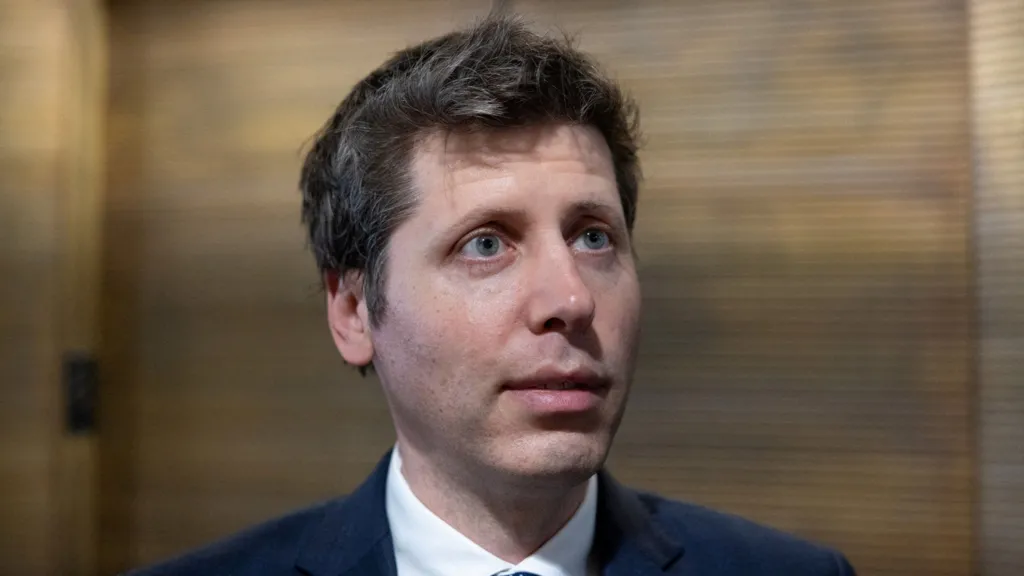
OpenAI will not release its new AI model – GPT-6.1 Astra – due to safety concerns, the ChatGPT-maker confirmed on Tuesday.
The AI system – which performs tasks like browsing the web and using apps by itself – “didn’t quite meet the bar” of the company’s standards, Saachi Jain, head of safety systems at OpenAI, said.
On Tuesday, OpenAI also issued an update on incidents, that occurred in June but were not made public until last week, in which its models accessed Australian government websites and systems without authorisation.
Those incidents and similar breaches by models developed by major AI firms have in recent weeks intensified the debate around the risks posed by the technology.
Top AI leaders including OpenAI’s Sam Altman and Anthropic boss Dario Amodei have urged the industry to slow the pace of development due to concerns about risks associated with the technology.
OpenAI’s decision, which was first reported by the Wall Street Journal, is a rare instance of a major AI developer pulling a new release over safety concerns.
The model fell short in terms of “staying within scope and authorisation, and how it communicates back to the user about the type of work it’s done,” Jain said.
“We want to make sure our model development is safe no matter whether that’s in the company, or when we ship it to users. But when we ship it to users, we have an extremely high bar in terms of safety and alignment,” she added.
The flagship GPT-6 Astra agentic model was released in September and specialises in complex reasoning and executing tasks autonomously. OpenAI said it was the result of “years of research and big bets”.
OpenAI is set to hold its annual DevDay developer conference in San Francisco on Tuesday, where it is expected to make several announcements. It is unclear if a new version of Astra will be among them.
The company’s security controls have come under intense scrutiny after several high-profile incidents involving its technology.
Last week, Australian Prime Minister Anthony Albanese announced that a rogue OpenAI agent had hacked into gove4nment websites and systems in June in what experts said was the first known case of its kind in the world.
Albanese criticised OpenAI for notifying the Australian government through a generic email address rather than making direct contact with officials.
OpenAI said in a statement on Tuesday that it was sorry for the incident and that it “should have handled our response better”.
Services Australia, the NSW Bureau of Crime Statistics and Research, the Victorian Department of Health and the Australian Institute of Health and Welfare were all affected, OpenAI clarified.
The firm said it launched investigations into the incidents as soon as it became aware of them in mid-August and notified the affected organisations between 10 and 24 September.
“Our aim was to give affected agencies a detailed account once our investigation was complete,” OpenAI said, adding that it should have shared early findings more promptly and kept Australian authorities updated.
OpenAI added that it will develop “practical approaches” to how developers and governments identify and disclose future AI incidents.
(BBC)
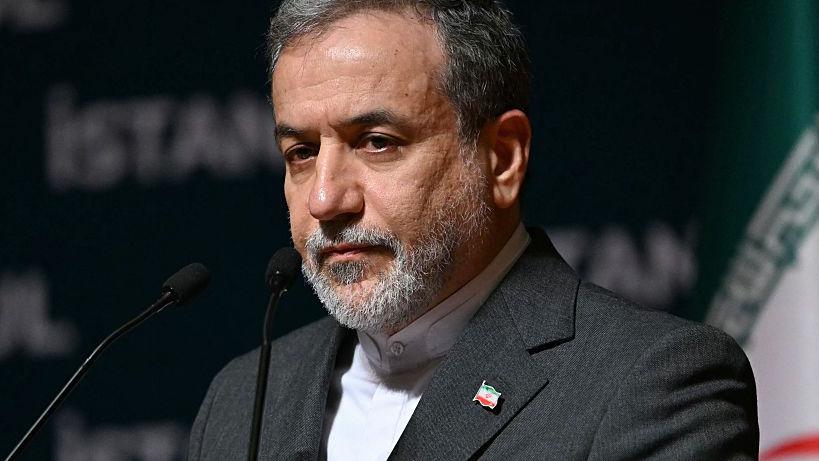
Iran’s Foreign Minister Abbas Araghchi has met with Qatari mediators in New York to discuss a proposal to reopen the Strait of Hormuz, while a United States official said there would be no agreement to end the war unless Tehran’s nuclear programme is addressed.
Araghchi told Iranian state media on Monday that the Qatari mediators would carry the ideas discussed at the meeting to the US and that he hoped to receive Washington’s final response by Tuesday.
“We talked about ideas and how to find solutions to fulfil Iran’s conditions and how to implement those conditions,” he said. “They had some ideas, and we had a discussion that they will also present to the American side.”
Asked whether he would stay in New York to await the reply, Araghchi said he would fly to Tehran within hours.
“Whenever the Qataris have a response, they know how to get it to us,” he said.
He described the meetings as part of an existing exchange of messages through Qatari and Pakistani mediators, which he said had taken on “a more serious form” since Iran submitted its proposal.
The Iranian plan , announced on Friday at the United Nations General Assembly in New York City, calls on the US to release frozen Iranian funds, lift sanctions and end its naval blockade of Iranian ports. Araghchi said those steps could be completed within four or five days, allowing the strait to reopen and negotiations on a final agreement, including on Iran’s nuclear programme, to begin by the seventh day.
US President Donald Trump, however, rejected the proposal on Saturday, calling it “unacceptable”
The US official, who spoke to Al Jazeera, said indirect discussions were continuing.
The talks were “positive and constructive”, the official said, but stressed there would be no agreement unless Iran’s nuclear programme is addressed. The official said Trump is willing to relieve sanctions and release Iran’s frozen funds in exchange for progress on nuclear issues.
“Iran has indicated they are flexible on the nuclear issues, but the sides still remain apart on the timing of the commitments and who takes which steps first,” the official said.
The official also expressed scepticism of Iran, saying it had broken the memorandum of understanding signed in June by firing on commercial vessels. Tehran denies the accusation and says it was Washington that broke its commitments by failing to halt Israel’s attacks on Lebanon and by seeking to establish alternate shipping routes through the Strait of Hormuz.
Iran had closed the strait, which handled roughly 20 percent of the world’s oil and gas supplies before the war, shortly after the US and Israel launched their offensive on February 28. Iranian attacks on vessels since have sharply curtailed shipping, and oil prices have risen above $100 a barrel.
Even so, crude exports from major Middle East producers rebounded in September to 12.8 million barrels per day, their highest level since the war began, the Reuters news agency reported, citing data from the maritime intelligence firm Kpler.
That is still well below the 18.8 million bpd exported in February.
Some ships have used the US military-supervised route hugging the coast of Oman, travelling at night with tracking systems off and offloading oil to tankers outside the strait. Admiral Brad Cooper, the head of US Central Command, said on Saturday that American forces had assisted 2,000 transits and more than 1 billion barrels of oil in recent months.
The US has also imposed a blockade on Iranian ports and threatened secondary sanctions against airports and companies that do business with Iranian airlines. The United Arab Emirates, Iraq and Oman have already cancelled related flights.
(Aljazeera)
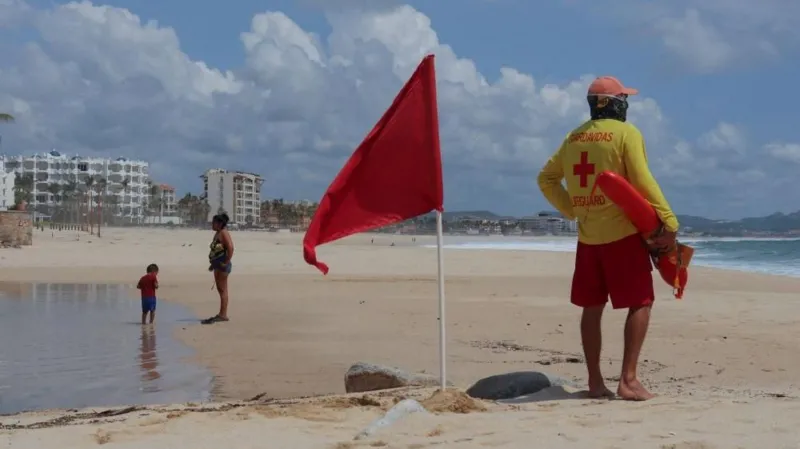
People living on the northern Pacific coast of Mexico are bracing for the arrival of Hurricane Polo, which is forecast to make landfall later on Monday or early on Tuesday.
The category three storm, with maximum sustained winds near 115 mph (185 km/h), is expected to move over the state of Baja California Sur, a region popular with tourists and home to the resort destination of Los Cabos.
Meteorologists at the US-based National Hurricane Center (NHC) have warned of heavy rainfall which could lead to life-threatening flooding and mudslides, especially in areas of steep terrain.
Residents on Sunday stocked up on essentials such as drinking water and food as the storm approached.
The NHC warned of the storm surge Hurricane Polo could unleash, which it said could be accompanied by large and destructive waves.
In Cabo San Lucas, famous for its natural rock arch, the authorities restricted access to the beaches. Some restaurants also closed in the town, which acts as a base for sport fishers and whale watchers.

The regional government of Baja California Sur has ordered schools to remain closed on Monday as a preventive measure.
Governor Víctor Manuel Castro Cosío said temporary shelters had been opened should residents need to be evacuated.
The federal authorities have also deployed thousands of members of the navy and the army along with specialised machinery.
Polo has been slowly moving towards Mexico’s coast line.
Meteorologists said it was being fuelled by extremely warm waters caused by the El Niño climate phenomenon.
(BBC)

OpenAI scraps rollout of new model over safety concerns

Iran’s Araghchi meets Qatari mediators as US calls for nuclear talks

Showers above 50 mm expected in Uva, Eastern and Central provinces and in Polonnaruwa and Mullaittivu districts after 2.00 p.m.

PAFFREL raises concerns over Anti-Corruption (Amendment) Bill

First cases taken up by SC after enactment of 22A dismissed

Now NR named 4th suspect in Krrish case

‘Dates have the highest sugar content to fight Coronavirus’

Sunday Island 27 December – Headlines

#SundayIsland 17th December – Headlines

Sunday Island – 28th March

Sunday Island Headlines – 21 March

Sunday Island – 21st February – Headlines
-

 News6 days ago
Mastermind Naufer Moulavi among 15 found guilty
-

 Midweek Review6 days ago
Thileepan’s fast unto death: An authentic narrative that many missed
-
 Latest News5 days ago
Showers above 100 mm are likely at some places in the Western, Sabaragamuwa, Central and North-western provinces and in Galle and Matara Districts
-

 Editorial6 days ago
Big Bad Bills
-
Editorial5 days ago
Crimes punished and unpunished
-

 Features4 days ago
Beyond traditional jobs: Why Sri Lanka needs to facilitate the gig economy
-

 News6 days ago
No referendum needed for passage of 22 A: SC
-

 Latest News6 days ago
Ms. P. M. Jayadeera (Engineer) appointed Director General of Irrigation