
Life style
Foods you should try in Sri Lanka – from sour fish curry to coconut relish

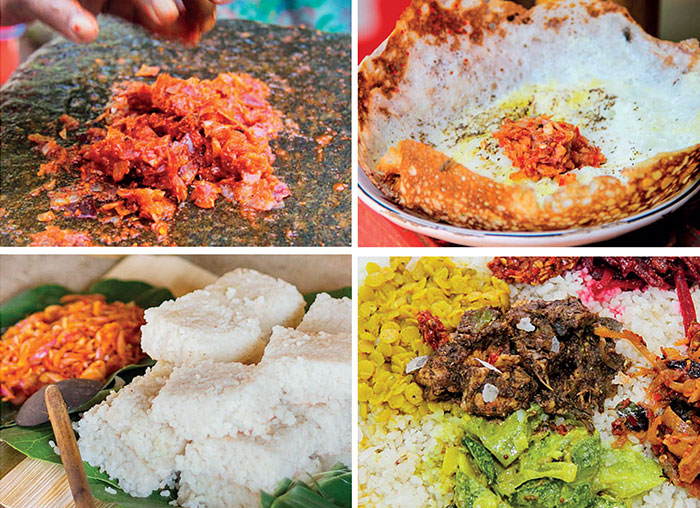
The Teardrop of India or Pearl of the Indian Ocean are among many nicknames for Sri Lanka. But a more accurate description of the gorgeous nation might be the Island of Rice and Curry.Making liberal use of local fruit, such as coconut and jackfruit, seafood and an arsenal of spices, Sri Lankan cooking delivers an abundance of incredible dishes.
Here are some you shouldn’t miss.
Fish ambul thiyal (sour fish curry)
As you’d expect from an island in the Indian Ocean, seafood plays an important role in Sri Lankan cuisine. Fish ambul thiyal (sour fish curry) is one of the most beloved varieties of the many different fish curries available.
The fish — usually something large and firm, such as tuna — is cut into cubes, then sauteed in a blend of spices including black pepper, cinnamon, turmeric, garlic, pandan leaves and curry leaves. Perhaps the most important ingredient is dried goraka, a small fruit responsible for giving the fish a sour flavor.
Ambul thiyal
is a dry curry dish, meaning all the ingredients are simmered with a small amount of water and cooked until the liquid reduces. This allows the spice mixture to coat each cube of fish.
Originating in southern Sri Lanka, it’s available throughout the country at restaurants that serve curry, and is best eaten with rice.
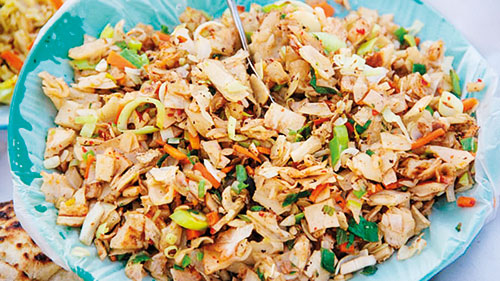
Kottu (also, kottu roti)
Over the traffic and noise at a Sri Lankan market, you’ll likely hear the clanking of metal on metal and know kottu isn’t far away. Kottu is Sri Lanka’s hamburger — everybody’s favorite go-to fast food when craving something tasty and greasy.It resembles fried rice, except instead of rice, it’s made with a type of roti known as godamba roti (a flat, crispy bread).
The roti is normally fried at the beginning of the day, piled into stacks and served as it’s ordered. When you place an order, the kottu chef will fry and chop the roti with a selection of ingredients you choose. The result is a tasty mixture of salty pieces of fried dough, lightly spiced and extremely comforting.
Kottu is served with spicy curry sauce, which you can either use as a dip or pour over your entire plate.
Some of the most skilled kottu chefs compose their own unique songs, singing while they rhythmically clank their spatula and knives against the metal frying surface, slicing the roti with each clank.
Kukul mas curry (chicken curry)
Simple to make, chicken curry is a common household dish in Sri Lanka. There are many variations depending on region and taste preferences.
Spices like fennel seeds, cardamom, cloves and cinnamon sticks are tempered in hot oil before being combined with chicken and spices like chili powder, curry powder, turmeric, pandan leaves, lemongrass and curry leaves.
Coconut milk contributes to the rich base of the curry gravy. Depending on the recipe, a puree of tomato is often included.The chicken is stewed for an hour or so until the essence of the spices is infused into the chicken. Most satisfying when served with hot rice and roti.
Parippu (dhal curry)
Parippu, or dhal curry, is the most common curry in all of Sri Lankan cuisine, a staple in any restaurant or household. Masoor dhal (split red lentils) are first rinsed and boiled until soft.In a separate pan, a number of fresh ingredients, such as onions, tomatoes and fresh green chilies, are sauteed and mixed with tempered spices like cumin seeds, turmeric, fenugreek, mustard seeds and curry leaves.
All the ingredients are combined and usually thickened with a splash of fresh coconut milk to give the dhal a rich flavor and creamy texture.It goes with everything, but is perfect as a dipping gravy for a fresh roti or paratha.
Ways to experience the best of Sri Lanka
Lamprais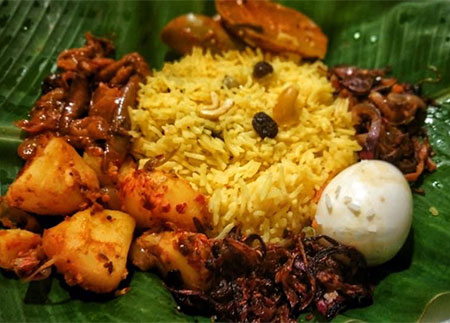
Sri Lanka has been influenced by a diversity of cultures and one of the most evident is the Dutch Burgher community.Lamprais, a word that combines the two Dutch words for “lump” and “rice,” is a combination of meat, rice and sambol chili sauce, wrapped into a banana leaf packet and steamed. The rice is cooked with meat stock — usually a combination of different meats like beef, pork or lamb — that’s infused with cardamom, clove and cinnamon.
A scoop of rice is placed in the centre of a banana leaf, along with the mixed meat curry, two frikkadels (Dutch-style beef balls), blachan (a shrimp paste) and a starch or vegetable, usually either ash plantain or brinjals.
The package is folded into a parcel and steamed. Since lamprais is a Burgher contribution to Sri Lankan cuisine, the meat is usually prepared with sweet spices like clove and cinnamon, recreating the flavor favored by the Dutch Burgher community.Original recipes called for beef, pork and lamb, but chicken and eggs are often included in a modern lamprais packet.
Hoppers (appa or appam)
Also, string hoppers (indi appa or idiyappam) Hoppers are the Sri Lankan answer to the pancake. The batter is made from a slightly fermented concoction of rice flour, coconut milk, sometimes coconut water and a hint of sugar.
A ladle of batter is fried in a small wok and swirled around to even it out. Hoppers can be sweet or savory, but one of the local favorites is egg hoppers. An egg is cracked into the bowl-shaped pancake, creating the Sri Lankan version of an “egg in the hole.”
Egg hoppers are garnished with lunu miris, a sambol of onions, chilies, lemon juice and salt.Unlike the runny batter used for hoppers, string hoppers are made from a much thicker dough. The dough is squeezed through a string hopper maker, like a pasta press, to create thin strands of noodles, which are steamed.
String hoppers are normally eaten for breakfast or dinner with curries.
Polos (green jackfruit curry)
Jackfruit is consumed in a number of different stages of ripeness, from very ripe and sweet to green and starchy. Polos is a Sri Lankan curry prepared with young green jackfruit.The fruit is sliced into bite-sized chunks and boiled until soft.
It’s then cooked with onions, garlic, ginger and spices like mustard seeds, turmeric, chili powder, roasted curry powder, pandan leaves and curry leaf sprigs. The final step is to add coconut milk and simmer to reduce most of the liquid, leaving all the beautiful flavors within the cubes of jackfruit.
Jackfruit has a starchy texture, somewhat similar to cassava or potato. Polos is a standard dish available at most Sri Lankan curry restaurants.
Sophisticated Sri Lanka hotels Wambatu moju (eggplant/brinjals pickle)
Served mostly with rice and curries, wambatu moju is an extremely flavorful candied eggplant (brinjals) pickle.The eggplant — usually the purple-skinned, long and slender variety — is cut into bite-sized wedges and deep fried, giving the eggplant a crispy texture with a soft and silky interior.It’s then caramelized with a spoon of sugar, vinegar, red onions, green chilies, mustard seeds, chili powder and a hint of turmeric powder until the color turns almost black.Take a bite and the soft and juicy texture of the eggplant should melt in your mouth — the slightly sweet, sour and salty contrast is absolutely sensational.
Gotu kola sambol (pennywort salad)
One of the most readily available green vegetable dishes in Sri Lanka is gotu kola sambol.Gotu kola (known in English as Asiatic pennywort) is a medicinal herb in Asia. It’s shredded into slivers, then combined with shallots, tomatoes, fresh grated coconut and chili and seasoned with a dressing of salt, pepper and lemon juice.
Sambol is a term used in Sri Lanka for ingredients that are combined and eaten raw, sometimes more of a chili sauce and sometimes more of a salad, like gotu kola sambol.Gotu kola has a powerful, herbaceous flavour similar to kale, making it an extremely fresh and crisp dish. It’s typically a side dish served with curry and rice.
Kiribath with lunu miris
Kiribath is a special type of rice, cooked with thick coconut milk and often served during special or auspicious occasions, such as Sinhalese New Year.There are a few versions of kiribath, but the basic procedure is to start by boiling a pot of rice.Before the rice finishes cooking, add coconut milk and a pinch of salt. The coconut milk makes the rice creamy and rich and helps it form a sticky consistency. Once the rice is finished cooking, it’s cut into wedges and served like slices of cake.
Kiribath can be eaten along with a number of different Sri Lankan dishes, often either sweetened with jaggery or consumed salty with chili sauce or curry. One of the most common ways to garnish kiribath is with lunu miris, a sambol chili sauce made from red chilies, onions, lemon juice, salt and sometimes dry Maldive fish, all ground into a paste using a stone mortar and pestle.
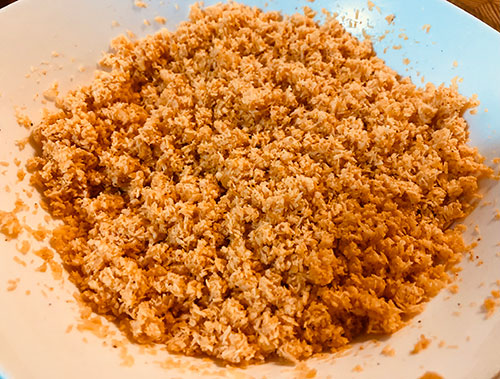
Pol Sambol (coconut relish)
In a country in which the coconut is of supreme importance, there’s one Sri Lankan side dish that pays fitting tribute.Pol sambol, which might also be called fresh coconut relish, is a simple blend of finely grated coconut, red onions, dried whole chilies or chili powder, lime juice, salt and Maldive fish (if available). The ingredients are diced or ground, then combined in a bowl.In Sri Lanka, pol sambol is used as a garnish or side dish for everything and anything.
It goes well with rice and curry, pol roti (coconut roti), a hot paratha, string hoppers or even just scooped up with slices of bread. If you love coconut, there’s no better garnish in the world.
Sri Lanka’s top tea experiences: Sips of history
Wood apple
It wouldn’t be a Sri Lankan food discussion without wood apple.The wood apple is a Southeast Asian fruit about the size of a de-husked coconut. It also has just as hard of a shell, and a pungent, almost blue cheese aroma.
Walking through a market in Sri Lanka your nose will detect it long before your eyes do. Inside the shell is a dark brown paste that resembles something between tamarind pulp and fermented raisins.Wood apple can be eaten directly out of the shell, but one of the most popular ways to eat (or drink) it throughout Sri Lanka is in a thick smoothie, known as wood apple juice.- CNN
The fruit is blended with jaggery (or sugar) and water to smooth it out. It has a unique sour and sweet flavor. Mention that you love wood apple to any Sri Lankan you meet, and they probably won’t be able to hold back a knowing smile. – (CNN)








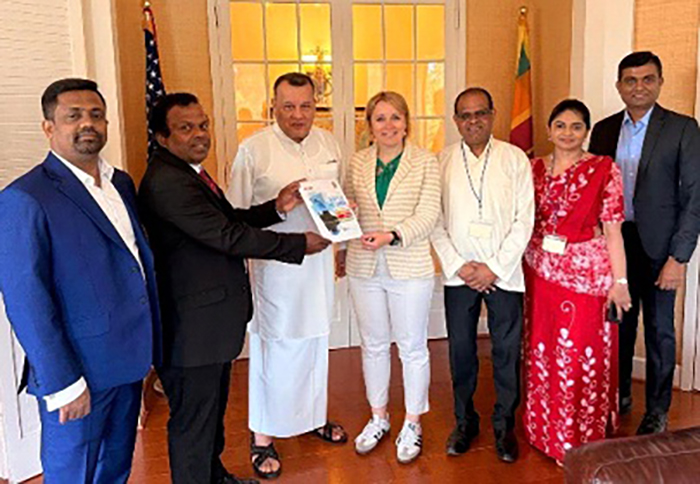
By Ifham Nizam
The sixth edition of the “Beauty of Sri Lanka” Photography Exhibition is set to unfold across North America this April, transforming the power of visual storytelling into a compelling platform for cultural diplomacy, environmental advocacy and nation branding.
Organised by the America Sri Lanka Photographic Art Society in collaboration with key diplomatic and institutional partners, including the Embassy of Sri Lanka in Washington, D.C., the Permanent Mission of Sri Lanka to the United Nations, the Consulate General of Sri Lanka in Los Angeles and Toronto, and the Sri Lanka Tourism Promotion Bureau, the exhibition will run from April 22 to May 4 across Los Angeles, Toronto, New York and Washington, D.C.
Held in conjunction with Earth Day, the exhibition continues to evolve as a globally recognised initiative that brings together art, conservation and international engagement. What began as a photography showcase has now matured into a dynamic soft-power platform that tells Sri Lanka’s story to the world—through its landscapes, biodiversity, and deeply rooted cultural heritage.

Photographers from Sri Lanka at Nigara State Park
The 2026 tour will feature prestigious venues that reflect its growing international stature. These include the iconic Church of Scientology Celebrity Centre International, Metro Hall in Toronto—marking the exhibition’s debut in Canada—the Permanent Mission in New York, and the Sri Lankan Embassy in Washington, D.C., as part of the widely celebrated Passport D.C. event. Each venue represents not only a geographic expansion but also a widening of the exhibition’s global audience and influence.

Exhibition
At its heart, “Beauty of Sri Lanka” is a vivid narrative of a nation’s natural and cultural wealth. From the mist-covered central highlands and pristine coastal belts to dense rainforests teeming with endemic wildlife, the exhibition captures Sri Lanka’s ecological richness through the lenses of talented photographers. These images serve as both an invitation to explore and a reminder of the urgent need to protect fragile ecosystems.
This year’s programme takes a significant step further by integrating real-world environmental action. The “ReTree Los Angeles” initiative, launched in line with Earth Day, focuses on tree planting, urban restoration and community engagement. It also includes a children’s painting competition aimed at fostering environmental awareness among the younger generation. Organisers believe that nurturing creativity at an early age can instil a lifelong commitment to conservation.
Adding a scientific dimension to the event, Dr. Sarath Gunapala will deliver the keynote address on “The Journey of Infrared Photography,” exploring how advanced imaging techniques can reveal unseen dimensions of the natural world. His participation highlights the exhibition’s interdisciplinary approach, where art meets science to deepen understanding and appreciation.
The exhibition will also feature a vibrant cultural segment designed to immerse international audiences in Sri Lanka’s living traditions. A carefully curated lineup of performances—including the sacred Wes Pooja, the dramatic Naga Raksha mask dance, the rhythmic Thelme ritual dance and the light-hearted Salu Paliya—will bring to life the island’s folklore, rituals and performing arts heritage. These performances are expected to add colour, rhythm and emotional depth to the visual experience offered by the photographic displays.
ASPAS President Suria Perera emphasised that the exhibition is more than a display of images. “It is a celebration of Sri Lanka’s identity—its natural beauty, its cultural vibrancy, and its responsibility to future generations,” she said. “Through photography and community engagement, we aim to inspire a deeper connection between people and the environment.”
Over the years, the exhibition has drawn a diverse audience, including diplomats, policymakers, conservationists, art collectors and members of the Sri Lankan diaspora. Its ability to connect these varied groups underscores its role as a bridge between cultures, fostering dialogue and mutual understanding while strengthening Sri Lanka’s global presence.
The continued support of diplomatic missions, cultural institutions and tourism authorities has been instrumental in elevating the exhibition’s profile. Their collaboration reinforces the role of art as a powerful tool in shaping perceptions, building partnerships and promoting sustainable tourism.
As the 2026 edition prepares to open its doors, “Beauty of Sri Lanka” stands as a testament to the island nation’s enduring appeal and its commitment to conservation. It is not merely an exhibition, but a movement—one that celebrates beauty, inspires responsibility and connects Sri Lanka to the world through the universal language of art.
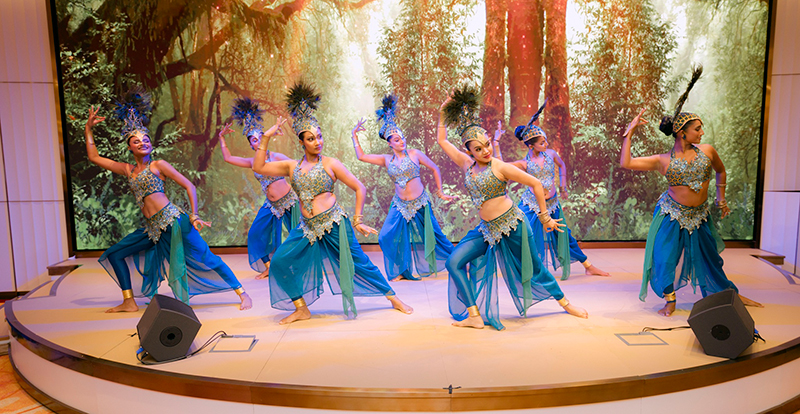
This holiday season, City of Dreams Sri Lanka invites guests to step into the heart of a truly Sri Lankan celebration with Signature Avurudu—a four-day cultural experience taking place.
Blending time-honoured traditions with contemporary flair, the festivities promise to capture the spirit of the Aluth Avurudda (Sinhala and Tamil New Year) in all its colour, rhythm, and warmth. From the moment guests arrive, they will be welcomed into a space transformed with festive décor, echoing the charm of a village celebrations brought to life in the city.
At the centre of the celebration is the Pahan Pujava, a symbolic lamp lighting ceremony led by the management, setting a tone of unity, prosperity, and new beginnings. This meaningful ritual reflects the essence of the New Year—a time to pause, reflect, and step into the new year with hope and positivity.
Throughout the four days, guests can experience the rich cultural heritage of Sri Lanka through a series of traditional performances. The rhythmic beats of raban and drums, alongside vibrant dance acts, will fill the air, creating an atmosphere that is both nostalgic and celebratory. Adding to the experience are elegantly dressed Sri Lankan hostesses, offering a warm, authentic welcome that embodies the island’s renowned hospitality.
No Avurudu celebration is complete without its flavours, and City of Dreams Sri Lanka delivers a feast to remember. Guests can indulge in an array of traditional sweets and savouries, alongside curated Avurudu-themed buffets and creative beverages inspired by local ingredients. Passing canapés and festive treats ensure there is something to enjoy at every turn—whether you’re reminiscing over childhood favourites or discovering new twists on beloved classics.
Designed as a celebration for all, Signature Avurudu brings together families, friends, and visitors from around the world to share in the joy of the season. It is a reminder that Avurudu is more than a festival—it is a feeling of togetherness, renewal, and shared happiness.
This April, celebrate the sights, sounds, and tastes of Avurudu at City of Dreams Sri Lanka—where tradition meets modern celebration, and every moment feels like home.

Students of S. Thomas’ College recently demonstrated commendable performance at two international sailing events held in India: the inaugural Indian Sailing Regatta and the 4th North-East Regatta. Both events featured participation from foreign teams, including Sri Lanka, Taiwan, Malaysia, Russia, Great Britain, South Korea, Singapore, and India.
The inaugural Indian Sailing League (ISL), held at Umiam Lake, Shillong, India, marked a significant milestone in the sport and was prominently featured in The Times of India. The ISL is a first-of-its-kind franchise-based sailing league, bringing together 14 teams, 182 sailors, and 58 international participants from eight countries.
The ISL follows a concept similar to the Cricket Indian Premier League, where top sailors are “bid” and selected into franchise teams representing different regions. The competition introduced an innovative team-based format in which the best sailor from each team in each category competed, combining multiple race formats such as fleet racing, team racing, marathon races, and rig-and-race challenges. This pioneering structure, widely regarded as a first in global sailing history, has significantly enhanced the spectator appeal and competitive depth of the sport, while promoting youth, women, and high-performance sailing on a single platform.
At the first Indian Sailing Regatta, in the Boys’ Optimist category, Haren Wickramatillake secured 3rd place and was also awarded a special medal for his courage during the rig and race event. Dhiren Perera achieved 3rd place in the rig and race event alongside his team member.
At the 4th North-East Regatta, performances continued to be noteworthy. In the Main Optimist Boys category, Haren Wickramatillake was placed 6th, while Shem Fernando secured 19th place out of 32 participants. In the Junior Green Fleet Optimist Boys category, Anuruth Tennakoon achieved 2nd place and Dhiren Perera was placed 4th out of 10 participants. In the ILCA 4 Boys category, Akaine Ubayasiri was placed 11th out of 22 participants.
These achievements highlight the high level of skill, determination, and sportsmanship demonstrated by the young sailors, while also reflecting Sri Lanka’s strong presence in an emerging and globally significant sailing platform.
Upcoming international sailing events, featuring students of S. Thomas’ College, include the Asian Beach Games 2026, to be held in China ,in April 2026, and the International Optimist Dinghy Association (IODA) competition, scheduled to take place at Port City, in Sri Lanka, in December 2026. These events will provide valuable international exposure and further opportunities for the young college sailors to compete at a high level.

Singapore Zoo’s first Sri Lankan leopard cubs make their public debut

Sri Lanka Navy seize multi day fishing craft suspected of smuggling narcotics

‘Sent to be killed’: How Russia forces migrants to fight in Ukraine

Babar Azam 71* helps Peshawar Zalmi extend lead at top

Trump threatens to fire Fed chair Jerome Powell if he doesn’t leave in May

Royal Challengers Bengaluru top the table after bowlers help thump Lucknow Super Giants

‘Dates have the highest sugar content to fight Coronavirus’

Sunday Island 27 December – Headlines

#SundayIsland 17th December – Headlines

Sunday Island – 28th March

Sunday Island Headlines – 21 March

Sunday Island – 21st February – Headlines
-

 News5 days ago
CEB orders temporary shutdown of large rooftop solar systems
-
 Features5 days ago
From Royal College Platoon to National Cadet Corps: 145 years of discipline, leadership, and modern challenges
-

 Business7 days ago
Israeli attack on Lebanon triggers local stock market volatility
-

 Business7 days ago
HNB Assurance marks 25 years with strategic transformation to ‘HNB Life’
-

 Latest News4 days ago
PNS TAIMUR & ASLAT arrive in Colombo
-

 News6 days ago
Anura Solomons passes away
-

 Features5 days ago
CIA’s hidden weapon in Iran
-

 Latest News3 days ago
Prasidh, Buttler set up comfortable win for Gujarat Titans