
Features
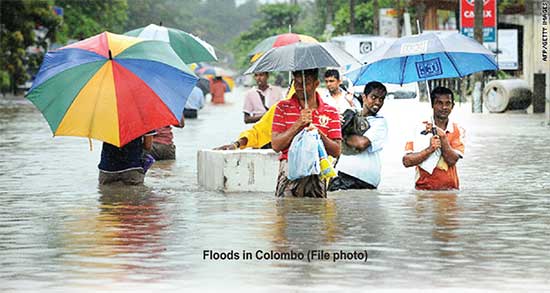
Flood protection of Colombo Metropolitan Region-An alternative scheme

By Dr Janaka Ratnasiri
I thank Eng. Anton Nanayakkara (AN)’s write-up in The Island of 28.07.2020, responding to my article on Flood Protection of Colombo Metropolitan Region which appeared in The Island of 21.07.2020. The main purpose of my article was to highlight the fact that the government after getting Japanese Consultants to formulate a Master Plan for flood protection of Colombo Metro Region at great cost, what is being implemented as a priority project is only a clean-up of the Weras Ganga basin, making a mockery of the word Master Plan. This area is totally outside the Greater Colombo area with no impact on its flooding. AN has failed to comment on this issue.
METRO COLOMBO URBAN DEVELOPMENT
PROJECT
With the failure of the Master Plan to address the flood situation within the city and its suburbs, Sri Lanka Land Development Corporation (SLLDC) has taken the initiative to develop a separate project titled Metro Colombo Urban Development Project (MCUDP) to address this issue. This project expected to be executed during 2012 – 2020 is estimated to cost USD 104 Million (SLLDC Website). It will address flood mitigation in areas covered by the Colombo Municipal Council, Sri Jayewardenapura, Battaramulla, Rajagiriya, Madiwela and Dehiwala. Activities described under “Improvements to existing drainage systems” in my previous article of July 21st were in fact carried out by SLLDC under this project.
COMMENTS ON ENG. NANAYAKKARA’S
RESPONSES
In his response, AN has made certain remarks on some statements appearing in my article and questions their validity. What I have said are totally based on material extracted from other sources including the JICA reports and the website of the SLLDC and not my own suggestions. It appears that AN seems to be unaware of the latest situation in this regard, and hence they need clarification. My comments are given against each of AN’s statements which are given below using material extracted from SLLDC website – Special Projects pages.
1. “The Madiwela East Diversion (MED), remaining dry most of the time, as mentioned, may be due to its wrong location, too far upstream of the Kelani Ganga about 10 miles above the historic Nagalagam Street outfall”.
COMMENT: MED was established by constructing a new canal from the Thalangama Tank up to the origin of the existing natural canal flowing through Malabe paddy fields parallel to Chandrika Kumarathunga Mawatha. It has its natural outfall at Ambatale. The topography of the area does not permit shifting of this outfall further downstream.
2. “Even during floods of the Kelani Ganga, this outfall No 1 (See plan) has to be closed, long before Nagalagam Street outfall closing at +5.00 ft MSL, the accepted minor flood level for Colombo, negating the very purpose for which this canal was built”.
COMMENT: The SLLDC is currently building a pumping station at Ambatale across the MED canal to pump water to the river when its water level rises during heavy rainfall, at a cost of USD 5.85 Million and LKR 1,181 Million (SLLRDC website).
3. “The learned doctor has not noticed the extent to which the Thalangama Tank had silted up, reducing the capacity to retain flood water (about 50 ac.ft) entering the Parliament lake”.
COMMENT: In a project carried out by the SLLDC during 2016 – 2018, the tank was dredged to increase its water holding capacity and remove unnecessary growth on the tank bund, at a cost of LKR 107 million. In any case, I wonder how even a professional hydrologist could notice the extent of silting of the tank just by looking at it.
4. “This gate was constructed at ID’s flood control premises to pump water from the Kelani Ganga to the Beira Lake, for the purpose of cleaning the lake. The project ceased soon after the flood. Strangely, no inquiry was made. It was all swept under the carpet”.
COMMENT: According the SLLDC website, it has built three gates across Kolonnawa Canal, Heen Ela and St. Sebastian canal at the crossing of New Kelani Bridge Road to isolate the canal system enabling water to be pumped back into the canal system from the river by operating the pumps installed at St. Sebastian outfall in the reverse direction. This work to be carried out during 2018 – 2020 is estimated to cost of USD 5.85 million and LKR 1181 million. So, it is not a case of sweeping under the carpet.
5. “Dr. R’s reference to the Beira Lake, too, needs some clarifications. The Beira Lake is not a natural lake. It is an artificial lake also kept at an artificial level, of 6.00 ft above mean sea level, by the Beira Spillway”.
COMMENT: A pumping station is being built across St. Sebastian Canal at Maradana for pumping water from the canal to Beira Lake during periods of high rainfall in Colombo. This work to be carried out during 2019 -2020 is estimated to cost of USD 5.93 million and LKR 165 million. (See also the last paragraph).
6. “Ignoring many other references, contained in Dr R’s article, let me now say a few words about narrowing of bridges, mentioned in it. This is not a matter of life and death, as made out to be. Any hydrologist will agree that within the narrowed section, the velocity will increase to make up for the constriction”.
COMMENT: Widening of the canals and removing bottleneck were not proposals that I made, but what are actually executed by SLLDC as described in its website. Kolonnawa Canal Diversion Stage III says “the canal has become very narrow at certain sections due to encroachment. Some resettlement and land acquisitions are undertaken to remove bottlenecks”. This work to be carried out during 2018-2020 will cost of LKR 1,000 million. Diversion Stage IV also refers to removing two bottlenecks near the outfall.
7. “If, as proposed, the southern diversion takes place, such a canal would become a “trans-basin diversion” let alone the new outfall getting pushed about 20 miles, down south, to Panadura; not to mention reversing the natural flow direction, within the Madiwela catchment, and aggravating the already existing problems, within Bolgoda”.
COMMENT: The proposed diversion is not the first trans-basin diversion in Sri Lanka. Under the Mahaweli Scheme, there are trans-basin diversions. There are even such diversions among ancient works including diversion of Kala Oya to Malwathu Oya basin and Amban Ganga to Yan Oys basin. More recently, Kalu Ganga (Matale) was diverted to Amban Ganga basin under Moragahakanda Project, Uma Oya is being diverted to Kirindi Oya basin. It is also proposed to divert Gin Ganga to Nilwala basin. If Madiwela South diversion is the only practical option available to protect Sri Jayewardenapura area from flooding, it should be pursued after addressing whatever environmental issues that it may cause.
8. “The proposals (which) I have been making for more than 30 years, do not go against nature, no damage to environment by digging new canals, no underground tunnels of large diameter, no widening of bridges, and no pumping”.
COMMENT: If AN’s proposal with no digging of new canals, no tunneling or no widening of canals had merit, why wasn’t it accepted by authorities for implementation all these 30 years?
OPTION WITH NO DIGGING, TUNNELING AND PUMPING
As mentioned in my previous article, the Diyawannawa Lake has two draining outlets, one via Kolonnawa Canal and the other via Wellawatta Canal. The Kolonnawa Canal branches into three canals with outfalls to the Kelani River at Grandpass, Kotuwila and Ambatale which need pumping during heavy rainfall days. Hence, only the Wellawatta Canal is available for draining direct into the sea without resorting to digging new canals, or building tunnels or installing pumping stations. Under the MCUDP project, the stretch of Wellawatta Canal beyond the Galle Road was dredged, widened and the outfall improved at a cost of LKR 111.6 Million. It is to be seen whether this outlet together with the improved outfalls to Kelani River could handle the draining of Diyawannawa Lake during an extreme rainfall event.
ALTERNATIVE PROPOSAL TO DRAIN FLOOD WATER
AN has expressed his reservations about using the Beira Lake as an outfall for flood water as the level of the spillway cannot be adjusted. Though a sum of LKR 1,350 million is spent on building a pumping station at Maradana to divert flood water coming along the Dematagoda Canal into the Beira Lake and then to the sea, there is a doubt as to whether this diversion will work. If it works, it will take flood water from Kotte diverted to St. Sebastian Canal first to the Floating Market and then to the Beira Lake before the water enters the spillway near Galle Face. This will invariably raise the water level of Beira Lake which is presently maintained at 1.8 m above mean sea level to prevent buildings constructed on wooden piles along the lake from collapsing. However, according to an environment screening study on a project for rehabilitation of the Beira Lake carried out by Moratuwa University in 2011, any changes to the water level of the Beira lake can have an adverse effect on the stability of these foundations.
There is however, another alternative option available to improve the draining of Kotte flood water flowing along Dematagoda Canal into the river without posing any of these problems. That is by diverting water flowing in Dematagoda Canal direct into Kiththamphuwa Ela (KE) before it joins with St. Sebastian Canal, by constructing a new canal branching off from the Dematagoda Canal just before it crosses the railway line. This canal could run parallel to the railway line and join with the KE where it makes a U-turn near Welewatta Road. This link canal is only about 0.5 km long and this area comes mostly under railway reservation. The stretch of KE which runs parallel to the railway line up to the river outfall is being widened and dredged under the Kolonnawa Canal Diversion Stage IV at a cost of LKR 1,432 Million. Hence, construction of this new link canal could be undertaken as a part of this project.
The distance to the existing river outfall along St. Sebastian Canal from this branching point is 3.0 km while the distance to the Beira Lake outfall via St. Sebastian Canal in the opposite direction 5.2 km, whereas the distance to the river outfall along the proposed link canal and KE is only 1.7 km. Further, the present St. Sebastian Canal route has six road crossings and several bends while the route via Beira Lake has eight road crossings. Also, the stretch of St. Sebastian Canal behind the Technical College passes through a narrow passage cut through a hill with no room for widening. On the other hand, the proposed route via the link canal and KE is short and straight with only one road crossing at Orugodawatta and is a better option to drain the Kotte flood water into Kelani River, than the proposed scheme via Beira Lake.
CONCLUSION
The SLLDC has already executed several projects worth LKR 1,165 Million with World Bank funding to improve the drainage in several canals in the city and its suburbs. Several more projects estimated to cost over LKR 4,500 Million and USD 44 Million are on-going. This includes a project to take flood water from Kotte all the way to Beira Lake and then to spillway at Galle Face for discharging into the sea by reversing the flow in St. Sebastian Canal. However, this does not appear sensible even to a layman like myself. It is more sensible to drop this proposal and instead develop the link canal to take flood water flowing in Dematagoda Canal direct to KE stretch running parallel to the railway line and thereafter to the Kelani river. The pumping equipment intended for diverting flood water via Beira Lake could be installed at the outfall of KE near Kalu Palama, enabling it to remove the flood water during heavy rainfall.



Export of Jackfruit
by Gomi Senadhira
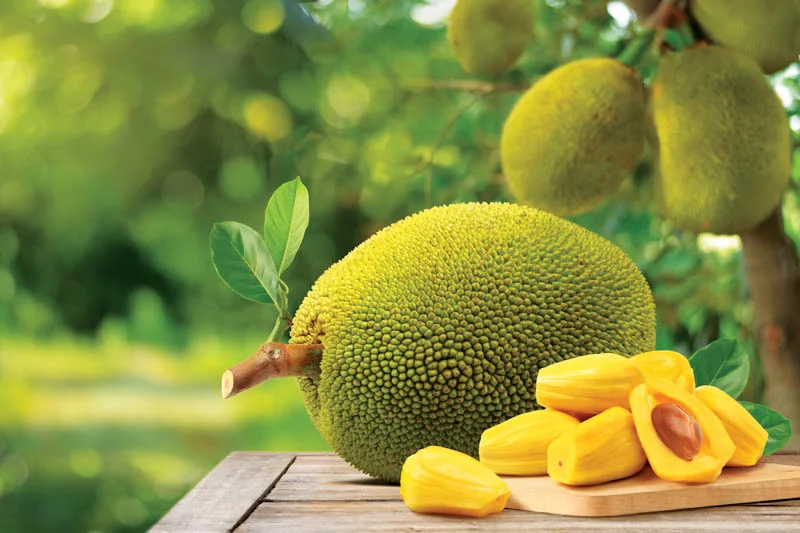
A few recent news items prompted me to write this article. The first was in the Sinhala newspaper Divaina on jackfruits, which said that out of the 280 million jackfruits produced in Sri Lanka, only 80 million were consumed. Does this mean the rest, 200 million fruits, are just wasted every year? However, other available reports estimate that about 70% of the production is consumed and only 30 percent is wasted. Whatever the exact number, we know a substantially large number of jackfruits go to waste. The second was a more recent article in an English paper on cinnamon exports: it states that Sri Lanka is targeting US$ 300 million in cinnamon export earnings this year and aiming for annual export earnings of US$ 500 million by 2030!
Good sense
These news items reminded me of another article I read in The Island a few years ago. It was by Dr. Upatissa Pethiyagoda, a well-known Sri Lankan scientist, diplomat, and writer, about a chance encounter he had with former Prime Minister Wijayananda Dahanayake (WD) in the early 1970s at a Perera & Sons outlet in Kollupitiya, where both had stopped for iced coffee, In those days, politicians, even former prime ministers, walked around without bodyguards and could be spotted at coffee shops, like P&S, in CTB buses or on trains. After learning that Dr. Pethiyagoda was a senior researcher at the Tea Research Institute, Dahanayake quipped that Sri Lanka should focus on five key crops: paddy, sugarcane, pasture grass, coconut, and jack (kos). Dr Pethiyagoda further adds “The unsophisticated wisdom of WD still haunts. Being self-reliant in basic foodstuffs is very respectable and a base for true national pride. A Canadian slogan in support of their (salmon) fishery was “We eat what we can and can what we can’t” or the Thai advertisement line, accompanying a tantalising picture of a fruit basket was “We have got it, come and get it”. Capturing tourism and horticulture simultaneously!”
I do not know why WD advocated promoting jack instead of tea. Yet, 50 years later, while we are trying to expand cinnamon exports into an already saturated market, the global market for jackfruit has become larger than the market for Ceylon cinnamon. Hence, the slogans quoted by Dr Pethiyagada are more than appropriate to promote jackfruit exports.
“We eat what we can and can what we can’t”
Globally, the demand for jackfruit has rapidly increased in recent years due to its appeal to vegan, vegetarian, and health-conscious consumers. However, it is difficult to grasp the size of the global market for jackfruit through import/export statistics, as jackfruit doesn’t have a specific standalone customs code. Customs data, even at the HS eight-digit level, groups jackfruit along with several other tropical fruits. Hence, the numbers given in this article are from various reports available on the Internet. Although the numbers presented in those reports vary, trade dynamics point to a multi-billion-dollar global market for jackfruit which has already reached USD 2.8 billion in 2025 and is likely to reach USD 5.2 billion by 2034. This market is largely dominated by jackfruit processed products (including canned, frozen, and dried items). The market for fresh jackfruit hovers around USD 500 million a year.
“We have got it, come and get it”
With around 300,000 tons of exports annually, Thailand is the leading exporter of jackfruits, closely followed by Vietnam. Interestingly, the value of jackfruit exports from Vietnam has increased remarkably from “… just $3 million in 2015 to an impressive $236.8 million in 2023. ” The South Asian countries are also emerging as leading jackfruit exporters. India exported over 26 million kg (26,000 tons) of jackfruit valued at approximately US$40 million during the 2023-2024 fiscal year. The annual exports from Bangladesh fluctuated between 1000 to 2000 metric tons during the recent years. In contrast, jackfruit exports from Sri Lanka are estimated to be around 20 to 30 metric tons per month, which are mainly in processed form.
Main markets for jackfruits are in North America, Europe, Gulf countries, China, and Australia. Key markets for fresh jackfruits are Gulf countries and China. The governments of the main exporting countries intervene proactively to develop these markets for their exporters. For example, during the visit of the Bangladesh Prime Minister Tarique Rehaman to China in June 2026, one of the MoUs signed was on jackfruit. Based on this MoU, Bangladesh is targeting 500 to 1,000 tons of exports to China during the next year.
Gulf market for fresh jackfruits
As the global demand for jackfruit increases, the demand for fresh jackfruit has also risen in the Gulf countries. The Indian and Bangladeshi exporters have already successfully exploited this market. However, due to perishability and the limited shelf life of fresh jackfruits, exporters from India and Bangladesh rely on air shipments for quicker delivery. Yet, as whole jackfruits are heavy with a high waste-to-edible ratio (thick rind and core), air freighting whole fruit is economically inefficient. Hence, exports are mainly in semi-processed form.
A game changer – export of fresh jackfruits by sea
This brings me to another article published early this month in Bangladesh; it says a Dhaka-based export company shipped 3.5 tons of fresh jackfruits to Dubai by sea in May this year. Though the shipment took over 26 days to reach its destination, the quality of the jackfruit remained intact. If that is so, then it is a game changer. Sea freight from Colombo to Dubai, I believe, takes only 4 to 8 days for a direct port-to-port journey, compared to 26 days from Bangladesh. Hence, exporting jackfruits and other fruits and vegetables by sea to GCC markets from Sri Lanka would be much more efficient and cost-effective.
With its plentiful supply and a lucrative market in close proximity in the Gulf countries, it is difficult to understand how Sri Lanka has not managed to capture a significant share of the market in the GCC, given that Sri Lanka began to export fruits and vegetables into that market long before Bangladesh, Thailand, or Vietnam.
(The writer can be reached at senadhiragomi@gmail.com)
Reflections on Kandyan Genealogical Studies:
by Sena Thoradeniya
(Part I of this article appeared in The Island of 19 August 2026)
In the Kandyan territories, genealogical studies have been largely caste based on only those who belong to the so-called upper stratum – the highest echelon of the Govigama caste. Even within this group, attention is reserved for ancient office holders, illustrious figures, and socially prominent members, while non-office holders, side branches, and ordinary kin are omitted. Sub divisions of the Govigama caste, as well as families belonging to the so-called depressed castes, are almost entirely omitted. One reason for this stigmatisation lies in the absence of competition for caste supremacy within the Kandyan regions, unlike in the “low country” areas. This silences the presence of non-elite Kandyans. However, oral genealogies, folk traditions, palm-leaf manuscripts, and colonial records preserve the names of less prominent members.
On the other hand, the descendants of clan leaders, such as the Vidana Maha Durayas, Maha Balitiyannas, Maha Hulawaliyas, Mulacharis, and chiefs of Halu Apullana Henayas, do not seek to record their genealogies as all their ancestral roots have been uprooted and obliterated. In such a context, they have acquired new names, new identities, and fashion a new genealogy as their point of departure. The erasure of older identities forces these families to reconstruct a new lineage.
The only exception within my private collection is “Great Royal Artificer of the Kandyan Kingdom: Devendra Mulachari” by D. D. M. Waidyasekera (2017), which records the architectural works of the master craftsman, chiefly responsible for the design of the Paththirippuwa, Walakulu Bemma, and Mangul Maduwa.
The names of hundreds of master craftsmen and other artificers have been carefully recorded, yet their works remain largely obscure, without their corresponding works save the creations of a few celebrated Sittaras. This creates an inconsistency in cultural memory as in pre-Kandyan days.
In theory, elders are often the custodians of memory, transmitting genealogies across generations, providing names, relationships, anecdotes, and related details that written records are not available, although the memory may be selective and biased influenced by various factors. Today such elders are rare, even within our traditional villages. With the passing of elders, the cultural and historical memory tied to ancient villages was obliterated. I can illustrate this with numerous examples taken from my village.
More often genealogical records, especially those produced by descendants of noble families, are not impartial records. They conceal historical truths such as collaboration with colonial expeditions, capture of the last King, betrayal during 1818 and 1848 uprisings as some Kandyan chiefs sided with the British during the 1818 and 1848 uprisings, and their servility to British colonial rulers as junior partners in the administration. Their descendants too later held high office under colonial rule, but genealogical records often present only illustrious service. But modern historians, colonial records, and oral traditions unravel these tainted facts. Some descendants of freedom fighters who were executed or transported to the Isle of France, sometimes rose to prominence under the British.
Although genealogical writers are not historians, they can and do omit vital information if they tarnish family prestige. They can consult archival records, oral traditions, and colonial documents to augment their studies. This writer suggests a combination of all sources as explained at the beginning of this essay.
It is true that the line between genealogical study and historical research is less rigid or open. Both genealogists and researchers may use the same sources, but the distinction lies in the purpose and the method. The primary aim of genealogy is to trace lineage, kinship ties and family continuity. It is basically descriptive and compilatory, but it needs critical assessments. Genealogy becomes research when the genealogist moves beyond compiling sources, and analyzing and interpreting them, situating family history in a wider historical process.
In Kandyan genealogical studies, clashes and serious discrepancies between family records, oral traditions, colonial writings, and modern historical scholarship are common. The problem is how to weigh them against one another looking for convergences. Discrepancies arise when genealogical writers adhere to their own records for family pride or myth making, without consulting other sources, without following a more balanced approach, and allowing the reader to formulate independent perspectives. Failure to engage multiple sources perpetuates partial inquiry rather than historical inquiry.
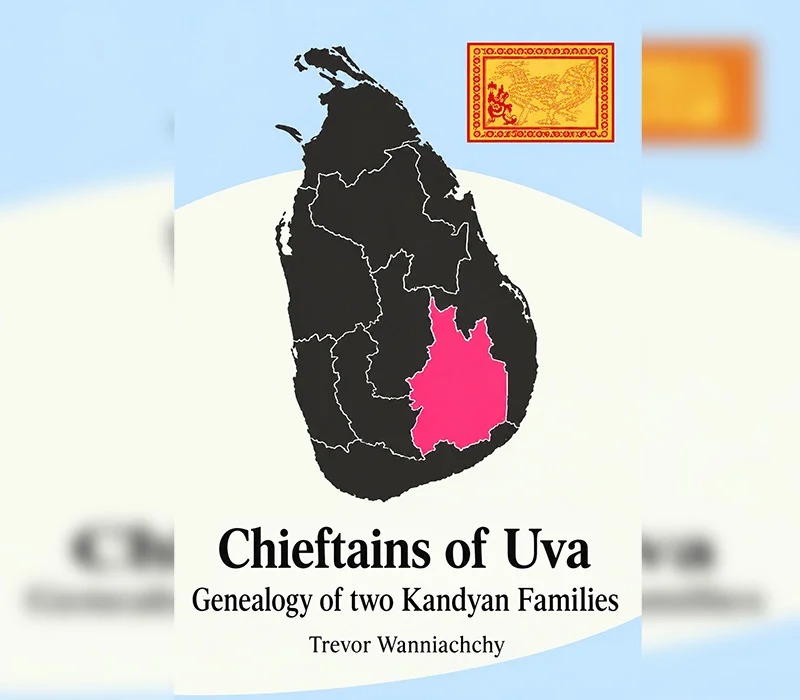
Wanniachy faithfully traces the ancestry of the Taldena family from the era of King Devanam Piyatissa, drawing upon family history, oral tradition, and two folk poems. Yet his account remains narrowly confined, for he pays little attention to other archival sources, colonial writings, and modern historical scholarship. Works such as Paul E. Pieris’s “Sinhale and the Patriots, 1815–1818” (1950/1995), Tennakone Wimalananda’s “The Great Rebellion of 1818” (1963), are conspicuously absent from his study. Although colonial records remain largely inaccessible to the general public, the writings of modern historians reach a wider audience.
Wimalananda records that Taldena Mohottala, a chieftain of Viyaluwa, saw his house ransacked and destroyed by the British troops during the uprising of 1818. In ancient times, a Mohottala, was a scribe, a secretary, whose main function was collecting and sending the King’s and Dissave’s revenue. Mohottalas of Uva also assumed far greater powers by reason of the distance from the capital, Kandy.
The English dismembered the ancient Uva Maha Disawa, under the almost independent authority of a Maha Disava and created six Disavas, of which one was Oya Palatha.
Paul E. Pieris says that Taldena in recognition of his good work for the British, demanded the post of Disava of Oya Palatha. Owing to his collaboration with the colonial administration, he was appointed Acting Dissava of Oya Palatha. Taldena however, again fell under suspicion, was kept under detention at the Barrier Guard and the British administration thought advisable to remove him from Badulla. As he was ill under detention he could not be removed to Colombo as ordered. He was removed from his position of Oya Palata Disava and was called upon to deposit his valuables at the Badulla Kachcheri, as security for his good behaviuor. On depositing his valuables with the Agent, he was released from detention.
Wimalananda further notes that the Taldena family established marital ties with families in the Batticaloa District. A native of Pottuvil, Mutu Banda’s relative, Sama Kumarihamy alias Ramath, married G. B. Taldena; her second husband was Mutukumaru Murugesu Pillai, and their daughter was Madduma Kumarihamy.
The ancient Maha Disava of Uva was further divided. In my series of articles on the Kandyan chieftains under British rule, I have noted that in 1908 Charles Taldena was appointed Gravets Muhandiram of Kandy by J. P. Lewis, Government Agent of the Central Province. In his report, Lewis observed that this office, as had always been the case, was once again entrusted to a Kandyan, whereas previously it had been conferred upon a “lowcountry” official.
In Chapter Four of his booklet, Wanniachy turns to the history and genealogy of the Mullegama family. Though Mullegama does not belong to Uva, the family is linked to the Taldenas through intermarriage, as he explains. Mullegama itself is a village in Harispattuwa, situated about two kilometers off from the Ambatenna junction along the Kandy–Matale road. In tracing the lineage of the Mullegamas, Wanniachy relies closely on A. C. Lawrie’s Gazetteer of the Central Province of Ceylon (1898).
Mullegama, once Dissava of Wellassa and Dissava of Navayodun Korale supported the British expedition. Yet in 1818, British troops plundered his residence at Wellassa, seizing his most treasured possessions, among them gifts from Sri Vickrema, an elephant, and two horses, which were later sold in Badulla, says Paul E. Peiris. During the Uva uprising, he provided the British with valuable intelligence, and in recognition of his services he was subsequently appointed as Siyapattuwe Adhikaram, a post created by Sri Vickrema, an ironic reward for loyalty despite the plundering.
Lawrie records that the estate of the Mullegama Maha Nilame was divided, and that one grandson sold his share to Moormen of Akurana. He further notes that all the walawwa lands were eventually sold, with a Moorman of Akurana purchasing part of the walawwa, repairing it, and residing there. The pathetic decline of the Mullegama estates is poignantly reflected in Asoka M. Herath’s Sinhala novel Nindagama (2002), a symbolic resonance of the literary echo of dispossession.
I am acutely aware that independent researchers and genealogists of Kandyan families often incur the displeasure of presentday descendants, for the facts they uncover are seldom palatable. Their inquiries reveal that certain ancestors occupied the lower rungs of the royal administration yet later attained high office under the British through collaboration with the colonial regime. Such revelations, though historically significant, provoke resentment among descendants who prefer to sustain more exalted narratives of lineage. This genealogical selectivity perpetuates sanitised family histories and conceals the complexities of colonial collaboration.
In Kandyan genealogical studies compiled by kinsmen, attention is almost exclusively bestowed upon the illustrious figures who once served the king. Their descendants, even those living today, are relegated to mere entries in family trees, noted with their matrimonial alliances. Wanniachy’s book is no exception.
Why does this occur? By highlighting only those ancestors who held office or enjoyed distinction, families reinforced their claims to nobility and social standing. Descendants, unless they themselves attained prominence, were recorded routinely since their presence served only continuity but not prestige.
I thought it necessary to highlight certain technical shortcomings of the book. In the present publishing climate, design has become a matter of considerable importance. Proper book design requires attention to margins, chapter titles, and other elements of presentation. Moreover, the volume carries no ISBN, indicating that it has not been registered with the National Library. This omission prevents the work from being catalogued in the Sri Lanka National Archives, the Museum Library, the National Library, and the University of Peradeniya Library and diminishes its archival value. Another notable deficiency is the absence of the author’s address and contact information. (Concluded)
by Jehan Perera
It appears that the die has been cast on the 22nd Amendment. The government appears unshaken in its determination to ensure its passage into law. From the government’s perspective, the 22nd Amendment and associated legislation, by increasing the tenure of all judges by two years, will give them the extra time to complete their existing cases. This will do away with the need to change judges midstream and have complex legal cases go back to the beginning, which has too often been the case. The completion of these cases will be to the benefit of the victims who have waited for decades for justice in some cases. It will also be to the government’s benefit as many of the wrongdoers are those in the political opposition. In the past, human rights and democracy activists, not to mention lawyers in the field, have bemoaned the manner in which court cases have got delayed for a variety of reasons, including judges being promoted or transferred midstream or reaching the age of retirement.
Principled opposition to 22nd Amendment is articulated in terms of the ad hoc and sudden emergence of the amendment. Those who advance this argument have expressed concern that extending judges’ tenure could create a sense of indebtedness to the government and weaken judicial independence. They would prefer the extension of judges’ tenure to be part of a comprehensive package of constitutional reforms that would apply across the board to other sectors of the public service and, ideally, find its place in the new constitution that the NPP promised in its election manifesto. The question is one of timing. Public opinion surveys carried out regularly have shown that the vast majority of people consider that corruption and criminality at high levels need to be brought to an end as soon as possible. They want accountability to become real rather than remain an unfulfilled promise. The public mood today is that the era of impunity must finally end.
Investigations by law enforcement agencies into the misdeeds of politicians in the past have too often come to naught due to the lack of political will on the part of successive governments. But on this occasion there is a manifest expression of such political will, as witnessed in the seemingly endless series of corruption and criminality cases being uncovered and exposed week by week and month by month. It is equally predictable that those under investigation will seek to challenge the legitimacy of this process. Some will perceive the prosecutions as essentially being in the nature of political revenge rather than lawful accountability and argue along those lines. Others will seek to rally public opinion by questioning the independence of the institutions involved. These reactions should surprise no one. But they make it all the more important that the credibility of the institutions through which accountability is pursued be safeguarded.
Safeguard Change
There is an old saying that society is a mule, not a horse. A horse may respond to repeated use of the spurs, but a mule, if driven too hard, may throw its rider off altogether. The proverb captures an important truth about governing societies. History offers many examples of societies that succeeded in exposing wrongdoing but failed to build reconciliation afterwards. The greatest danger is not merely that the guilty will protest their innocence. That is to be expected. The greater danger is that punishment itself becomes the principal language of politics. When that happens, each change of government carries with it the expectation that today’s judgments will tomorrow be revisited, reversed or avenged.
The electoral verdicts of 2024 that swept the NPP into power brought an entirely new group of political leaders to the fore. This transition needs to take place with care to ensure that polarisation and civil conflict are contained rather than intensified. The post-22nd Amendment period will therefore require something more than legal correctness. It will require political sagacity. Accountability needs to be seen in the light of strengthening the legitimacy of institutions rather than becoming sidetracked into another arena of political contestation. If justice comes to be seen as merely the continuation of politics by legal means, even deserving convictions of wrongdoers may lose public confidence on which long lasting justice depends.
Troubling in this context has been the conduct of some opponents of the amendment. They have not only attacked the government leadership for taking forward the 22nd Amendment. They have also launched personal attacks on judges and cast sweeping aspersions on the judiciary itself. Ironically, in seeking to discredit the courts before they deliver their judgments, they risk undermining the very institution they claim to defend. The lawyers who have united against the 22nd Amendment have every right and duty to raise constitutional concerns. Opposition politicians have every right to criticise legislation. But both also carry a responsibility not to erode public confidence in the judiciary through speculative accusations that prejudge the integrity of judges before they have acted. Such argumentation weakens an institution that belongs to the entire country, not to any government or opposition.
Real Test
Sri Lanka is emerging from decades of violent conflict and deep political polarization. Too often in our history, one government’s triumph has become the next government’s point of demonization as in the once widely used phrase of the “17 year curse” by the successor government. Institutions rebuilt today must therefore survive tomorrow’s transfer of power. They must earn the confidence not only of those who celebrate today’s victories, but also of those who will one day sit in opposition. Institutions that command confidence across political divides need to become stronger and not weaker than the governments that created them.
The national challenge is no longer simply whether accountability will be pursued. It is whether accountability will restore faith in the law by ending a culture of impunity that for too long protected the powerful while denying justice to victims. The country has waited too long for that moment. It must not now be compromised by unnecessary political confrontation or irresponsible attacks on the courts. Ultimately, the strongest answer to the critics of the 22nd Amendment will not come from government ministers or parliamentary speeches. It will need to come from the judges themselves.
The extension of the tenure of members of the judiciary will place an even greater obligation upon them to demonstrate, through every judgment they deliver, that they are truly independent, impartial and beholden to no political authority. If they uphold the law without fear or favour, they will expose the predictions of the doomsayers as unfounded. Those in the legal profession, media, civil society and politics should likewise recognise that criticism of judicial decisions must not become an assault on the institution of the judiciary itself. The greatest service that all sides can render Sri Lanka at this moment is to strengthen the people’s faith that justice belongs equally to every citizen and that no one, however powerful, stands above the law.

Showers above 75 mm are likely at some places in the Western, Sabaragamuwa and North-western provinces and in Kandy, Nuwara-Eliya, Galle and Matara districts

Govt. determined to press ahead with 22A: Justice Minister

U.S. Ambassador designate to Sri Lanka Eric Meyer here

GL alleges Justice Minister committed contempt of court by ruling out referendum

Two-month deadline for expert panel to review electoral system, excluding PCs

Sri Lanka facing follow on at SSC

‘Dates have the highest sugar content to fight Coronavirus’

Sunday Island 27 December – Headlines

#SundayIsland 17th December – Headlines

Sunday Island – 28th March

Sunday Island Headlines – 21 March

Sunday Island – 21st February – Headlines
-
 News5 days ago
Country’s first woman Surveyor General appointed
-

 Business4 days ago
SriLankan Airlines makes ShakthiSAT Mission possible for talented Sri Lankan student
-

 Sports6 days ago
Tharanga, Weber headline stellar Lausanne javelin field
-

 Features5 days ago
Medical education in Sri Lanka: Then and now
-
 Business6 days ago
Mannar’s offshore opportunity: the dollar question behind Sri Lanka’s oil and gas search
-
 Latest News5 days ago
Imran Khan moved to private hospital amid deteriorating health
-

 Latest News5 days ago
Government has declared 21, 22 and 23 August 2026 as national days of mourning
-
Latest News4 days ago
Tharanga edges out Chopra in 88m javelin battle