
Business
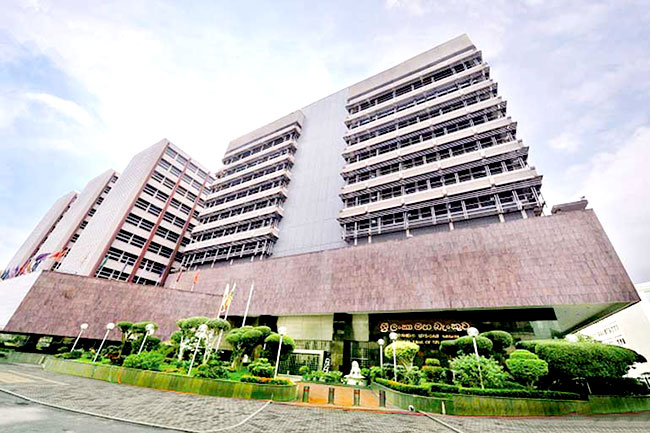
Fitch’s decision to downgrade Sri Lanka shows nothing but recklessness : CBSL

Fitch was constantly updated on imminent foreign exchange inflows
Earnings from merchandise exports recorded an all time high in October 2021
Indices of the Colombo Stock Exchange reached historical highs
Prospects for workers’ remittances are bright
Fitch appears to have completely ignored the standby SWAP facility with PBOC of around USD 1.5 billion
Fitch Ratings in a rather hasty move, downgraded Sri Lanka’s international sovereign rating on 17 December 2021, demonstrating its failure to recognise the positive developments taking place in Sri Lanka, in an environment in which the entire world is grappling with multiple waves of the COVID-19 pandemic, the Central Bank of Sri Lanka says.
Issuing a press release the Bank further says:
This action resembles the recent unwarranted downgrade by Moody’s Investors Service a few
days prior to the announcement of the National Budget 2022. The sense of urgency on the part of an internationally recognised rating agency to downgrade Sri Lanka is inconceivable, particularly considering the fact that Fitch was being constantly updated by Sri Lankan authorities on the latest developments in all sectors of the economy and imminent foreign exchange inflows.
In particular, despite the lockdown measures that had to be introduced in the third quarter of 2021, the real economy averted a deep contraction during the quarter,
signalling Sri Lanka’s adaptability to the new normal. Real GDP, in fact, expanded by 4.4 per cent (year-on-year) during January-September 2021, reaffirming the strong possibility of above 4 per cent growth in 2021. High frequency data on activity point towards a strong recovery of the economy surpassing the pre-pandemic level. The Manufacturing Purchasing Managers’ Index reached 61.9 in November 2021, the highest reading for a month of November on record, and way above the pre-pandemic level of activity.
Indices of the Colombo Stock Exchange reached historical highs, with a large number of Initial Public Offerings taking place in 2021. Credit extended to the
private sector expanded by over Rs. 685 billion in the ten months to October 2021, compared to about Rs. 260 billion in the same period last year.
The trade deficit continued to decline from May 2021 on a month-on-month basis, supported by record high export earnings. Earnings from merchandise exports
recorded an all time high in October 2021, and preliminary information indicates that
earnings have exceeded this record level in November 2021. With the exchange rate remaining stable since April 2021, excepting a few speculation-driven deviations, the conversion of export proceeds and other foreign exchange earnings has also improved
substantially in recent weeks. An exponential growth in tourist arrivals is observed on a monthly basis, indicating an early reversal of the annual foreign exchange revenue loss of around US dollars 5 billion in the period ahead.
The prospects for workers’ remittances are bright, with the resumption of worker migration, increased demand for Sri Lankan workers particularly from the Middle East and efforts to facilitate worker remittances through formal channels through an attractive incentive package. With such measures, the external current account
balance is expected to be maintained at growth supporting levels, thereby accommodating equity capital to the financial account through direct investment to
the identified projects in the Colombo Port City and Industrial Zones, in addition to the expected monetisation of non strategic and underutilized assets.
These developments and the rapid vaccination drive, which is being rolled out nationally, would help realise the potential of the economy over the near to medium term.
Fitch has also failed to recognise the fiscal reforms introduced through the National Budget 2022. With the introduction of new tax measures, upgraded tax administration systems, and the revival of the economy, the year 2022 is expected to deliver a substantial increase in Government revenue. Increasing the retirement age of public sector employees and measures to enhance the viability of state owned business
enterprises are notable reforms, and issuing quarterly warrants for Government institutions instead of annual warrants are expected to instill financial discipline in the
utilisation of the allocations, thereby cushioning the expenditure side. Such revenue and expenditure side measures would pave the way for a reduction in the fiscal deficit and financing needs of the Government, contributing to a sustainable debt level.
The domestic market has responded positively to expected path of fiscal consolidation, and interest rates have stabilised, following an initial overshooting, at market clearing levels. The Central Bank’s holdings of Government securities have also declined notably as a result of improved subscription at primary market auctions and active open market operations. Contrary to Fitch’s unfounded claims on increased probability of a default event over the coming months, the measures undertaken by the Government and the Central
Bank to secure support from friendly nations in the region are nearing fruition, thereby offsetting pressures on the balance of payments in the period ahead. The Six- Month Road Map for Ensuring Macroeconomic and Financial System Stability clearly articulated the expected cashflows by December 2021 and by March 2021, and the Government and the Central Bank remain confident that these inflows will materialise, and the end-2021 level of Gross Official Reserves will remain above US dollars 3 billion. Fitch appears to have completely ignored the standby SWAP facility with the People’s Bank of China of around US dollars 1.5 billion, of which the drawal is imminent.
The credit lines and other inflows expected following high-level meetings in India and the Middle Eastern and other regional economies are also not given due consideration by Fitch in arriving at this decision.
The fact that Fitch Ratings decided to downgrade Sri Lanka without waiting until the first test date of 31 December 2021 shows nothing but recklessness, which could only hurt investors if decisions are made based on this downgrade. It must also be noted that the Government has given a clear assurance that Sri Lanka will honour all debt obligations in the period ahead, and Sri Lanka has not delayed a single payment even under severe stresses that were caused by the COVID-19 pandemic over the past two years.
Therefore, all stakeholders of the economy, including international investment partners, are requested not to be dissuaded by this unjustified rating action, but instead, work with Sri Lanka to surf the turbulent tides, which are expected to settle in the next few days. A detailed press release on the progress of expected foreign inflows as envisaged in the Six-Month Road Map will be published this week.
-Central Bank







‘Sri Lanka recorded a growth of five percent or more but due to the Middle East crisis this growth rate could be expected to drop. However, this decline could be managed effectively through the adoption of prudent policy adjustments, Central Bank Governor Dr. Nandalal Weerasinghe said at the monthly CBSL monetary policy review meeting. The meet was held at the CBSL head office in Colombo yesterday.
The Governor said that the CBSL had decided to increase the Overnight Policy Rate (OPR) by 100 basis points, bringing it to 8.75 percent.
Following this adjustment, the Standing Deposit Facility Rate (SDFR) and the Standing Lending Facility Rate (SLFR), which are linked to the OPR, have been increased to 8.25 percent and 9.25 percent, respectively. The decision comes after a careful evaluation of evolving domestic and global macroeconomic conditions, Dr Weerasinghe explained.
Dr. Weerasinghe added: ‘The tightening of the monetary policy stance is primarily driven by mounting inflationary pressures. Heightened geopolitical tensions in the Middle East have kept global commodity prices, especially petroleum, elevated.
‘This has led to sharp upward adjustments in domestic energy prices, pushing Sri Lanka’s year-on-year headline inflation to 5.4 percent in April 2026.
‘While the recent spike is largely supply-driven, strengthening domestic demand, evidenced by continued credit expansion, credit-driven imports and robust economic activity—has further accelerated short-term inflation expectations.
‘The external sector has also faced amplified headwinds in recent weeks. A widening merchandise trade deficit, driven by increased fuel import costs and a slowdown in tourism earnings, resulted in a modest external current account surplus for the first quarter of 2026.
‘Additionally, speculative activities led to notable depreciation pressures on the Sri Lankan rupee, though conditions have since stabilized. Despite these pressures and ongoing foreign debt servicing, Sri Lanka’s Gross Official Reserves stood at a resilient USD 6.8 billion by the end of April 2026, a figure that includes a swap facility from the People’s Bank of China.
‘Looking ahead, headline inflation is projected to remain above the Central Bank’s target of 5 percent in the near term before stabilizing.
‘To counter potential second-round effects on inflation from energy price hikes and unchecked private sector credit growth, the Board deemed a restrictive policy stance necessary to maintain long-term domestic price stability. Upcoming multilateral inflows and government stabilization measures are expected to support the external sector and we will continue to monitor incoming data ahead of the next scheduled monetary policy review on July 22, 2026.’
By Hiran H Senewiratne

A new tilapia culture-based production and semi-processing centre launched in Iranamadu, Kilinochchi, is expected to boost climate-resilient aquaculture, strengthen rural livelihoods and create sustainable employment opportunities for women in Sri Lanka’s Northern Province.
The facility, launched by the International Labour Organization in partnership with Cargills (Ceylon) PLC and supported by the Government of Norway, is being hailed as a significant milestone in inclusive economic development and inland fisheries advancement.
Located in the Iranamadu freshwater fisheries hub, the centre has been established under the ILO’s Promoting Advancement of Vulnerable Persons and Enterprises (PAVE) Project, aimed at promoting climate-resilient livelihoods among vulnerable communities, particularly women and persons with disabilities.
Speaking at the launch, ILO Country Director for Sri Lanka and the Maldives, Joni Simpson, said the initiative demonstrated the power of partnerships in advancing social justice and decent employment.
“This processing centre represents what can be achieved when communities, government, development partners and the private sector work together. It contributes not only to strengthening aquaculture value chains but also to expanding access to decent and productive employment, especially for women and marginalized groups,” she said.
The centre is expected to generate new jobs in fish handling, processing and quality assurance while providing training in food safety standards, value addition and enterprise development. Officials said this would significantly increase women’s participation in the aquaculture value chain in the Northern Province.
Representing the Norwegian Government, Tormod Nuland said Norway’s continued support for livelihood projects in the North reflected its commitment to gender equality, inclusivity and climate resilience.
“Illustrating the success of long-standing cooperation with the ILO, the new tilapia processing unit is a key initiative that will help strengthen socio-economic conditions for communities in the Northern Province,” he said.
Cargills officials noted that the project marked the company’s first major venture into inland fisheries development after years of engagement with agricultural and dairy farming communities in the North.
Group Manager Agribusiness at Cargills, Haridas Fernando, said the company saw immense potential in developing the tilapia industry as an affordable and nutritious protein source for Sri Lankan consumers.
“We are pleased to partner with the ILO on this important initiative to support the inland fisheries sector while strengthening livelihoods for small-scale fishing communities,” he said.
The initiative also strengthens market access for the Iranamadu Freshwater Fishermen’s Cooperative Society by linking smallholder fisher communities with private sector markets and national retail networks.
Officials said the project would continue under the ILO’s Generating Resilient Opportunities for Work (GROW) programme, funded by the Governments of Australia and Norway, with the aim of expanding climate-resilient and market-oriented livelihood systems across the Northern Province.
The GROW project builds on more than a decade of interventions under the ILO’s Jobs for Peace and Resilience Programme and focuses on sustainable employment creation, private sector partnerships and social empowerment for vulnerable communities.
By Ifham Nizam

As West Asian tensions continued to simmer, the All Share Price Index moved down by 189.63 points, while the more liquid S&P SL20 went down by 36.97 points.
Turnover stood at Rs 4.93 billion with four crossings. Those crossings were: Softlogic Life Insurance 33.8 million shares crossed to the tune of Rs 3 billion at a per share value of Rs 92, HNB 316,889 shares crossed for Rs 125.2 million; its shares traded at Rs 395, HNB (Non-Voting) 318,199 shares crossed to the tune of Rs 105 million; its shares sold at Rs 330 and Lanka IOC 200,000 shares crossed for Rs 27.7 million; its shares traded at Rs 138.50.
In the retail market companies that mainly contributed to the turnover were; LOLC Holdings Rs 116.5 million (207 900 shares traded), Softlogic Life Insurance Rs 112.3 million (1.2 million shares traded), Commercial Bank 78.2 million (380,000 shares traded), Overseas Reality Rs 64 million (1.3 million shares traded), Sampath Bank Rs 48.9 million (340,000 shares traded), CIC Holdings (Non-Voting) Rs 46.5 million (1.7 million shares traded) and JKH Rs 46 million (2.3 million shares traded). During the day 94.3 million share volumes changed hands in 22097 transactions.
It is said that 75 percent of the turnover came from Softlogic Life Insurance which amounted to more than Rs 3 billion. Therefore, the Insurance sector led the market while the banking sector, especially Commercial Bank and HNB, performed well.
Main contributors to the ASPI were DFCC Bank (up 0.75 percent at Rs 135.00 ), Lanka Ashok Leyland (up 7.38 percent at Rs 3,050.00 ), and Tokyo Cement Company (Lanka) (up 2.00 percent at Rs 92.00 ).
Hayleys (down 1.78 percent at 234.00 rupees), Melstacorp (down 0.53 percent at Rs 186.25 ), Sunshine Holdings (down 3.49 percent at Rs 30.40), LB Finance (down 3.44 percent at Rs 161.25 ), and Dialog Axiata (down 1.25 percent at Rs 39.40 ) were top negative contributors.
Lanka Ashok Leyland announced a first and final proposed dividend of Rs 30 per share for the financial year ended March 31, 2026.
The Lighthouse Hotel has also declared a final dividend of Rs 3 per share for the financial year ended March 31, 2026, subject to shareholder approval at its Annual General Meeting on June 30, 2026.
Yesterday the rupee was quoted at Rs322.00/323.50 to the US dollar in the spot market , stronger from Rs 325.50/327.00 the previous day, dealers said, while bond yields were quoted higher following the rate hike.
The telegraphic transfer rate for Sri Lanka’s rupee against the US dollar was 321.50 buying, 330.50 selling.
By Hiran H Senewiratne

Five people found alive after week trapped in flooded Laos cave

Peace deal to fully reopen Hormuz as US military pulls out

World Cup contenders England and India hope to get their combinations right

Do not be misled by Fake news created using the PM’s name, photographs, and video footage – Prime Minister’s Media Division

Israeli strike in Gaza City kills new head of Hamas’s military wing

Sri Lanka Cricket launch a program to enhance coaching standards of school cricket

‘Dates have the highest sugar content to fight Coronavirus’

Sunday Island 27 December – Headlines

#SundayIsland 17th December – Headlines

Sunday Island – 28th March

Sunday Island Headlines – 21 March

Sunday Island – 21st February – Headlines
-

 Business6 days ago
Historic launch of CCWE Fashion Week & International Summit 2026
-
 Opinion7 days ago
Murder of Ehelepola family, Bogambara Wewa and Sightings of Wangediya
-
 News7 days ago
Steps underway to safeguard Sri Lanka’s maritime heritage
-

 News4 days ago
All-New GRAVITE launches at LKR 6.99 Mn
-

 News3 days ago
Police probe underway to ascertain links between criminals deported from UAE and local politicians
-

 Features4 days ago
The NPP’s pivot to the past
-

 News2 days ago
Easter Sunday carnage: Court told Maulana’s statement cannot be accepted without cross-examination
-

 Opinion6 days ago
The need to reform Buddhist ecclesiastical order