
Business
Fitch’s decision to downgrade Sri Lanka shows nothing but recklessness : CBSL

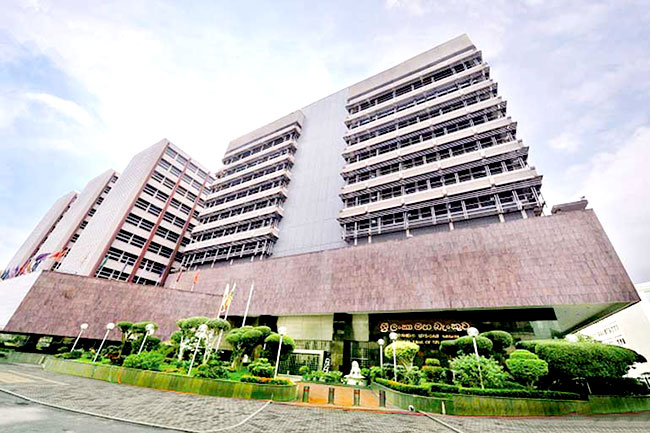
Fitch was constantly updated on imminent foreign exchange inflows
Earnings from merchandise exports recorded an all time high in October 2021
Indices of the Colombo Stock Exchange reached historical highs
Prospects for workers’ remittances are bright
Fitch appears to have completely ignored the standby SWAP facility with PBOC of around USD 1.5 billion
Fitch Ratings in a rather hasty move, downgraded Sri Lanka’s international sovereign rating on 17 December 2021, demonstrating its failure to recognise the positive developments taking place in Sri Lanka, in an environment in which the entire world is grappling with multiple waves of the COVID-19 pandemic, the Central Bank of Sri Lanka says.
Issuing a press release the Bank further says:
This action resembles the recent unwarranted downgrade by Moody’s Investors Service a few
days prior to the announcement of the National Budget 2022. The sense of urgency on the part of an internationally recognised rating agency to downgrade Sri Lanka is inconceivable, particularly considering the fact that Fitch was being constantly updated by Sri Lankan authorities on the latest developments in all sectors of the economy and imminent foreign exchange inflows.
In particular, despite the lockdown measures that had to be introduced in the third quarter of 2021, the real economy averted a deep contraction during the quarter,
signalling Sri Lanka’s adaptability to the new normal. Real GDP, in fact, expanded by 4.4 per cent (year-on-year) during January-September 2021, reaffirming the strong possibility of above 4 per cent growth in 2021. High frequency data on activity point towards a strong recovery of the economy surpassing the pre-pandemic level. The Manufacturing Purchasing Managers’ Index reached 61.9 in November 2021, the highest reading for a month of November on record, and way above the pre-pandemic level of activity.
Indices of the Colombo Stock Exchange reached historical highs, with a large number of Initial Public Offerings taking place in 2021. Credit extended to the
private sector expanded by over Rs. 685 billion in the ten months to October 2021, compared to about Rs. 260 billion in the same period last year.
The trade deficit continued to decline from May 2021 on a month-on-month basis, supported by record high export earnings. Earnings from merchandise exports
recorded an all time high in October 2021, and preliminary information indicates that
earnings have exceeded this record level in November 2021. With the exchange rate remaining stable since April 2021, excepting a few speculation-driven deviations, the conversion of export proceeds and other foreign exchange earnings has also improved
substantially in recent weeks. An exponential growth in tourist arrivals is observed on a monthly basis, indicating an early reversal of the annual foreign exchange revenue loss of around US dollars 5 billion in the period ahead.
The prospects for workers’ remittances are bright, with the resumption of worker migration, increased demand for Sri Lankan workers particularly from the Middle East and efforts to facilitate worker remittances through formal channels through an attractive incentive package. With such measures, the external current account
balance is expected to be maintained at growth supporting levels, thereby accommodating equity capital to the financial account through direct investment to
the identified projects in the Colombo Port City and Industrial Zones, in addition to the expected monetisation of non strategic and underutilized assets.
These developments and the rapid vaccination drive, which is being rolled out nationally, would help realise the potential of the economy over the near to medium term.
Fitch has also failed to recognise the fiscal reforms introduced through the National Budget 2022. With the introduction of new tax measures, upgraded tax administration systems, and the revival of the economy, the year 2022 is expected to deliver a substantial increase in Government revenue. Increasing the retirement age of public sector employees and measures to enhance the viability of state owned business
enterprises are notable reforms, and issuing quarterly warrants for Government institutions instead of annual warrants are expected to instill financial discipline in the
utilisation of the allocations, thereby cushioning the expenditure side. Such revenue and expenditure side measures would pave the way for a reduction in the fiscal deficit and financing needs of the Government, contributing to a sustainable debt level.
The domestic market has responded positively to expected path of fiscal consolidation, and interest rates have stabilised, following an initial overshooting, at market clearing levels. The Central Bank’s holdings of Government securities have also declined notably as a result of improved subscription at primary market auctions and active open market operations. Contrary to Fitch’s unfounded claims on increased probability of a default event over the coming months, the measures undertaken by the Government and the Central
Bank to secure support from friendly nations in the region are nearing fruition, thereby offsetting pressures on the balance of payments in the period ahead. The Six- Month Road Map for Ensuring Macroeconomic and Financial System Stability clearly articulated the expected cashflows by December 2021 and by March 2021, and the Government and the Central Bank remain confident that these inflows will materialise, and the end-2021 level of Gross Official Reserves will remain above US dollars 3 billion. Fitch appears to have completely ignored the standby SWAP facility with the People’s Bank of China of around US dollars 1.5 billion, of which the drawal is imminent.
The credit lines and other inflows expected following high-level meetings in India and the Middle Eastern and other regional economies are also not given due consideration by Fitch in arriving at this decision.
The fact that Fitch Ratings decided to downgrade Sri Lanka without waiting until the first test date of 31 December 2021 shows nothing but recklessness, which could only hurt investors if decisions are made based on this downgrade. It must also be noted that the Government has given a clear assurance that Sri Lanka will honour all debt obligations in the period ahead, and Sri Lanka has not delayed a single payment even under severe stresses that were caused by the COVID-19 pandemic over the past two years.
Therefore, all stakeholders of the economy, including international investment partners, are requested not to be dissuaded by this unjustified rating action, but instead, work with Sri Lanka to surf the turbulent tides, which are expected to settle in the next few days. A detailed press release on the progress of expected foreign inflows as envisaged in the Six-Month Road Map will be published this week.
-Central Bank





Business
“RDB Drives Unprecedented Growth with Record Profits Fueling Expansion and Development Impact”

The Regional Development Bank (RDB) delivered an exceptional financial performance for the year ended 31 December 2025, recording an 86% year-on-year increase in Profit After Tax to LKR 2.37 billion. The Bank’s total income reached LKR 42.81 billion, driven by a 23.89% growth in Net Interest Income to LKR 24.23 billion, complemented by steady contributions from both interest and fee-based income streams. This performance highlights the Bank’s ability to optimise its asset base while sustaining a well-diversified and resilient revenue profile.
Marking its 40th anniversary in 2025, the Bank’s exemplary performance underscores the strength of its resilient operating model, disciplined execution, and its growing role as a catalyst for inclusive economic progress in Sri Lanka. Profitability metrics strengthened notably, with Return on Assets (ROA) improving to 1.70% and Return on Equity (ROE) increasing to 11.77%, demonstrating enhanced efficiency in capital deployment and earnings generation.
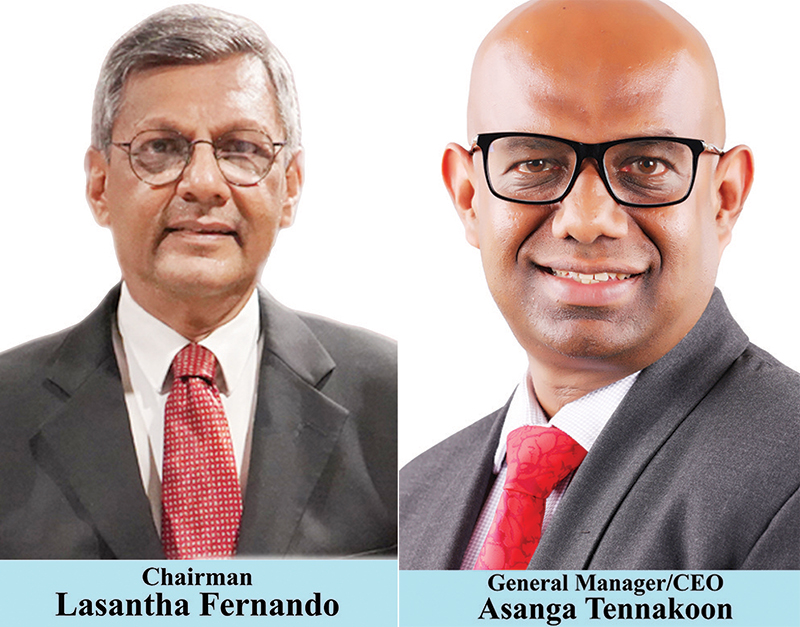
Commenting on the Bank’s performance, Chairman Lasantha Fernando stated,
“Our performance in 2025 reflects the strength of a purpose-driven banking model that successfully balances financial sustainability with national development priorities. As Sri Lanka progresses on its path to recovery, our commitment to enabling inclusive growth remains unwavering.”
The Bank continued to expand its development-focused lending portfolio, with loans and receivables growing by 23.59% to LKR 302.54 billion. This growth supported priority sectors including agriculture, SMEs, manufacturing, housing, and rural enterprises representing segments critical to national economic revitalisation. Importantly, this expansion was achieved alongside improved asset quality, with the Stage 3 impaired loans ratio declining to 4.06% from 6.25%, demonstrating robust credit risk management and effective recovery strategies.
Customer confidence remained strong, with deposits increasing by 11.85% to LKR 283.72 billion, driven by growth in both savings and fixed deposits. The Bank also maintained liquidity ratios well above regulatory thresholds, reinforcing its financial stability and resilience
Asanga Tennakoon General Manager/Chief Executive Officer, highlighted” last year’s results underscore the impact of disciplined execution, prudent risk management, and a strong customer-centric approach. Looking ahead, we will continue to expand our reach, strengthen digital capabilities, and deepen financial inclusion to create sustainable value for all stakeholders.”
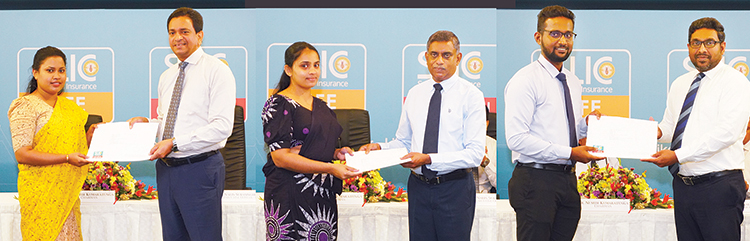
Sri Lanka Insurance Life Ltd (SLICLL) and Sri Lanka Insurance General Ltd (SLICGL) together appointed 112 Trainee Insurance Assistants, marking one of the largest recruitments across both companies in recent years.
Of the total intake, 87 candidates joined SLICGL while 25 candidates were appointed to SLICLL. This recruitment reflects the continued efforts of both companies to strengthen their workforce while contributing to employment opportunities.
The recruitment process was conducted through a structured and independent evaluation framework to ensure transparency and merit-based selection. Applications were invited from eligible candidates island-wide, followed by a written examination. Candidates who met the required benchmarks were shortlisted for interviews conducted by an independent panel, reinforcing fairness and credibility throughout the process.
The newly appointed Trainee Insurance Assistants represent a diverse and capable talent pool. Approximately 30% of the recruits are graduates, while all candidates possess the required academic qualifications, including G.C.E. Ordinary Level and Advanced Level certifications, or equivalent diplomas and higher qualifications.
This intake is aligned with the long-term focus of SLICLL and SLICGL on developing human capital and nurturing future-ready professionals within the insurance industry. The new recruits will have access to structured career growth opportunities, enabling them to build sustainable careers within the organisations. Efforts have also been made to assign employees to locations closest to their places of residence, subject to operational requirements, ensuring both efficiency and employee convenience.
Commenting on the appointments, Nusith Kumaratunga, Chairman of Sri Lanka Insurance stated, “The onboarding of this new group of Trainee Insurance Assistants reflected our continued focus on building strong and capable teams across both SLICLL and SLICGL. By maintaining a transparent and merit-based selection process, we remained committed to creating opportunities for talented individuals while strengthening the foundations for long-term organisational growth. This initiative also aligned with our broader role in supporting employment generation and contributing to the country’s economic progress.”
The official appointment ceremony was held on 7th April 2026 at the SLIC Head Office, in the presence of the Chairman and the Corporate Management of SLICLL and SLICGL, marking an important milestone in the organisations’ ongoing people development journey.
Business
99x Wins Five Awards at Best Management Practices Awards ‘26, Showcasing AI-led Transformation
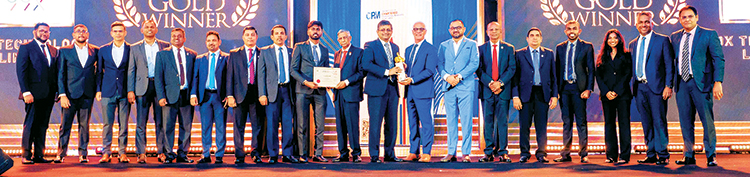
99x, a leading global product engineering company, has secured five major accolades at the CPM Best Management Practices Awards 2026, including an Overall Gold Award, positioning the company among Sri Lanka’s top-performing organisations in management excellence. The company was also recognised as the Sector Winner for IT, Software & BPO Services, named among the Forty Outstanding Companies, and received the Best Management Practices Excellence Award. In addition, Hasith Yaggahavita, CEO of 99x, was honoured with the Leadership Excellence Award, acknowledging his role in driving the organisation’s AI-led transformation.
The recognition was awarded for 99x’s submission titled ‘Embracing AI: Rethinking Talent, Products & Services,’ which addressed one of the most pressing shifts facing the global technology services industry today. As AI continues to redefine how software is built and delivered, traditional outsourcing models are being challenged from reduced reliance on large engineering teams to a growing shift toward outcome-based delivery and faster go-to-market expectations.
Chatura De Silva, Chief AI Officer at 99x, stated, “Winning five awards at one stage is a proud moment for us as a team. While AI is driving change across the industry, what made this possible is how we chose to adapt to it. We recognised that AI is not just a layer on top of what we do, but that it changes the foundation of how value is created. This transformation was about connecting both our talent and delivery, while embedding AI across everything we do”.
Selected from over 150 award submissions, 99x was also among the top 10 organisations invited to present its journey at the CPM Management Insights Summit 2026, placing its transformation on a national stage among the country’s most forward-thinking enterprises. Chatura De Silva, Kalana Wijesekara, Chief Developer Experience Officer and Chrishan de Mel, Chief Marketing and Corporate Affairs Officer, presented 99x’s story.
Commenting on the significance of this year’s awards, Dilshan Arsakularathna, CEO of The Institute of Chartered Professional Managers of Sri Lanka, stated, “99x securing the Overall Gold Award among organisations across multiple industries reflects the level at which Sri Lanka’s IT sector is progressing today. It demonstrates how companies are building real capability and driving innovation that can confidently stand on a global stage. Notably, 99x has now become the first organisation to secure the Overall Gold Award twice across the five editions of the BMPC Awards. This remarkable achievement reflects their strong commitment to sustaining excellence and continuously embedding best management practices within their operations. What stood out with 99x was how they have adapted to change in a practical and forward-thinking manner, reshaping how they operate and deliver value, while setting a compelling benchmark for modern management practices.”

Salt and Patidar power RCB past Mumbai Indians

Prasidh, Buttler set up comfortable win for Gujarat Titans

Heat Index at Caution level’ in the Northern, North-central, North-western, Western and Southern provinces and in Trincomalee district.

Showers above 75 mm are likely at some places in the Western, Sabaragamuwa, Central, Southern and North-western provinces.

Sun directly overhead Pesalai, Mankulam and Nedunkerny about 12:11 noon

PNS TAIMUR & ASLAT arrive in Colombo

‘Dates have the highest sugar content to fight Coronavirus’

Sunday Island 27 December – Headlines

#SundayIsland 17th December – Headlines

Sunday Island – 28th March

Sunday Island Headlines – 21 March

Sunday Island – 21st February – Headlines
-

 News6 days ago
Lankan-origin actress Subashini found dead in India
-

 News4 days ago
AG: Coal procurement full of irregularities
-

 News1 day ago
CEB orders temporary shutdown of large rooftop solar systems
-

 Business3 days ago
Israeli attack on Lebanon triggers local stock market volatility
-

 Business4 days ago
Hayleys Mobility introduces Premium OMODA C9 PHEV
-

 Business3 days ago
HNB Assurance marks 25 years with strategic transformation to ‘HNB Life’
-

 News6 days ago
UN Regional Director launches SL’s first Country Gender Equality Profile during official visit
-

 News6 days ago
Dialog Launches ‘GanuDenu QR’, Making Cashless Transfers Free for All with eZ Cash and Dialog Finance