
News
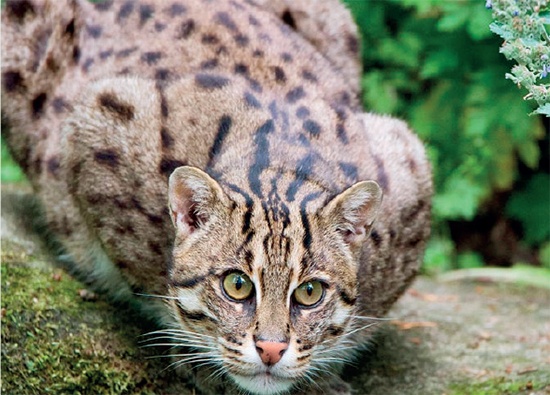
Fishing cats also targeted by villagers following leopard attack at Panama fearing they are dangerous

by Ifham Nizam
With the killing of a man by a leopard at Panama in Ampara recently, the relatively harmless fishing cats (Prionailurus viverrinus) are being targeted by villagers, who fear the animals as a ‘diviya’ in Sinhala means a leopard.
The Sinhala term for fishing cats is ‘Handun Diviya’, which gives the jitters to many villagers who fear that the animals are akin to leopards and are a threat to them, says researcher cum conservationist Chaminda Jayasekara.
With the human-leopard issue that has emerged with the Panama attack, fishing cats are also being targeted and killed in some parts of the hill country, he says.
“In some parts of Nawalapitiya, children fear to go out when word gets around that ‘Handun Diviyas’ were lurking in the vicinity,” he said.
The killing of fishing cats happen primarily because some people assume that they could harm them as the animals are often misidentified as leopard cubs. This happens especially in the tea plantation areas due to the lack of knowledge on this species, he remarked.
Fishing cats, an elusive feline in the Wetlands, suffer mostly in the dry zone when they sneak into poultry farms or roam in the vicinity. “Poisoning these animals is common especially in areas where poultry farms are located. Poisoning is considered as one of the biggest threats apart from being hit by vehicles in areas such as Sigiriya, when they cross roads to hunt, Jayasekara explained.
This is a big threat to all three small cat species in Sri Lanka, he pointed out.
There is also information that fishing cats are also killed for native treatment of asthmatic patients, he said.
Jayasekara, the Assistant Manager of Jetwing Vil Uyana, further said they built a forest habitat for fishing cats with two lakes on 28 acres. Within last year, seven young cubs were sighted there.
Unlike other cat species, fishing cats prefer an area close to water, he said. “They don’t mingle with domestic cats as jungle cats do. When encountered, they kill domestic cats”.
Of the 40 species of wild cats in the world, four are found in Sri Lanka. Three of them are considered small cats. Apart from the magnificent leopard (Panthera pardus kotiya), Sri Lanka is also home to three of its smaller, but equally threatened, cousins. The fishing cat, jungle cat (Felis chaus) and rusty-spotted cat (Prionailurus rubiginosus) are found in the wetlands and jungles around the island. Their secretive, elusive nature, smaller size and often nocturnal habits make their sightings difficult.
Fishing cats are small to medium sized felines found in countries in South and South East Asia. They have been given a Latin name because of their viverrine or civet like appearance. They are larger than domestic cats and are one of the most elusive small cat species in the world, as well as in Sri Lanka. They are also a threatened species due to habitat destruction.
Unlike other cat species, fishing cats love to be in the water and wetlands and are good swimmers and tree climbers. The size of a fully grown fishing cat is 57 to 85cm in length, with a 25 to 30cm tail. Their weight varies from six to 12 kilograms. The males are slightly bigger than the females. As they are solitary creatures, males and females come together mostly for mating.
Globally, the fishing cat is classified as “Vulnerable” in the IUCN Red List and in Sri Lanka, it is considered “endangered”. They can be found in Sri Lanka, Nepal, India, Bangladesh, Indonesia, Thailand, Myanmar and Cambodia.
They have a stocky and powerful body that is quite long in comparison to their short legs. Their short and coarse coat of fur is olive grey to ashy grey and patterned with solid black spots that run the length of its body and often with black lines along the spine.
Fishing cats typically live near water in thick vegetation. They are not commonly found near fast moving and deep water bodies. This is one of the unique habitat adaptations of fishing cats because, unlike the other wild cat species in the world, they spend most of their life close to the water hunting and are well adapted for an aquatic lifestyle.
They are found in Sri Lanka in habitats like forests, shrubs, grasslands, reed beds, lakes, river, wetlands, paddy fields etc.
Fishing cats are territorial and they live and hunt alone. The size of their territory also varies due to climatic conditions. Especially during the dry season, as most water reserves in the dry zone go dry, they expand their territories for their survival. During the rainy season as they have plenty of food in a small area, they do not expand their territories much. Both females and males overlap their territories.
Mostly within the dry zone of the country, they have suitable habitats and enough food because the dry zone of the country is rich with wetland areas including man-made lakes, canals and paddy fields.
Fishing cats are carnivorous but their main food is fish. They also prey on frogs, snakes, rats and also nocturnal birds like night herons.
They use different techniques to catch fish. They have been observed hunting along the edges of water courses. Once a fish has been spotted, they jump into the water and catch it with their paws. Sometimes they stay in shallow water areas to catch their prey.
When they stay at the edge of the water, they slightly tap the surface of the water by using a paw to imitate a struggling insect to attract fish. When the fish is close enough, they quickly jumps into water and catches it and drags it to the ground, reeds or dense area.
Their gestation period is nearly 70 days and they give birth to one to four kittens at a time. The babies stay with their mother in more dense vegetation areas.



The Sri Lanka Navy successfully recovered its Fast Attack Craft P 4447 following a successful salvage operation, bringing a multi-stage emergency response to a close.
The craft, which ran into distress during a routine patrol on 15th August 2026 off Angulana, was brought to the surface on 11th September, from a depth of approximately 80 feet. It was
subsequently towed to the Colombo Dockyard premises.
The initial phase of the operation immediately following the incident focused on search and rescue. A joint effort involving the Navy, Air Force, Police, and local fishermen from Angulana
resulted in the rescue of 11 crew members. The search and rescue phase drew to a close with the recovery of the remains of the Second in Command of the craft, on 4th September.
Following the search and rescue phase, specialized Navy diving and salvage teams launched a dedicated recovery phase against rough sea conditions and underwater challenges, adhering to
strict safety protocols. The Navy’s marine, hull, electrical, and electronic engineering teams utilized specialized technical know-how and equipment to raise the vessel in stages.
Thus, the salvage operation marked an outstanding achievement attained through the professionalism, technical expertise of Navy divers, and coordinated contribution of all
engineering and technical branches of the Sri Lanka Navy. Technical support and specialized expertise were also extended by the Sri Lanka Ports Authority and Colombo Dockyard PLC.


By Shamindra Ferdinando
The Opposition should intensity its focus on the forthcoming selection of a member of the Commission to Investigate Allegations of Bribery or Corruption (CIABOC) and remain vigilant as Speaker Dr. Jagath Wickremaratne, MP, the head of the Constitutional Council (CC) tasked with making the relevant recommendation, is under investigation by the CIABOC, sources familiar with the ongoing inquiry told The Island.
Chethiya Goonasekara, PC, is expected to complete his three-year term on Dec 31, 2026. Sources pointed out that CIABOC Commissioners are appointed by the President on the recommendation made by the 10-member Constitutional Council.
The CIABOC initiated the investigation following a complaint lodged by suspended Chief of Staff and Deputy Secretary General of Parliament Chaminda Kularatne in early February this year. Sources said that as Goonasekera is scheduled to complete his term toward the end of 2026, the CC would have to call applications soon to choose the successor.
Goonasekara received his appointment from President Ranil Wickremesinghe in January 2024. A Justice W. M. N. P. Iddawala was appointed Chairman of the CIABOC. The other commissioner is K. Bernard Rajapakse.
Asked whether Iddawala and Rajapakse, too, would complete their terms soon, sources said that in terms of the Anti-Corruption Act No 09 of 2023, the Chairman of CIABOC would hold office for a period of five years, second commissioner (K. Bernard Rajapakse) for four years and the third commissioner (Chethiya Goonasekara) for a period of three years.
Sources said that the Opposition as well as civil society representatives in the CC should take up the issue of Speaker facing an investigation by the CIABOC taking part in the forthcoming selection process. Responding to queries, sources emphasized that the issue was whether in terms of Section 107 of the Anti-Corruption Act the participation of the Speaker in the selection process amounted to a violation of the Act itself.
The current members of the CC are Dr Jagath Wickramaratne, Speaker and Chairman of the Constitutional Council, Dr. Harini Amarasuriya, Prime Minister, Sajith Premadasa, Leader of the Opposition, Bimal Rathnayake, MP, Aboobucker Athambawa, MP, Ajith P. Perera, MP, Sivagnanam Shritharan, MP, Austin Fernando, Civil society representative, Prof. Wasantha Seneviratne, Civil society representative and Ranjith Ariyaratne, Civil society representative.
Sources pointed out that in spite of the sensitivity of the case, the CIABOC recorded Kularatne’s statement in the second week of August, six months after he lodged the complaint.
The CIABOC on 3, 8 and 10 Sept recorded the statements from the Transport Officer, Deputy Director, Administration and Assistant Director, Finance regarding the use of facilities by the Speaker, those assigned to his staff and other relevant matters.
The NPP named Dr. Wickramaratne as the Speaker after Asoka Ranwala resigned over controversy regarding his higher education qualifications.
SJB lawmaker Dayasiri Jayaskera has repeatedly raised the issues concerning the Speaker with the focus also on the Speaker using two government-managed residences, relevant staff in addition to expenditure on food, transport and fuel provided to the Speaker’s private secretary.
Political sources said that trouble erupted after the Parliamentary Staff Advisory Council in late January sacked Kularatne accusing him of providing false information to secure his appointment. Before being appointed as the Deputy Secretary-General of Parliament in 2023, Kularatne held several high-ranking positions, including Secretary to the Chief Government Whip, Additional Secretary to the President, Additional Secretary to the Prime Minister, and Additional Secretary to the Leader of the Opposition.
The SJB declared in Parliament that Ranwala should be brought back as the Speaker as they have no faith in Wickramaratne. MP Mujibur Rahuman jokingly told parliament that the Opposition wouldn’t raise Ranwala’s educational qualifications.

The Government Medical Officers’ Association (GMOA) has stressed the need to conduct a comprehensive countrywide cadre revision urgently.
GMOA spokesman Dr. Lasitha Dhammika told The Island that the failure on the part of successive governments to conduct cadre revision caused the deterioration of the public sector health services. Due to the absence of required statistics, they hadn’t been able to fully comprehend the situation on the ground and to ascertain the requirements of the public.
Dr. Dhammika pointed out the expansion of the services without supporting statistics and the need to initiate an immediate cadre revision. According to him, the GMOA had raised this issue with successive governments without success. The GMOA spokesman said that they also sought relevant information from the Health Ministry in terms of the Right to Information (RTI) Act two weeks ago but was yet to receive response.
(SF)

Fast Attack Craft P 4447 recovered in successful salvage operation

Showers above 100 mm are likely at some places in the Western, Central, Sabaragamuwa, Southern, North-central and North-western provinces

Shafali, Mandhana power India to eighth Asia Cup title

Tharanga wins Ultimate Javelin title

CIABOC member’s appointment: Controversy over Speaker under probe heading selection process

GMOA: Countrywide cadre revision not done since 2015

‘Dates have the highest sugar content to fight Coronavirus’

Sunday Island 27 December – Headlines

#SundayIsland 17th December – Headlines

Sunday Island – 28th March

Sunday Island Headlines – 21 March

Sunday Island – 21st February – Headlines
-

 Sports3 days ago
DDS set to lose Test captaincy
-
 News6 days ago
Thailand shuts door on undesirables from Sri Lanka
-

 News3 days ago
Sri Lanka faces new grid challenge as rooftop solar surges: former CEB GM
-

 Latest News3 days ago
Shafali, Deepti power India into sixth T20 Asia Cup final
-
 Business6 days ago
CEB successor company breaks into top three in competitive BESS tender
-
 Opinion5 days ago
Navigating Sri Lanka’s Israeli Dilemma
-

 Latest News3 days ago
Sri Lanka thwart Fatima Sana challenge to secure Asia Cup final spot
-
 Features4 days ago
Lost for 90 years: Rare Goby resurfaces in Jaffna